
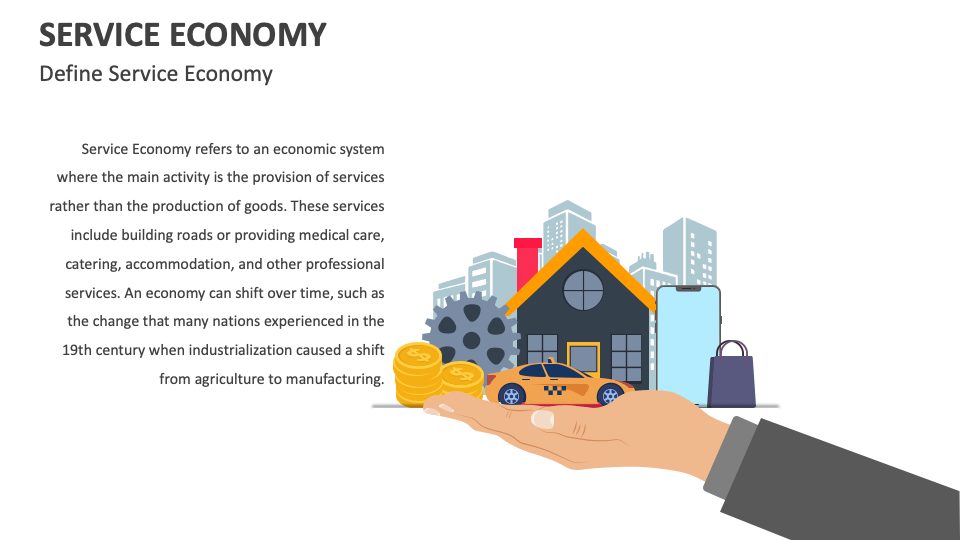
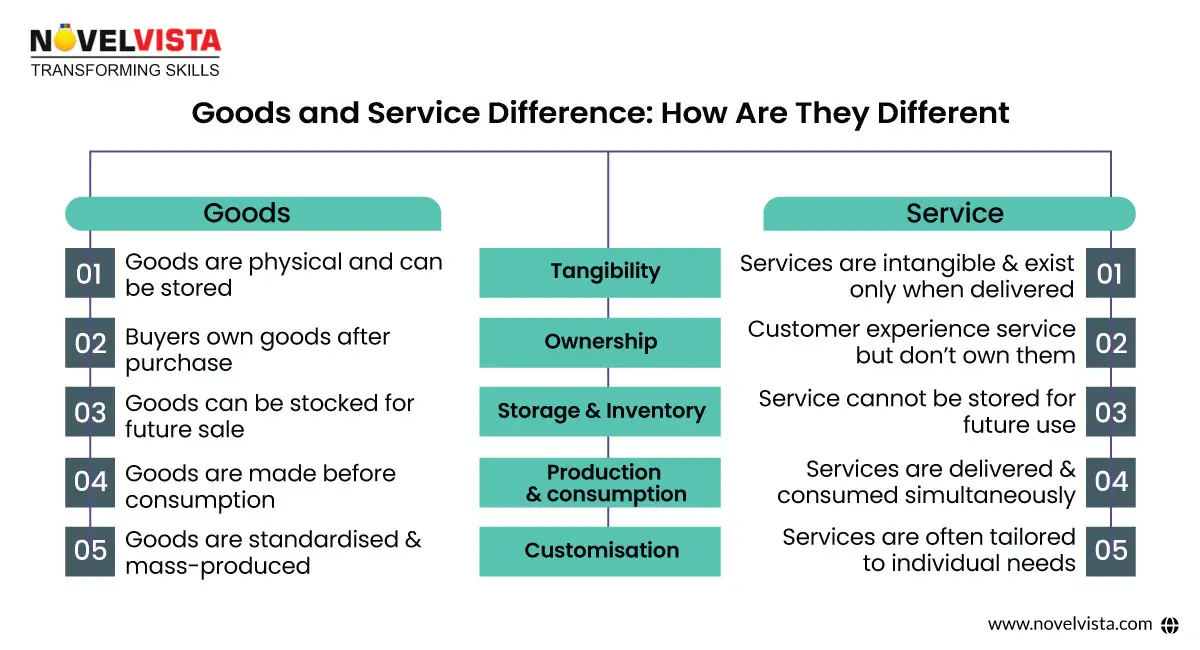
In the traditional study of economics, the marketplace is divided into two primary offerings: goods and services. While goods are the tangible items we can touch, store, and transport—like a smartphone or a loaf of bread—services represent the intangible actions, performances, or efforts provided by one party to another. In the modern financial landscape, the service sector has evolved from a secondary consideration to the primary driver of global GDP, particularly in developed economies. Understanding what a service is, how it is valued, and how it functions within the framework of business finance is essential for investors, entrepreneurs, and anyone looking to navigate the complexities of the current wealth-building environment.

Defining the Economic Service: Characteristics and Fundamentals
To grasp the role of services in economics, one must first understand the unique characteristics that distinguish them from physical products. Unlike a manufacturing firm that produces a surplus of inventory to be sold later, a service-based business operates on the principles of real-time value exchange. In financial terms, this creates a distinct risk and reward profile for the business owner and the consumer alike.
Intangibility and the Experience Factor
The most defining feature of a service is its intangibility. You cannot hold a financial consultation in your hand, nor can you store a legal defense in a warehouse. Because services lack physical form, their value is often subjective and based on the expertise, reputation, and outcome provided. For a business, this means that “selling” a service requires a high degree of trust and brand equity. From a money management perspective, the cost of an intangible service is often viewed as an investment in human capital or operational efficiency rather than a capital expenditure on a physical asset.
Perishability and the “Right Now” Economy
In economics, perishability refers to the fact that services cannot be saved, stored, or returned. An empty seat on a flight or an unbooked hour in a consultant’s schedule represents lost revenue that can never be recovered. This “perishability” creates a unique financial challenge: capacity management. Service-based businesses must use sophisticated financial tools and dynamic pricing models to ensure that supply meets demand as closely as possible, maximizing the yield on every available unit of time.
Inseparability of Production and Consumption
When you buy a car, the production (at the factory) and the consumption (on the road) are separated by time and space. However, in services, the provider and the consumer are often present simultaneously. A haircut is produced and consumed at the exact same moment. This inseparability means that the quality of the service is inextricably linked to the person providing it. For those looking at side hustles or professional services, this means your “income floor” is often tied to your personal time, necessitating a shift toward scalable models if the goal is significant wealth accumulation.
Services vs. Goods: Navigating the Shift in Business Finance
The distinction between goods and services is not merely academic; it dictates how companies are valued, how they manage their cash flow, and how they approach taxation. As the global economy shifts toward a “service-first” model, the lines between these two categories have blurred, leading to the rise of the “servitization” of products.
The Tangibility Spectrum
Most modern offerings fall somewhere on a spectrum between “pure goods” and “pure services.” A restaurant, for example, provides a physical good (food) but also an intangible service (cooking, ambiance, and service). Understanding where a business sits on this spectrum is vital for financial analysis. Pure service businesses often have lower overhead in terms of raw materials but higher costs in terms of skilled labor. For investors, this translates to different margin profiles and scalability potential.
Cost Structures and Scaling a Service Business
In business finance, the cost of goods sold (COGS) is a straightforward metric for manufacturers. For service providers, the “Cost of Services” is primarily driven by wages and time. This makes scaling a service business inherently different from scaling a product business. While a software company can sell a million copies of a program with minimal extra cost, a traditional service provider (like an accounting firm) must hire more staff to handle more clients. This linear relationship between labor and revenue is why many service providers are now turning to digital tools to automate “productized services,” allowing for exponential growth without a corresponding increase in headcount.
Value-Based Pricing in the Service Sector
One of the most powerful aspects of services in economics is the ability to move away from “cost-plus” pricing toward “value-based” pricing. Because services are intangible and often solve high-stakes problems, their price is not necessarily tied to the cost of production. A financial advisor who saves a client $100,000 in taxes might charge a $10,000 fee, even if the work only took five hours. This disconnect between time spent and value delivered is the foundation of high-income service models and is a key concept for anyone looking to increase their personal earning power.
The Role of Services in the Global Economy and Investing
From a macroeconomic perspective, the growth of the service sector is a hallmark of an advanced economy. As nations grow wealthier, their reliance on agriculture and manufacturing typically decreases, while their reliance on services—financial, educational, medical, and professional—increases.
The Tertiary Sector as a Driver of GDP
Economists divide activity into the primary (raw materials), secondary (manufacturing), and tertiary (services) sectors. In many developed nations, the tertiary sector accounts for over 70% of total GDP. This shift has profound implications for the labor market and investment strategies. Investing in the service sector often means looking at industries with high barriers to entry based on intellectual property, licensing, or specialized knowledge, which can provide a “moat” against competitors.
Investing in Service-Based Corporations
When evaluating service-based stocks, investors focus on different metrics than they would for a manufacturing giant. Key performance indicators (KPIs) such as Customer Acquisition Cost (CAC), Lifetime Value (LTV), and churn rate take center stage. Because service companies often have fewer physical assets to use as collateral, their valuation is heavily dependent on recurring revenue streams and brand loyalty. For the savvy investor, service companies—especially those in the financial and professional sectors—can offer high Return on Equity (ROE) due to their asset-light nature.
Service Innovation as a Competitive Advantage
In a crowded market, the service component of a business often becomes the primary differentiator. This is known as “service-dominant logic.” Even companies that sell physical goods are now focusing on the “service” of the experience to drive brand loyalty and repeat purchases. From a business finance perspective, investing in superior customer service is not just an expense; it is a strategic move to lower churn and increase the long-term valuation of the company.
Services in the Digital Age: From SaaS to the Gig Economy
The digital revolution has fundamentally altered how services are delivered and monetized. We have entered an era where “Service” is no longer just a category of economics, but a delivery model that has disrupted traditional ownership.
The Rise of Subscription-Based Revenue Models
Software as a Service (SaaS) and other subscription models have transformed the way we think about spending and income. Instead of a one-time purchase, consumers now pay for ongoing access to a service. For the provider, this creates “predictable” recurring revenue, which is highly prized in business finance because it makes cash flow management and long-term planning much easier. For the consumer, it moves expenses from “Capital Expenditure” (buying the software) to “Operating Expenditure” (paying a monthly fee), which can be more tax-efficient and easier on the monthly budget.
Side Hustles and the Individual Service Provider
The “Gig Economy” is essentially a marketplace for individual economic services. Platforms that allow individuals to sell their expertise—be it graphic design, financial consulting, or ride-sharing—have democratized the service sector. This has opened up new avenues for online income and side hustles. For the individual, the economics of a service-based side hustle are attractive because they often require zero upfront capital; the primary investment is simply one’s own skill and time.
Leveraging Financial Tools to Manage Service-Based Income
As more people move toward service-based income, the need for specialized financial tools has grown. Managing irregular income streams, calculating estimated taxes for 1099 work, and setting up solo 401(k)s are now essential skills for the modern service provider. Financial technology (FinTech) has stepped in to fill this gap, providing automated bookkeeping and tax-shelter tools that allow freelancers to operate with the financial sophistication of a much larger corporation.
The Future of Services: Automation and Human Capital
As we look toward the future, the definition of a service in economics continues to expand. The integration of artificial intelligence and automation is changing the “human” requirement of services, leading to a new era of high-efficiency, high-value offerings.
The Evolution of High-Value Professional Services
While basic tasks are being automated, the demand for “high-touch” professional services—those requiring empathy, complex judgment, and strategic thinking—is increasing. In the world of money and finance, this means that the role of the service provider is shifting from “doer” to “advisor.” The economic value of a service is increasingly found in the ability to navigate complexity rather than just performing a repetitive task. For those looking to future-proof their income, focusing on specialized, high-value service niches remains one of the most reliable paths to financial security and wealth creation in the modern economy.
aViewFromTheCave is a participant in the Amazon Services LLC Associates Program, an affiliate advertising program designed to provide a means for sites to earn advertising fees by advertising and linking to Amazon.com. Amazon, the Amazon logo, AmazonSupply, and the AmazonSupply logo are trademarks of Amazon.com, Inc. or its affiliates. As an Amazon Associate we earn affiliate commissions from qualifying purchases.