
In the landscape of personal finance, few decisions carry as much weight—or as much immediate depreciation—as the purchase of a vehicle. For the savvy consumer, the primary challenge lies in balancing the desire for a reliable, modern machine with the fiscal responsibility of avoiding the “new car smell” tax. This is where the concept of the “pre-certified” or, more accurately, the Certified Pre-Owned (CPO) vehicle enters the conversation.
A CPO car represents a unique asset class in the automotive market. It sits strategically between the high-cost, high-depreciation world of new cars and the high-risk, low-transparency world of traditional used cars. From a financial standpoint, a CPO vehicle is more than just a used car with a stamp of approval; it is a risk-mitigation tool designed to offer the security of a factory warranty at a fraction of the original MSRP.

Understanding the CPO Model: An Investment in Peace of Mind
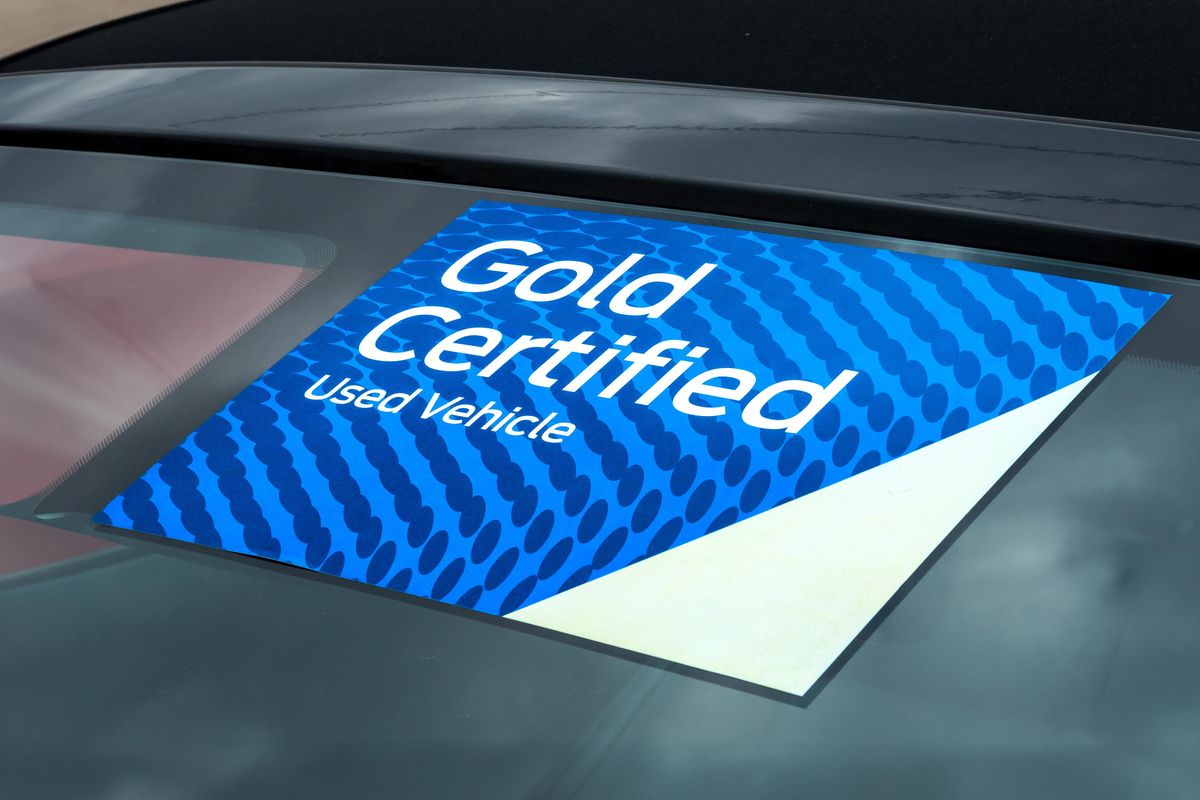
To understand what a pre-certified used car is, one must first distinguish it from the standard “used” inventory found on a corner lot. A CPO vehicle is a late-model car that has undergone a rigorous inspection and refurbishment process mandated by the original manufacturer (OEM). Unlike a generic used car, which is sold “as-is,” a CPO vehicle is backed by the brand that built it.
The Distinction Between Used and Certified
In the world of personal finance, “used” often equates to “uncertainty.” When you buy a standard used vehicle from a private party or a non-franchised dealer, you are assuming 100% of the mechanical risk the moment the title transfers. A CPO vehicle, however, must meet specific criteria to even be considered for the program. Typically, these cars must be less than five to six years old and have fewer than 60,000 to 75,000 miles on the odometer. This strict filtering process ensures that the underlying asset is still in its “prime” productive years.
The Manufacturer’s Guarantee
The defining characteristic of a CPO car is the factory-backed warranty. While many used car dealers offer “dealer warranties,” these are often limited in scope and only valid at that specific location. A true CPO vehicle comes with a warranty from the manufacturer (e.g., Toyota, BMW, or Ford), meaning it can be serviced at any franchised dealership across the country. For the buyer, this is an insurance policy against catastrophic mechanical failure, effectively capping their potential out-of-pocket expenses for a specified duration.
The Financial Mechanics of a CPO Purchase
When analyzing a CPO vehicle through a financial lens, the primary question is whether the price premium—the extra amount paid over a non-certified version of the same car—is justified. On average, a CPO vehicle costs between $1,000 and $3,000 more than its non-certified counterpart. To a disciplined investor or budget-conscious consumer, this premium must be weighed against tangible benefits.
Analyzing the Price Premium
The premium paid for a CPO car is not a “markup” in the traditional sense; it is a bundle of services. This includes the cost of the multi-point inspection (often 150+ points), the cost of any necessary reconditioning (new tires, brakes, or cosmetic fixes required to meet CPO standards), and the cost of the extended warranty insurance. If a set of new tires and a brake job would cost $1,500, and a third-party service contract costs another $1,500, a $2,000 CPO premium actually represents a net financial gain before the car even leaves the lot.
Interest Rates and Incentive Financing
One of the most overlooked financial advantages of CPO vehicles is the availability of captive finance incentives. Manufacturers often treat their CPO programs as a way to build brand loyalty and manage their lease-return inventory. As a result, they frequently offer subsidized interest rates—sometimes as low as 0.9% or 1.9%—on CPO models. In contrast, a traditional used car loan from a bank might carry an interest rate of 6% to 10% depending on market conditions. Over a 60-month loan term, the interest savings on a CPO vehicle can completely offset the initial price premium, making the “more expensive” car the cheaper financial choice in the long run.
Depreciation and the Total Cost of Ownership (TCO)

The single greatest expense in car ownership is not fuel, insurance, or maintenance—it is depreciation. A new car typically loses 20% of its value in the first year and up to 60% of its value within the first five years. The CPO buyer uses this economic reality to their advantage.
Avoiding the “New Car” Depreciation Curve
By purchasing a CPO vehicle that is two to three years old, the buyer allows the first owner to absorb the steepest part of the depreciation curve. You are essentially acquiring an asset that is 80-90% as good as a new model but at 60-70% of the cost. Because the vehicle has already “leveled off” in value, the CPO buyer will lose significantly less money in equity over their period of ownership compared to someone who bought the same model brand new.
Resale Value and Asset Retention
CPO vehicles tend to hold their value better than standard used cars when it comes time for resale. Because the vehicle has a documented history of meeting manufacturer standards and was maintained under a factory-backed program, future buyers (or dealerships taking a trade-in) view the vehicle as a lower-risk asset. This “pedigree” can translate into a higher valuation at the end of the ownership cycle, further improving the Total Cost of Ownership.
Risk Management: Assessing the Warranty and Inspection Value
In any financial endeavor, risk management is paramount. A CPO vehicle acts as a hedge against the volatility of automotive repair costs. Modern vehicles are essentially high-powered computers on wheels; a single failure in an infotainment system or an advanced driver-assistance sensor can cost thousands of dollars.
The Multi-Point Inspection as a Pre-emptive Audit
Before a car is “pre-certified,” it must pass a rigorous audit. Technicians check everything from engine compression to the thickness of the brake pads. If a component does not meet the manufacturer’s specific “like-new” standards, it must be replaced with original equipment manufacturer (OEM) parts. For the buyer, this is a form of due diligence that is far more comprehensive than a standard pre-purchase inspection (PPI) performed by an independent mechanic. It ensures that the “hidden costs” of a used car are addressed before the sale.
Extended Coverage and Avoiding Surprise Liabilities
The warranty extension provided by CPO programs (often adding 12 months or 12,000 miles to the original bumper-to-bumper coverage, or extending the powertrain warranty to 7 years/100,000 miles) provides a predictable ceiling for maintenance costs. In a personal budget, “surprise” expenses are the enemy of wealth building. By knowing that the major mechanical components are covered, the CPO owner can more accurately forecast their monthly cash flow without the fear of a $4,000 transmission failure disrupting their savings goals.
Strategic Decision-Making: Is the Premium Justified?
Choosing a CPO vehicle is a strategic decision that depends on the specific make, model, and the buyer’s long-term financial goals. It is not always the correct choice for every driver, but for those prioritizing stability, it is often the most logical path.
When to Choose CPO over Standard Used
The financial math for CPO is most compelling when dealing with luxury European brands or high-tech vehicles. For brands like Mercedes-Benz, Audi, or Land Rover, where out-of-warranty repair costs are notoriously high, the CPO warranty is an incredibly valuable asset. Conversely, for a highly reliable, low-complexity economy car with cheap parts, the CPO premium might be harder to justify, as the statistical likelihood of a major failure is lower.
Calculating Your Personal ROI
To determine if a pre-certified used car is the right financial move for you, perform a simple “Net Value” calculation:
- Compare the CPO price to the average private-party price for the same mileage/year.
- Subtract the value of the reconditioning (Check tire tread and brake life on the non-CPO car).
- Add the interest rate savings over the life of the loan.
- Assign a dollar value to the warranty coverage (Compare this to the cost of a high-quality third-party service contract).
If the combined value of the warranty, lower interest, and reconditioning exceeds the CPO premium, the “pre-certified” car is not just a luxury—it is a superior financial investment. By viewing the car as a depreciating asset that requires a risk-management strategy, the CPO model stands out as the most balanced approach to modern car ownership. It provides the reliability of a new vehicle with the economic logic of the used market, allowing you to keep more of your capital working for you in other investments.
aViewFromTheCave is a participant in the Amazon Services LLC Associates Program, an affiliate advertising program designed to provide a means for sites to earn advertising fees by advertising and linking to Amazon.com. Amazon, the Amazon logo, AmazonSupply, and the AmazonSupply logo are trademarks of Amazon.com, Inc. or its affiliates. As an Amazon Associate we earn affiliate commissions from qualifying purchases.