
In the landscape of personal finance, few concepts are as foundational—yet frequently misunderstood—as the pension plan. For decades, the pension was the bedrock of the “American Dream” and the global standard for retirement security. It represented a social contract between employer and employee: years of loyal service in exchange for guaranteed financial stability in one’s twilight years. However, as the global economy has shifted from industrial roots to a digital-first, high-mobility environment, the nature of these plans has evolved significantly.
Understanding how a pension plan works is no longer just a task for those nearing retirement; it is a critical component of wealth management for professionals at every stage of their careers. Whether you are navigating a traditional defined-benefit system or managing a modern defined-contribution account, the mechanics of these vehicles will dictate your quality of life decades from now.

1. Defining the Pension Plan: Types and Structures
At its core, a pension plan is a retirement fund that requires contributions to be made by an employer, an employee, or both. These funds are invested on the employee’s behalf, with the ultimate goal of providing a steady stream of income when the individual ceases to work. To understand the modern financial landscape, we must distinguish between the two primary pillars of retirement planning: Defined Benefit and Defined Contribution plans.
Defined Benefit Plans: The Traditional Promise
The “traditional” pension is technically known as a Defined Benefit (DB) plan. In this structure, the employer promises a specific monthly benefit upon retirement. This amount is usually calculated using a formula that considers the employee’s salary history and years of service.
The defining characteristic of a DB plan is that the investment risk falls entirely on the employer. If the stock market crashes or the fund’s investments underperform, the company is still legally obligated to pay the promised amount. This provides the employee with a high degree of predictability, acting as a “paycheck for life.”
Defined Contribution Plans: The Modern Shift
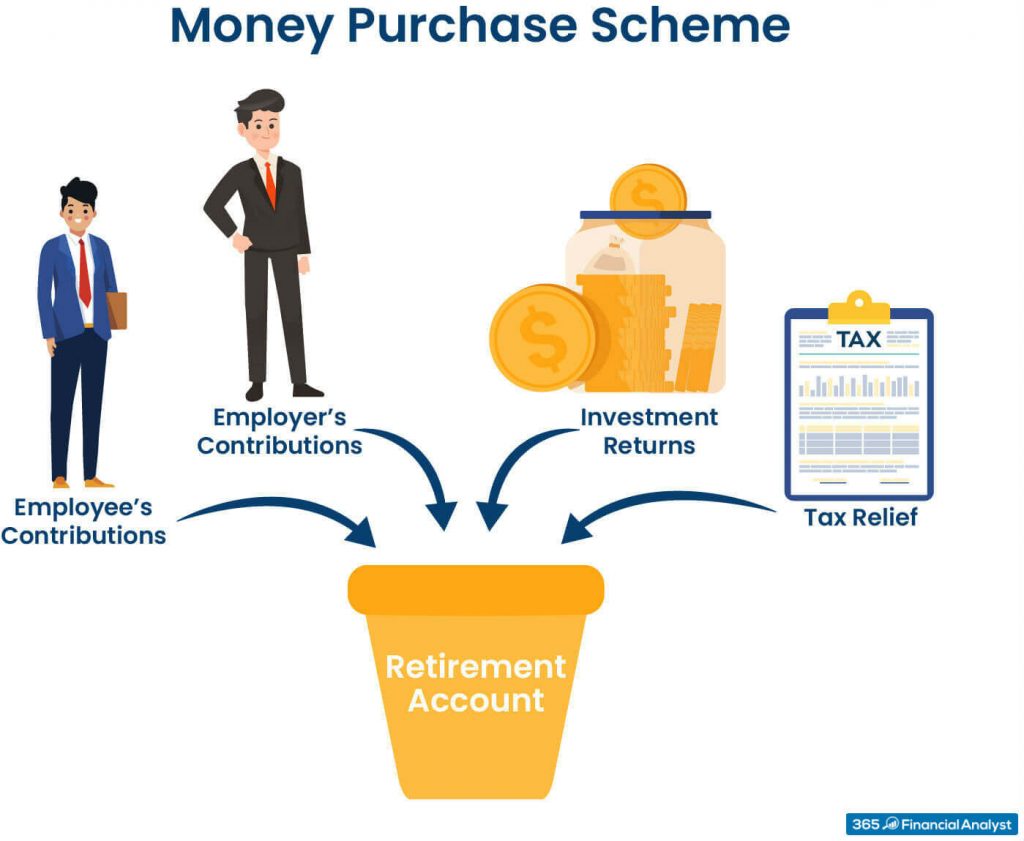
Over the last forty years, the private sector has largely shifted toward Defined Contribution (DC) plans, such as the 401(k) in the United States or Superannuation in Australia. In this model, the “definition” applies to the input rather than the output. The employer, the employee, or both contribute a specific amount to an individual account.
Unlike the DB plan, the investment risk in a DC plan rests with the employee. The final retirement “nest egg” depends on how much was contributed and how well those investments performed over time. While this offers less predictability than a traditional pension, it provides the employee with more control and portability.
The Hybrid Model and Cash Balance Plans
Some organizations utilize hybrid models, such as Cash Balance plans. These appear to the employee like a DC plan—showing a running account balance—but are legally classified as DB plans. They offer a guaranteed interest credit and a contribution credit, blending the transparency of modern accounts with the safety of traditional structures.
2. How Pension Plans Function: The Lifecycle of Retirement Savings
A pension plan is not a static bank account; it is a dynamic financial engine that operates through three distinct phases: accumulation, vesting, and distribution. Understanding these phases is essential for maximizing the value of your benefits.
The Accumulation Phase and Tax Advantages
During the accumulation phase, capital is funneled into the plan. The primary engine of growth here is not just the contribution itself, but the tax-advantaged status of the vehicle. In most jurisdictions, contributions to pension plans are “pre-tax,” meaning they reduce your taxable income in the year you make them.
Furthermore, the growth within the plan is tax-deferred. In a standard brokerage account, you might pay capital gains taxes every year you sell a stock for a profit. Inside a pension plan, that money is reinvested without being taxed, allowing for a powerful “compounding effect” where you earn interest on money that would have otherwise gone to the government.
The Vesting Period: Earning Your Right to the Funds
One of the most critical aspects of a pension plan is the vesting schedule. Vesting refers to the ownership of the funds contributed by the employer. While your own contributions are always 100% yours, employer-matched funds often come with strings attached.
Employers use vesting as a retention tool. A “cliff vesting” schedule might mean you own 0% of the employer’s contributions if you leave before three years, but 100% the moment you hit that three-year mark. A “graded vesting” schedule might give you 20% ownership each year over five years. Leaving a firm a few months before you are fully vested can be a multi-thousand-dollar mistake.
The Distribution Phase: Lump Sum vs. Annuity
When you reach retirement age, you face the distribution phase. In traditional pension plans, you are often given a choice: take a “Lump Sum” (one large payment) or an “Annuity” (monthly payments for life).
Choosing between these requires rigorous financial analysis. An annuity provides “longevity insurance,” ensuring you never outlive your money. However, a lump sum allows for greater flexibility, the potential for higher returns through private investing, and the ability to leave an inheritance to heirs—something that many annuities do not offer.

3. The Role of Regulation and Security in Pension Management
Because pension plans represent the future livelihood of millions, they are among the most heavily regulated financial products in the world. This regulation ensures that even if a company fails, the employees’ futures are not necessarily erased.
ERISA and Fiduciary Responsibility
In the United States, the Employee Retirement Income Security Act (ERISA) of 1974 sets the minimum standards for most voluntarily established pension and health plans in private industry. ERISA requires plan sponsors to provide participants with information about plan features and funding.
More importantly, it imposes “fiduciary” duties on those who manage the plan. A fiduciary is legally obligated to act solely in the interest of the plan participants. This prevents company executives from using pension funds as a personal piggy bank or making reckless investments that favor the corporation over the workers.
The Pension Benefit Guaranty Corporation (PBGC)
What happens if a company goes bankrupt and its traditional pension plan is underfunded? This is where the PBGC comes in. It is a federal agency that acts as an insurance provider for private-sector defined benefit plans. If a plan is terminated without enough money to pay benefits, the PBGC steps in to pay at least a portion of the promised amount, providing a safety net for retirees.
Global Variations: The Multi-Pillar System
Most developed nations use a “multi-pillar” approach to retirement. The first pillar is usually a state-funded social security system. The second pillar consists of occupational pension plans (the focus of this article). The third pillar involves voluntary personal savings. Understanding how your employer-sponsored pension interacts with government benefits is vital for a holistic financial plan.
4. Strategic Advantages: Maximizing the Value of Your Plan
To treat a pension plan as a “set it and forget it” tool is a missed opportunity. High-net-worth individuals and savvy investors view the pension plan as a strategic asset that requires active optimization.
The Power of the Employer Match
In Defined Contribution plans, the employer “match” is perhaps the only “free money” available in the financial world. If an employer matches 50% of your contributions up to 6% of your salary, failing to contribute that 6% is equivalent to turning down a guaranteed 50% return on investment. No stock market strategy can reliably beat that immediate ROI.
Asset Allocation and Risk Management
For those in DC plans, how you allocate your assets within the plan is the primary driver of your final balance. Early in a career, a bias toward equities (stocks) is generally preferred to capture long-term growth. As retirement nears, shifting toward fixed income (bonds) helps preserve the capital you have accumulated. Professional-grade pension plans often offer “Target Date Funds” that automate this shift, balancing risk and reward as you age.
Inflation Protection and Cost-of-Living Adjustments (COLA)
One of the greatest threats to retirement security is inflation. A $3,000 monthly pension might seem adequate today, but in twenty years, its purchasing power could be halved. Some high-quality traditional pensions include a Cost-of-Living Adjustment (COLA), which increases your benefit annually based on inflation indices. When evaluating a job offer or a pension structure, the presence of a COLA is a massive value-add that is often overlooked.
5. The Evolving Landscape: Portability and the Modern Worker
The modern workforce is characterized by “job hopping,” with the average professional changing careers or companies every few years. This mobility creates challenges for traditional pension models but opportunities for those with portable accounts.
The Rollover Strategy
When you leave an employer, you generally have four options for your DC pension plan: leave it where it is, move it to your new employer’s plan, cash it out (which incurs heavy taxes and penalties), or “roll it over” into an Individual Retirement Account (IRA). The rollover is often the most sophisticated move, as it allows you to consolidate your retirement assets in one place while often gaining access to a wider range of investment options and lower fees.
The “Pension Gap” and Self-Employment
With the decline of the traditional DB pension, many workers—especially freelancers and gig workers—face a “pension gap.” This has led to the rise of Solo 401(k)s and SEP-IRAs, which allow self-employed individuals to create their own “pension-like” structures. These tools offer the same tax-deferred growth and high contribution limits, proving that the principles of pension planning can be applied even outside of corporate life.
Conclusion: Securing Your Financial Future
A pension plan is more than just a line item on a benefits summary; it is a sophisticated financial instrument designed to solve the problem of longevity. Whether it takes the form of a guaranteed monthly check from a Defined Benefit plan or a growing portfolio in a Defined Contribution plan, it remains one of the most effective ways to build and protect wealth.
By understanding the mechanics of vesting, the tax advantages of accumulation, and the strategic importance of asset allocation, you can transform a standard retirement plan into a powerful engine for financial independence. In an era of economic uncertainty, the best defense is a well-structured and disciplined approach to your pension—ensuring that when you eventually stop working, your money continues to work for you.
aViewFromTheCave is a participant in the Amazon Services LLC Associates Program, an affiliate advertising program designed to provide a means for sites to earn advertising fees by advertising and linking to Amazon.com. Amazon, the Amazon logo, AmazonSupply, and the AmazonSupply logo are trademarks of Amazon.com, Inc. or its affiliates. As an Amazon Associate we earn affiliate commissions from qualifying purchases.