
In the landscape of modern hardware, few substances are as ubiquitous yet as misunderstood as the liquid crystal. While we interact with them for hours every day through our smartphones, laptops, and televisions, the “liquid crystal” remains a bridge between the physical states of matter and the digital interface. To understand what a liquid crystal is from a technological perspective is to understand the evolution of the display industry, the mechanics of light manipulation, and the future of optical computing.
At its core, a liquid crystal is a state of matter that possesses properties between those of conventional liquids and those of solid crystals. For instance, a liquid crystal may flow like a water-based fluid, but its molecules may be oriented in a crystal-like way. This dual nature—the fluidity of a liquid combined with the optical properties of a solid—is the fundamental “hack” that engineers use to control light at the pixel level.

The Physics of the Mesophase: How Liquid Crystals Work
The term “liquid crystal” refers to the substance’s mesophase—an intermediate state. In a solid, molecules are fixed in a rigid lattice. In a liquid, they move randomly. In the liquid crystalline state, molecules maintain a degree of orientational order even as they move past one another.
The Nematic Phase and Molecular Alignment
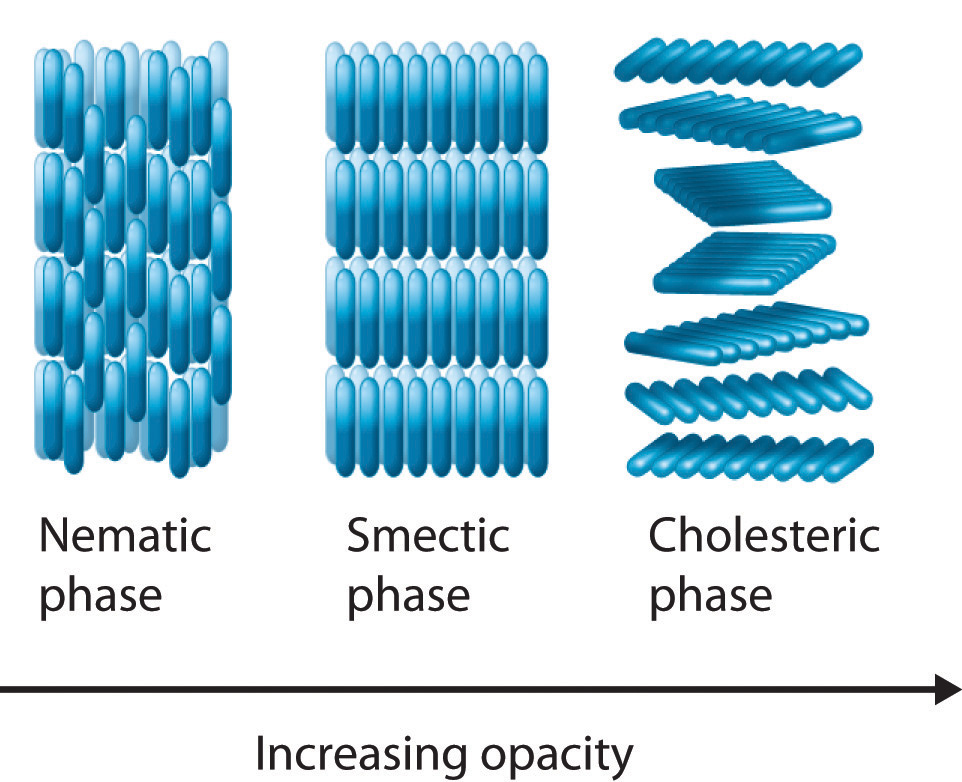
In the tech world, the most commonly utilized type of liquid crystal is the “nematic” phase. Nematic molecules are rod-shaped and tend to align themselves parallel to one another. What makes them technologically revolutionary is their sensitivity to electromagnetic fields. By applying a small voltage to a layer of liquid crystals, engineers can force these molecules to rotate or “untwist.”
When these molecules move, they change the way light passes through them. This is the foundational principle of a Liquid Crystal Display (LCD). Without this specific chemical sensitivity, the portable electronics revolution—from the first digital watches to the latest ultra-wide monitors—would have been physically impossible.
Birefringence and Light Manipulation
Liquid crystals are “birefringent,” meaning they have a refractive index that depends on the polarization and propagation direction of light. In a tech context, this allows the material to act as a programmable light valve. When paired with two polarizing filters set at 90-degree angles to each other, the liquid crystal layer can either twist the light to allow it through the second filter or leave it unchanged so the light is blocked. This creates the “on” and “off” states of a pixel.
Evolution of Display Technology: From TN to IPS and Beyond
The application of liquid crystals in technology has evolved through several distinct generations, each solving specific hardware limitations like viewing angles, color accuracy, and response times. Understanding these distinctions is critical for hardware enthusiasts and professionals selecting gear for specific workflows.
Twisted Nematic (TN) Panels: The Speed Kings
The first widespread application of liquid crystals in consumer tech was the Twisted Nematic (TN) panel. In these displays, the liquid crystals are arranged in a helical structure. When voltage is applied, the helix “untwists.”
TN panels are valued in the gaming industry for their high refresh rates and low response times. However, they suffer from poor color reproduction and narrow viewing angles. If you tilt a TN screen, the colors often invert or wash out—a direct result of the specific way those liquid crystals are physically oriented within the panel.
In-Plane Switching (IPS) and Visual Fidelity
To solve the limitations of TN technology, engineers developed In-Plane Switching (IPS). In an IPS panel, the liquid crystal molecules are aligned horizontally (in-plane) and rotate within that plane to control light. This alignment allows for much wider viewing angles and superior color accuracy.
For graphic designers, video editors, and tech professionals, IPS is the gold standard of liquid crystal technology. It demonstrates how manipulating the physical orientation of these molecules can directly impact the quality of professional digital output.

Vertical Alignment (VA) and Contrast Ratios
Vertical Alignment (VA) panels offer a middle ground. In their natural state, the liquid crystals stand perpendicular to the substrate, effectively blocking light and providing deep blacks and high contrast ratios. This makes them ideal for home theater setups and immersive gaming, where the “inkiness” of the dark levels is more important than the lightning-fast response times of a TN panel.
Beyond the Screen: Liquid Crystals in Next-Generation Tech
While displays are the most famous application, the unique properties of liquid crystals are being harnessed in several emerging technology sectors. The ability to manipulate light with low power consumption makes them a prime candidate for “Smart Tech” applications.
Smart Windows and Optical Shutters
In the realm of IoT (Internet of Things) and green technology, liquid crystals are used to create “smart glass.” By sandwiching a layer of Polymer Dispersed Liquid Crystals (PDLC) between glass panes, windows can switch from transparent to opaque with the flick of a switch. When the power is off, the crystals are scattered, diffusing light and creating privacy. When current is applied, they align, allowing light to pass through. This tech is increasingly integrated into smart office designs to reduce HVAC costs and improve privacy management.
Liquid Crystal on Silicon (LCoS) in AR/VR
The push for Augmented Reality (AR) and Virtual Reality (VR) has led to the development of Liquid Crystal on Silicon (LCoS). Unlike a traditional LCD, which is transmissive (light passes through it), LCoS is reflective. It uses a liquid crystal layer on top of a silicon backplane to create incredibly high-resolution micro-displays. This technology is crucial for the miniaturization of headsets, allowing for high-pixel-density images that are necessary to eliminate the “screen door effect” in immersive environments.
Telecommunications and Photonic Crystals
In the telecommunications sector, liquid crystals are used in wavelength-selective switches. As data travels through fiber optic cables as light pulses, liquid crystals can act as ultra-fast, reliable gates to route specific wavelengths of light to different destinations. This application takes liquid crystal tech out of the “visual” realm and into the “infrastructure” realm, powering the backbone of high-speed internet.
The Future of Liquid Crystal Innovation
As we look toward the next decade of technology, liquid crystals are not being phased out by newer technologies like OLED; rather, they are evolving to remain competitive in an increasingly demanding market.
Mini-LED and Quantum Dot Enhancements
The latest trend in high-end tech is the marriage of liquid crystals with Quantum Dots (QLED) and Mini-LED backlighting. By using thousands of tiny LEDs to illuminate the liquid crystal layer, manufacturers can achieve “local dimming,” which brings the contrast and black levels of liquid crystals closer to that of OLED. This ensures that liquid crystal technology remains the most cost-effective and durable solution for high-brightness HDR content.
Flexible and Wearable Electronics
Research into “cholesteric” liquid crystals—which have a helical structure that can reflect specific colors of light without a backlight—is opening doors for ultra-low-power, flexible displays. These “e-paper” style liquid crystals could lead to wearables that last for weeks on a single charge or foldable tech that maintains the durability that current OLED foldables struggle with.
Sustainability and the Circular Tech Economy
The tech industry is also focusing on the environmental impact of liquid crystal production. Modern manufacturing is moving toward “green” liquid crystal synthesis, reducing the use of hazardous solvents. Furthermore, as millions of LCD devices reach the end of their lifecycle, new chemical processes are being developed to extract and recycle liquid crystals from discarded screens, ensuring that this vital material supports a more sustainable digital future.
Conclusion: The Enduring Legacy of Liquid Crystals
The question “what is a liquid crystal?” finds its answer not just in a chemistry textbook, but in every glowing screen and high-speed data connection in the world today. It is a material that defies the standard definitions of matter to provide the precise control over light that our digital lives require.
From the early days of basic digital calculators to the complex, high-refresh-rate displays used in professional e-sports and medical imaging, the liquid crystal has proven to be one of the most versatile tools in the hardware engineer’s arsenal. As we move toward a future of augmented reality, smart cities, and sustainable electronics, the liquid crystal will continue to be a foundational element of the technological landscape, evolving alongside our needs for faster, brighter, and more efficient ways to interface with the digital world.
aViewFromTheCave is a participant in the Amazon Services LLC Associates Program, an affiliate advertising program designed to provide a means for sites to earn advertising fees by advertising and linking to Amazon.com. Amazon, the Amazon logo, AmazonSupply, and the AmazonSupply logo are trademarks of Amazon.com, Inc. or its affiliates. As an Amazon Associate we earn affiliate commissions from qualifying purchases.