
In the landscape of modern healthcare, the FNP-BC (Family Nurse Practitioner-Board Certified) credential is more than just a professional milestone; it is a powerful financial engine. For nursing professionals, obtaining this certification from the American Nurses Credentialing Center (ANCC) represents a significant pivot point in their economic trajectory. As the demand for primary care providers surges and the “business of medicine” shifts toward cost-effective, high-quality outcomes, the FNP-BC stands at the intersection of clinical expertise and high-yield career potential.
Understanding what an FNP-BC is requires looking past the clinical duties and focusing on the financial implications of the role. This article explores the FNP-BC through a fiscal lens, analyzing the return on investment (ROI) of the certification, the diverse income streams available to board-certified practitioners, and the entrepreneurial opportunities that come with independent practice.

The Investment Phase: Calculating the ROI of the FNP-BC Credential
Before reaping the rewards of a board-certified role, one must navigate the significant “Capital Expenditure” phase of education and certification. Viewing the journey to becoming an FNP-BC as a financial investment is crucial for long-term wealth management.
The Cost of Entry: Tuition and Opportunity Costs
The path to the FNP-BC requires either a Master of Science in Nursing (MSN) or a Doctor of Nursing Practice (DNP). Total tuition can range from $30,000 to over $100,000 depending on the institution. Beyond the direct costs, prospective FNPs must account for opportunity costs—the wages lost if they reduce their clinical hours as a Registered Nurse (RN) to study. However, when compared to the cost of medical school for a Physician (MD/DO), the FNP path offers a much faster “break-even” point, allowing practitioners to enter the high-earning bracket several years earlier.
Certification as a Marketable Asset
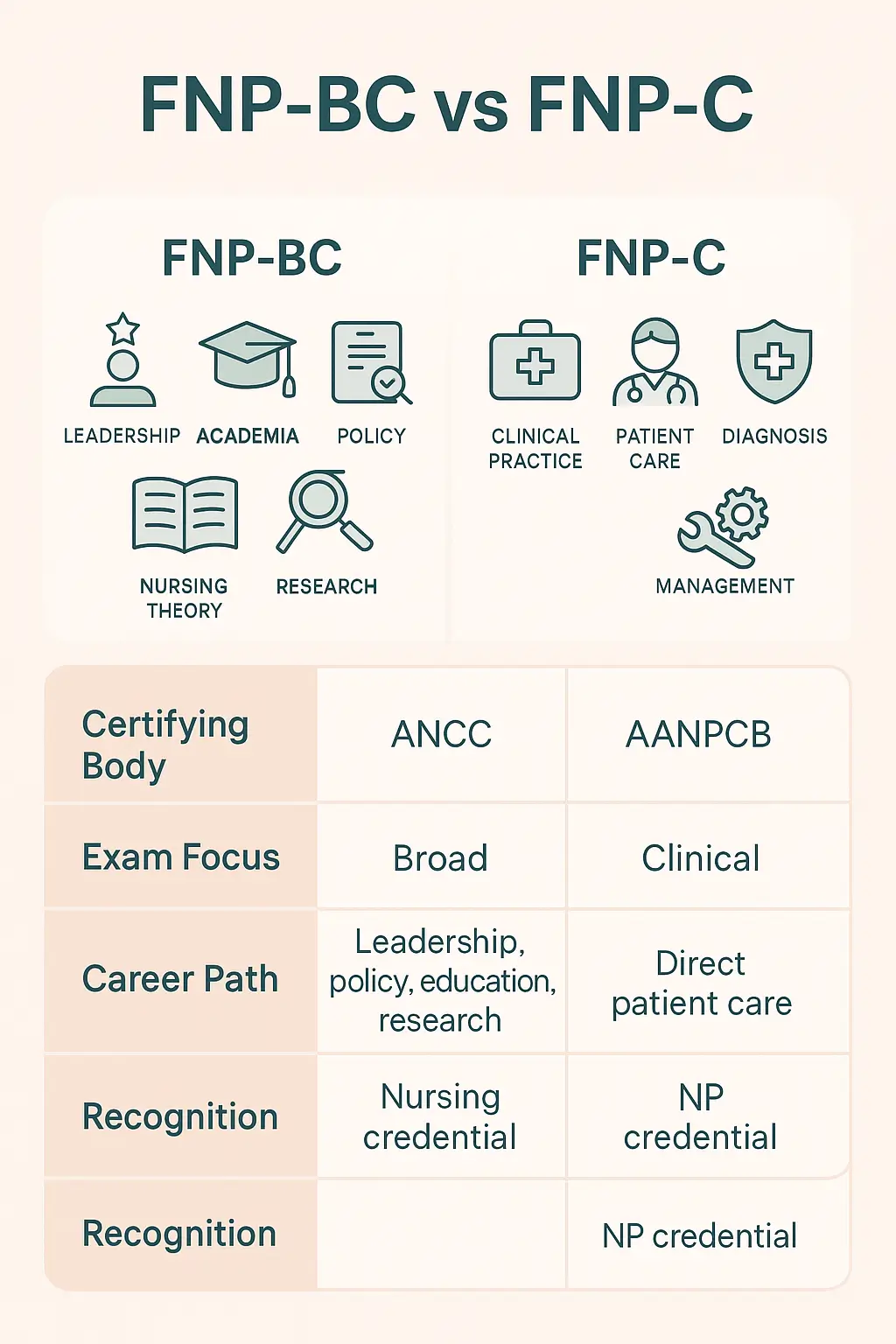
The “-BC” in FNP-BC signifies that the practitioner is “Board Certified” by the ANCC. From a financial perspective, this credential serves as a quality seal that increases a practitioner’s market value. Many healthcare systems offer higher starting bonuses or “differential pay” for board-certified NPs compared to those who are only state-licensed. Furthermore, being board-certified is often a prerequisite for credentialing with major insurance payers, which is the foundational step for any NP looking to generate revenue through billing.
Long-Term ROI Projections
Statistical data consistently shows that transitioning from an RN to an FNP-BC results in a salary increase of 30% to 60%. Over a 20-year career, this translates to millions of dollars in additional lifetime earnings. When factoring in the ability to work in diverse settings—from retail clinics to specialized private practices—the FNP-BC credential offers a level of “income insurance” that is rare in other industries.
Maximizing Income: Salary Benchmarks and High-Yield Specializations
Once the credential is secured, the focus shifts to maximizing the annual “yield” of the FNP-BC. The financial floor for an FNP-BC is high, but the ceiling is even higher for those who understand how to navigate the labor market.
Geographic Arbitrage and Market Demand
In the world of personal finance, location is everything. The FNP-BC can leverage geographic arbitrage to maximize savings. For instance, while an FNP-BC in a high-cost-of-living area like New York City may earn a high salary, their “real income” after taxes and housing might be lower than a practitioner working in a state like Texas or Washington, which have no state income tax and a high demand for primary care providers. Understanding these regional economic variances is key to optimizing a practitioner’s net worth.
The Locum Tenens Model: Maximizing Short-Term Cash Flow
One of the most lucrative “side hustles” or full-time strategies for an FNP-BC is locum tenens work. Locum tenens (temporary) providers often earn significantly higher hourly rates than permanent staff—sometimes double the standard rate. For a board-certified FNP, these assignments often include paid housing and travel expenses, allowing the practitioner to keep a larger portion of their gross pay. This model is particularly effective for those looking to aggressively pay off student loans or build an investment portfolio quickly.
Specialized Niche Roles and Revenue Generation
While the “Family” in FNP-BC implies a generalist role, the most financially successful practitioners often specialize in high-margin niches. Aesthetic medicine, orthopedics, and psychiatry (with additional certification) represent sectors where the revenue per patient encounter is higher. By positioning themselves in these high-demand niches, FNP-BCs can command salaries that rival or exceed those of some specialized physicians, especially in suburban markets.

The Business of Care: Entrepreneurship and Independent Practice
Perhaps the most compelling “Money” aspect of the FNP-BC is the ability to move from “employee” to “owner.” In many states, FNP-BCs have full practice authority, meaning they can own and operate their own clinics without physician oversight.
The Economics of Private Practice
Starting a private practice as an FNP-BC is a significant business venture. It involves managing overhead, hiring staff, and, most importantly, mastering the revenue cycle. An FNP-BC who understands the nuances of ICD-10 coding and CPT codes can maximize the reimbursement they receive from insurance companies. By cutting out the “middleman” (the hospital system), the practitioner retains the profit that would otherwise go to corporate administrators.
Telehealth and Scalable Business Models
The digital revolution has opened doors for FNP-BCs to build scalable, low-overhead businesses through telehealth. A board-certified NP can provide consultations across multiple states (provided they are licensed in each), significantly expanding their potential customer base. Digital health platforms allow FNP-BCs to operate with minimal physical infrastructure, drastically reducing the “burn rate” of the business and increasing the net profit margin.
Cash-Pay and Concierge Medicine
To avoid the complexities of insurance billing, many FNP-BCs are moving toward concierge or cash-pay models. This business strategy involves charging patients a monthly membership fee or a flat rate for services. For the practitioner, this creates a predictable, recurring revenue stream. It also allows for longer patient visits and higher quality of care, which builds a premium “brand” that can command higher prices in the marketplace.
Financial Strategy: Wealth Building and Debt Management for the FNP-BC
Earning a high income is only half the battle; the other half is managing that income to ensure long-term financial independence. For the FNP-BC, this requires a strategic approach to debt and taxes.
Managing the Debt-to-Income Ratio
Many FNP-BCs enter the workforce with significant student loan debt. A sophisticated financial strategy involves balancing debt repayment with retirement contributions. Utilizing programs like Public Service Loan Forgiveness (PSLF) can be a multi-hundred-thousand-dollar financial win for FNP-BCs working in non-profit hospital systems. Alternatively, for those in the private sector, refinancing debt when interest rates are low can free up cash flow for other investments.
Tax Advantages for the Self-Employed Practitioner
For FNP-BCs who operate as independent contractors or business owners (using an S-Corp or LLC structure), the tax advantages are substantial. Business expenses—such as continuing education (CEUs), certification fees for the ANCC, medical equipment, and even portions of a home office—can be deducted. Additionally, self-employed practitioners can utilize SEP IRAs or Solo 401(k)s to shield a significant portion of their high income from taxes while building a robust retirement fund.
Diversifying Income Streams
The most financially savvy FNP-BCs do not rely solely on their clinical hours. They diversify. This might include medical writing, consulting for legal firms on malpractice cases, or teaching in adjunct faculty positions. By creating multiple streams of income, the FNP-BC protects themselves against burnout and economic downturns in the healthcare sector.
Conclusion: The FNP-BC as a Financial Catalyst
In summary, the FNP-BC is far more than a set of initials behind a name. In the context of finance and business, it is a high-value asset that grants the holder access to elite earning tiers, entrepreneurial independence, and a variety of tax-advantaged wealth-building strategies.
While the initial investment in education and board certification is significant, the long-term financial trajectory of a board-certified Family Nurse Practitioner is one of the most stable and lucrative in the modern economy. By viewing their career through the lens of ROI, market demand, and business scalability, the FNP-BC can move beyond the traditional “nursing” paycheck and enter the realm of true professional and financial mastery. Whether working in a high-paying locum position, specialized niche, or owning a private practice, the FNP-BC credential is the key that unlocks a world of financial opportunity.
aViewFromTheCave is a participant in the Amazon Services LLC Associates Program, an affiliate advertising program designed to provide a means for sites to earn advertising fees by advertising and linking to Amazon.com. Amazon, the Amazon logo, AmazonSupply, and the AmazonSupply logo are trademarks of Amazon.com, Inc. or its affiliates. As an Amazon Associate we earn affiliate commissions from qualifying purchases.