
The intersection of physical kinesiology and advanced technology has birthed a new era of “Smart Fitness.” When we ask, “What is a dumbbell pullover?” in a modern context, we are no longer just discussing a classic bodybuilding movement popularized in the Golden Era of the 1970s. Instead, we are examining a complex biomechanical algorithm that serves as a primary case study for computer vision, motion-tracking software, and the digital transformation of resistance training.
In the current tech landscape, the dumbbell pullover represents one of the most challenging movements for AI to categorize and optimize. Because it functions as a “bridge” exercise—targeting both the pectoralis major and the latissimus dorsi—it offers a unique data set for developers working on fitness algorithms and IoT-integrated gym hardware. This article explores the technical architecture behind analyzing this movement, the software powering its execution, and how digital tools are redefining strength training through the lens of the dumbbell pullover.
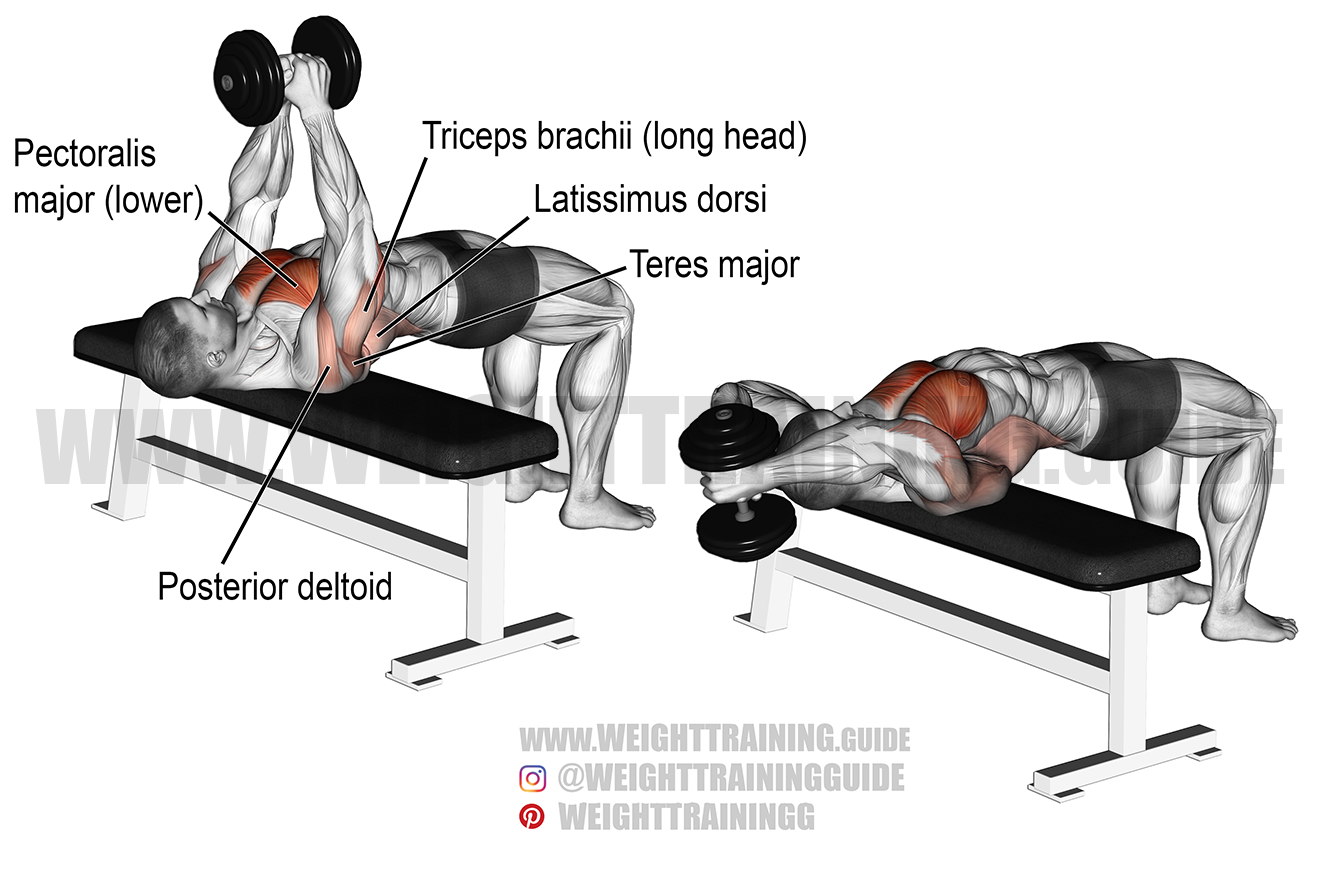
The Biomechanics of Motion: How AI Analyzes the Traditional Pullover
At its core, the dumbbell pullover is a multi-joint movement performed lying perpendicular to or flat on a bench, moving a weight in an arc from behind the head to above the chest. For a human trainer, the nuances are visual; for a software engineer, they are a series of coordinate shifts within a 3D space.
Computer Vision and Joint Tracking Accuracy
The primary challenge in fitness technology today is the “occlusion problem.” During a dumbbell pullover, the arms often obscure the face or the torso from the perspective of a single-lens camera (like a smartphone). Advanced tech firms are utilizing Pose Estimation models, such as MediaPipe or OpenPose, to solve this. These libraries utilize deep learning to identify “keypoints”—the wrists, elbows, and shoulders.
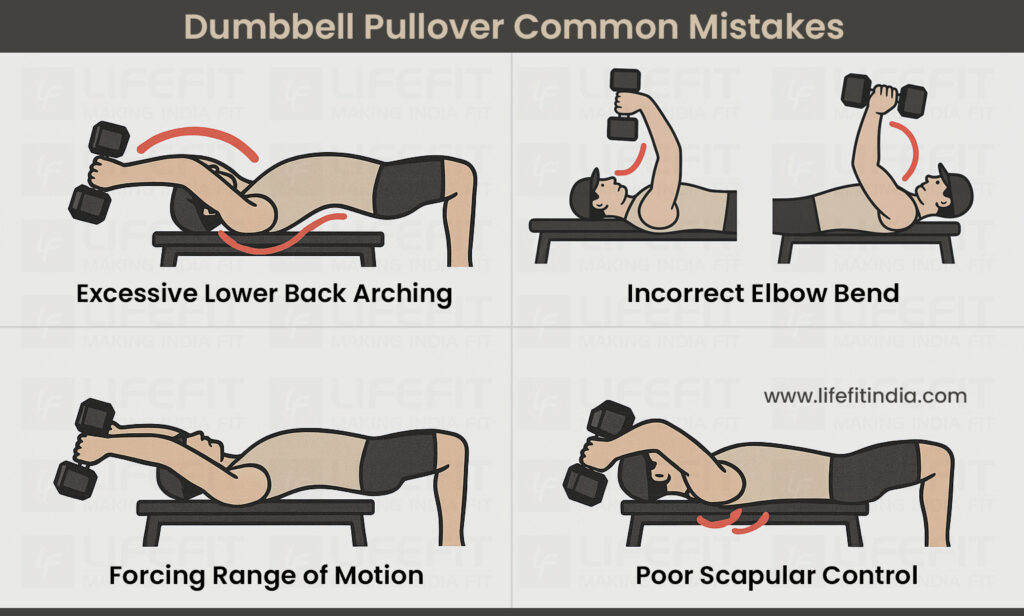
By calculating the angular velocity and the specific degree of the arc, software can now determine if the user is maintaining the “technical integrity” of the movement. If the elbow angle changes significantly during the eccentric phase, the algorithm flags a “form error,” noting that the user has shifted the mechanical load from the lats to the triceps. This real-time data processing requires high-performance edge computing to ensure there is zero latency between the physical movement and the digital feedback.
Real-Time Feedback Loops in Smart Home Gyms
The rise of smart mirrors and wall-mounted AI trainers has pushed the dumbbell pullover into the realm of “Biomechanical Digital Twins.” When you perform a pullover in front of a device equipped with LiDAR or Time-of-Flight (ToF) sensors, the machine creates a digital map of your musculoskeletal system.
These systems use “Reinforcement Learning” to provide haptic or auditory feedback. If the dumbbell descends too deep—potentially risking the integrity of the glenohumeral joint—the software triggers an immediate alert. This is not merely a “tutorial”; it is a sophisticated interaction between human biology and machine learning, ensuring that a high-risk, high-reward exercise like the pullover is performed within the safe parameters defined by thousands of data points from professional kinesiology databases.
Hardware Innovations: Integrating IoT into Free Weights
While software handles the analysis, the hardware—the dumbbell itself—is undergoing a digital revolution. The “dumb” in dumbbell is rapidly becoming a misnomer as IoT (Internet of Things) integration becomes standard in high-end training environments.
Sensor-Embedded Dumbbells
The modern answer to “What is a dumbbell pullover?” involves hardware equipped with 9-axis Inertial Measurement Units (IMUs). These sensors include accelerometers, gyroscopes, and magnetometers. When a user performs a pullover, the IMU captures the precise “path of travel.”
In a professional tech-driven facility, this data is transmitted via Bluetooth Low Energy (BLE) to a centralized hub. For developers, this provides a “Heat Map” of the movement. By analyzing the “jerk” (the rate of change of acceleration), the software can detect muscle fatigue before the user even feels it. This level of preventative tech is a cornerstone of modern athletic performance software, allowing for “Autoregulation”—where the app suggests a weight reduction in real-time based on the decline in explosive force detected during the upward phase of the pullover.
Haptic Feedback and Form Correction
We are seeing the emergence of wearable “haptic sleeves” that sync with the dumbbell’s movement. During a pullover, the most critical tech component is maintaining a slight, static bend in the elbows. Wearable tech now uses micro-vibrations to “nudge” the user’s limb back into the correct plane of motion. This integration of hardware and software creates a “closed-loop” system where the technology acts as a secondary nervous system, refining the motor patterns of the exercise through digital stimulus.

Data Analytics and Muscle Activation Modeling
One of the longest-running debates in fitness is whether the dumbbell pullover is a “chest move” or a “back move.” Technology is finally providing a definitive, data-driven answer through Electromyography (EMG) integration and algorithmic modeling.
Electromyography (EMG) Integration in Wearables
New consumer-grade wearables are beginning to incorporate surface EMG sensors. These sensors measure the electrical activity produced by skeletal muscles. When a user syncs these wearables with a fitness tracking platform, they can see a visual representation of “Motor Unit Recruitment.”
In the context of the pullover, the tech reveals a fascinating “Shift Point.” Data shows that the pectorals are most active during the first 30 degrees of the movement (from the bottom), while the lats take over as the weight approaches the vertical position. Software platforms like “MuscleWiki” or “Strava’s” advanced analytical tiers are looking toward a future where users can see a “Live Strain Score” for specific muscle groups, allowing them to adjust their technique to target the specific “Hardware” (muscle) they wish to upgrade.
Optimizing the “Chest vs. Back” Algorithm
For app developers, creating a “Pullover Optimization” feature involves complex math. By inputting the user’s limb length and the weight used, the software can calculate “Torque Curves.” This tech allows the user to decide their goal:
- Hypertrophy Mode: The app guides the user through a range of motion that maximizes time-under-tension for the lats.
- Mobility Mode: The algorithm focuses on the thoracic extension and shoulder flexibility metrics.
This transition from a “one-size-fits-all” movement to a “Software-Defined Workout” is the current frontier of personal fitness tech.
The Future of Strength Training: Virtual Coaching and AR Overlays
As we look toward the future, the definition of a dumbbell pullover will likely move into the “Spatial Computing” era. With the release of headsets like the Apple Vision Pro and Meta Quest 3, the “tutorial” is becoming an “overlay.”
Augmented Reality for Path Visualization
Imagine lying on your bench and seeing a “Ghost Path” projected into your physical space via AR glasses. This digital overlay shows the ideal trajectory of the dumbbell. As you move the weight, the AR tech changes color—green when you are on the “Optimal Vector,” and red when you deviate.
This use of Augmented Reality (AR) solves the “Kinesthetic Awareness” gap. Most beginners struggle with the pullover because they cannot see their arms behind their heads. AR tech provides a “Virtual Mirror” effect, projecting a 3D model of the user’s skeleton into their field of vision, allowing for perfect form without the need for a physical coach.
Gamification of Resistance Training
Finally, the “Tech-ification” of the pullover leads to gamification. High-end apps are now turning the completion of a “Perfect Set” into a digital currency or XP (experience points). By utilizing the data from the sensors and AI mentioned earlier, the software can verify the “Quality of Rep.”
In this ecosystem, a dumbbell pullover isn’t just a rep in a logbook; it is a verified data packet. This data can be shared in “Digital Dojos” or used to compete in global leaderboards where the metrics are based on “Form Accuracy” rather than just raw weight. This merges the world of “FinTech” (incentive structures) with “FitTech,” creating a powerful psychological loop that keeps users engaged.
Conclusion: The Pullover as a Digital Benchmark
What is a dumbbell pullover? In the world of technology, it is a sophisticated interplay of biomechanical data, sensor fusion, and AI-driven coaching. It is a testament to how far we have come from the simple iron weights of the past.
As we continue to develop more refined computer vision models and more sensitive IoT hardware, the humble pullover serves as a benchmark for what is possible. It represents the successful “Digitalization of the Human Body,” where every stretch, every contraction, and every arc of motion is captured, analyzed, and optimized by the tools of the modern age. For the tech-savvy athlete, the dumbbell is no longer just a piece of metal—it is a peripheral device in the ultimate operating system: the human body.
aViewFromTheCave is a participant in the Amazon Services LLC Associates Program, an affiliate advertising program designed to provide a means for sites to earn advertising fees by advertising and linking to Amazon.com. Amazon, the Amazon logo, AmazonSupply, and the AmazonSupply logo are trademarks of Amazon.com, Inc. or its affiliates. As an Amazon Associate we earn affiliate commissions from qualifying purchases.