
In the rapidly evolving landscape of digital imaging, where smartphone sensors leverage artificial intelligence and computational photography to mimic professional results, the relevance of standalone hardware is often scrutinized. However, for technology enthusiasts, gadget reviewers, and professional photographers alike, one piece of hardware remains an undisputed cornerstone of the kit: the 50mm prime lens. Often referred to as the “Nifty Fifty,” this focal length represents a pinnacle of optical engineering and hardware efficiency.
Understanding what a 50mm lens is good for requires a deep dive into the intersection of optical physics and modern sensor technology. Whether you are migrating from a smartphone to a mirrorless system or looking to optimize your hardware stack, the 50mm lens offers a unique set of technical advantages that software cannot yet fully replicate.

The Optical Engineering Behind the 50mm Standard
At its core, the 50mm lens is celebrated for its “normal” perspective. This is not a creative descriptor but a technical one, referring to the lens’s ability to replicate the magnification and field of view of the human eye without significant distortion.
Mimicking the Human Eye: Perspective and Field of View
The 50mm focal length on a full-frame sensor produces an image that closely approximates the spatial relationships we perceive in real life. Unlike wide-angle lenses, which stretch the edges of the frame, or telephoto lenses, which compress the distance between foreground and background, the 50mm provides a neutral rendition. From a technical standpoint, this makes it an essential tool for “true-to-life” imaging. In the tech world, this accuracy is vital for product photography and architectural documentation where maintaining the geometric integrity of the subject is paramount.
The Advantage of Prime Lens Construction
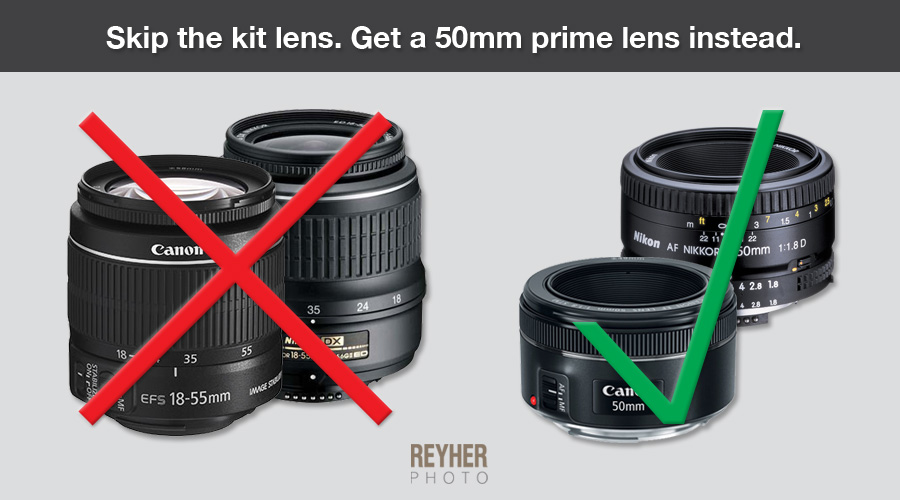
Unlike zoom lenses, which require complex arrays of moving glass elements to shift focal lengths, a 50mm prime lens is a “fixed” system. This simplicity in hardware design allows engineers to prioritize optical clarity over versatility. With fewer glass-to-air surfaces, prime lenses typically suffer from less internal flare and ghosting. Furthermore, the specialized coatings applied to 50mm primes often result in superior micro-contrast and color accuracy, making them a benchmark gadget for testing the resolving power of high-megapixel digital sensors.
Technical Superiority in Low-Light and Depth Control
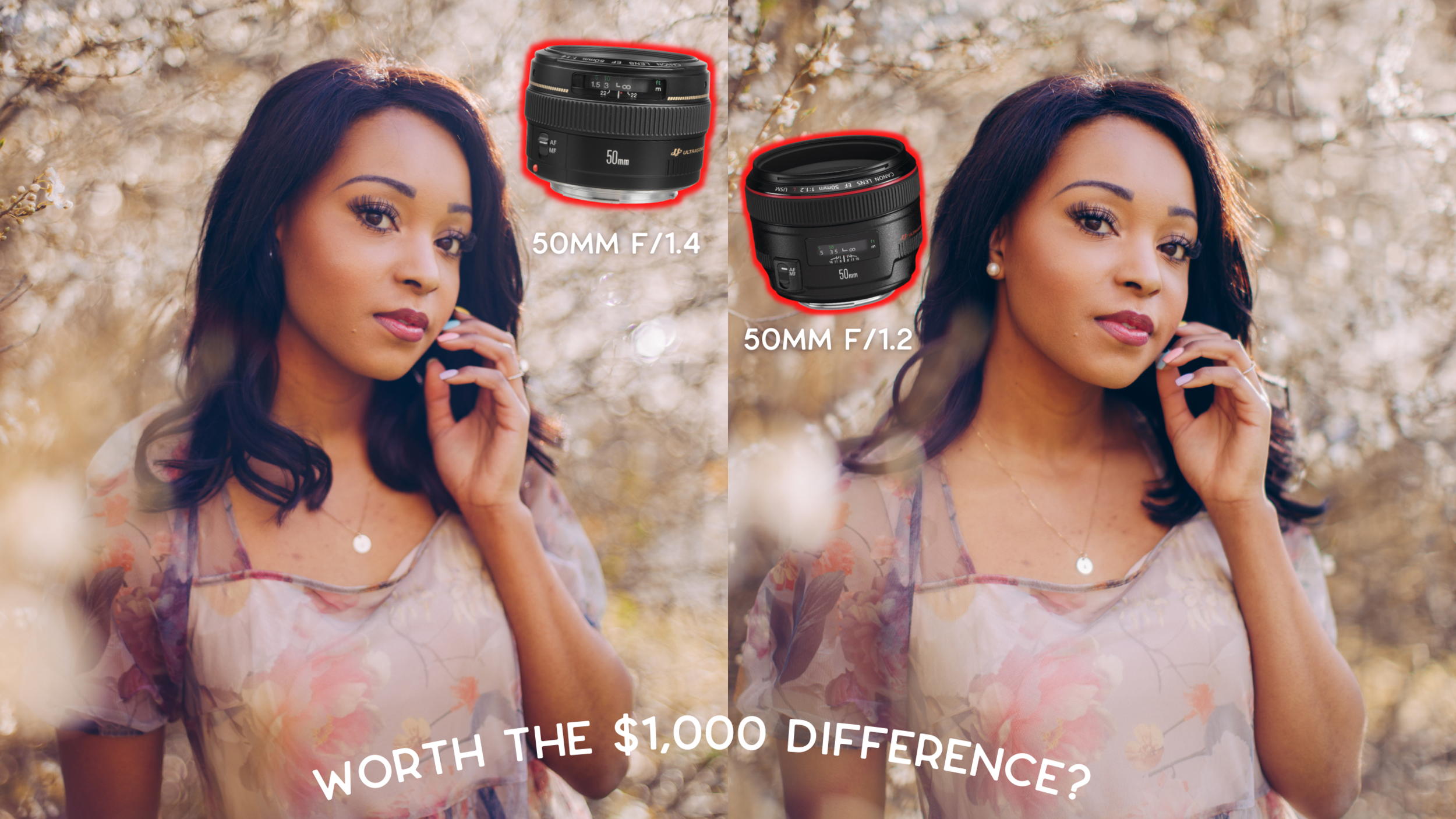
One of the primary reasons tech-focused creators gravitate toward the 50mm lens is its mechanical aperture capability. Most 50mm lenses feature wide maximum apertures, such as f/1.8, f/1.4, or even f/1.2. This hardware specification provides two significant advantages that software-based “Portrait Modes” still struggle to emulate perfectly.
Wide Apertures and Light Gathering Capabilities
In the realm of digital sensors, light is the primary data source. A 50mm f/1.8 lens can gather significantly more light than a standard kit zoom lens (which often starts at f/3.5). This allows the sensor to operate at lower ISO sensitivities, reducing digital noise and preserving the dynamic range of the raw file. For tech reviewers filming in controlled studio environments or hobbyists shooting in dim settings, the 50mm’s ability to maximize photon capture is a hardware solution to a common environmental limitation.
Computational Bokeh vs. Natural Optical Compression
While modern smartphones use LiDAR and AI-driven edge detection to blur backgrounds, a 50mm prime lens achieves this through pure physics. The shallow depth of field produced by a wide-aperture 50mm creates a natural “bokeh”—the aesthetic quality of the out-of-focus areas. Because this blur is created optically, it avoids the “haloing” artifacts and masking errors common in AI-processed images. For professional-grade content, the gradual transition from the focal plane to the blurred background provided by a 50mm lens remains the gold standard for visual isolation.
Versatility Across Modern Digital Sensors
The utility of a 50mm lens changes depending on the hardware it is paired with. As sensor technology has branched into various formats, the 50mm has proven to be a versatile asset that adapts to different technical requirements.
Full-Frame vs. Crop Sensor Dynamics
On a full-frame sensor, the 50mm is the ultimate “walk-around” lens, suitable for everything from street photography to environmental portraits. However, when mounted on an APS-C (crop) sensor—common in many entry-to-mid-range mirrorless cameras—the “effective” focal length shifts to approximately 75mm or 80mm due to the crop factor. This technical shift transforms the 50mm into a dedicated portrait lens, providing enough telephoto reach to flatter facial features by minimizing nasal protrusion and ear shrinkage, a common distortion in wider lenses.
The 50mm in Videography and 4K Content Creation
As the demand for high-quality video content grows, the 50mm lens has become a staple in the videographer’s toolkit. Its focal length is ideal for “talking head” shots and interviews. Technically, many modern 50mm primes are now equipped with advanced autofocus motors, such as Linear Motors or Stepping Motors (STM), designed for near-silent operation. This is a critical tech spec for content creators, as it prevents the microphone from picking up mechanical gear noise during recording while ensuring the Dual Pixel or Phase Detection autofocus systems stay locked on the subject’s eye.
Evaluating the 50mm as a Long-term Hardware Investment
When building a tech ecosystem, longevity and reliability are key metrics. The 50mm lens is often cited as the best value-to-performance hardware investment a user can make, largely due to its refined manufacturing process and ergonomic design.
Sharpness and Lens Distortion Metrics
In lab testing, 50mm prime lenses consistently outperform zoom lenses that cost three to four times as much. The MTF (Modulation Transfer Function) charts for most 50mm primes show exceptional center-to-edge sharpness even when shot “wide open.” Additionally, the 50mm focal length is inherently resistant to “barrel” or “pincushion” distortion. For technical users who require precise lines—such as those photographing hardware components, circuit boards, or industrial designs—the 50mm provides a level of fidelity that requires minimal post-processing correction.
Portability and Ergonomics for Field Work
In an era where “everyday carry” (EDC) tech is trending toward miniaturization, the 50mm lens stands out. Most 50mm f/1.8 models are incredibly lightweight and compact, often referred to as “pancake” or near-pancake lenses. This portability ensures that the camera setup remains unobtrusive. For tech journalists covering trade shows like CES or Computex, the ability to have a high-performance, low-light capable lens that fits in a jacket pocket is a significant operational advantage. It allows for high-speed maneuvering through crowds without the physical strain of heavy telephoto glass.
Conclusion: The Essential Tech Tool
The 50mm lens is far more than just a “standard” piece of glass; it is a sophisticated tool that solves multiple technical challenges in one compact package. It bridges the gap between the physical limitations of light and the digital requirements of modern high-resolution sensors. By offering a natural perspective, superior low-light data acquisition, and unrivaled optical sharpness, the 50mm prime remains an essential gadget for anyone serious about the quality of their digital output.
Whether you are analyzing the latest smartphone’s AI bokeh or building a professional mirrorless rig, the 50mm lens serves as a constant reminder that sometimes the best technology isn’t found in a new algorithm, but in the perfection of a century-old optical formula. For those looking to master the art and science of imaging, the “Nifty Fifty” is not just a starting point—it is a destination.
aViewFromTheCave is a participant in the Amazon Services LLC Associates Program, an affiliate advertising program designed to provide a means for sites to earn advertising fees by advertising and linking to Amazon.com. Amazon, the Amazon logo, AmazonSupply, and the AmazonSupply logo are trademarks of Amazon.com, Inc. or its affiliates. As an Amazon Associate we earn affiliate commissions from qualifying purchases.