
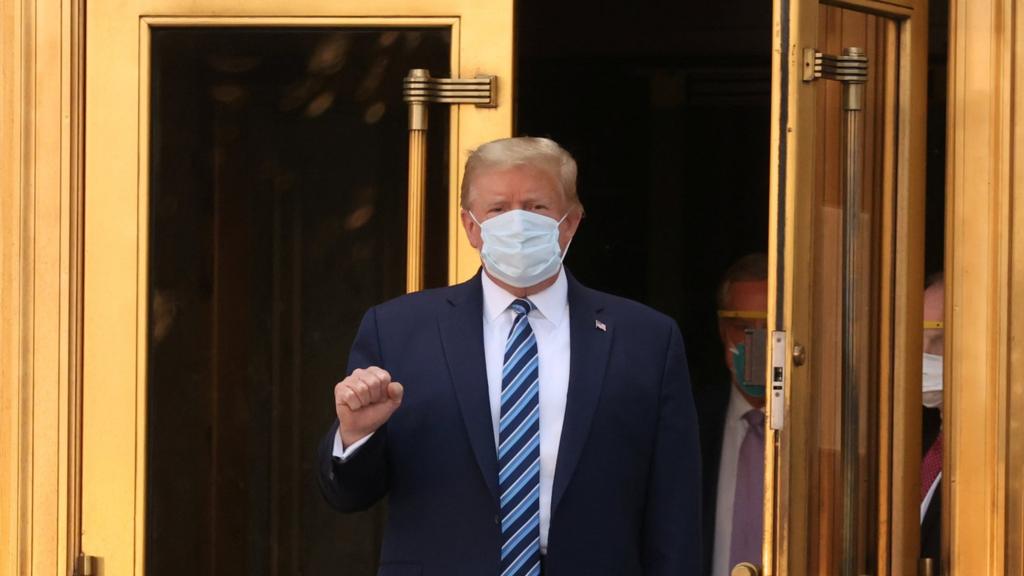
In October 2020, the world’s attention turned to the Walter Reed National Military Medical Center (WRNMMC) when then-President Donald Trump was admitted following a COVID-19 diagnosis. While the media focused on the political implications, the event served as a high-profile demonstration of what is arguably the most technologically advanced medical facility in the world. Often referred to as “The President’s Hospital,” Walter Reed is not merely a center for treatment; it is a digital fortress that integrates cutting-edge healthcare IT, specialized diagnostic software, and military-grade cybersecurity.
Understanding the technological infrastructure of the hospital where the Commander-in-Chief receives care provides a glimpse into the future of global healthcare technology. From the integration of artificial intelligence in diagnostics to the secure transmission of biometric data, the tech stack at Walter Reed represents the pinnacle of modern medical engineering.
Inside the Command Center: The Tech Infrastructure of Walter Reed
The technological backbone of Walter Reed National Military Medical Center is designed to handle more than just routine care; it is built for crisis management and high-security operations. Unlike a standard civilian hospital, WRNMMC operates within a complex ecosystem of military networks, requiring a seamless blend of medical efficacy and data integrity.
High-Security Health Information Systems (HIS)
At the heart of the hospital’s operation is a robust Health Information System (HIS) that bridges the gap between traditional Electronic Health Records (EHR) and military logistics. When a high-profile patient like a president is admitted, the system must allow for real-time updates that are accessible to a strictly vetted medical team while remaining invisible to unauthorized personnel. The technology utilized here focuses on interoperability—ensuring that data from specialized diagnostic tools can be instantly synthesized into a centralized dashboard for the attending physicians. This involves high-speed data pipelines that can process petabytes of medical imaging and laboratory results without latency.
Integrated Telemedicine and Global Connectivity
Walter Reed is a hub for the Military Health System (MHS) Video Connect, a sophisticated telemedicine platform. During a presidential stay, this technology allows for instantaneous consultation with specialists across the globe. These aren’t standard Zoom calls; they are encrypted, low-latency telepresence suites that allow remote doctors to view high-definition diagnostic feeds in real-time. This level of connectivity ensures that the “hospital” effectively extends to any expert, anywhere, while maintaining a secure digital perimeter.
Cutting-Edge Diagnostic Tools and AI-Driven Treatment Protocols
When a president enters a facility like Walter Reed, the diagnostic process is augmented by software and hardware that often precede widespread commercial release. The facility serves as a testing ground for many Department of Defense (DoD) medical innovations.
AI in Pulmonary and Infectious Disease Diagnostics
One of the most significant tech stories surrounding the 2020 admission was the use of sophisticated imaging and AI to monitor lung health. Modern high-resolution computed tomography (HRCT) scanners at Walter Reed are often paired with AI diagnostic software capable of identifying microscopic changes in tissue long before they are visible to the human eye. In the context of viral infections, these AI algorithms can predict disease progression by comparing a patient’s scans against massive databases of similar cases, allowing for “predictive healthcare” rather than reactive treatment.
Precision Medicine and Genomic Sequencing
The “Tech” of Walter Reed includes an intense focus on precision medicine—tailoring treatment to the specific genetic makeup of the patient. The facility employs advanced genomic sequencing technology to understand how a patient’s unique biology will react to specific pharmaceuticals, such as monoclonal antibodies or antiviral high-dose regimens. By utilizing bioinformatics platforms, doctors can simulate the interaction between a drug and a patient’s protein structures in a virtual environment before the first dose is even administered. This reduces the risk of adverse reactions and maximizes therapeutic efficacy in high-stakes scenarios.
Cybersecurity in High-Stakes Healthcare Environments
The biggest challenge for a hospital treating a head of state is not the medicine; it is the data. In the digital age, a patient’s medical data is a matter of national security. Walter Reed operates under some of the most stringent cybersecurity protocols on the planet, blending HIPAA compliance with Department of Defense security standards.
Protecting Sensitive Patient Data from State Actors
Healthcare is one of the most targeted sectors for cyber espionage. When the president is a patient, the hospital’s network becomes a primary target for state-sponsored hackers. To counter this, Walter Reed utilizes advanced “Zero Trust” architecture. In this model, no device, user, or packet of data is trusted by default, regardless of whether it is inside or outside the network perimeter. Multi-factor authentication, biometric access controls, and end-to-end encryption for every piece of medical hardware ensure that even if a physical device were compromised, the data within it remains an unreadable cipher.
The Internet of Medical Things (IoMT) Security
Modern hospitals are filled with “smart” devices—infusion pumps, ventilators, and heart monitors that are all connected to the local network. This “Internet of Medical Things” (IoMT) represents a massive attack surface. At Walter Reed, these devices are segmented into isolated “micro-networks.” This ensures that a vulnerability in a bedside monitor cannot be used as a gateway to access the hospital’s main server or the patient’s sensitive records. Furthermore, dedicated cybersecurity teams monitor the “digital heartbeat” of the facility, looking for anomalies in data traffic that could indicate a breach or a denial-of-service attack.
The Future of Executive Health Tech: From Wearables to Bio-Monitoring
The technology used during presidential hospitalizations often sets the trend for the broader health-tech industry. What begins as a specialized military or executive tool eventually trickles down to the general consumer market, influencing everything from Apple Watches to hospital management software.
Continuous Health Monitoring and Early Warning Systems
The concept of “Continuous Monitoring” is central to the care provided at Walter Reed. Rather than checking vitals every few hours, patients are often equipped with non-invasive, medical-grade wearables that stream data 24/7 to a centralized monitoring station. These systems utilize machine learning to establish a “baseline” for the patient and can trigger an alert the millisecond a deviation occurs. This shift from episodic to continuous data collection is currently the “holy grail” of the wearable tech industry, with companies like Oura and Whoop striving to reach the clinical accuracy that facilities like Walter Reed have already mastered.
Smart Bio-Sensors and Remote Triage
Looking forward, the evolution of health tech at elite institutions is moving toward implantable or skin-adherent bio-sensors. These sensors can measure glucose levels, oxygen saturation, and even stress hormones like cortisol in real-time. For a high-profile leader, this means the medical team can detect the onset of illness or physical fatigue before the patient even feels symptoms. This “always-on” diagnostic approach represents the future of executive health, where technology serves as a proactive shield rather than a reactive cure.

Conclusion: The Hospital as a Technological Vanguard
While the question “what hospital did Trump go to” may have started as a search for a physical location—Walter Reed National Military Medical Center—the deeper answer lies in the technological ecosystem that the location represents. Walter Reed is more than a collection of rooms and doctors; it is a high-tech laboratory where the boundaries of digital health, cybersecurity, and artificial intelligence are constantly being pushed.
The integration of AI-driven diagnostics, the implementation of Zero Trust cybersecurity, and the use of precision genomic medicine at Walter Reed provide a blueprint for the future of the entire healthcare industry. As these technologies become more cost-effective and scalable, we can expect the high-tech care once reserved for presidents to become the standard for patients worldwide. In the intersection of medicine and technology, the lessons learned in the secure wards of Walter Reed are driving the next great revolution in human longevity and digital security.
aViewFromTheCave is a participant in the Amazon Services LLC Associates Program, an affiliate advertising program designed to provide a means for sites to earn advertising fees by advertising and linking to Amazon.com. Amazon, the Amazon logo, AmazonSupply, and the AmazonSupply logo are trademarks of Amazon.com, Inc. or its affiliates. As an Amazon Associate we earn affiliate commissions from qualifying purchases.