
The journey toward financial independence often begins with a single step: entering the stock market. For many, the idea of “buying shares” sounds like a complex endeavor reserved for professionals in high-rise buildings. However, the digitization of finance has democratized access to the global markets, allowing anyone with an internet connection and a modest amount of capital to own a piece of the world’s most successful companies. Buying shares is not merely a transaction; it is a commitment to wealth building and a primary tool for outperforming inflation over the long term.
The Foundation: Understanding the Stock Market
Before committing your hard-earned capital, it is essential to understand the underlying mechanics of what you are actually purchasing. Investing without a foundational knowledge of the market is akin to sailing without a compass—you might move, but you won’t necessarily reach your destination.
What is a Share?
A share, also known as stock or equity, represents a unit of ownership in a corporation. When you buy a share, you are purchasing a small fraction of that company’s assets and future earnings. If the company prospers, the value of your shares typically increases, and you may even receive a portion of the profits in the form of dividends. Conversely, if the company’s performance falters, the value of your shares may decrease.
How the Stock Market Operates
The stock market is a vast network of exchanges—such as the New York Stock Exchange (NYSE) or the Nasdaq—where buyers and sellers meet to trade shares of publicly listed companies. These exchanges act as a regulated marketplace that ensures transparency and liquidity. Prices are determined by the laws of supply and demand; when more people want to buy a stock than sell it, the price goes up, and vice versa.
Risk vs. Reward
Every investment carries a degree of risk. In the world of shares, this usually refers to “market volatility”—the fluctuation of prices over time. While the stock market has historically provided higher returns than savings accounts or bonds, there is no guarantee of profit. Understanding that higher potential rewards usually come with higher risks is a fundamental principle of personal finance.
Preparing Your Financial Strategy
Successful investing is 10% execution and 90% preparation. You should never jump into the market impulsively. Instead, you must integrate share buying into your broader financial ecosystem to ensure that a market downturn doesn’t derail your lifestyle.
Setting Financial Goals
Why are you buying shares? Are you saving for retirement thirty years away, or are you looking to fund a house down payment in five years? Your “time horizon” is the most critical factor in your strategy. Long-term investors can afford to weather short-term market crashes, whereas short-term investors need to be much more conservative to protect their principal.
Assessing Your Risk Tolerance
Risk tolerance is your emotional and financial ability to handle a drop in the value of your investments. If a 10% dip in your portfolio would cause you to lose sleep or panic-sell, you may have a low risk tolerance. In this case, you might focus on “Blue Chip” companies—large, established firms with a history of stability—rather than volatile tech startups or penny stocks.
The Importance of an Emergency Fund
Before you buy your first share, ensure your financial house is in order. Financial experts generally recommend having three to six months of living expenses tucked away in a high-yield savings account. This “emergency fund” ensures that if you lose your job or face an unexpected medical bill, you won’t be forced to sell your shares at an inopportune time when the market might be down.
Choosing the Right Investment Platform
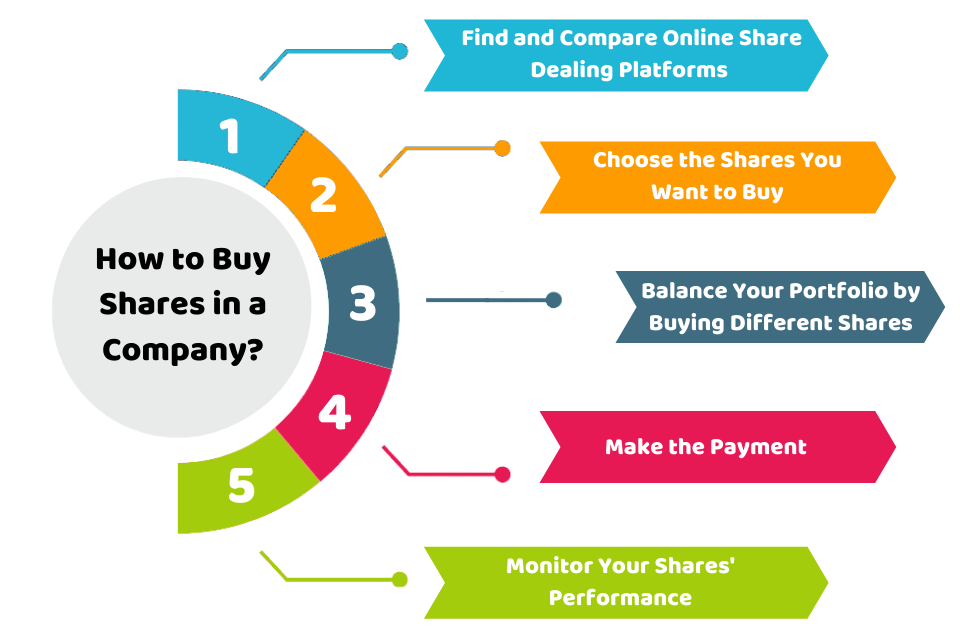
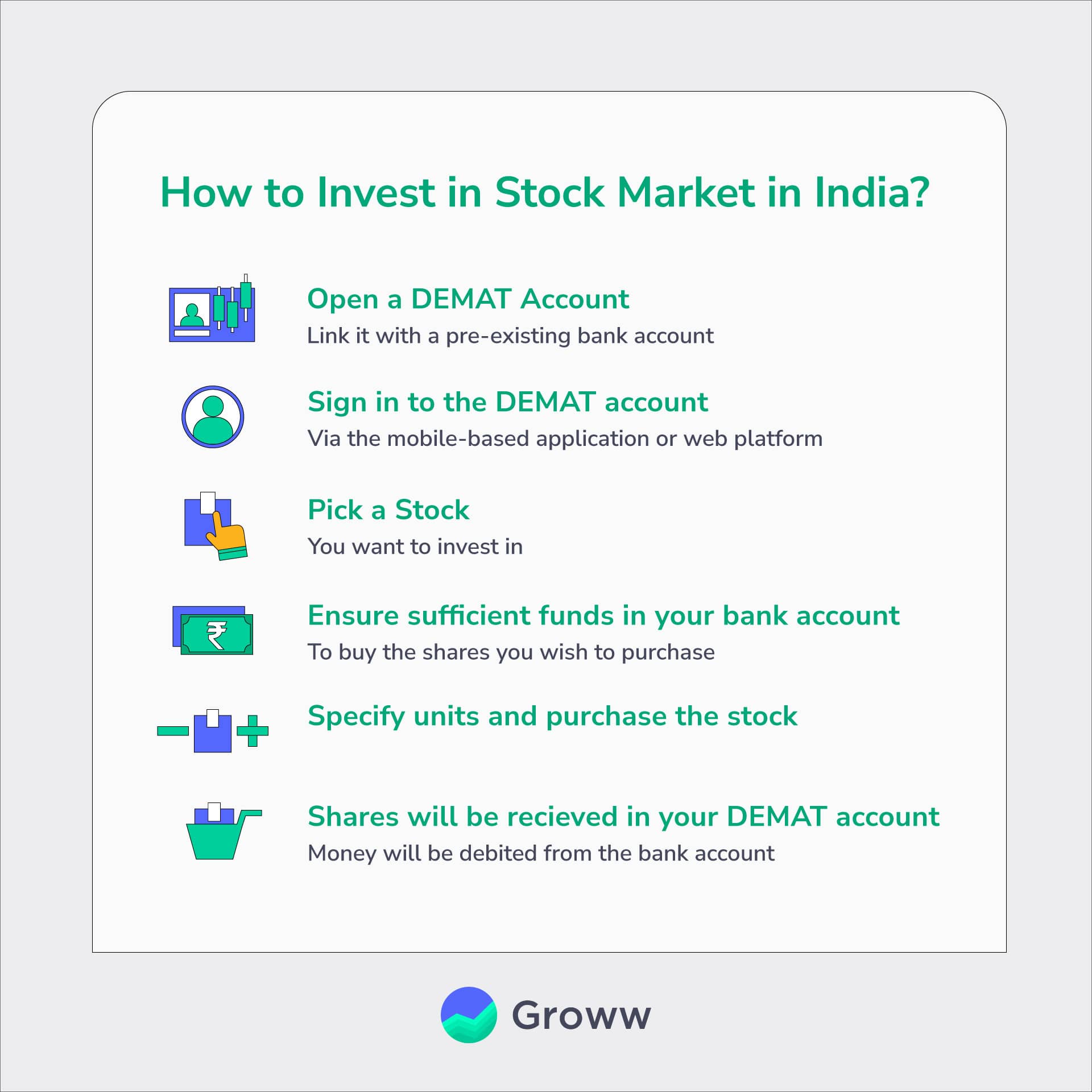
To buy shares, you need a bridge to the stock exchange. This bridge is provided by a brokerage firm. Choosing the right broker is a critical decision that affects your costs, the tools available to you, and your overall investing experience.
Types of Brokerage Accounts
There are two main categories of brokers: full-service and discount. Full-service brokers provide personalized investment advice and portfolio management but charge high commissions. Discount brokers (including popular mobile apps) offer a “do-it-yourself” platform with low or zero commissions. For most individual investors, a reputable discount broker provides all the necessary tools at a fraction of the cost.
Fee Structures and Hidden Costs
While many modern brokers offer $0 commission on stock trades, “free” doesn’t always mean free. You should investigate other potential costs, such as inactivity fees, withdrawal fees, or the “spread” (the difference between the buy and sell price). Additionally, if you are interested in international stocks, check the currency conversion fees, as these can eat into your profits significantly over time.
User Experience and Research Tools
A good brokerage platform should provide more than just a “Buy” button. Look for platforms that offer robust research tools, including analyst ratings, historical price charts, and real-time news feeds. Many modern brokers also offer “fractional shares,” which allow you to buy a portion of a high-priced stock (like Amazon or Berkshire Hathaway) for as little as $1 or $5.
Executing Your First Trade
Once your account is funded, you are ready to make your first purchase. This stage requires a blend of analytical research and a basic understanding of how to place orders within the platform.
Researching Potential Stocks
Investment decisions should be based on data, not tips from social media. Investors typically use “Fundamental Analysis” to evaluate a company. This involves looking at a company’s financial statements, its debt levels, its revenue growth, and its competitive advantage in the industry. Ask yourself: Does this company provide a product or service that people will still need in ten years? Is the management team competent?
Understanding Order Types (Market vs. Limit)
When you go to buy a share, you will usually see two primary options:
- Market Order: This tells the broker to buy the stock immediately at the best current price. This guarantees the trade happens quickly, but you might pay slightly more than the last quoted price.
- Limit Order: This tells the broker to buy the stock only if the price hits a specific level (or lower). This gives you control over the price, but there is a risk that the order won’t be filled if the price never drops to your limit.
Diversification Strategies
“Don’t put all your eggs in one basket” is the golden rule of investing. Diversification involves spreading your money across different companies, industries, and even geographical regions. If you only buy shares in one tech company and that industry faces a regulatory crackdown, your entire portfolio suffers. By diversifying, you ensure that the poor performance of one stock is offset by the stability or growth of others. Many beginners achieve instant diversification by buying Exchange-Traded Funds (ETFs), which are “baskets” of hundreds of different stocks.
Managing Your Portfolio for Long-Term Growth
Buying the shares is only the beginning. The real work of an investor lies in the ongoing management and discipline required to see your wealth grow over years and decades.
Monitoring Your Investments
While you shouldn’t check your portfolio every hour (which often leads to emotional decision-making), you should review your holdings quarterly. Check to see if the “investment thesis”—the reason you bought the stock in the first place—still holds true. If a company’s fundamentals have fundamentally changed for the worse, it may be time to sell, regardless of whether you are in profit or loss.
Rebalancing and Dividend Reinvestment
Over time, some stocks will grow faster than others, causing your portfolio to become lopsided. Rebalancing is the process of selling a bit of your “winners” and buying more of your “underperformers” to return to your original desired asset allocation. Furthermore, consider setting up a Dividend Reinvestment Plan (DRIP). This automatically uses any dividends you receive to buy more shares of the same stock, leveraging the power of compound interest to accelerate your wealth building.

Tax Implications of Trading
In most jurisdictions, the government takes a cut of your investment profits. “Capital Gains Tax” is triggered when you sell a share for more than you paid for it. In many countries, holding a stock for longer than a year qualifies you for a lower tax rate (Long-term Capital Gains). Additionally, dividends are often taxed as income. Understanding these rules or utilizing tax-advantaged accounts (like an IRA in the US or an ISA in the UK) can save you thousands of dollars over your investing lifetime.
Investing in shares is one of the most effective ways to build sustainable wealth. By understanding the market, preparing your finances, choosing the right broker, and maintaining a disciplined, diversified approach, you can turn the stock market into a powerful engine for your financial future. The key is to start early, stay informed, and remain focused on the long term.
aViewFromTheCave is a participant in the Amazon Services LLC Associates Program, an affiliate advertising program designed to provide a means for sites to earn advertising fees by advertising and linking to Amazon.com. Amazon, the Amazon logo, AmazonSupply, and the AmazonSupply logo are trademarks of Amazon.com, Inc. or its affiliates. As an Amazon Associate we earn affiliate commissions from qualifying purchases.