
Understanding the mechanisms behind stock price fluctuations is the cornerstone of successful investing. To a casual observer, the flashing green and red numbers on a trading screen might appear chaotic or governed by sheer luck. However, stock prices are the product of a sophisticated interplay between mathematical valuation, human psychology, and global economics. At its most fundamental level, the price of a stock represents the market’s collective agreement on what a share of a company is worth at any given millisecond.
To navigate the financial markets effectively, one must look beyond the ticker symbol and understand the underlying forces that drive these valuations. This guide explores the multi-faceted process of how stock prices are determined, from the basic laws of supply and demand to the complex world of fundamental analysis and market sentiment.
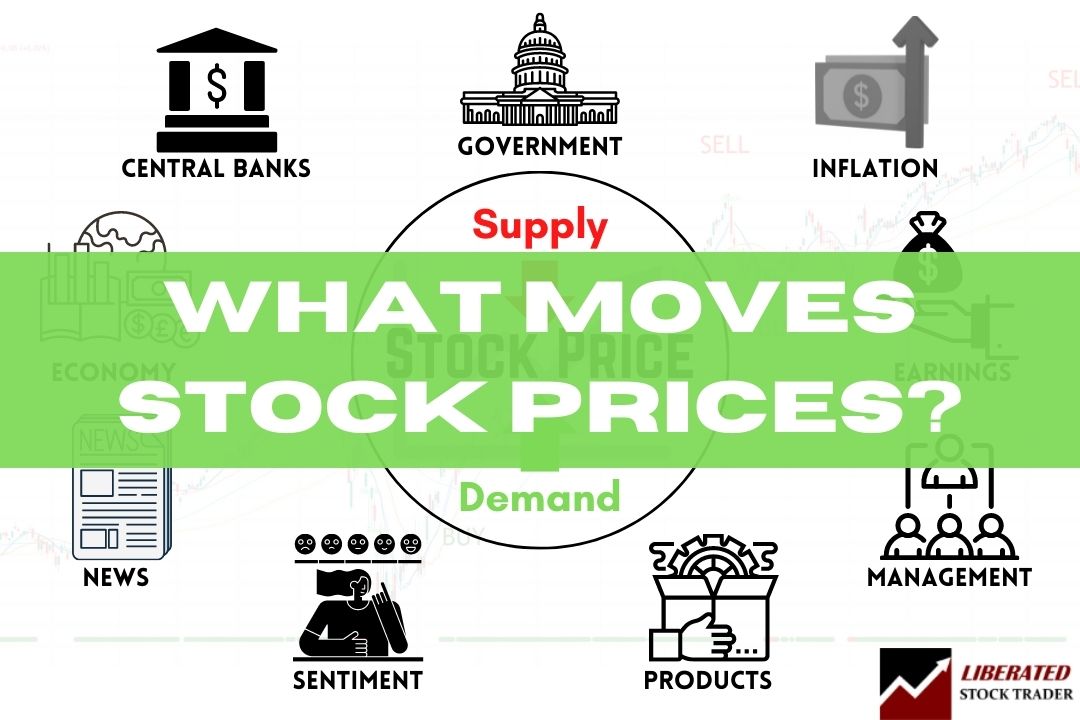
1. The Core Mechanism: Supply, Demand, and the Auction Process
The stock market is, in essence, a giant ongoing auction. While we often talk about the “price” of a stock as a single fixed number, it is actually the “last traded price”—the point at which a buyer and a seller most recently agreed to do business.
The Role of the Order Book and Bid-Ask Spread
Every publicly traded company has an “order book” that lists the intentions of buyers and sellers. On one side, you have the “bid”—the highest price a buyer is willing to pay. On the other, you have the “ask”—the lowest price a seller is willing to accept. The difference between these two numbers is known as the “bid-ask spread.”
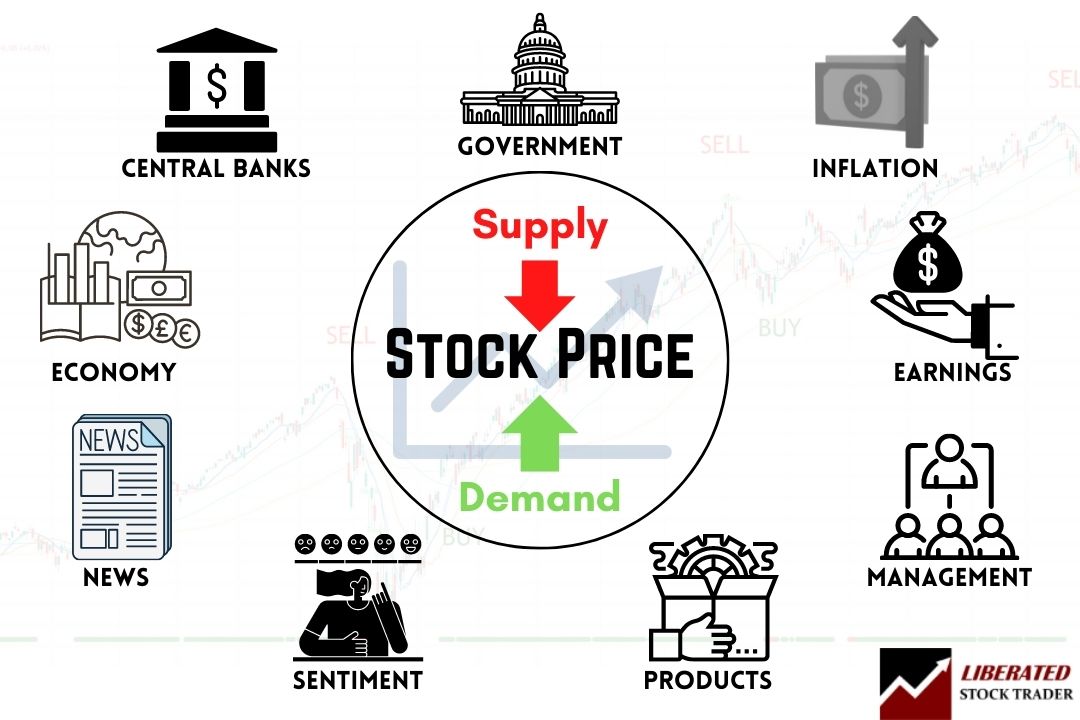
When a buyer and seller’s prices meet, a transaction occurs, and the “stock price” is updated to reflect that transaction. If more people want to buy a stock (demand) than sell it (supply), the buyers must compete by offering higher prices, driving the stock price up. Conversely, if more people are looking to exit a position than there are buyers willing to enter, sellers must lower their prices to attract a buyer, driving the price down.
Market Liquidity and Its Impact on Price
Liquidity refers to how easily a stock can be bought or sold without significantly affecting its price. Large-cap companies like Microsoft or Apple have high liquidity; millions of shares change hands daily, meaning the bid-ask spread is usually just a penny, and large trades can be executed with minimal price movement.
In contrast, “thinly traded” or low-liquidity stocks can experience massive price swings based on relatively small orders. In these cases, the determination of price is much more volatile because the gap between what a buyer wants to pay and what a seller wants to receive is wider.
2. Fundamental Valuation: Determining Intrinsic Value
While supply and demand explain how the price moves, fundamental analysis explains why investors are willing to pay a certain price in the first place. Fundamental investors look at the health of the underlying business to determine its “intrinsic value.”
Earnings and Revenue Growth
The single most important driver of a stock’s long-term price is earnings—the company’s profit. A company that consistently grows its revenue (top-line) and its net income (bottom-line) is generally seen as more valuable over time.
Investors often use the Price-to-Earnings (P/E) ratio to gauge whether a stock is priced fairly. If a company earns $5 per share and the stock is trading at $100, the P/E ratio is 20. If the market believes the company’s earnings will double next year, investors might be willing to pay $150 or $200 today in anticipation of that future growth. This forward-looking nature of the market means that stock prices often reflect where a company is going, rather than where it has been.
Macroeconomic Factors and Interest Rates
Stock prices do not exist in a vacuum; they are heavily influenced by the broader economic environment. Perhaps the most significant external factor is interest rates, set by central banks like the Federal Reserve.

When interest rates rise, the cost of borrowing increases for companies, which can eat into profits. Furthermore, higher interest rates make “risk-free” investments like government bonds more attractive. If an investor can get a 5% return on a safe bond, they are less likely to risk their money in the stock market unless the potential returns are significantly higher. Consequently, when rates go up, stock prices—particularly those of high-growth tech companies—often face downward pressure as their future earnings are discounted at a higher rate.
3. The Psychology of the Market: Expectations vs. Reality
If stock prices were determined solely by math, the market would be far less volatile. However, markets are driven by human beings (and algorithms programmed by human beings), leading to the influence of sentiment, expectations, and sometimes, irrationality.
The Impact of Earnings Reports and “Beating the Street”
Quarterly earnings season is a prime example of how expectations drive prices. Before a company reports its financial results, analysts provide “estimates” of what they think the company earned.
If a company reports strong profits but fails to meet the high expectations of the market, its stock price might actually drop. Conversely, a company that is losing money might see its stock price soar if those losses were smaller than expected. This phenomenon highlights that the current stock price already “prices in” certain assumptions; the movement in price occurs when reality deviates from those assumptions.
Speculation and Herd Mentality
The stock market often experiences periods of “irrational exuberance” or “panic selling.” During a speculative bubble, prices are driven up not by earnings, but by the fear of missing out (FOMO). Investors buy shares simply because the price is going up, creating a feedback loop that pushes valuations far beyond their fundamental worth.
On the flip side, during a market crash, fear takes over. Even fundamentally strong companies may see their stock prices plummet as investors rush for the exits simultaneously. In these moments, the price is determined more by the collective emotional state of the market than by the balance sheets of the companies involved.
4. External Catalysts and Global Events
Beyond the balance sheet and the trading floor, external events can cause immediate and dramatic shifts in stock prices. These catalysts change the risk profile of an investment or alter the projected future cash flows of an entire industry.
Geopolitical Stability and Trade Policies
Political events can have a profound impact on market valuations. For example, the imposition of new tariffs can increase the cost of goods for manufacturers, leading to lower profit margins and lower stock prices. Similarly, geopolitical conflicts in oil-producing regions can drive up energy costs, which acts as a “tax” on both consumers and businesses, often leading to a broad market sell-off. Investors value certainty; when political instability arises, they often demand a “risk premium,” which lowers the price they are willing to pay for stocks.
Technological Disruption and Industry Shifts
The price of a stock also reflects the company’s competitive position within its industry. Technological breakthroughs can overnight change the perceived value of a corporation. The rise of Artificial Intelligence, for instance, has led to massive price appreciation for companies that provide the necessary hardware (like semiconductor manufacturers) while putting pressure on companies whose business models may be rendered obsolete. When a new technology emerges, the market begins a process of “price discovery,” attempting to figure out who the winners and losers will be in the new economic landscape.
5. Conclusion: Navigating the Complexity of Pricing
Determining the price of a stock is a dynamic, 24-hour-a-quarter process that blends cold mathematics with hot-blooded human emotion. While the mechanics of the bid-ask spread and the order book facilitate the actual transaction, the price itself is a reflection of everything from a company’s latest quarterly earnings to the global interest rate environment and the prevailing “mood” of the investing public.
For the individual investor, understanding these drivers is crucial. It allows one to distinguish between a price drop caused by a fundamental flaw in the business and a price drop caused by temporary market panic. By recognizing that stock prices are a combination of intrinsic value and market sentiment, investors can better position themselves to buy when others are fearfully selling and to remain cautious when the market reaches heights of speculative euphoria. Ultimately, while price is what you pay, value is what you get—and the most successful participants in the market are those who can tell the difference between the two.
aViewFromTheCave is a participant in the Amazon Services LLC Associates Program, an affiliate advertising program designed to provide a means for sites to earn advertising fees by advertising and linking to Amazon.com. Amazon, the Amazon logo, AmazonSupply, and the AmazonSupply logo are trademarks of Amazon.com, Inc. or its affiliates. As an Amazon Associate we earn affiliate commissions from qualifying purchases.