
In the annals of economic history, few structures represent the intersection of sovereign wealth, architectural investment, and absolute capital concentration as vividly as the Temple of Solomon. While often relegated to the realms of theology and archaeology, the “First Temple” serves as one of history’s most profound case studies in asset management, resource allocation, and the devastating impact of geopolitical risk on a nation’s balance sheet.
When we ask “what happened” to Solomon’s Temple from a financial perspective, we are not merely asking about the destruction of stone and cedar. We are investigating the liquidation of a massive national treasury and the ultimate failure of a “fortress” investment strategy. In this analysis, we will explore the economic rise and fall of this ancient financial epicenter and derive modern lessons for personal finance and institutional wealth preservation.
The Fiscal Foundation: Understanding the Economics of the Solomonic Era
To understand the disappearance of the Temple, one must first understand the sheer scale of the capital invested in its construction. This was not merely a place of worship; it was the ultimate “trophy asset,” a physical manifestation of a kingdom’s GDP and its creditworthiness on the world stage.
Revenue Streams and the 666 Talents of Gold
Historical records suggest that King Solomon’s annual revenue reached approximately 666 talents of gold. In modern terms, adjusting for the weight of a talent (roughly 75 pounds), this represents an inflow of over 25 tons of gold annually. This wealth was generated through a sophisticated network of trade routes, maritime commerce via the Red Sea, and a rigorous system of domestic taxation.
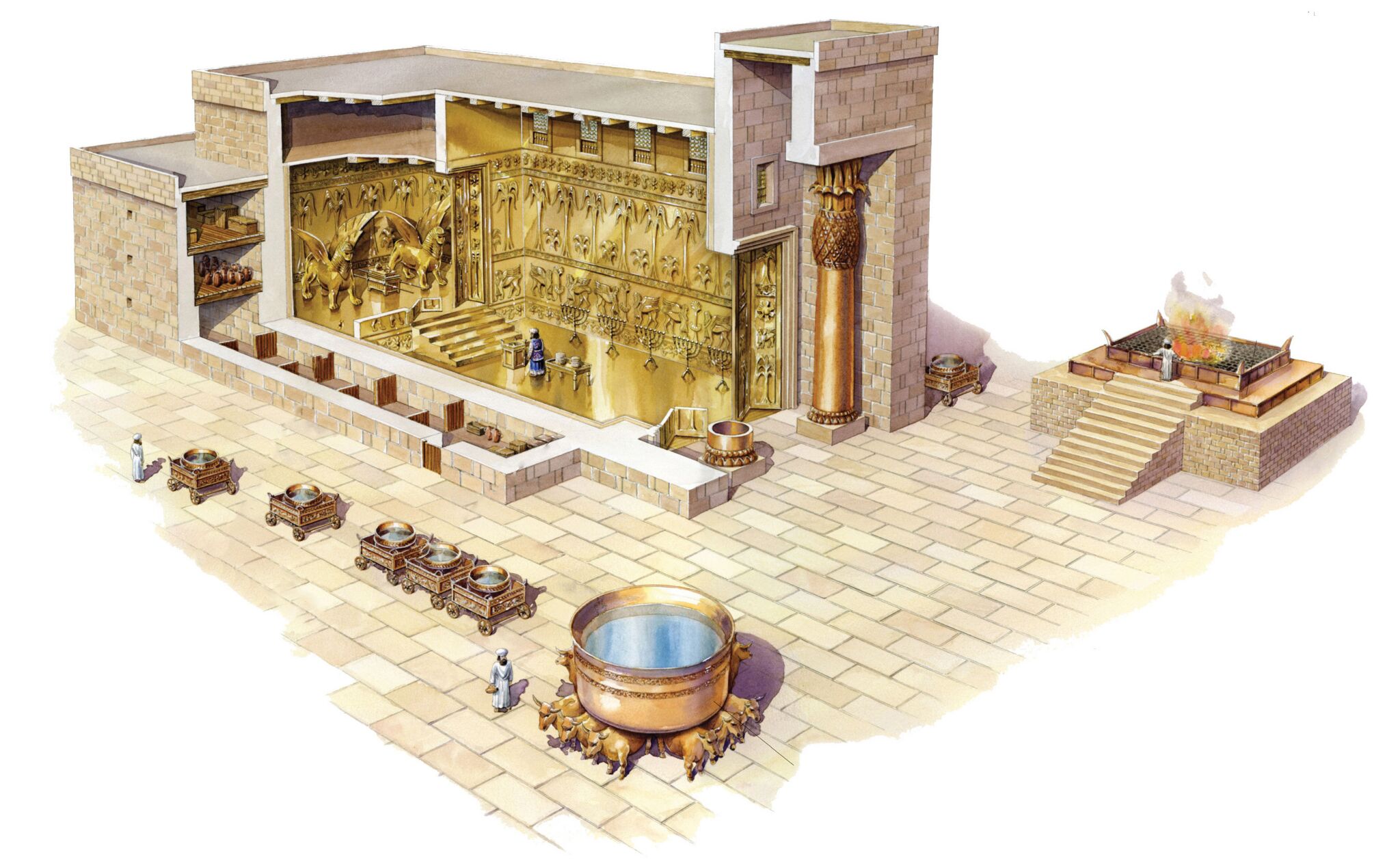
The Temple functioned as the primary repository for this surplus. In an era before digital ledgers or fractional reserve banking, wealth was stored in “hard” assets. The Temple’s walls were literally plated in gold, creating a concentrated asset base that was unparalleled in the Levant. From a money management perspective, the Temple represented a “Gold Standard” economy where the currency was backed by the physical presence of the metal within the capital city.
Infrastructure as a Capital Investment
The construction of the Temple was a massive public works project that stimulated the regional economy. By partnering with Hiram of Tyre, Solomon engaged in a complex international trade agreement: exporting agricultural commodities (wheat and oil) in exchange for raw materials (cedar and juniper) and specialized labor.
This represents an early example of Foreign Direct Investment (FDI) and strategic outsourcing. The “cost” of the Temple was not just in gold, but in the opportunity cost of the labor force and the depletion of agricultural surpluses. However, the result was a piece of infrastructure that increased the “brand value” of the Kingdom of Israel, attracting foreign dignitaries like the Queen of Sheba, which in turn opened new avenues for trade and diplomatic “consulting” fees.
The Great Liquidation: Geopolitical Risk and the Dissolution of Tangible Assets
The ultimate fate of Solomon’s Temple—its total destruction and the looting of its contents—serves as a cautionary tale regarding the vulnerability of physical, concentrated wealth. In financial terms, the Temple suffered from a lack of diversification and an inability to hedge against “Black Swan” geopolitical events.
The Cost of Concentrated Wealth
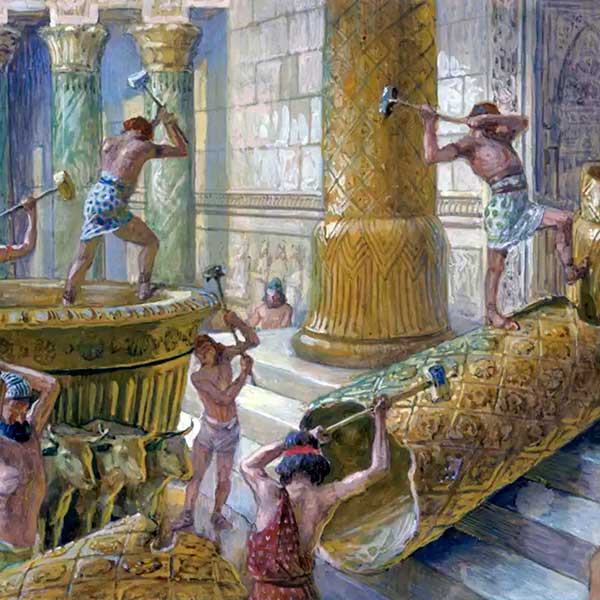
The primary reason the Temple became a target was its high “liquidity” for an invading force. By housing the nation’s entire gold reserve in a single, stationary location, the kingdom created a massive incentive for external aggression. When the Babylonian Empire, led by Nebuchadnezzar II, besieged Jerusalem in 586 BCE, the Temple was treated not as a religious site, but as a “bank” to be liquidated.
The destruction of the Temple was essentially a forced liquidation of the nation’s equity. The gold, silver, and bronze vessels were hauled away to Babylon, effectively transferring the wealth of one nation to the balance sheet of another. This historical event highlights a fundamental principle of money: physical assets that cannot be moved or hidden are liabilities in times of high systematic risk.
Systematic Risk and the Babylonian Foreclosure
The “foreclosure” of the First Temple was the result of a failure in risk management. The Kingdom of Judah had attempted to play major powers (Egypt and Babylon) against each other—a high-stakes geopolitical “leveraged bet” that failed. When the Babylonian “creditors” came to collect, they didn’t just take the interest; they seized the principal.
The burning of the Temple marked the end of an era of sovereign wealth and the beginning of a “downturn” that lasted decades. For modern investors, this mirrors the danger of “home bias”—the tendency to keep all one’s investments in a single country or asset class. When that specific environment collapses, the lack of geographic and asset diversification leads to a total loss of capital.
Lessons in Asset Preservation: Why Modern Portfolios Replace Physical Temples
What happened to Solomon’s Temple changed the way humanity thinks about wealth. We have moved from the “Temple Model” of wealth—centralized, physical, and vulnerable—to the “Distributed Model” of modern finance.
From Physical Gold to Liquidity and Diversification
The disappearance of the Temple’s gold teaches us the importance of liquidity. Physical gold is difficult to transport during a crisis. In contrast, modern financial tools allow for the “tokenization” of value. If an investor’s “temple” (their home or local market) is under threat today, they can move digital assets across borders in seconds.
The modern equivalent of Solomon’s wealth is not found in a single building but in a diversified portfolio of global equities, bonds, and decentralized assets. By spreading risk across different sectors and jurisdictions, an investor ensures that no single “conqueror” or market crash can wipe out their entire net worth. The Temple was a “Single Point of Failure”; a modern portfolio is a web of resilience.
The “Temple” of Compound Interest
While the physical Temple was destroyed, the concept of “Solomonic Wisdom” in finance survived. This wisdom emphasizes the long-term view. In the book of Proverbs, often attributed to Solomon, there is a focus on steady accumulation: “Wealth gained hastily will dwindle, but whoever gathers little by little will increase it.”
This is the ancient precursor to the “Boglehead” or passive investing philosophy. The “real” temple of wealth is not built of stone, but of time and compound interest. While a building can be razed, the principles of disciplined saving and reinvestment are indestructible assets that can be carried in the mind, regardless of where one resides.
The Legacy of Value: Wealth Management in the 21st Century
As we look back at what happened to the Temple, we see a transition from a “Hard Asset” economy to an “Intangible Asset” economy. The Temple’s physical components are gone, but its “brand” and the lessons derived from its management remain.
Building Intangible Equity
In business finance, we often distinguish between book value (physical assets) and market value (brand, intellectual property, and goodwill). Solomon’s Temple had immense book value, but its true lasting power was its “brand.” Thousands of years later, the name “Solomon” is still synonymous with prosperity and wisdom.
For modern entrepreneurs and individuals, this suggests that the most durable “temple” you can build is your personal brand and your specialized knowledge. These are assets that cannot be looted. Even if a business fails or a market crashes, the “intellectual capital” used to build the first temple can be used to build the second and third.
Conclusion: The Enduring Search for Financial Stability
The story of what happened to Solomon’s Temple is a cycle of accumulation, concentration, and eventual redistribution through conflict. It serves as a reminder that no amount of gold can protect a treasury if the underlying risk management strategy is flawed.
Today, we do not build temples to house our gold. Instead, we build “Financial Temples” out of diversified ETFs, retirement accounts, and global ventures. We have learned that the safest way to store 666 talents of gold is not to put it in a single room, but to put it to work across the global economy. By understanding the fiscal rise and fall of Solomon’s greatest project, modern investors can better navigate the complexities of wealth preservation, ensuring that their own “temples” of financial security stand the test of time, market volatility, and history.
aViewFromTheCave is a participant in the Amazon Services LLC Associates Program, an affiliate advertising program designed to provide a means for sites to earn advertising fees by advertising and linking to Amazon.com. Amazon, the Amazon logo, AmazonSupply, and the AmazonSupply logo are trademarks of Amazon.com, Inc. or its affiliates. As an Amazon Associate we earn affiliate commissions from qualifying purchases.