
The share market is often perceived as a complex labyrinth of numbers, charts, and high-stakes gambling. However, for the informed investor, it represents one of the most powerful engines for wealth creation in modern history. Investing in shares—also known as equities—is essentially the process of buying a piece of ownership in a corporation. As the company grows and generates profit, the value of your ownership stake increases, and you may even receive a portion of those profits in the form of dividends.
Transitioning from a saver to an investor requires a shift in mindset. While savings accounts offer security, they rarely outpace inflation. To truly build a financial legacy, one must understand how to navigate the stock market with discipline, strategy, and a long-term perspective. This guide explores the fundamental pillars of stock market investing, from the initial setup to advanced portfolio management.
1. Understanding the Foundations of the Share Market
Before committing capital, it is essential to understand the mechanics of the environment you are entering. The share market is a decentralized network of exchanges where shares of publicly held companies are issued, bought, and sold.
What is a Share?
A share represents a unit of ownership in a company. When a business wants to expand, it can either take out a loan or “go public” by issuing shares through an Initial Public Offering (IPO). When you buy a share, you become a shareholder. This entitles you to a claim on a part of the corporation’s assets and earnings. If the company performs well, the demand for its shares rises, driving the price up. Conversely, poor performance can lead to a decline in share price.
How the Stock Exchange Works
The exchange acts as a regulated marketplace. Major entities like the New York Stock Exchange (NYSE) or the Nasdaq provide the infrastructure for buyers and sellers to meet. In the modern era, this happens almost instantaneously through electronic trading platforms. The exchange ensures transparency, liquidity, and fair pricing by enforcing strict listing requirements and trading rules.
Primary vs. Secondary Markets
It is vital to distinguish between these two arenas. The primary market is where securities are created; it is where companies sell new stocks to the public for the first time via IPOs. The secondary market is what most people refer to as the “stock market.” This is where investors trade previously issued securities among themselves without the involvement of the issuing companies.
2. Building Your Investment Infrastructure
Successful investing is not just about picking the right stocks; it is about having the right tools and a clear framework. Without a proper setup, you risk high transaction costs and security vulnerabilities.
Choosing the Right Brokerage
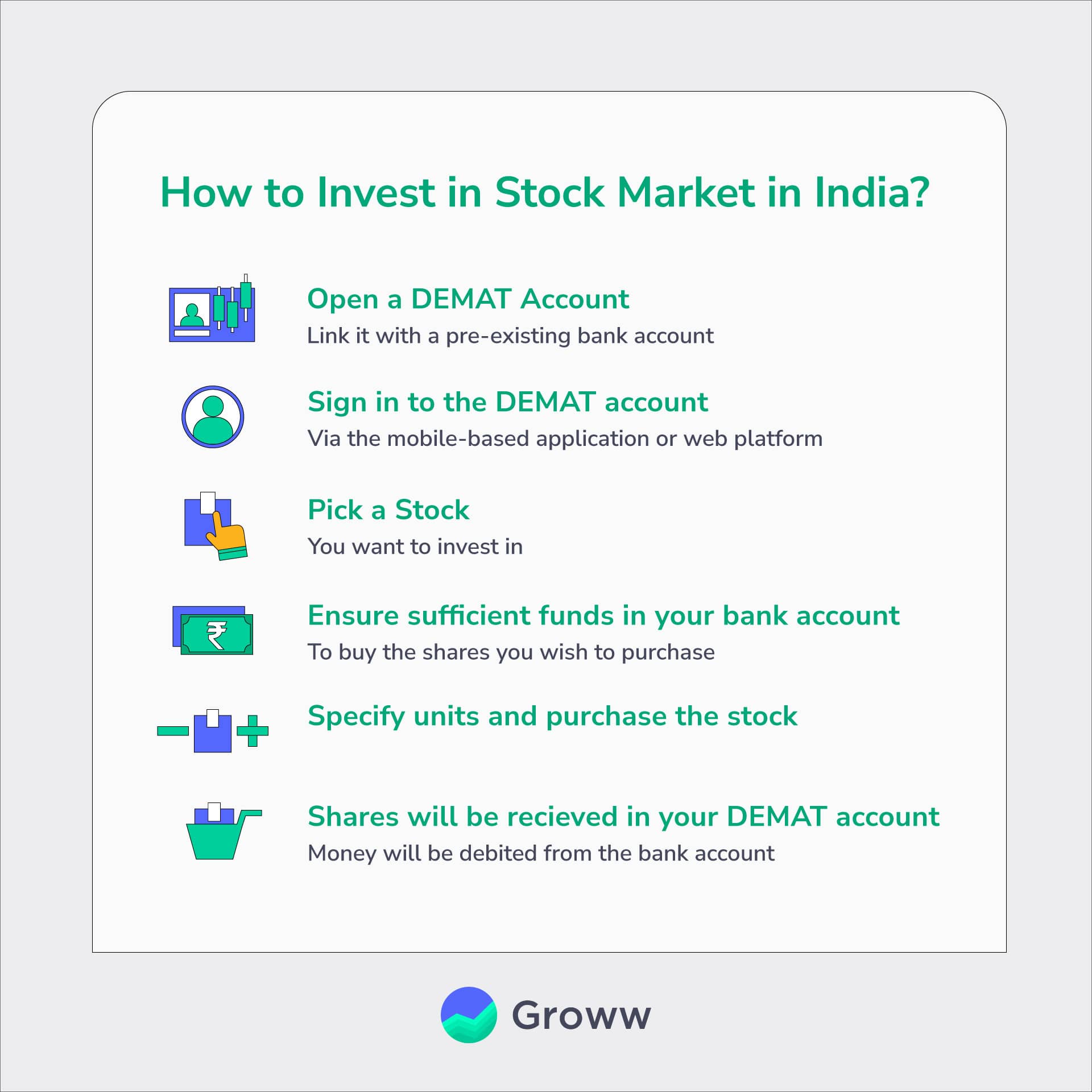
A stockbroker is your gateway to the market. In the digital age, you have two primary choices: full-service brokers and discount brokers. Full-service brokers offer personalized investment advice, tax planning, and portfolio management, usually for a higher commission. Discount brokers, often accessible via mobile apps, provide the tools for you to trade independently at a much lower cost. For beginners, a reputable discount broker with a robust educational platform is often the most cost-effective starting point.
Understanding Demat and Trading Accounts
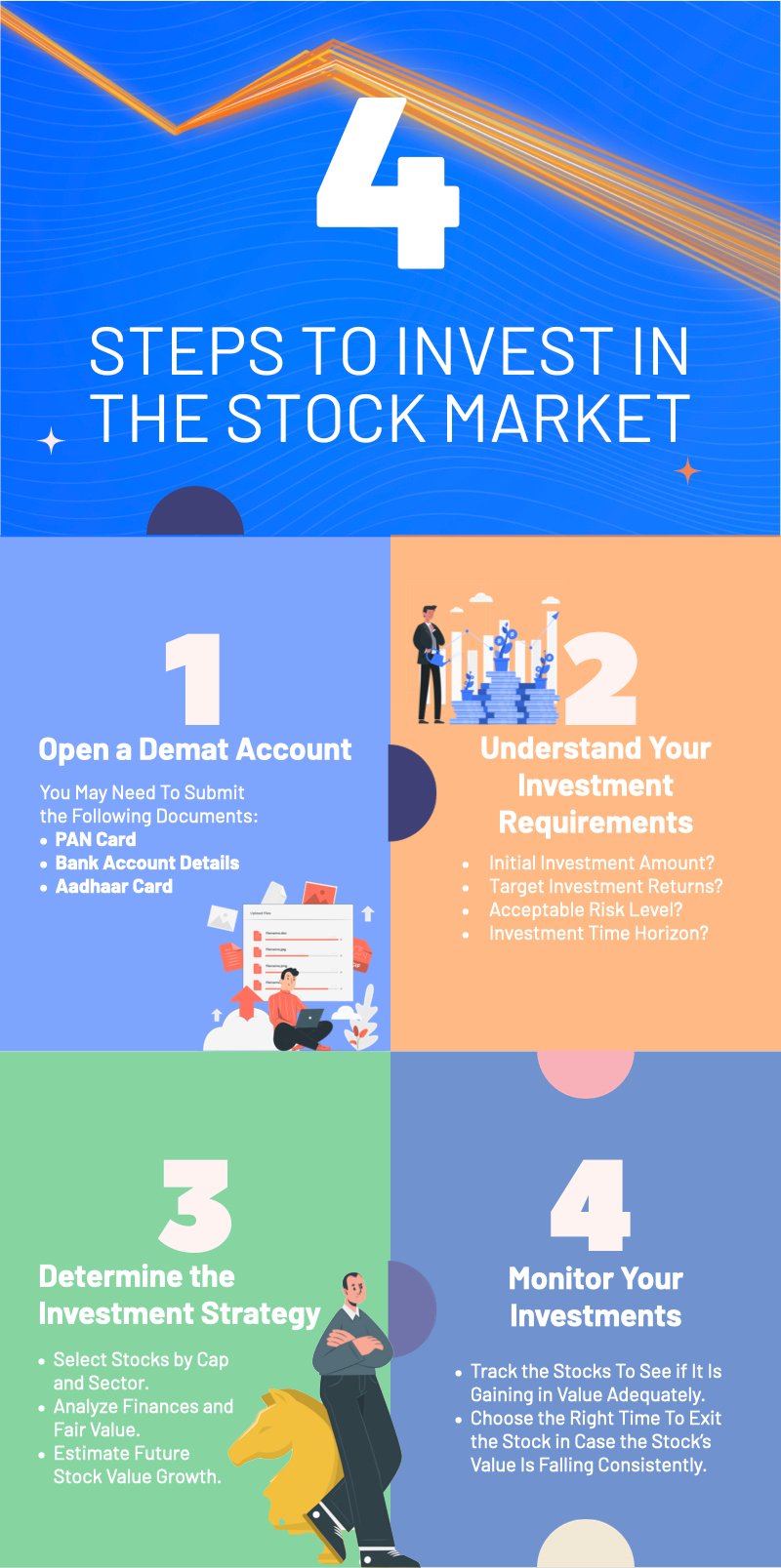
To trade effectively, you typically need two types of accounts (though they are often integrated into one platform). A Trading Account is used to place buy and sell orders. A Demat (Dematerialized) account acts as a digital vault where your shares are stored in electronic form. Ensuring these accounts are linked to a secure bank account is the first physical step in your investment journey.
Setting Realistic Financial Goals
Investing without a goal is like sailing without a compass. Are you investing for retirement thirty years away, or are you saving for a down payment on a house in five years? Your timeline dictates your risk tolerance. Long-term goals allow you to weather the market’s natural volatility, whereas short-term goals require a more conservative approach to protect your principal capital.
3. Strategic Approaches to Stock Selection
Once your accounts are active, the next challenge is deciding what to buy. With thousands of companies listed, investors must use specific methodologies to filter the noise.
Fundamental Analysis: Looking at the Numbers
Fundamental analysis is the process of evaluating a company’s intrinsic value. This involves scrutinizing financial statements, including the Balance Sheet, Income Statement, and Cash Flow Statement. Key metrics to watch include:
- Earnings Per Share (EPS): The portion of a company’s profit allocated to each outstanding share.
- Price-to-Earnings (P/E) Ratio: A valuation ratio of a company’s current share price compared to its per-share earnings.
- Debt-to-Equity Ratio: A measure of a company’s financial leverage.
By understanding these figures, you can determine if a stock is undervalued (a bargain) or overvalued (expensive).
Technical Analysis: Reading the Trends
While fundamental analysis looks at “what” to buy, technical analysis often looks at “when” to buy. Technical analysts study historical market data, primarily price and volume. They use charts and indicators like Moving Averages or the Relative Strength Index (RSI) to identify patterns and trends. While more common among short-term traders, long-term investors often use technical analysis to find optimal entry points for fundamentally sound companies.
Growth vs. Value Investing
These are the two primary philosophies in the market. Growth investors look for companies that are expected to grow at a rate significantly above the average for the market. These companies often reinvest their earnings into expansion rather than paying dividends (e.g., tech startups). Value investors, popularized by Warren Buffett, look for “stocks on sale.” They seek established companies whose stock prices do not currently reflect their intrinsic worth, often providing steady dividends and lower volatility.
4. Risk Management and Portfolio Diversification
The share market offers no guarantees. Prices fluctuate based on economic data, geopolitical events, and investor sentiment. Therefore, managing risk is more important than chasing returns.
The Power of Diversification
The most fundamental rule of risk management is: “Don’t put all your eggs in one basket.” Diversification involves spreading your investments across different sectors (tech, healthcare, energy), different market caps (small-cap vs. large-cap), and even different geographic regions. If one sector faces a downturn, the gains in another can help stabilize your overall portfolio.
Understanding Market Volatility and Risk Tolerance
Volatility is the frequency and magnitude of price movements. Every investor has a different “stomach” for these swings. Your risk tolerance is a combination of your financial ability to lose money and your emotional ability to stay calm during a crash. Assessing this honestly before you invest will prevent you from making impulsive decisions during market corrections.
The Importance of a Long-Term Horizon
Historically, the stock market has trended upward over decades, despite short-term crashes. Time is an investor’s greatest ally because of compound interest. When your investments earn returns, and those returns earn their own returns, your wealth grows exponentially. By maintaining a long-term horizon, you can ignore the “noise” of daily price fluctuations and focus on the cumulative growth of the economy.
5. Common Pitfalls and How to Avoid Them
Even the most intelligent investors can fail if they fall victim to psychological traps or poor habits. Awareness of these pitfalls is the best defense.
Emotional Investing and Herd Mentality
The human brain is wired for survival, which often translates poorly to the stock market. When prices soar, “Fear of Missing Out” (FOMO) leads people to buy at the peak. When prices drop, fear leads them to sell at the bottom. Successful investing requires a contrarian mindset—being cautious when others are greedy and being brave when others are fearful.
Over-trading and Transaction Costs
Many beginners believe that more activity equals more profit. In reality, frequent buying and selling often lead to lower returns due to transaction fees, taxes, and the difficulty of “timing the market.” For most people, a “buy and hold” strategy—investing in quality companies or index funds and holding them for years—outperforms active trading.
Staying Disciplined Through Market Cycles
The market moves in cycles: bull markets (rising prices) and bear markets (falling prices). Discipline means sticking to your investment plan even when the headlines are terrifying. Whether you use Dollar-Cost Averaging (investing a fixed amount regularly regardless of price) or a lump-sum approach, consistency is what separates successful investors from those who lose their capital to market volatility.
Conclusion
Investing in the share market is a journey of continuous learning. It is not a “get-rich-quick” scheme, but a disciplined path toward financial independence. By understanding the foundational mechanics of the market, building a solid brokerage infrastructure, applying rigorous analysis, and managing your risks through diversification, you can harness the growth of the world’s most successful companies.
The best time to start was yesterday; the second-best time is today. Begin with small, manageable amounts, prioritize education over speculation, and allow the power of time and compounding to work in your favor. In the world of finance, patience is often rewarded more than brilliance.
aViewFromTheCave is a participant in the Amazon Services LLC Associates Program, an affiliate advertising program designed to provide a means for sites to earn advertising fees by advertising and linking to Amazon.com. Amazon, the Amazon logo, AmazonSupply, and the AmazonSupply logo are trademarks of Amazon.com, Inc. or its affiliates. As an Amazon Associate we earn affiliate commissions from qualifying purchases.