
In the landscape of modern television, long-running procedural dramas function as more than just entertainment; they are multi-million dollar brands built on the foundation of consistency and emotional investment. When a central figure abruptly disappears from the narrative, it creates a “brand shock” that tests the loyalty of the audience and the structural integrity of the show’s identity. The departure of Linda Reagan (portrayed by Amy Carlson), the wife of Detective Danny Reagan on the hit CBS series Blue Bloods, provides a masterclass in how brand strategy, character positioning, and narrative pivots intersect in the high-stakes world of corporate entertainment.

The Anatomy of a Narrative Brand: Why Linda Reagan Mattered
To understand the impact of Linda Reagan’s departure, one must first analyze her role within the Blue Bloods brand ecosystem. Unlike many police procedurals that focus exclusively on the “cops and robbers” dynamic, Blue Bloods distinguishes itself through the “Reagan Family” brand—a cohesive identity centered on Catholic values, law enforcement tradition, and the iconic Sunday dinner scenes.
The “Moral Compass” Archetype
Within the brand framework of the Reagan family, Linda served as the essential civilian perspective. While the rest of the family—Frank, Danny, Jamie, and Erin—approached problems through the lens of the legal system, Linda offered the humanistic, empathetic counterbalance. As a nurse, her character brand was built on healing and domestic stability. For the audience, she was the anchor that kept Danny Reagan’s volatile, high-intensity persona grounded. From a brand management perspective, she facilitated the “emotional ROI” (Return on Investment) for viewers, providing a soft landing for the show’s gritty investigative plots.
Maintaining the Family Dynamic Brand
The Blue Bloods brand is heavily reliant on the “Family Dinner” segment, a trademarked-style trope that appears in nearly every episode. Linda Reagan was not merely a background character in these scenes; she was a primary agitator of healthy debate. Her presence ensured that the dinner table was a place of diverse thought rather than a law enforcement echo chamber. When a brand loses a component that provides ideological balance, it risks becoming one-dimensional. The challenge for the showrunners was to maintain the “Reagan Family” brand equity without one of its most stabilizing pillars.
Crisis Management and Brand Continuity
The departure of Amy Carlson at the end of Season 7 was not a scripted creative choice but a result of contract negotiations—a common occurrence in the business side of television branding. Carlson chose not to renew her contract, leaving the production with a significant “brand gap” to fill before Season 8.
Handling the Off-Screen Exit Strategy
From a brand strategy standpoint, the decision to kill off Linda Reagan in an off-screen helicopter crash was a high-risk move. In branding, transparency is often preferred, but when an actor leaves abruptly, the “product” (the show) must find a way to explain the absence without damaging the remaining “assets” (the other characters). By placing the death between seasons, the show attempted a “hard reset.” However, this led to a temporary “brand dilution” as fans felt the exit was unceremonious and lacked the dignity associated with the Reagan family brand.
Managing Audience Backlash and Brand Loyalty
Brand loyalty is a double-edged sword. While the Blue Bloods audience is notoriously loyal, that loyalty breeds high expectations. The “Where is Linda?” outcry on social media served as a real-time case study in audience engagement. The show’s producers had to navigate a delicate balance: honoring the character’s legacy to satisfy the “legacy fans” while simultaneously moving the narrative forward to ensure the “product” remained fresh. This involved a strategic use of mentions and tributes throughout Season 8 and 9, ensuring that while the physical presence was gone, the “Linda Reagan Brand” remained part of the show’s DNA.
The Personal Brand Evolution of Amy Carlson
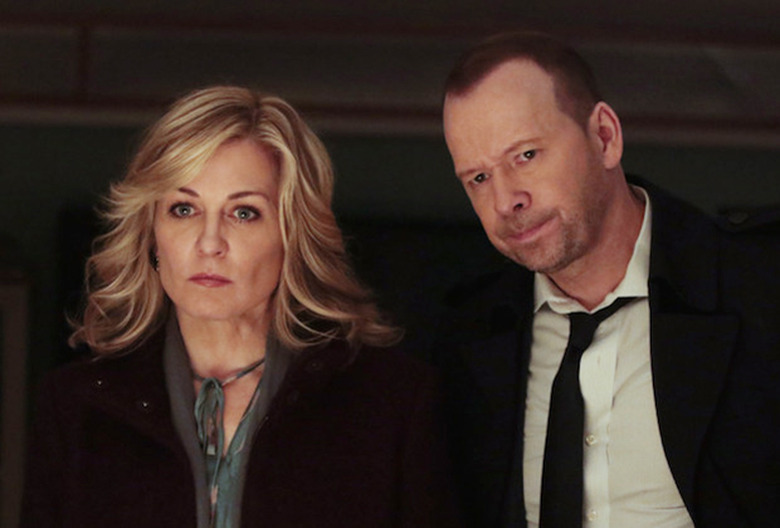
Beyond the show’s corporate brand, the exit of Linda Reagan highlights the intricacies of personal branding for actors. In the modern gig economy, an actor is a brand, and their career moves are strategic pivots designed to increase their market value or change their market positioning.
The Decision to Pivot: When a Brand Outgrows its Role
Amy Carlson had portrayed Linda Reagan for seven years. In the world of professional branding, “stagnation” is the enemy of growth. For Carlson, the decision to leave a stable, high-paying role on a top-tier network show was a move to diversify her “portfolio.” By leaving a long-standing role, an actor can avoid being “typecast”—a branding term for being stuck in a specific market niche. Her departure was a statement of personal brand independence, signaling to the industry that she was ready for new “market opportunities” in different genres or mediums.
Life After Procedurals: Leveraging a Legacy
Leaving a major franchise is a calculated risk. For Carlson, the “Linda Reagan” association remains her strongest brand asset. However, a successful personal brand strategy involves leveraging past success to fuel future ventures. Since leaving Blue Bloods, Carlson has focused on independent projects, directing, and advocacy. This shift represents a transition from being a “component” of a massive corporate brand to being the “CEO” of her own creative brand. It serves as a reminder that in any industry, knowing when to “exit the market” is just as important as knowing when to enter it.
Strategic Rebranding of Danny Reagan’s Character Arc
The most significant consequence of Linda’s departure was the forced rebranding of the show’s lead protagonist, Danny Reagan (Donnie Wahlberg). For seven seasons, Danny was marketed as the “tough cop with a heart of gold and a stable home.” Without Linda, that brand was no longer sustainable.
From Partnered Detective to Lone Wolf: A Structural Shift
The showrunners had to execute a “brand pivot” for Danny. He transitioned from a family man to a widower grappling with grief and the challenges of single parenthood. This shift allowed the writers to explore a darker, more vulnerable side of his character, effectively “refreshing” a character brand that had remained relatively static for nearly a decade. In business terms, this is akin to a legacy company rebranding itself to appeal to a more modern or emotionally complex consumer base.
The Narrative ROI of Grief and Growth
While the loss of Linda was a deficit initially, it provided the show with several seasons of “narrative capital.” Danny’s journey through the stages of grief, his eventual openness to new romantic interests (a new “product launch” for the show), and his deepened relationship with his sons provided fresh storylines. This demonstrates a core principle of brand resilience: the ability to take a significant loss and convert it into a long-term growth strategy. The “Blue Bloods” brand proved that it was larger than any single character, a testament to the strength of its core identity.

Conclusion: Lessons in Brand Durability
The saga of Linda Reagan’s exit from Blue Bloods offers several insights for brand managers and content creators alike. First, it underscores the importance of a strong “brand core.” Because the Reagan family identity was so well-established, the show was able to survive the loss of a major character that might have sunk a less-defined series.
Second, it highlights the necessity of “crisis agility.” When external factors—such as contract disputes—disrupt the “product pipeline,” the ability to pivot the narrative and rebrand the remaining assets is crucial for survival. The show did not try to replace Linda with a lookalike; instead, it leaned into the void she left, making the loss a central part of the brand’s evolution.
Finally, the situation serves as a reminder that characters in a long-running series are not just roles; they are brand assets. Managing their entries and exits requires a blend of creative storytelling and cold, hard business strategy. As Blue Bloods continues its historic run, the “Linda Reagan era” remains a vital chapter in its history, proving that even when a character disappears, their impact on the brand’s legacy is indelible. The show’s ability to maintain high ratings and cultural relevance post-Linda is the ultimate proof of its brand strength and the savvy management of its creative leads.
aViewFromTheCave is a participant in the Amazon Services LLC Associates Program, an affiliate advertising program designed to provide a means for sites to earn advertising fees by advertising and linking to Amazon.com. Amazon, the Amazon logo, AmazonSupply, and the AmazonSupply logo are trademarks of Amazon.com, Inc. or its affiliates. As an Amazon Associate we earn affiliate commissions from qualifying purchases.