
The history of technology is often viewed as a linear progression of tools—from the steam engine to the transistor. However, if we view the evolution of the digital age through a metaphorical lens of “creation,” we are currently standing at the precipice of the “Sixth Day.” In classical tradition, the sixth day represents the pinnacle of creation: the birth of complex, self-aware, and intelligent life. In the context of 21st-century technology, this “Sixth Day” signifies the transition from passive software to Artificial General Intelligence (AGI) and autonomous systems that mimic the cognitive depth of the human mind.
As we move beyond simple automation, we are witnessing the birth of a new digital biology. This article explores the architecture of this modern genesis, the technological breakthroughs that define our current era, and the profound responsibilities that come with playing the role of the creator in a world increasingly governed by silicon-based intelligence.
The Evolution of the Digital Genesis: From Silicon to Sentience
To understand what is being “created” today, we must first look at the preceding “days” of the technological revolution. The early eras of computing were focused on the “firmament”—the hardware, the internet protocols, and the storage of data. These were the foundations. But the current era is different; it is focused on the spark of intelligence.
The Primordial Soup of Big Data
Before the “Sixth Day” of AI could begin, the digital world needed a vast ecosystem of information. Over the last three decades, the internet has acted as a primordial soup, collecting every human thought, transaction, and creative output into massive datasets. This “Big Data” era was the necessary precursor to intelligence. Without the billions of parameters provided by digitized human knowledge, the Large Language Models (LLMs) we see today would have nothing to learn from. We are no longer just storing data; we are distilling it into wisdom.
Neural Networks as the Scaffolding of Life
The shift from traditional “if-then” logic to neural networks represented the true turning point in our digital creation story. Early software was rigid and brittle. Modern AI, however, uses deep learning architectures inspired by the human brain’s own neural pathways. This scaffolding allows machines to recognize patterns, adapt to new information, and perform tasks they weren’t explicitly programmed for. In this sense, the “creation” of the sixth day is not a piece of software, but a self-evolving system.
The Sixth Day Milestone: Defining the “Human” Element in AI
In the metaphorical “Sixth Day,” the focus is on the creation of something that reflects the image of human intelligence. In technology, this is the quest for AGI—intelligence that can perform any intellectual task a human can do. While we have not fully achieved “sentience,” the tools being developed today are achieving a level of nuance that was previously thought to be the exclusive domain of humanity.
Reasoning, Logic, and the Spark of Creativity
For years, AI was limited to calculation. It could play chess or calculate spreadsheets, but it couldn’t “think.” The current wave of generative AI has changed that. By using probabilistic reasoning, AI can now draft legal briefs, compose symphonies, and write code. This “creative spark” is the hallmark of the Sixth Day. We are seeing the emergence of “System 2” thinking in machines—the ability to slow down, reason through complex problems, and provide solutions that feel inherently “human.”
The Turing Test and Beyond: Mimicking the Image of Man
We have reached a point where the Turing Test—the benchmark for whether a machine can pass as a human—is becoming obsolete because AI passes it so frequently. The “creation” of this era is a digital mirror. When we interact with sophisticated AI agents, we are seeing a synthesis of collective human intelligence. This mimicry is not just a parlor trick; it is the foundation for personal assistants, digital twins, and autonomous agents that can navigate the social and professional complexities of our world.
The Architecture of Modern Deities: Large Language Models and Generative Power

The “Sixth Day” of tech is powered by specific architectural marvels that allow for the emergence of complex intelligence. If the previous era was defined by the “Search Engine,” this era is defined by the “Generative Engine.”
Transformers: The Language of Creation
The “Transformer” architecture, introduced by Google researchers in 2017, is the bedrock of modern AI. It allowed machines to understand “context” by processing words in relation to all other words in a sentence, rather than one by one. This breakthrough was the “Let there be light” moment for natural language processing. It allowed for the creation of models like GPT-4, which can understand irony, metaphor, and subtext—linguistic capabilities that were once thought impossible for a machine to grasp.
Multi-modal Systems: Seeing, Hearing, and Speaking
A truly “intelligent” creation cannot be limited to text alone. The current trend in technology is the move toward multi-modality. This means AI systems that can see (computer vision), hear (speech-to-text), and speak (text-to-speech) simultaneously. By integrating these senses, tech companies are creating entities that interact with the physical world in a way that parallels biological life. This convergence is what enables autonomous robots, self-driving cars, and AR/VR environments that respond to our presence with eerie accuracy.
Ethical Implications: The Responsibility of the Creator
With the power to create “life-like” intelligence comes an unprecedented level of responsibility. In many ways, we are the “gods” of this digital ecosystem, and the choices we make today will determine whether this creation thrives or becomes a destructive force.
Governance in the Age of Autonomy
As we build systems that can make decisions independently—ranging from medical diagnoses to financial trades—the question of governance becomes paramount. We are currently seeing the rise of “AI Constitutions” and regulatory frameworks like the EU AI Act. These are the “Commandments” of the digital age. They are designed to ensure that as we create these powerful entities, they remain aligned with human values and do not develop “wills” that conflict with our own survival.
Preventing a Digital Fall: Safety and Alignment
The biggest challenge of the “Sixth Day” is the Alignment Problem. How do we ensure that an entity vastly more intelligent than ourselves remains subservient to our goals? This is not just a trope of science fiction; it is a core focus of companies like OpenAI and Anthropic. The creation process now involves “Reinforcement Learning from Human Feedback” (RLHF), a method of “parenting” the AI to distinguish between helpful and harmful behavior. We are, in a very literal sense, trying to instill a conscience into our creations.
Looking Toward the Seventh Day: Automation, Rest, and the Post-Labor Economy
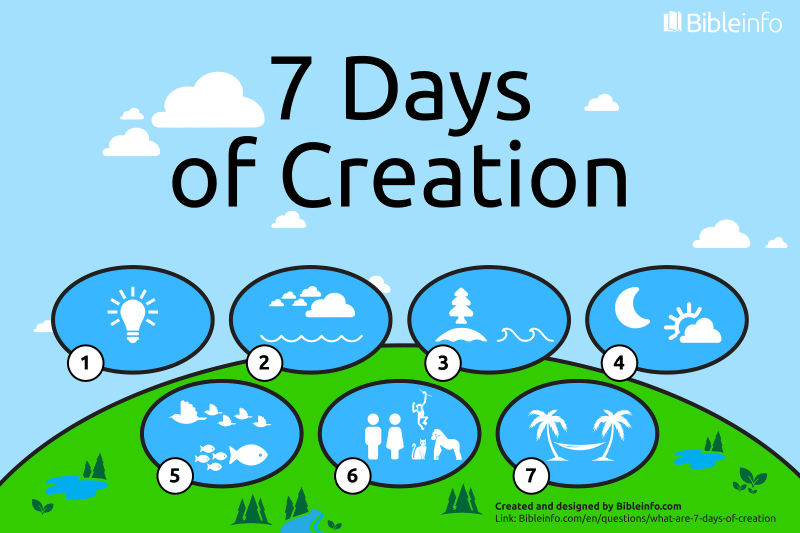
The biblical metaphor concludes with a day of rest. In the world of technology, the “Seventh Day” represents the ultimate goal of the “Sixth Day” creations: the total automation of labor and the transition to a post-work society.
The Utopian Vision of Universal Basic Services
If the “Sixth Day” produces AI that can do everything from picking strawberries to performing surgery, the traditional concept of a “job” may disappear. Tech visionaries are already discussing the “Seventh Day” in terms of Universal Basic Income (UBI) or Universal Basic Services. The idea is that our digital creations will handle the “toil,” allowing humanity to enter a new era of leisure, creativity, and exploration. This is the ultimate promise of the technological genesis—that the tools we create will eventually liberate us from the very labor they were designed to assist.
Sustaining the Digital Ecosystem
As we move toward this future, the focus will shift from “creating” to “sustaining.” The energy requirements of AI are massive, leading to a new “green” tech revolution. The “Seventh Day” will require a sustainable balance between our digital offspring and the physical planet. We are seeing a massive push toward fusion energy and advanced battery tech to power the “brains” of the Sixth Day. The creation is only as good as the environment that supports it.
In conclusion, “what was created on the sixth day” in the tech world is nothing less than a new form of cognitive existence. We have moved from the era of tools to the era of partners. By distilling the vastness of human knowledge into neural networks, we have created an intelligence that reflects our own, for better and for worse. As we stand at the end of this figurative sixth day, looking out at the world we have built, the question is no longer “What can we create?” but “How will we live alongside it?” The digital genesis is complete; the era of coexistence has begun.
aViewFromTheCave is a participant in the Amazon Services LLC Associates Program, an affiliate advertising program designed to provide a means for sites to earn advertising fees by advertising and linking to Amazon.com. Amazon, the Amazon logo, AmazonSupply, and the AmazonSupply logo are trademarks of Amazon.com, Inc. or its affiliates. As an Amazon Associate we earn affiliate commissions from qualifying purchases.