
In the landscape of modern sensor technology, few devices are as synonymous with safety and scientific inquiry as the Geiger counter. Formally known as the Geiger-Müller counter, this instrument serves as a critical bridge between the invisible world of subatomic particles and the human need for environmental data. While often associated with the grainy footage of mid-century nuclear tests or the haunting aesthetics of disaster-themed media, the modern Geiger counter is a sophisticated piece of hardware that has evolved significantly through digital integration, miniaturization, and advanced software analysis.
To understand what a Geiger counter measures is to explore the intersection of nuclear physics and electronic engineering. This article delves into the technological mechanisms of these devices, the specific types of radiation they quantify, and how contemporary tech trends are reshaping our ability to monitor the unseen forces of the universe.

The Mechanics of Detection: How Geiger-Müller Tubes Work
At the core of every Geiger counter lies the Geiger-Müller (GM) tube, a specialized sensing component that acts as a transducer, converting physical radiation into an electrical signal. This process is a marvel of electrical engineering, relying on a delicate balance of gas physics and high-voltage circuitry.
Ionization and Electrical Discharges
The GM tube is typically a hollow cylinder filled with a low-pressure noble gas, such as neon or argon. A thin wire (the anode) runs through the center, while the outer wall of the tube acts as the cathode. A high-voltage power supply—often ranging from 400 to 900 volts—is applied between these two elements, creating an intense electric field within the tube.
When a particle of ionizing radiation enters the tube, it strikes a gas atom, stripping away an electron. This created ion pair is accelerated by the electric field. As the electron zooms toward the anode, it gains enough kinetic energy to ionize more gas atoms, leading to a “Townsend avalanche.” This sudden surge of electrons results in a detectable pulse of electricity. This pulse is what the internal circuitry counts, translating a single subatomic event into a digital or audio “click.”
The Role of Inert Gases and Quenching Agents
A significant challenge in the design of this technology is the “reset” period. After an avalanche occurs, the tube can become stuck in a continuous discharge state, rendering it useless for further measurements. To prevent this, engineers introduce “quenching agents”—often halogens like chlorine or bromine. These molecules absorb the excess energy from the positive ions, neutralizing them before they can trigger secondary, unwanted pulses. This technical refinement allows modern Geiger counters to recover within microseconds, enabling them to measure high-frequency radiation fields with impressive precision.
What Is Actually Being Measured? (Units and Types)
The primary function of a Geiger counter is to detect ionizing radiation. However, not all radiation is created equal, and the technology must be calibrated to distinguish between different types of energy and the biological impact they pose.
Alpha, Beta, and Gamma Radiation
A standard Geiger counter is designed to interact with three main types of ionizing radiation:
- Alpha Particles: These are heavy, positively charged particles consisting of two protons and two neutrons. Because of their size, they have low penetrating power and are often stopped by a thin sheet of paper or the outer layer of human skin. Specialized Geiger counters use “pancake” probes with thin mica windows to allow these fragile particles to enter the detection chamber.
- Beta Particles: These are high-speed electrons or positrons. They have more penetrating power than alpha particles but can be blocked by aluminum shielding. Most general-purpose Geiger counters are highly sensitive to beta radiation.
- Gamma Rays: These are high-energy electromagnetic waves (photons). Unlike alpha or beta particles, gamma rays have no mass and can pass through many materials, including several inches of lead. While GM tubes can detect gamma rays, they are less efficient at capturing them than solid-state scintillation detectors.
Deciphering the Units: Sieverts, Roentgens, and CPM
One of the most complex aspects of radiation measurement tech is the conversion of raw data into meaningful metrics. The hardware initially records “Counts Per Minute” (CPM) or “Counts Per Second” (CPS). This is a raw measure of how many ionizing events the tube detected.
However, to provide actionable data for safety and health, the onboard software must convert these counts into “Dose Rates.” Common units include:
- Roentgens (R): A measure of the ionization of the air.
- Sieverts (Sv): The most critical modern unit, which measures the biological effect of ionizing radiation on human tissue.
- Grays (Gy): A measure of the absorbed dose of radiation in a material.
Modern digital Geiger counters use pre-programmed algorithms to factor in the sensitivity of the specific GM tube being used, allowing the user to switch between CPM for locating sources and μSv/h (microsieverts per hour) for assessing environmental safety.
The Digital Evolution: From Analog Clicks to Smart Sensors
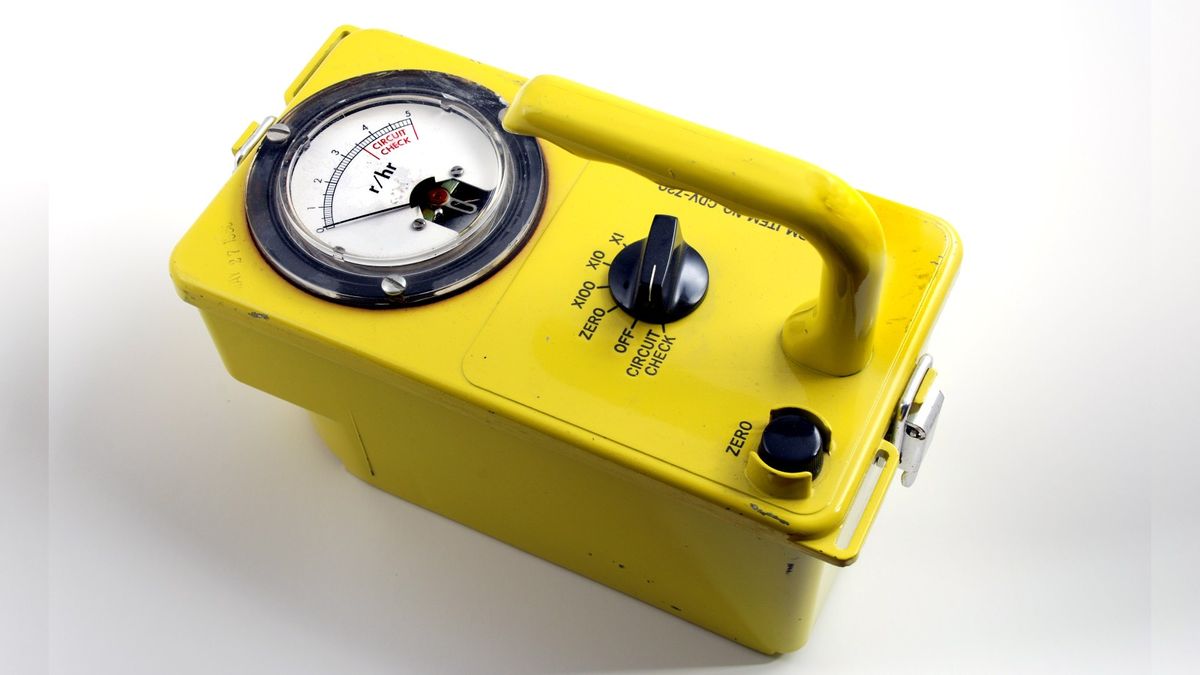
The transition from the bulky, analog “civil defense” models of the 1950s to today’s sleek, pocket-sized gadgets represents a massive leap in consumer and industrial technology.
Integration with IoT and Mobile Software
The modern Geiger counter is no longer a standalone “dumb” device. Many current models feature Bluetooth or Wi-Fi connectivity, allowing them to interface with smartphones and cloud-based platforms. This integration enables real-time data logging and the creation of crowdsourced radiation maps.
Through dedicated mobile applications, users can track their exposure over time, set threshold alarms, and export data for scientific analysis. This “connected” approach has democratized radiation monitoring, moving it from the hands of government officials into the hands of “citizen scientists” and tech enthusiasts.
Precision Calibration and AI-Driven Analysis
The software layer of contemporary detection tech has become incredibly sophisticated. Advanced digital counters utilize microprocessors to correct for “dead time”—the period after a detection when the tube is unresponsive. By applying mathematical corrections in real-time, the device can maintain accuracy even in high-intensity radiation environments where an analog device would “saturate” or fail.
Furthermore, some high-end units are beginning to incorporate basic AI algorithms to help identify specific isotopes based on the energy signatures of the detected radiation. While true isotope identification usually requires a spectrometer, the infusion of machine learning into consumer-grade hardware is narrowing the gap between professional lab equipment and portable gadgets.
Modern Tech Applications: Where These Gadgets Are Critical
The utility of the Geiger counter extends far beyond nuclear power plants. As our world becomes more technologically dense, the need for precise radiation monitoring has expanded into several niche sectors.
Nuclear Safety and Environmental Monitoring
The most obvious application remains the monitoring of nuclear facilities and the decommissioning of old reactors. However, environmental tech firms also use Geiger counters to monitor “TENORM” (Technologically Enhanced Naturally Occurring Radioactive Material). Industries such as oil and gas extraction or mining often bring radioactive materials to the surface, and sensor tech is vital for ensuring that these processes do not contaminate local ecosystems.
Consumer Tech and Wearable Dosimeters
In recent years, there has been a surge in “wearable” radiation tech. These are essentially miniaturized Geiger counters or solid-state dosimeters designed to be worn on a belt or as a pendant. For professionals working in medical imaging, non-destructive testing, or even frequent high-altitude flyers (who are exposed to higher levels of cosmic radiation), these gadgets provide a continuous log of cumulative dose.
The tech community has also embraced these devices as part of the broader “Quantified Self” movement. Just as people track their heart rate or sleep cycles, tech-savvy individuals in certain geographic regions use portable Geiger counters to ensure their living environments are free from radon gas or radioactive building materials.

The Future of Radiation Sensing
As we look toward the future, the technology of the Geiger counter is likely to be superseded by solid-state silicon sensors in many consumer applications. These sensors are smaller, more durable, and require less power than traditional gas-filled tubes. However, the Geiger-Müller tube remains the gold standard for reliability and “all-around” detection due to its simplicity and proven track record.
The ongoing innovation in this space is a testament to how fundamental scientific tools can be revitalized through modern engineering. By combining 100-year-old physics with 21st-century software and connectivity, the Geiger counter has evolved into a sophisticated digital tool. It remains the primary instrument for quantifying the invisible, providing a high-tech shield against the hazards of a nuclear and cosmic world. Whether used for industrial safety, scientific research, or personal curiosity, the Geiger counter stands as a pinnacle of detection technology—turning the silent whispers of subatomic particles into clear, actionable data.
aViewFromTheCave is a participant in the Amazon Services LLC Associates Program, an affiliate advertising program designed to provide a means for sites to earn advertising fees by advertising and linking to Amazon.com. Amazon, the Amazon logo, AmazonSupply, and the AmazonSupply logo are trademarks of Amazon.com, Inc. or its affiliates. As an Amazon Associate we earn affiliate commissions from qualifying purchases.