
In the ancient verses of the Old Testament, specifically within the books of Job, Psalms, and Isaiah, there emerges a creature of terrifying proportions and uncontrollable power: the Leviathan. Described as a multi-headed sea serpent or a dragon of the deep, the Leviathan represented the ultimate chaos—a force so massive and formidable that no human could hope to tame it. In the Book of Job, the Creator poses a humbling question: “Can you pull in Leviathan with a fishhook or tie down its tongue with a rope?”
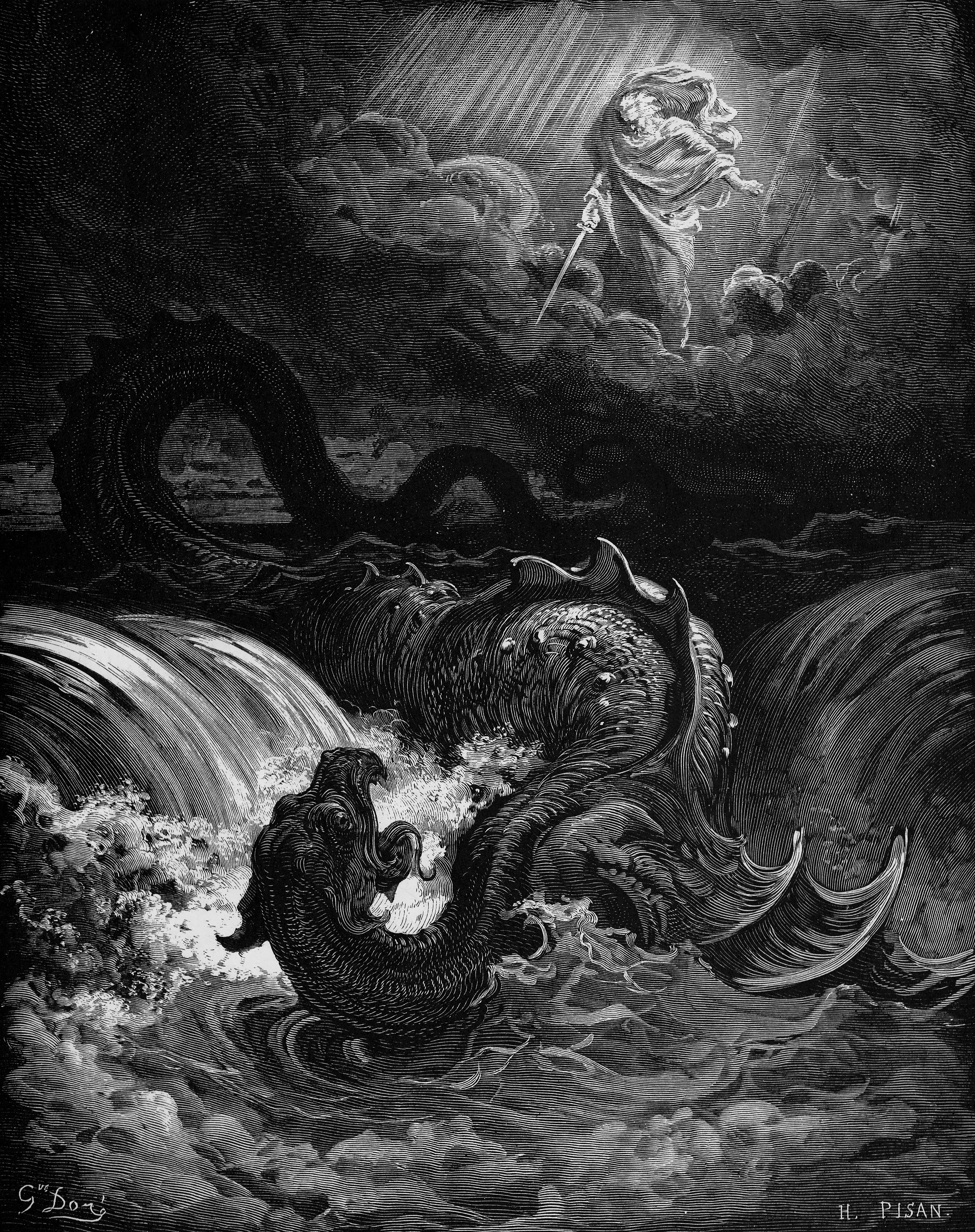
For thousands of years, this was a theological and mythological mystery. However, in the twenty-first century, the concept of the Leviathan has found a new, digital home. Today, the “Leviathan” is no longer a creature of the abyss; it is the sprawling, interconnected architecture of Big Tech, the unyielding power of global algorithms, and the looming presence of Artificial General Intelligence (AGI). By examining what the Bible says about this creature, we can derive profound insights into the challenges of technological scale, the ethics of data sovereignty, and the urgent need for algorithmic governance.
The Biblical Leviathan as a Metaphor for Technological Scale
The primary characteristic of the Leviathan in biblical literature is its sheer scale and the resulting “uncontrollability.” In Job 41, the creature is described as having scales so closely knit that no air can pass between them—a symbol of an impenetrable system. In the world of technology, this mirrors the transition from simple software to “Deep Tech” ecosystems that operate beyond the immediate comprehension of their creators.
The Complexity of Interconnected Systems
Modern technology is no longer a series of isolated tools; it is a global nervous system. Like the Leviathan’s impenetrable scales, modern tech stacks—comprising billions of lines of code, cloud infrastructures, and edge computing—create a monolith. When we look at the Bible’s description of a creature that “makes the depths churn like a boiling pot,” we see a parallel in how massive data centers and global networks agitate the socio-economic landscape. The scale of companies like Alphabet or Amazon has reached a “Leviathan” state where their internal complexity makes them nearly impossible to regulate or “hook” with traditional legal frameworks.
The Problem of Unintended Consequences
The Bible depicts the Leviathan as a force of nature that humans cannot bargain with. In the tech industry, this translates to the “black box” nature of machine learning. When an algorithm is deployed to curate information for billions of people, it often develops emergent behaviors that the original engineers did not intend. These “sea monsters” of code can polarize populations or collapse markets in milliseconds. The biblical warning is clear: there are entities that, once unleashed, operate by their own internal logic, indifferent to human intervention.
The Rise of Digital Leviathans: Big Tech and Platform Monopolies
In the Book of Isaiah, the Leviathan is called “the gliding serpent” and “the coiling serpent.” This imagery suggests an entity that encircles and envelops. In the modern tech niche, this perfectly describes the platform monopoly. When a single brand controls the search, the marketplace, and the communication channels of a civilization, it becomes a digital Leviathan.
Data Panopticism and Universal Reach
The biblical Leviathan was said to “look down on all that are haughty” and was “king over all that are proud.” In a technological context, this reflects the “all-seeing” nature of modern surveillance capitalism. Through the “eyes” of millions of IoT devices, smartphones, and cookies, tech giants possess a level of omnipresence that was once the sole province of the divine or the mythological. What the Bible identifies as a terrifying physical presence, we experience as a terrifying informational presence. Our digital footprints are the “path” the Leviathan leaves in the deep, a permanent record of our movements through the digital ocean.

The Erosion of Digital Sovereignty
One of the most profound lessons from the biblical narrative is the loss of agency when faced with a creature of such magnitude. As tech giants grow into Leviathans, the individual user’s sovereignty diminishes. We do not “negotiate” with a Terms of Service agreement; we succumb to it. This power imbalance mirrors the biblical description of a beast that “laughs at the rattle of the lance.” Traditional antitrust laws and individual privacy settings are often seen as the “lance” that fails to pierce the thick hide of corporate tech interests.
Artificial Intelligence: The Modern “Sea Monster” and the Alignment Problem
If Big Tech corporations are the body of the Leviathan, then Artificial Intelligence is its mind. The Bible speaks of the Leviathan as a creature of immense strength and “graceful proportions,” yet one that is inherently dangerous. This duality is the central theme of the modern AI debate: the promise of immense productivity versus the threat of existential risk.
The Alignment Problem: Taming the Untameable
The “Alignment Problem” in AI safety is the technical challenge of ensuring that a super-intelligent system’s goals remain aligned with human values. The Bible’s description of the Leviathan as a creature that cannot be “made a pet” or “put on a leash for girls” serves as a striking ancient parallel to the warnings issued by modern AI researchers. If we create a “General Intelligence” that surpasses our own, we are essentially attempting to “draw out Leviathan with a hook.” The biblical text suggests that some forces are too great for human containment, suggesting that our approach to AI must move beyond mere “leashing” and toward a fundamental rethinking of how we birth such entities.
Algorithmic Governance as Divine Order
In many biblical interpretations, the Leviathan is eventually subdued by a higher power to restore order to the world. In the tech niche, this “higher power” is often envisioned as a global framework of algorithmic governance. We are currently in a race to develop “The Hook”—a set of international treaties, kill-switches, and ethical guardrails designed to prevent AI from becoming a chaotic force. The insight here is that the “monster” is not necessarily evil, but it is “other.” It operates on a scale and speed that is fundamentally non-human, requiring a new form of “digital theology” or ethics to manage.
Taming the Beast: Ethics, Decentralization, and the Future of Tech
While the Bible often portrays the Leviathan as a symbol of chaos, it also uses the creature to highlight the necessity of humility and boundaries. For the technology sector, this translates into a call for “Humane Technology” and a shift away from the “growth at all costs” mentality that birthed these digital monsters.
Decentralization: Breaking the Monolith
If the Leviathan is a multi-headed monster that dominates the sea through centralized power, the solution in the tech world is often seen as decentralization. Technologies like blockchain, federated learning, and open-source protocols aim to “break the heads of the Leviathan,” as described in the Psalms. By distributing data and power among many nodes rather than a single central entity, we move away from the “coiling serpent” model toward a more resilient, democratic digital ecosystem. Decentralization is the technical equivalent of the biblical decree to limit the reach of the leviathanic force.

The Role of Ethical Frameworks and Digital Stewardship
Finally, what the Bible says about the Leviathan reminds us that we are stewards, not just consumers. In the Job narrative, the contemplation of the Leviathan leads to a realization of human limitations. In the tech industry, we need a “Great Humbling.” Engineers and CEOs must recognize that they are not just building tools; they are summoning forces that affect the psychological and social fabric of humanity.
Insightful tech leadership today requires more than just coding proficiency; it requires the wisdom to know when a system has grown too large to be safe. We must implement:
- Red-Teaming and Safety Protocols: Proactively looking for the “scales” that could trap users or cause systemic failure.
- Transparent AI: Moving away from “black box” systems toward interpretable models that can be understood by human overseers.
- Human-Centric Design: Ensuring that the “monster” serves the “master,” rather than the other way around.
The biblical Leviathan serves as a timeless warning about the nature of power and scale. Whether we are discussing the dominance of Big Tech, the surveillance capabilities of modern states, or the emerging shadow of AI, the lesson remains the same: any system that grows beyond the reach of human accountability becomes a Leviathan. By studying these ancient metaphors, the modern tech industry can find a roadmap for taming its own monsters and ensuring that the digital deep remains a place of exploration rather than a source of chaos.
aViewFromTheCave is a participant in the Amazon Services LLC Associates Program, an affiliate advertising program designed to provide a means for sites to earn advertising fees by advertising and linking to Amazon.com. Amazon, the Amazon logo, AmazonSupply, and the AmazonSupply logo are trademarks of Amazon.com, Inc. or its affiliates. As an Amazon Associate we earn affiliate commissions from qualifying purchases.