
In the landscape of corporate finance and business regulation, few acronyms carry as much weight or command as much respect as “SOX.” For the uninitiated, the term might sound like a reference to athletic apparel or a casual shorthand, but in the world of financial markets, it represents a monumental shift in how companies operate, report, and maintain transparency. SOX stands for the Sarbanes-Oxley Act of 2002.
Enacted by the U.S. Congress, this federal law was a direct response to a series of high-profile corporate and accounting scandals that rocked the global economy at the turn of the millennium. Today, understanding what SOX means is essential for investors, financial professionals, and business leaders alike. It is not merely a set of rules but a foundational pillar of financial integrity that governs the relationship between a corporation and its stakeholders.
The Genesis of SOX: From Corporate Scandal to Financial Integrity
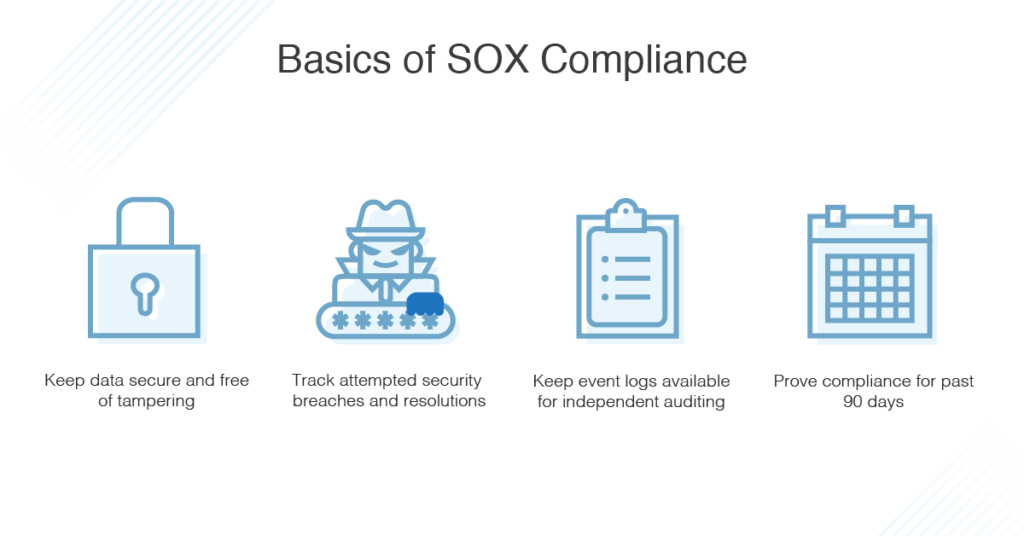
To truly grasp the significance of SOX, one must look back at the economic climate of the early 2000s. The era was defined by the collapse of massive corporations that were once considered the gold standard of American industry. These failures were not due to simple market shifts but were the result of systemic, intentional financial deception.
The Enron and WorldCom Context
The primary catalysts for the Sarbanes-Oxley Act were the catastrophic downfalls of Enron Corporation and WorldCom. Enron, an energy giant, used “special purpose entities” and complex accounting loopholes to hide billions of dollars in debt from its balance sheet. When the house of cards collapsed, shareholders lost $74 billion, and thousands of employees saw their retirement savings vanish overnight. Shortly thereafter, WorldCom admitted to inflating its assets by $11 billion.
These events shattered investor confidence and exposed massive gaps in the regulatory framework. The public demanded accountability, and the markets required a mechanism to ensure that the financial statements of public companies were accurate and honest.
The Core Objectives of the Legislation
Introduced by Senator Paul Sarbanes and Representative Michael G. Oxley, the act was designed with three primary objectives: to enhance corporate responsibility, to improve financial disclosures, and to combat corporate and accounting fraud. It aimed to move away from a system where executives could claim ignorance of financial mismanagement. By mandating a rigorous framework of internal controls and personal accountability, SOX transformed “good ethics” from a voluntary corporate choice into a legal requirement.
Key Pillars of the Sarbanes-Oxley Act
The Sarbanes-Oxley Act is a comprehensive piece of legislation consisting of eleven titles. However, for most financial professionals and businesses, three specific sections form the backbone of compliance efforts. These sections define the duties of the CEO, CFO, and the external auditors.
Section 302: Corporate Responsibility for Financial Reports
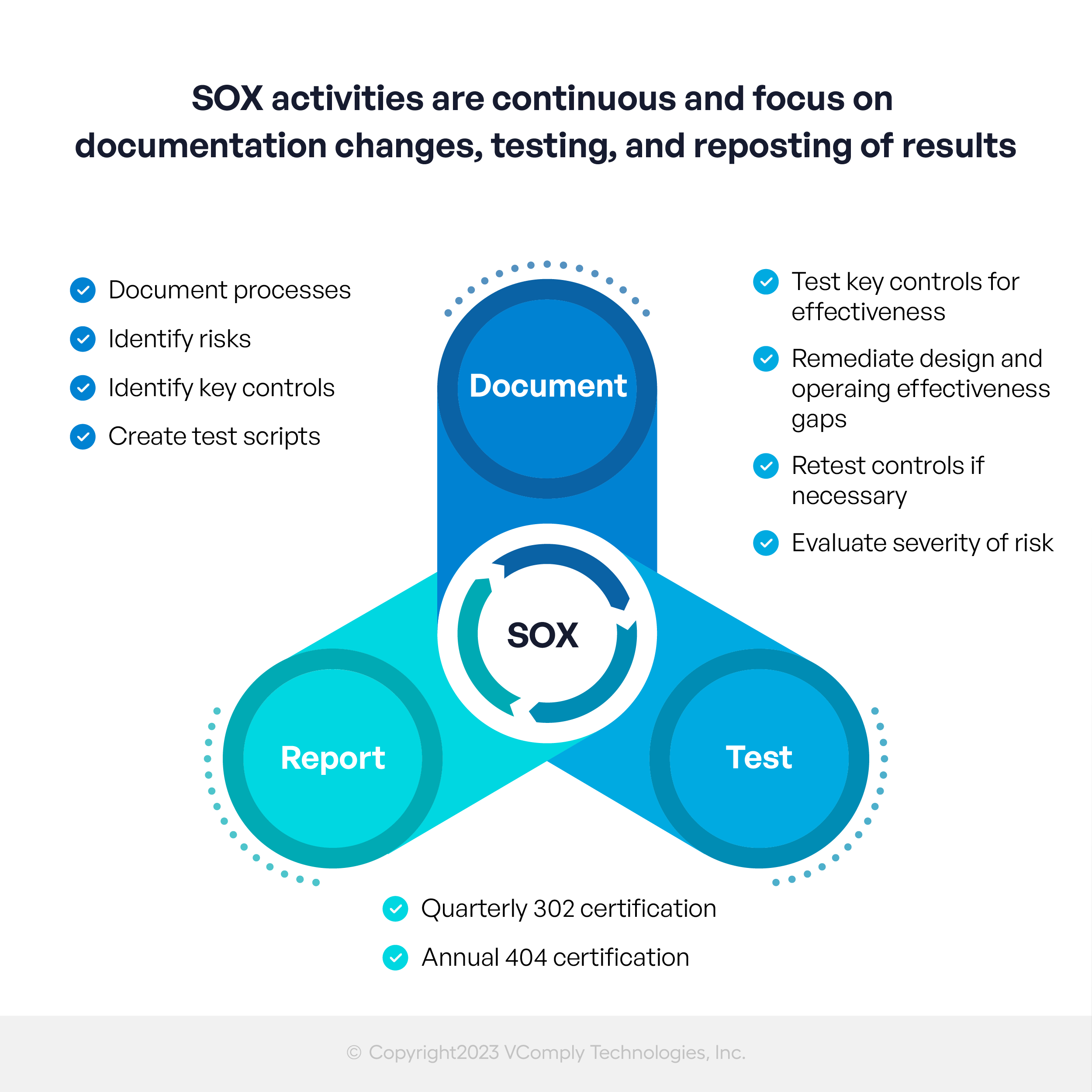
Before SOX, it was common for executives to distance themselves from the details of financial filings if fraud was discovered. Section 302 ended this practice by requiring the CEO and CFO to personally certify the accuracy of all financial reports.
Under this section, the signing officers must state that they have reviewed the reports, that the reports do not contain any untrue statements of material fact, and that the financial information fairly presents the company’s financial condition. This certification creates a direct line of legal accountability, ensuring that the “tone at the top” is focused on accuracy and transparency.
Section 404: Management Assessment of Internal Controls
Section 404 is perhaps the most famous and most burdensome aspect of the act. It requires management to maintain an adequate internal control structure and procedures for financial reporting. Furthermore, the company’s annual report must contain an assessment of the effectiveness of these internal controls.
For larger public companies, Section 404(b) requires an independent auditor to attest to, and report on, management’s assessment. This creates a “check and balance” system where internal processes are scrutinized by third-party experts to ensure there are no weak links that could lead to financial misstatements.
Section 802: Criminal Penalties for Altering Documents
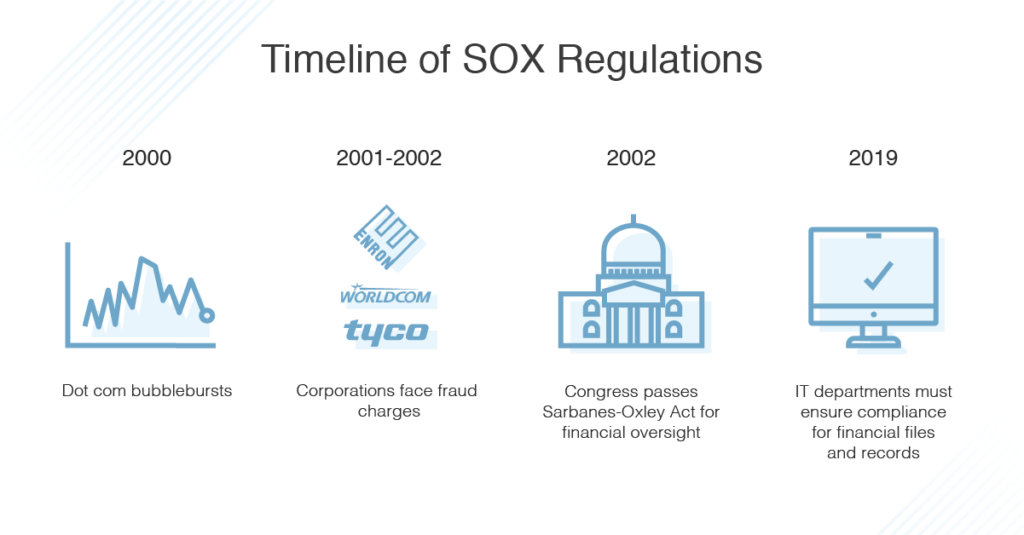
Section 802 deals specifically with the retention of records and the penalties for obstructing justice. This section was a direct response to the shredding of documents that occurred during the Enron investigation. It imposes harsh criminal penalties, including fines and up to 20 years in prison, for anyone who alters, destroys, or falsifies records with the intent to impede a federal investigation. This ensures that the paper trail—or digital trail—of a company’s financial history remains intact for regulators.
The Strategic Value of SOX Compliance for Modern Businesses
While the initial reaction to SOX was often focused on the burden of compliance, the long-term effects have been largely positive for the financial health of the markets. Companies that embrace SOX compliance often find that it provides more than just a legal shield; it offers a strategic advantage in a competitive landscape.
Enhancing Investor Confidence and Market Stability
The primary beneficiary of SOX is the investor. By mandating transparency and accountability, SOX has helped restore faith in the stock market. When an investor looks at a SOX-compliant company’s balance sheet, they can have a higher degree of confidence that the numbers reflect reality. This increased trust leads to greater market stability and can lower the cost of capital for compliant firms, as they are viewed as lower-risk investments.
Streamlining Internal Processes and Data Accuracy
In the process of documenting internal controls for Section 404, many companies discover inefficiencies they didn’t know existed. The rigorous audit of financial workflows often leads to the elimination of redundant tasks and the modernization of accounting systems. This “financial hygiene” results in more accurate data, which allows leadership to make better-informed strategic decisions based on a clear picture of the company’s cash flow, liabilities, and assets.
Challenges and Costs of Maintaining SOX Compliance
Despite its benefits, the Sarbanes-Oxley Act is not without its critics. The implementation of SOX has introduced significant costs, particularly for companies that are transitioning from private to public status.
The Financial Burden on Small to Mid-Cap Companies
For smaller public companies, the cost of compliance can be disproportionately high. Hiring external auditors, implementing specialized compliance software, and dedicating internal staff to document every control can run into millions of dollars annually. Critics argue that these costs may discourage smaller, innovative companies from going public (IPO), potentially limiting their growth and reducing the variety of investment options available to the public. Over the years, the SEC has introduced certain exemptions for “emerging growth companies” to mitigate these burdens.
Navigating the Complexity of Modern Audits
As business models become more complex—incorporating global supply chains, decentralized workforces, and intricate digital transactions—the audit process becomes exponentially more difficult. A SOX audit is no longer just about checking ledgers; it involves testing the security of the servers where financial data is stored, verifying the permissions of users in accounting software, and ensuring that “segregation of duties” is maintained in a digital environment. The complexity of these audits requires a high level of expertise, making the compliance process a year-round endeavor rather than a once-a-year event.
The Future of SOX: Automation and Digital Transformation
As we move further into the decade, the way companies manage SOX compliance is evolving. The manual spreadsheets and physical binders of the past are being replaced by sophisticated financial technology (FinTech) solutions.
Leveraging FinTech for Compliance Efficiency
Modern financial tools are now capable of continuous monitoring. Instead of waiting for a quarterly audit, companies can use AI-driven software to flag anomalies in real-time. For example, if a transaction is processed without the required dual-authorization, the system can automatically alert the compliance team. This proactive approach reduces the risk of fraud and significantly lowers the time and labor costs associated with traditional SOX audits.
Cybersecurity and the Evolving Definition of Internal Controls
In the modern era, “financial integrity” is inseparable from “digital security.” A breach of a company’s financial systems can lead to unauthorized data manipulation, which is a direct violation of SOX principles. Consequently, the scope of SOX is expanding to include rigorous cybersecurity controls.
The SEC has increasingly focused on how companies disclose their cybersecurity risks and incidents. For a company to be truly SOX-compliant today, it must demonstrate that its financial data is protected from external hacking and internal leaks. This fusion of finance and cybersecurity represents the next frontier of SOX, ensuring that the act remains relevant in an increasingly digital global economy.
In conclusion, “SOX” is much more than a regulatory hurdle. It is a comprehensive framework that transformed the world of finance from a “wild west” of unchecked executive power into a disciplined environment of accountability. While the costs of compliance are real, the value of a transparent, honest, and stable financial market is immeasurable. Whether you are an entrepreneur planning an IPO or an individual investor building a portfolio, the Sarbanes-Oxley Act remains the definitive standard for corporate integrity.
aViewFromTheCave is a participant in the Amazon Services LLC Associates Program, an affiliate advertising program designed to provide a means for sites to earn advertising fees by advertising and linking to Amazon.com. Amazon, the Amazon logo, AmazonSupply, and the AmazonSupply logo are trademarks of Amazon.com, Inc. or its affiliates. As an Amazon Associate we earn affiliate commissions from qualifying purchases.