
In the ecosystem of collectible card games (CCGs), few mechanics are as foundational or as elegant as “Scry.” Originally introduced in the Alliances expansion of Magic: The Gathering (MTG) and later becoming a “keyword action” and a staple of the game’s evergreen vocabulary, Scry represents a critical intersection of player agency and mathematical probability.
From a technological and design perspective, Scry is more than just a rule on a piece of cardboard; it is a sophisticated data-filtering algorithm integrated into a game’s architecture. Whether played on a physical tabletop or through the advanced digital interface of Magic: The Gathering Arena, Scry serves as a primary tool for “smoothing” the variance inherent in randomized systems. This article explores the technical mechanics of Scry, its implementation in digital software environments, and its broader implications for UX/UI design and game logic.

The Mechanics of Scry: From Cardboard to Code
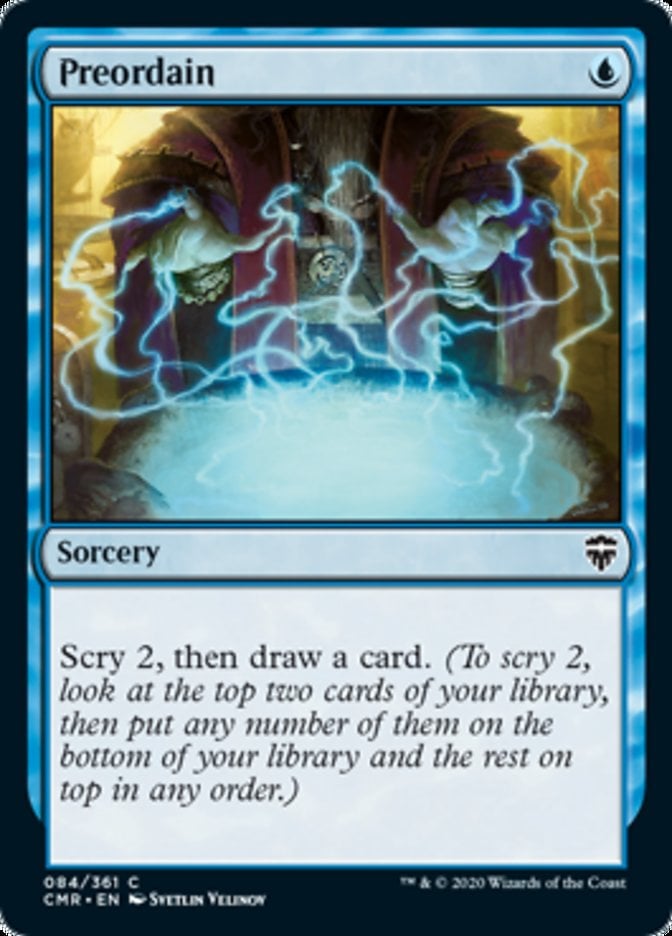
At its core, Scry is a keyword action that allows a player to look at a specific number of cards from the top of their library (deck), then put any number of them on the bottom of their library and the rest on top in any order. The shorthand is usually “Scry X,” where X is the number of cards the player examines.
Defining the Scry Logic
In computer science terms, Scry functions as a conditional filter applied to a stack data structure. The “Library” is an array of objects (cards) with a randomized order. When a Scry event is triggered, the software or the player executes a “Peek” function on the top n elements. The logic then permits a “Reorder” or “Move to Bottom” (re-indexing) command.
This provides the player with “look-ahead” capabilities. By allowing a user to interact with the stack before a “Draw” event occurs, the game designer introduces a level of deterministic control over a stochastic process. For developers, implementing this requires a robust state-tracking system that ensures the integrity of the deck’s order while allowing temporary visibility to only one participant in a multi-user environment.
The Evolution into Digital: MTG Arena’s Implementation
The transition of Scry from a manual physical action to a digital one in MTG Arena highlights the complexities of digital card game (DCG) architecture. In the physical game, Scrying relies on the honor system and physical dexterity. In the digital realm, the “Scry” mechanic must be handled by a secure server-side engine to prevent data packets from revealing the entire deck order to malicious clients (anti-cheat protocols).
When a player Scries in MTG Arena, the server sends only the information for the top n cards. The UI then creates a temporary workspace—a “modal window”—where the player can drag and drop icons. The technical challenge here is maintaining “game state synchronicity.” The server must wait for the client’s input before finalizing the stack’s new indices, all while maintaining a seamless experience that doesn’t feel like a laggy transaction.
Scry as a Tool for Variance Reduction in Game Algorithms
One of the biggest hurdles in game design is managing “variance”—the degree of randomness that can lead to a “non-game” (where one player loses simply due to poor luck). Scry is the ultimate tech-solution to this problem. It acts as a manual “heuristic” that allows players to optimize their own “draw engine.”
Managing RNG through User-Driven Data Filtering
Random Number Generation (RNG) is the heartbeat of MTG. However, “raw” RNG can often lead to frustration. By integrating Scry into the game’s card pool, designers provide players with a “buffer” against the “mana screw” or “mana flood” (having too few or too many resources).
From a systems-engineering standpoint, Scry increases the “velocity” of a deck without increasing its “power level” in a vacuum. It allows a deck to find its “win conditions” more reliably. This is an essential concept in modern software tools as well: providing users with filters to find relevant data faster, rather than just dumping a raw database output in front of them.
The Mathematical Impact on “Smoothing” Game States
When a developer balances a game, they look at “probability curves.” A deck with Scry mechanics has a different probability distribution than one without. Mathematically, Scrying for one card (Scry 1) effectively lets a player see 50% more of their deck over time if they are looking for a specific type of card.

In digital environments, this “smoothing” can be simulated through Monte Carlo iterations to see how Scry affects game length and player satisfaction. By tuning the frequency of Scry-heavy cards, developers can control the “meta-game” speed, ensuring that matches are decided by strategic decisions (software inputs) rather than just the initial seed of the randomizer.
UX/UI Design: How Scry Enhances the Player Decision Architecture
The way Scry is presented to a player is a classic study in User Experience (UX) design. It requires the interface to communicate hidden information, allow for complex manipulation, and provide clear feedback on the final state of the deck.
Visualizing Information Scarcity
In MTG Arena or Magic Online, the Scry interface must be distinct. Designers use visual cues—such as a specific “eye” icon or a dedicated zone on the screen—to indicate that the player is in a “Scry state.” This is vital for “cognitive load” management. A player needs to know exactly which cards are on top of the library, which are destined for the bottom, and which have not yet been looked at.
The UI designers utilize “drag-and-drop” mechanics to make this feel intuitive. This mimics the physical act of moving cards but adds a layer of digital clarity (e.g., highlighting a card in blue if it’s staying on top and red if it’s going to the bottom). This feedback loop ensures the user feels in control of the underlying data manipulation.
Responsive Feedback Loops in Digital Card Games
A successful digital implementation of Scry also requires “opponent-side” UX. Even though the opponent cannot see what was Scried, the UI must communicate that an action is taking place. Small animations, such as a card being tucked under the deck, provide “game feel.” This is a technical requirement for “concurrency”—ensuring that both users’ clients stay in sync regarding the timing of game phases, even when one player is making a hidden decision.
The Future of Predictive Mechanics in Gaming Tech
The logic behind Scry—predictive analysis and data filtering—is increasingly relevant in the world of Artificial Intelligence (AI) and machine learning within the gaming industry. As games become more complex, the tools we use to navigate that complexity must evolve.
AI and Machine Learning in Strategic Simulations
Modern MTG “bots” and AI players use algorithms like “Minimax” or “Monte Carlo Tree Search” (MCTS) to determine the best Scry decisions. An AI must calculate the “Expected Value” (EV) of keeping a card versus sending it to the bottom. This involves simulating thousands of potential future game states based on the remaining cards in the deck.
This tech isn’t just for bots; it’s used by professional players and analysts who use “deck-shuffler” simulators to optimize their deck lists. The Scry mechanic provides a perfect data set for training reinforcement learning models, as every Scry decision has a measurable impact on the probability of a win or loss.
Beyond MTG: Implementing Scry-like Logic in Software Design
The “Scry logic” is applicable far beyond the world of Wizards of the Coast. In software development, we see similar patterns in “predictive fetching” or “data pre-loading.” Just as a player Scries to prepare for future turns, modern web browsers “Scry” by pre-loading links they predict a user might click.
In cybersecurity, “Scry-like” mechanics are used in anomaly detection. Systems “look at” incoming packets (the top of the stack) and decide whether to “keep them” (allow them into the network) or “put them on the bottom” (drop or quarantine them) based on predictive heuristics. The fundamental goal is the same: reducing noise and focusing on high-value data.
Conclusion
“Scry” in Magic: The Gathering is a masterclass in how a simple rule can create profound depth when viewed through the lens of technology and logic. It is a tool for managing randomness, a challenge for UX/UI designers, and a data-point for AI researchers. By understanding what it means to Scry, we gain insight into how developers manage complex systems, ensure fair play in digital environments, and empower users to navigate through seas of randomized data to find the “perfect draw.” Whether you are a software engineer or a competitive player, the logic of the Scry remains a powerful testament to the elegance of well-optimized system design.
aViewFromTheCave is a participant in the Amazon Services LLC Associates Program, an affiliate advertising program designed to provide a means for sites to earn advertising fees by advertising and linking to Amazon.com. Amazon, the Amazon logo, AmazonSupply, and the AmazonSupply logo are trademarks of Amazon.com, Inc. or its affiliates. As an Amazon Associate we earn affiliate commissions from qualifying purchases.