
In the landscape of modern technology, the bridge between human intent and machine understanding is built upon the foundation of Natural Language Processing (NLP). For a global audience, the question “what does porque in Spanish mean” may seem like a simple vocabulary query. However, for software engineers, AI researchers, and developers of language-learning applications, this single word represents a sophisticated challenge in contextual computation. In Spanish, the concept of “why” or “because” is split into four distinct orthographic forms—porque, por qué, porqué, and por que—each serving a unique grammatical function.
Understanding how technology distinguishes between these forms is not just a lesson in linguistics; it is a masterclass in how modern AI tools, translation software, and digital educational platforms manage high-stakes data processing to provide accurate, real-time communication.
The Four Pillars of “Why”: A Challenge for Algorithmic Contextualization
To understand how technology processes Spanish, one must first understand the data points. The word “porque” is a homophone in many instances, yet its meaning shifts drastically based on accentuation and spacing. For a machine, distinguishing these requires more than a simple dictionary look-up; it requires a deep analysis of syntactic structure.
The Orthographic Variations: Porque, Por qué, Porqué, and Por que
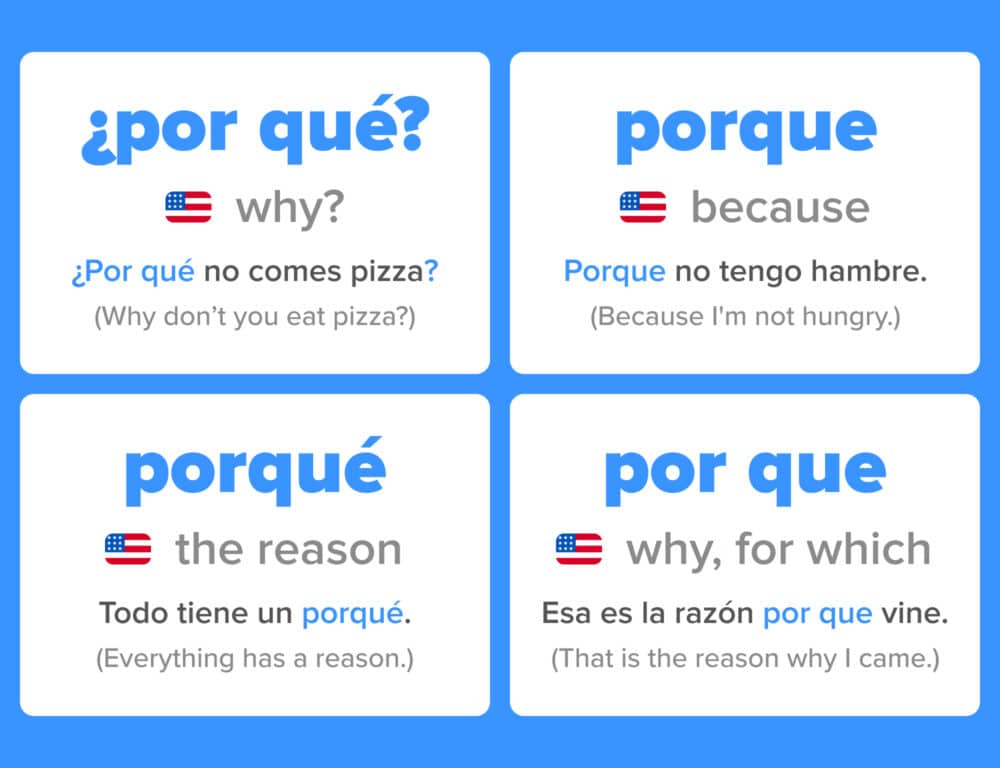
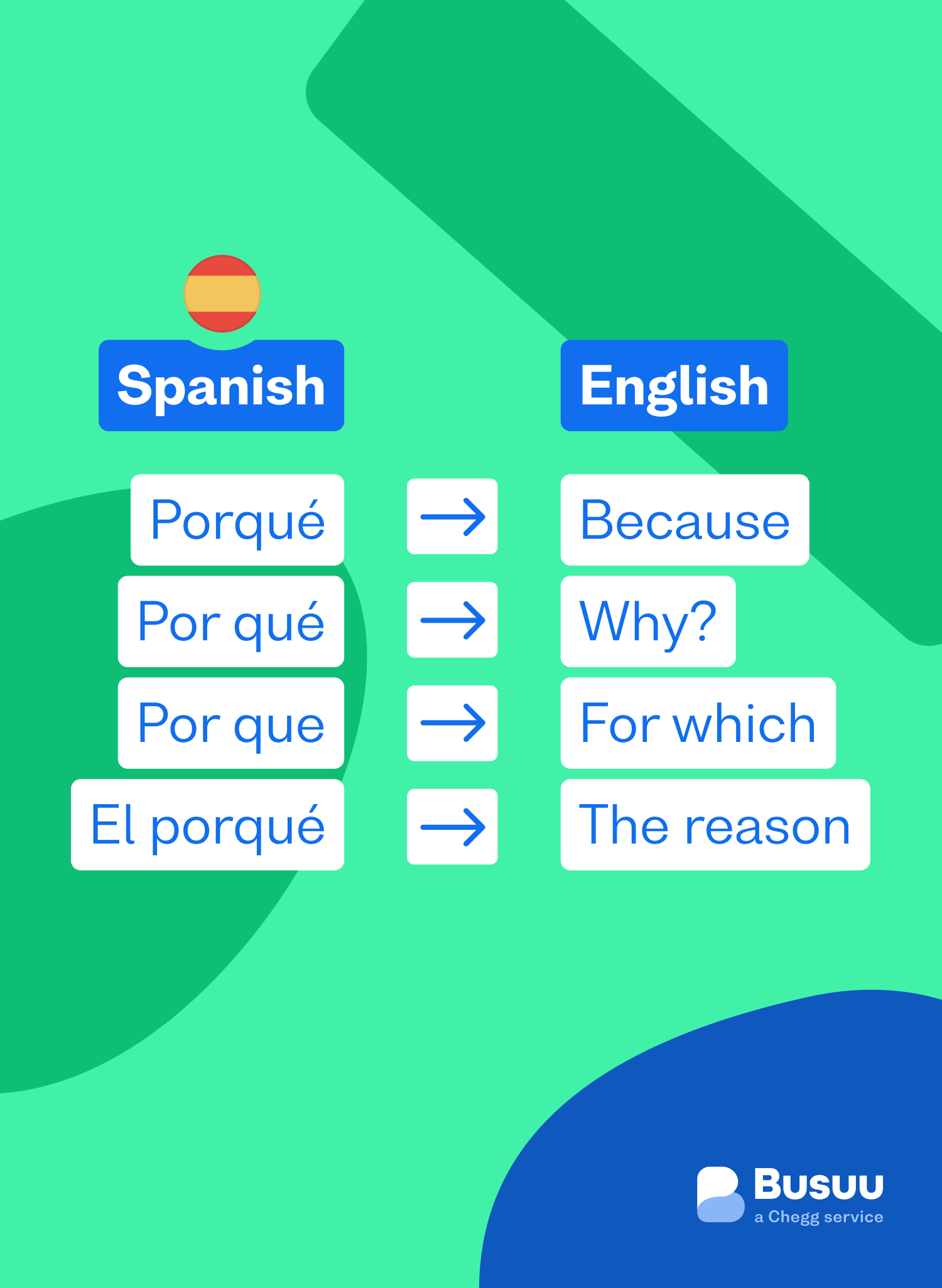
The primary challenge for any AI translation tool lies in the subtle differences between these four variations.
- Porque: A causal conjunction used to introduce a reason (equivalent to “because”).
- Por qué: The interrogative form used in questions (equivalent to “why”).
- Porqué: A noun meaning “the reason” or “the motive,” typically preceded by an article like “el.”
- Por que: A relative pronoun or a combination of a preposition and a conjunction, often translated as “for which.”
For a digital security algorithm or a customer service chatbot, confusing “por qué” (a question) with “porque” (an answer) could lead to a total failure in logic flow. Identifying these variations is the first step in training a Large Language Model (LLM) to interact naturally with Spanish-speaking users.
Identifying Syntactic Patterns in Large Language Models (LLMs)
Modern LLMs, such as GPT-4 or Claude, do not look at “porque” as a static string of characters. Instead, they use tokenization to break down the sentence into numerical representations. By analyzing the tokens surrounding “porque,” the model calculates the probability of its meaning. For instance, if the software detects a question mark at the end of the sentence or an opening inverted question mark (¿), the probability weight shifts toward “por qué.” This contextual awareness is what allows AI tools to offer real-time corrections in grammar-checking software like Grammarly or Hemingway, helping non-native speakers navigate the “porque” minefield.
From Rule-Based to Neural: The Evolution of Digital Translation Technology
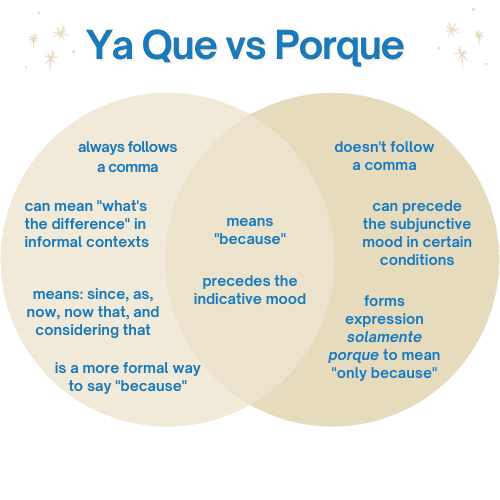
The history of how we answer “what does porque mean” through tech has shifted from rigid, rule-based systems to the fluid world of Neural Machine Translation (NMT). In the early days of digital translation, software relied on “if-then” logic. If “porque” followed a comma, it was likely “because.” However, human language is far too nuanced for such binary rules.
The Limitations of Statistical Machine Translation
Before the rise of AI, Statistical Machine Translation (SMT) dominated the field. These systems analyzed large bodies of bilingual text (corpora) to find the most frequent translation for “porque.” While effective for basic phrases, SMT often struggled with the “porqué” noun form. Because the noun version is less common in everyday data, older versions of Google Translate would frequently mistranslate it. This led to a “digital accent” where the software was technically correct but contextually awkward, a major hurdle for developers building apps for the Latin American and Spanish markets.
Transformer Architecture and the Power of Attention Mechanisms
The true breakthrough came with the “Transformer” architecture, the technology behind modern AI. Transformers utilize an “Attention Mechanism,” which allows the software to focus on specific parts of a sentence regardless of their distance from the word in question. When a user types a complex sentence involving “por que,” the AI can look back at the beginning of the sentence to find the prepositional trigger that requires that specific spelling. This level of technological sophistication ensures that when a user asks an AI “what does porque mean,” the AI can provide a response that accounts for the nuances of the “why/because” dichotomy.
Natural Language Processing (NLP) in Practice: Building Better Language Learning Tools
For EdTech companies like Duolingo, Babbel, or Rosetta Stone, the distinction between these Spanish terms is a core component of their pedagogical software. These apps are not just digital textbooks; they are complex software ecosystems designed to gamify the acquisition of linguistic logic.
Real-time Feedback in Educational Apps
The technology behind language-learning apps uses “error patterns” to improve user experience. If a user consistently confuses “por qué” and “porque,” the app’s backend algorithm flags this as a specific deficit in the user’s learning path. The software then dynamically adjusts the upcoming curriculum to provide more “spaced repetition” exercises focusing on those specific tokens. This is a prime example of how data-driven software can personalize education at scale, transforming a simple vocabulary word into a tailored digital learning experience.
Managing Dialectal Variations and Localized Meaning
Technology must also account for the fact that Spanish is not a monolith. The use of “porque” and its variants can be influenced by regional dialects across 20+ countries. High-end AI tools now incorporate localization layers. For software developers, this means utilizing “Named Entity Recognition” (NER) and “Sentiment Analysis” to determine if a user’s query originates from Spain, Mexico, or Argentina. By doing so, the software can provide definitions and usage examples that are culturally and technologically relevant to the user’s specific demographic.
The Future of Semantic Accuracy in AI-Driven Communication
As we look toward the future of digital communication, the ability of technology to decipher subtle linguistic cues will only become more critical. We are moving toward a world of “human-parity” in translation, where the gap between a human interpreter and an AI tool is virtually indistinguishable.
Ethical Considerations in Automated Translation
When we rely on tech to tell us what “porque” means, we are placing trust in the underlying data sets. If those data sets contain biases or errors, the translation software will perpetuate them. For developers in the digital security and AI ethics space, ensuring that translation algorithms are trained on diverse, high-quality corpora is essential. A mistranslation in a legal document or a medical app—such as confusing a reason (porque) with a question (por qué)—could have real-world consequences. This highlights the need for continuous oversight in the development of AI tools.
Towards Human-Parity in Contextual Understanding
The goal for the next generation of gadgets and apps, from smart glasses with real-time HUD translations to AI-powered earpieces, is to handle “porque” with zero latency. This requires processing power that can execute complex NLP tasks on the “edge”—meaning the calculations happen on the device rather than in the cloud. As mobile processors become more powerful, our ability to instantly translate and understand the “four whys” of Spanish will become a seamless part of our digital lives.
In conclusion, while the question “what does porque in Spanish mean” may originate in a dictionary, its answer is found in the cutting-edge realms of software engineering and artificial intelligence. From the Transformer models that power our search engines to the personalized algorithms in our educational apps, technology is the lens through which we now view and understand the world’s most beautiful linguistic complexities. Whether you are a developer building the next great app or a user seeking to communicate across borders, the intersection of Spanish linguistics and tech innovation is where the future of global connection lies.
aViewFromTheCave is a participant in the Amazon Services LLC Associates Program, an affiliate advertising program designed to provide a means for sites to earn advertising fees by advertising and linking to Amazon.com. Amazon, the Amazon logo, AmazonSupply, and the AmazonSupply logo are trademarks of Amazon.com, Inc. or its affiliates. As an Amazon Associate we earn affiliate commissions from qualifying purchases.