
In the rapidly evolving world of industrial technology, digital infrastructure, and large-scale software deployment, safety and efficiency are paramount. When professionals ask, “What does JHA stand for?” they are typically entering the realm of Job Hazard Analysis. While the term has its roots in traditional occupational safety, the digital transformation has reimagined the JHA as a tech-driven, data-heavy framework essential for protecting both human capital and high-value technical assets.
A Job Hazard Analysis (JHA) is a systematic procedure that focuses on job tasks as a way to identify hazards before they occur. It focuses on the relationship between the worker, the task, the tools, and the work environment. In today’s tech-centric economy—spanning from massive data center operations to semiconductor manufacturing—the JHA is no longer just a clipboard exercise; it is a sophisticated component of the modern tech stack.

The Evolution of JHA: From Paper Checklists to Safety Tech Integration
Historically, a JHA was a static document, often relegated to a filing cabinet. However, the integration of Technology Trends and Software has revolutionized how these analyses are conducted, stored, and utilized.
The Transition from Paper to Digital Safety Platforms
The modern tech industry has largely abandoned manual documentation in favor of Integrated Management Systems (IMS). Digital JHA tools allow for real-time updates, version control, and instant accessibility across global teams. For a software engineering firm or a hardware testing lab, having a digital JHA means that safety protocols are updated as quickly as the software deployment cycle. Cloud-based platforms ensure that a technician in a server farm in Virginia and a developer in Singapore are operating under the same safety parameters.
Key Components of a Tech-Enabled JHA
A comprehensive digital JHA consists of several data points that go beyond simple “if/then” scenarios. These include:
- Task Sequencing: Breaking down a technical process into discrete, manageable steps.
- Hazard Identification: Pinpointing where physical, electrical, or data-driven risks exist.
- Control Measures: Utilizing automated systems or hardware safeguards to mitigate risks.
- Data Validation: Using historical incident data to predict where future failures might occur.
The Role of Technology in Modern JHA Implementation
As we move deeper into the era of Industry 4.0, the “how” of conducting a JHA has become as technical as the jobs being analyzed. The intersection of AI, mobile apps, and IoT has turned the JHA into a proactive rather than reactive tool.
AI and Predictive Analytics in Hazard Detection
Artificial Intelligence is perhaps the most significant tech trend impacting JHA today. Machine Learning (ML) algorithms can analyze years of safety data to identify patterns that a human observer might miss. For example, in a high-tech manufacturing plant, AI can predict that a specific robotic arm configuration increases the likelihood of a mechanical failure during a certain phase of production. By integrating these insights into the JHA, tech leads can implement preventative maintenance schedules before a hazard ever manifests.
Mobile Applications and Real-Time Reporting
The proliferation of specialized “Safety Apps” has democratized the JHA process. Field engineers and IT technicians can now use tablets and smartphones to complete a JHA on-site. These apps often feature:
- Photo and Video Documentation: Instead of describing a faulty server rack, a technician can upload a high-resolution photo directly into the analysis.
- GPS and Time-Stamping: Ensuring that the analysis was conducted at the correct location and time, providing an audit trail for digital security and compliance.
- Dynamic Risk Scoring: Software that calculates the “Risk Priority Number” (RPN) instantly based on the severity and probability of a hazard.
Why JHA is Essential for Digital Infrastructure and IT Operations
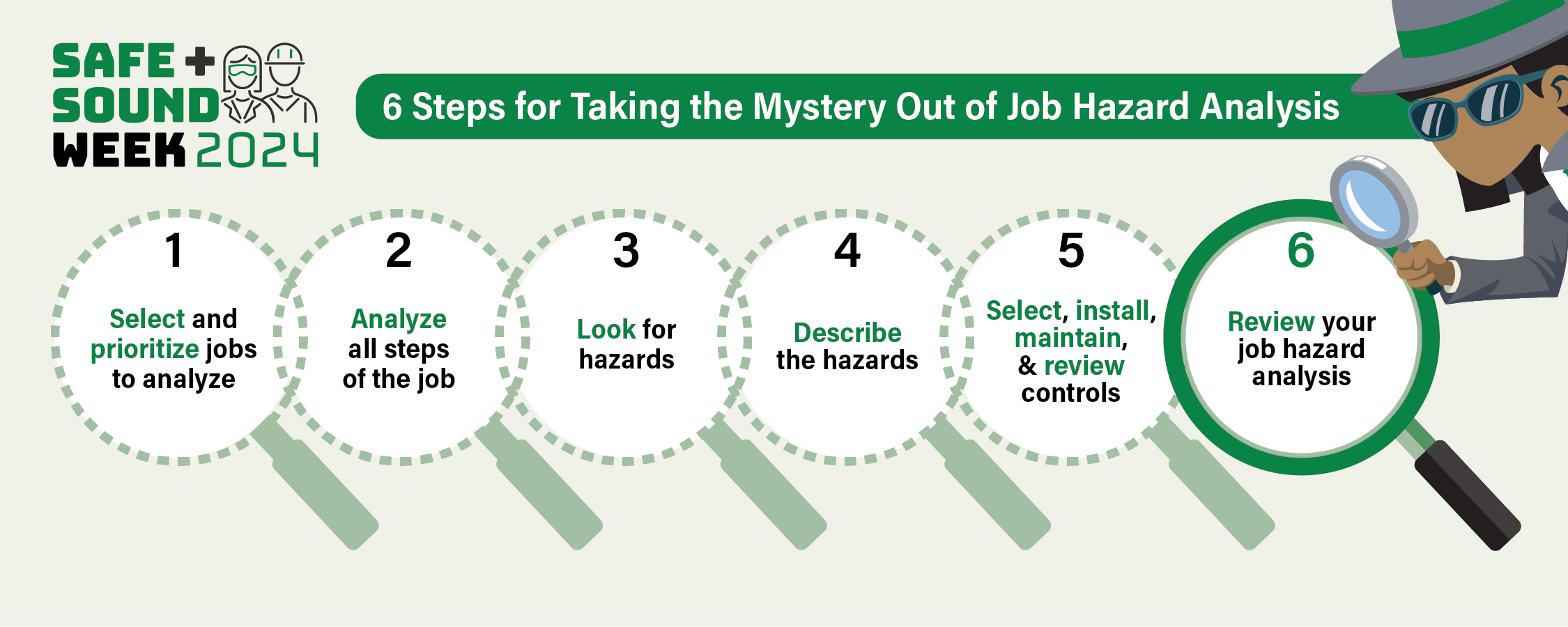
While many associate hazard analysis with construction or mining, it is critically important in the tech sector, specifically within data centers, telecommunications, and R&D labs.
Managing Risks in Data Centers and Server Environments
Data centers are the backbone of the modern internet, but they are also environments filled with unique hazards. High-voltage electrical systems, sophisticated cooling infrastructures (often involving chemicals or pressurized water), and the physical weight of server racks present significant risks. A JHA in this context ensures that when a technician is upgrading a liquid-cooling system, the “tech” doesn’t just refer to the cooling unit, but to the systematic software-driven safety protocol that prevents a catastrophic leak or electrical surge.
Cyber-Physical Systems and Security Hazards
In the niche of “Tech Security,” the JHA often overlaps with physical security. For example, when installing high-end biometric access points or surveillance hardware, a JHA must account for the intersection of physical installation risks and the integrity of the digital network. If a technician improperly installs a smart lock, it creates a physical hazard (the door not latching) and a digital hazard (a vulnerability in the network). The JHA framework helps bridge this gap by ensuring the technical installation follows a rigid, hazard-aware sequence.
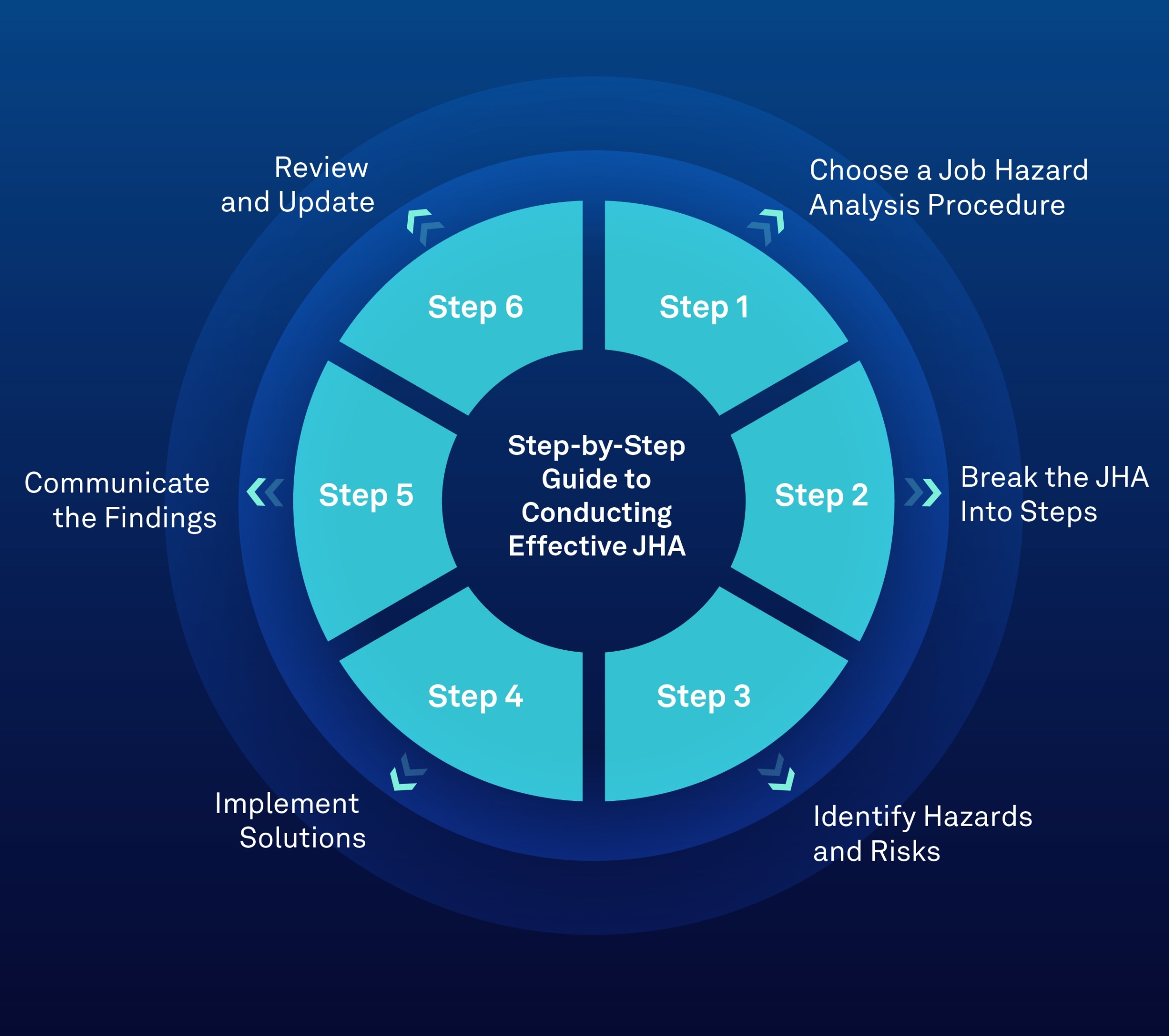
A Step-by-Step Guide to Conducting a Tech-Enabled JHA
For organizations looking to modernize their safety protocols, the following steps represent the “gold standard” of a tech-driven Job Hazard Analysis.
Identification of Tasks and Sequencing through Workflow Software
Before you can identify a hazard, you must understand the workflow. Using Project Management software like Jira or Asana, teams can break down complex technical tasks—such as “Migrating On-Premise Servers to Cloud Architecture”—into sub-tasks. Each sub-task is then evaluated within the JHA software to determine if the physical or digital environment presents a risk to the personnel or the data.
Leveraging Software for Hazard Assessment
Instead of guessing at the severity of a risk, modern tech firms use quantitative assessment tools. These software packages utilize standardized “Risk Matrices.” A technician inputs the variables (e.g., “Working near exposed fiber optic lines”), and the software provides a risk rating based on industry benchmarks. This removes human bias and ensures that safety standards remain consistent across different departments.
Implementing and Monitoring Digital Controls
Once a hazard is identified, “controls” must be implemented. In a tech environment, these are often “Engineering Controls”—technological solutions that physically prevent the hazard. For instance, if a JHA identifies a risk of data loss during a hardware swap, the “control” might be an automated, software-triggered backup that must complete before the physical task can begin. Monitoring these controls is done through dashboards that provide real-time feedback to safety officers and department heads.
The Future of JHA: Wearables, IoT, and Real-Time Monitoring
Looking forward, the concept of a JHA is becoming “living” rather than static. We are moving toward a reality where the analysis is happening in real-time as the job is performed.
Wearable Technology and Biometric Feedback
In high-stress tech environments, such as clean rooms or deep-sea cable laying, wearable devices can monitor a worker’s vitals. If a worker’s heart rate or body temperature spikes while performing a hazardous task identified in the JHA, the system can trigger an immediate alert or a “stop-work” command. This integrates personal health tech directly into the corporate safety framework.
The Internet of Things (IoT) and “Smart” Hazards
IoT sensors are now being used to feed data directly back into JHA databases. If a sensor on a server rack detects an unusual vibration or heat signature, it can automatically update the JHA for any technician scheduled to work on that unit. This level of connectivity means that the “Job Hazard Analysis” is no longer just a document—it is a dynamic, sensing organism that protects the workforce through constant data acquisition.
Conclusion: The Strategic Value of JHA in Tech
When we answer the question “What does JHA stand for?”, we are describing the intersection of human safety and technological excellence. In the tech industry, a JHA is a vital tool that ensures the push for innovation does not come at the cost of human or systemic safety. By leveraging the latest in AI, SaaS platforms, and IoT, companies can transform their Job Hazard Analysis from a bureaucratic requirement into a competitive advantage. In a world where uptime is everything and talent is the most valuable resource, mastering the tech-driven JHA is not just a safety requirement—it is a fundamental pillar of modern business strategy.
aViewFromTheCave is a participant in the Amazon Services LLC Associates Program, an affiliate advertising program designed to provide a means for sites to earn advertising fees by advertising and linking to Amazon.com. Amazon, the Amazon logo, AmazonSupply, and the AmazonSupply logo are trademarks of Amazon.com, Inc. or its affiliates. As an Amazon Associate we earn affiliate commissions from qualifying purchases.