
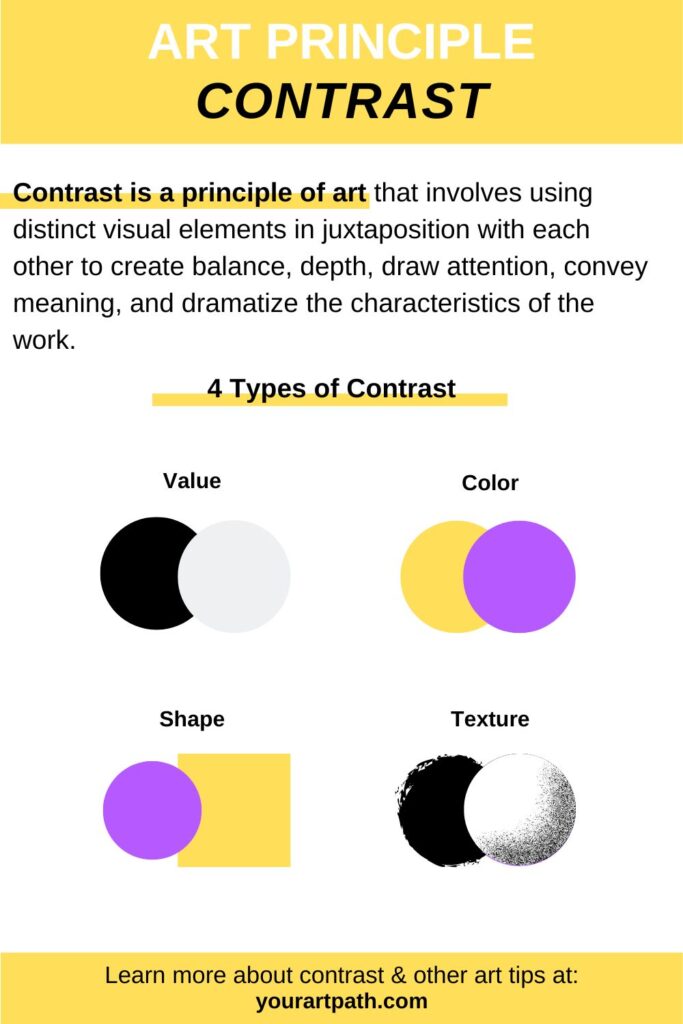
In the world of brand strategy and visual identity, contrast is often reduced to a simple design principle—the difference between black and white or light and dark. However, for brand architects, marketers, and entrepreneurs, contrast is a far more potent tool. It is the engine of visibility, the driver of memory, and the foundation of market positioning. When we ask, “What does contrast do?” we are really asking how a brand can distinguish itself in a crowded marketplace to capture attention and command loyalty.
Contrast is the mechanism that allows the human brain to process information efficiently. Without it, everything blends into a homogenous blur. In branding, contrast functions as a strategic lever that creates clarity, establishes hierarchy, and reinforces a brand’s unique value proposition.

Visual Contrast: The Foundation of Brand Recognition
At its most fundamental level, contrast is a visual tool. It dictates how a consumer interacts with a brand’s assets, from a logo on a smartphone screen to a billboard on a highway. In a digital-first economy, the ability to stand out visually is not just an aesthetic choice; it is a functional requirement for brand survival.
Color Theory and the Rule of Distinction
Color contrast is perhaps the most immediate application of this principle. Strategic branding utilizes high-contrast color palettes to ensure that key elements—such as a call-to-action button or a brand mark—are the first things a viewer sees. Complementary colors (those opposite each other on the color wheel, like blue and orange) create a natural vibration that draws the eye.
Beyond mere visibility, contrast in color dictates brand “mood.” A low-contrast palette, such as various shades of beige and cream, communicates luxury, serenity, and subtlety (common in high-end skincare brands). Conversely, high-contrast palettes (black and neon yellow) scream urgency, energy, and accessibility. By manipulating color contrast, a brand can signal its personality before a single word of copy is read.
Typography: Balancing Boldness with Readability
Contrast in typography is about more than just size; it is about weight, style, and spacing. A brand that uses a heavy, masculine serif font for headings paired with a light, airy sans-serif for body text is using contrast to create a visual hierarchy. This guides the reader’s eye, telling them what is most important (the headline) and what provides supporting detail (the copy).
In branding, typographic contrast also serves to prevent “visual fatigue.” If every element on a package or website has the same visual weight, the consumer’s brain has to work harder to decode the information. Strategic contrast reduces this cognitive load, making the brand feel more “intuitive” and professional.
The Role of Negative Space in High-Contrast Design
Negative space, or “white space,” is the ultimate tool for creating contrast. It is the silence between the notes that makes the music. By surrounding a logo or a product image with ample negative space, a brand creates a “focal point” that is impossible to miss. This is a hallmark of minimalist brand strategies—think of Apple’s packaging or Nike’s advertising. The contrast between the “something” (the product) and the “nothing” (the white space) elevates the product, giving it an aura of importance and premium quality.
Strategic Contrast: Positioning Your Brand Against the Grain
While visual contrast handles the “how” of brand appearance, strategic contrast handles the “why.” In a saturated market, a brand cannot succeed by being slightly better than its competitors; it must be different. This is the essence of strategic contrast: positioning a brand in direct opposition to the status quo.
Disruptive Messaging in Saturated Markets
Contrast in messaging involves identifying the “standard” language of an industry and intentionally choosing a different path. If every bank is talking about “trust,” “heritage,” and “stability” using blue logos and stock photos of handshakes, a challenger brand might use vibrant colors and a tone of voice that is irreverent, transparent, or even self-deprecating.
This strategic contrast creates a “pattern interrupt.” When a consumer sees a brand that doesn’t look or talk like the others in its category, they stop. This pause is the first step toward brand engagement. By being the “contrast” to the industry norm, a brand defines itself not just by what it is, but by what it is not.
The “Anti-Brand” Movement and Counter-Intuitive Marketing
Some of the most successful modern brand strategies rely on the contrast of being an “anti-brand.” In an era of hyper-polished, corporate perfection, brands like Liquid Death (canned water) or MSCHF use contrast to mock traditional marketing tropes.
Liquid Death uses the visual language of heavy metal and energy drinks—traditionally associated with “unhealthy” lifestyles—to sell the healthiest product on earth: water. This high-contrast approach between the “vibe” and the “product” created a multi-billion dollar brand. It works because it provides a stark contrast to the soft, blue-and-green aesthetic of every other water brand on the shelf.
Psychological Contrast: Influencing Consumer Perception
Contrast also operates on a psychological level, influencing how consumers value a product and how they remember a brand experience. Understanding the cognitive biases associated with contrast allows brand strategists to craft more compelling narratives.
The Von Restorff Effect in Brand Recall
Also known as the “Isolation Effect,” the Von Restorff Effect predicts that when multiple similar objects are present, the one that differs from the rest is most likely to be remembered. In branding, this is the ultimate goal of contrast.
If a consumer walks down a retail aisle and sees twenty boxes of cereal that all use bright cartoons and primary colors, and one box that is matte black with elegant white text, that one box will be remembered. It has successfully used contrast to “isolate” itself in the consumer’s memory. This isn’t just about being “weird”; it’s about being the outlier in a sea of similarity.
Creating Emotional Tension and Resolution
Great branding often uses contrast to tell a story of tension and resolution. This is frequently seen in “Before and After” marketing or “Problem vs. Solution” narratives. By vividly illustrating the “darkness” of a consumer’s problem (the high-contrast pain point) and then presenting the “light” of the brand’s solution, the brand creates an emotional arc.
The greater the contrast between the problem and the solution, the more valuable the brand appears. This is why high-growth B2B brands spend so much time articulating the “cost of inaction”—they are widening the contrast between the current state of the customer and the future state the brand provides.
Practical Application: Implementing Contrast Across Touchpoints
To be effective, contrast must be applied consistently across all brand touchpoints. It is not enough to have a high-contrast logo if the customer service experience feels “gray” and indistinct.
Contrast in Digital Experience (UX/UI)
In the digital realm, contrast is a matter of accessibility and conversion. High contrast between text and background ensures that a brand is inclusive of users with visual impairments. Furthermore, contrast is used to drive “user flow.” A high-contrast “Sign Up” button against a muted background acts as a visual magnet, guiding the user toward the desired action. Strategic contrast in UI (User Interface) design directly impacts a brand’s bottom line by increasing conversion rates.
Physical Packaging and Retail Presence
On the shelf, contrast is about “shelf pop.” Brand managers often use “eye-tracking” studies to see how quickly a consumer’s gaze finds their product. Contrast in texture (matte vs. gloss), shape (curved vs. angular), and color is what stops the “scanning” behavior of a shopper. If your brand lives in a retail environment, contrast is your primary salesperson. It is the silent shout that demands a second look.

Conclusion: Mastering the Balance of Contrast
What does contrast do? It provides the clarity needed to choose, the friction needed to remember, and the identity needed to belong. Without contrast, a brand is invisible. However, the mastery of contrast requires balance. Too much contrast can be jarring, aggressive, or “cheap.” Too little, and the brand becomes a wallflower—pleasant but ignored.
The most successful brands in the world use contrast as a precision tool. They use visual contrast to guide the eye, strategic contrast to disrupt the market, and psychological contrast to anchor themselves in the consumer’s mind. By understanding and implementing the power of contrast, a brand moves beyond being just another option in a category—it becomes the definitive choice. Whether through a bold color choice or a radical shift in brand voice, contrast is the bridge between being noticed and being known.
aViewFromTheCave is a participant in the Amazon Services LLC Associates Program, an affiliate advertising program designed to provide a means for sites to earn advertising fees by advertising and linking to Amazon.com. Amazon, the Amazon logo, AmazonSupply, and the AmazonSupply logo are trademarks of Amazon.com, Inc. or its affiliates. As an Amazon Associate we earn affiliate commissions from qualifying purchases.