
In the world of personal finance and real estate investment, terms like “contingent” often appear as hurdles between an aspiring homeowner and their target asset. For the uninitiated, seeing a “contingent” status on a property listing can be confusing. Does it mean the house is sold? Is it still available for backup offers? More importantly, if you are the one making the offer, what financial protections does a contingency provide?
Understanding the nuances of a contingent offer is essential for managing your personal balance sheet. A home is often the largest single investment an individual will ever make, and the legal clauses surrounding its purchase are designed to protect your capital, your liquidity, and your long-term financial health.
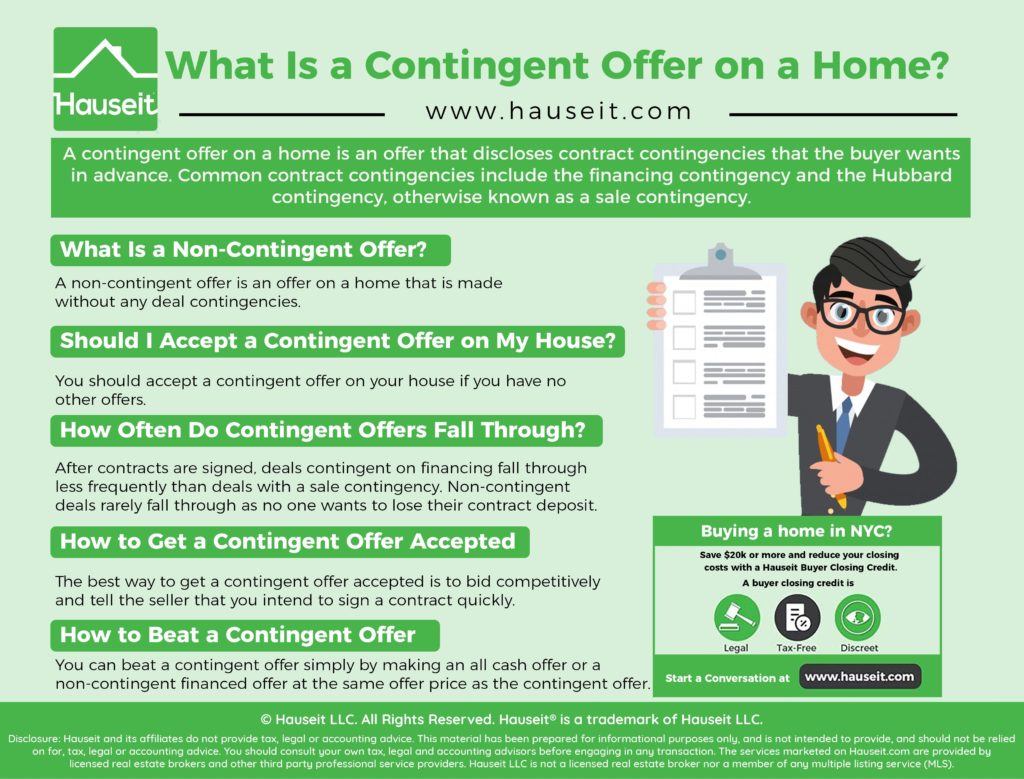
Decoding the Concept of Contingency in Real Estate Finance
At its core, a contingency is a condition that must be met for a real estate contract to become legally binding and move toward closing. In financial terms, think of a contingency as a “risk mitigation” clause. It allows a buyer to walk away from a deal—ideally with their earnest money deposit intact—if certain specific criteria are not satisfied.
Defining the Contingent Offer
When a house is listed as “contingent,” it means the seller has accepted an offer, but the final sale is dependent on the successful resolution of one or more specified conditions. From a legal and financial standpoint, the property is “under contract,” but the transaction is not yet a “fait accompli.” The buyer has effectively locked in the price, but they have also built in “exit ramps” should the investment prove to be riskier than initially anticipated.
Why Contingencies Are Vital for Financial Protection
For an investor or a primary homebuyer, contingencies serve as a safeguard against unforeseen liabilities. Without these clauses, you could be legally forced to purchase a property even if you cannot secure a mortgage, or if the property is discovered to have structural issues that would require tens of thousands of dollars in capital expenditure (CapEx). By utilizing contingencies, you are performing due diligence and ensuring that the asset’s value aligns with its purchase price.
Common Financial Contingencies Every Buyer Should Know
To navigate the real estate market with financial savvy, one must understand the three primary pillars of contingency: financing, appraisal, and inspection. These clauses protect your liquidity and ensure you aren’t overpaying for a depreciating or damaged asset.
The Mortgage Contingency: Protecting Your Liquidity
The most common contingency is the financing or mortgage contingency. This clause states that the offer is dependent on the buyer securing a loan at a specific interest rate or terms. In a fluctuating interest rate environment, this is crucial. If the Federal Reserve raises rates and your debt-to-income (DTI) ratio no longer qualifies you for the loan, the mortgage contingency allows you to exit the deal without losing your down payment. It ensures that you do not over-leverage yourself or find yourself in a position where you have committed to a purchase you cannot fund.
The Appraisal Contingency: Ensuring Value Matches Price
Lenders will not provide a loan for more than a property is worth. An appraisal contingency protects the buyer’s equity from day one. If you offer $500,000 for a home, but the bank’s appraiser values it at $480,000, there is a $20,000 “appraisal gap.” Without this contingency, you would be forced to cover that $20,000 difference out of pocket (cash) or risk breaching the contract. With the contingency, you can renegotiate the price with the seller or walk away, preserving your cash reserves.
The Inspection Contingency: Avoiding Unforeseen Maintenance Costs
The inspection contingency is a critical tool for assessing the “hidden” financial risks of a property. A professional inspector examines the roof, HVAC systems, foundation, and plumbing. If the inspection reveals $30,000 in necessary repairs, the buyer can request a credit at closing, ask the seller to fix the issues, or cancel the deal. For the budget-conscious homeowner, this prevents a “money pit” scenario where all available emergency funds are drained immediately after closing.
The House Sale Contingency: Navigating the “Double-Mortgage” Risk

Perhaps the most complex financial maneuver in real estate is the “house sale contingency.” This occurs when a buyer’s ability to purchase a new home depends on the successful sale of their current residence. From a personal finance perspective, this is a strategy used to avoid carrying two mortgages simultaneously, which can severely strain cash flow and credit scores.
The “Sale and Settlement” Clause
This type of contingency is used when the buyer has not yet accepted an offer on their current home. It is a high-risk move for the seller because it relies on an external market factor they cannot control. For the buyer, however, it is the ultimate safety net. It ensures that they only move forward with the new purchase once the equity from their previous home is liquid and available to be used as a down payment.
The “Settlement” Only Clause
A settlement contingency is a slightly stronger position for a buyer. It indicates that the buyer’s current home is already under contract and has a scheduled closing date. The financial risk is lower here, as the sale is further along the pipeline. However, if the buyer’s own purchaser falls through due to their own financing issues, this contingency allows the buyer to back out of their new purchase without penalty.
Strategic Implications for Your Investment Portfolio
For those viewing real estate as a component of a broader investment portfolio, the house sale contingency represents a choice between “opportunity cost” and “security.” While it protects your debt-to-income ratio and prevents the liquidation of other assets (like stocks or bonds) to cover a second mortgage, it also makes your offer less attractive in a competitive market. In a “seller’s market,” many sellers will reject house sale contingencies in favor of all-cash or non-contingent offers.
Navigating the Seller’s Perspective: Risk vs. Reward
When a property is listed as contingent, the seller has taken a calculated financial risk. They have taken their asset off the active market in hopes that the buyer’s conditions will be met. Understanding the seller’s financial motivations can help buyers structure better offers.
Assessing the Opportunity Cost
For a seller, “contingent” status is a waiting game. Every day the house is contingent is a day it isn’t being shown to potential “clean” buyers (those without contingencies). If the deal falls through after 30 days, the seller has lost a month of carrying costs—mortgage payments, taxes, insurance, and utilities—without a sale. This is why sellers often prefer buyers who have already been “pre-approved” by a lender, as it reduces the risk of the mortgage contingency failing.
The Kick-Out Clause: A Seller’s Financial Safety Net
To mitigate the risk of a house sale contingency, many sellers include a “kick-out clause.” This allows the seller to keep marketing the property. If they receive a better, non-contingent offer, they can “kick out” the first buyer unless that buyer agrees to remove their contingencies within a short window (usually 24 to 72 hours). This maintains the seller’s leverage and ensures they aren’t left stranded if the buyer’s current home fails to sell.
Financial Strategies to Strengthen Your Offer Without Sacrificing Security
In a high-demand market, having too many contingencies can be a financial disadvantage. However, removing them entirely is a gamble. Savvy investors use specific financial tools to make their offers more competitive while still maintaining a level of protection.
Pre-Approval vs. Pre-Qualification
From a money management standpoint, a pre-approval is far superior to a pre-qualification. A pre-approval involves a deep dive into your tax returns, bank statements, and credit history by an underwriter. Presenting a pre-approval letter with your offer effectively “pre-clears” the mortgage contingency, signaling to the seller that your financing is robust and the risk of the deal collapsing is minimal.
Escalation Clauses and Bridge Loans
If you find yourself in a bidding war but cannot waive the house sale contingency, you might consider a “bridge loan.” This is a short-term high-interest loan that allows you to borrow against the equity in your current home to fund the down payment on the new one. This allows you to make a non-contingent offer, making you more attractive to the seller. Alternatively, an “escalation clause” can be used to automatically increase your offer by a certain increment above competing bids, up to a maximum cap, ensuring you don’t overpay beyond your pre-set budget.

Conclusion
“Contingent” is not just a status on a real estate website; it is a fundamental concept in financial risk management. Whether you are a buyer looking to protect your earnest money or a seller trying to maximize your return on investment, understanding these clauses is vital. By strategically applying contingencies, you can navigate the complex real estate market with the confidence that your capital is protected and your financial future is secure. In the high-stakes world of property acquisition, a well-placed contingency is often the difference between a successful investment and a financial catastrophe.
aViewFromTheCave is a participant in the Amazon Services LLC Associates Program, an affiliate advertising program designed to provide a means for sites to earn advertising fees by advertising and linking to Amazon.com. Amazon, the Amazon logo, AmazonSupply, and the AmazonSupply logo are trademarks of Amazon.com, Inc. or its affiliates. As an Amazon Associate we earn affiliate commissions from qualifying purchases.