
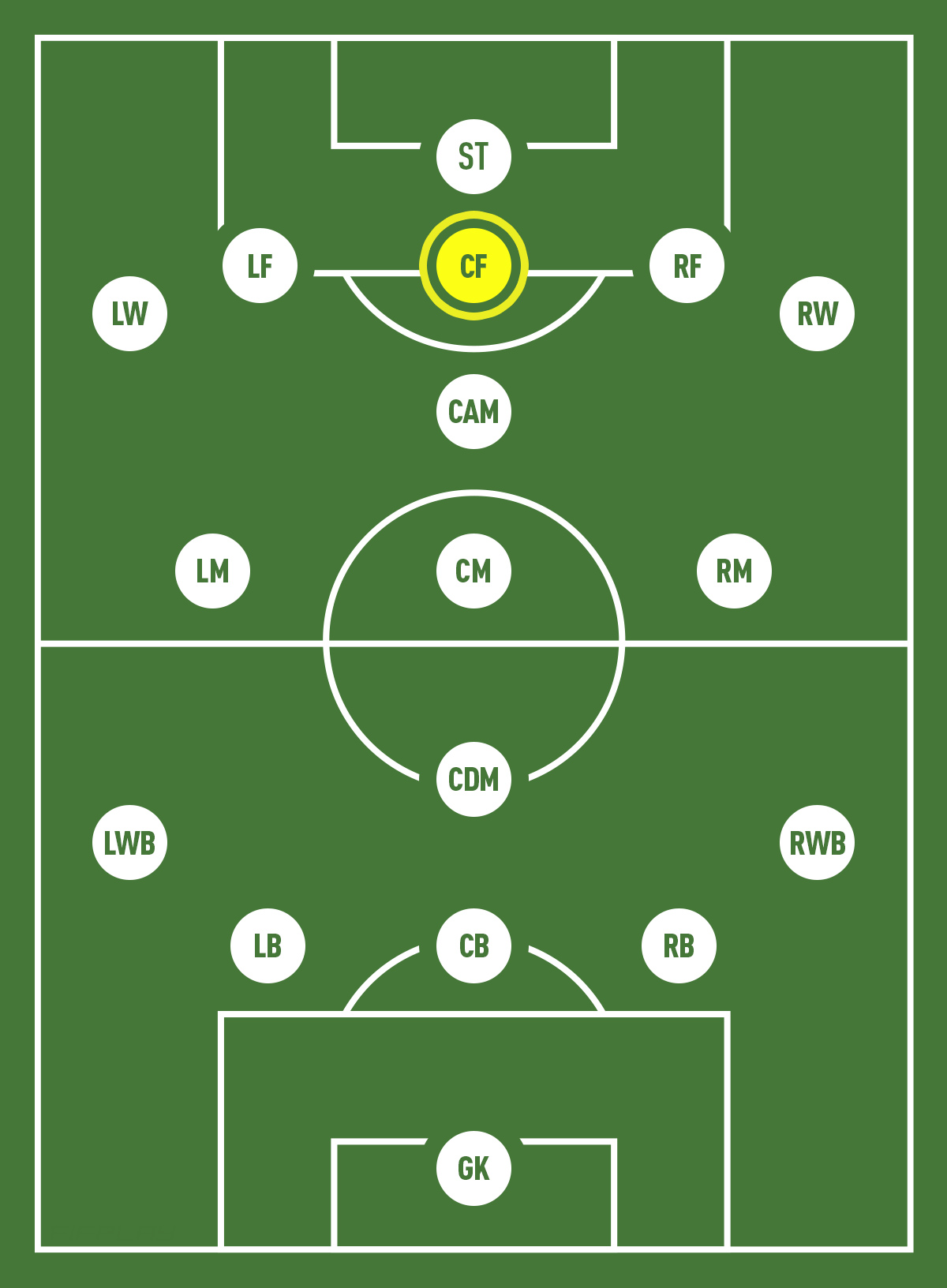
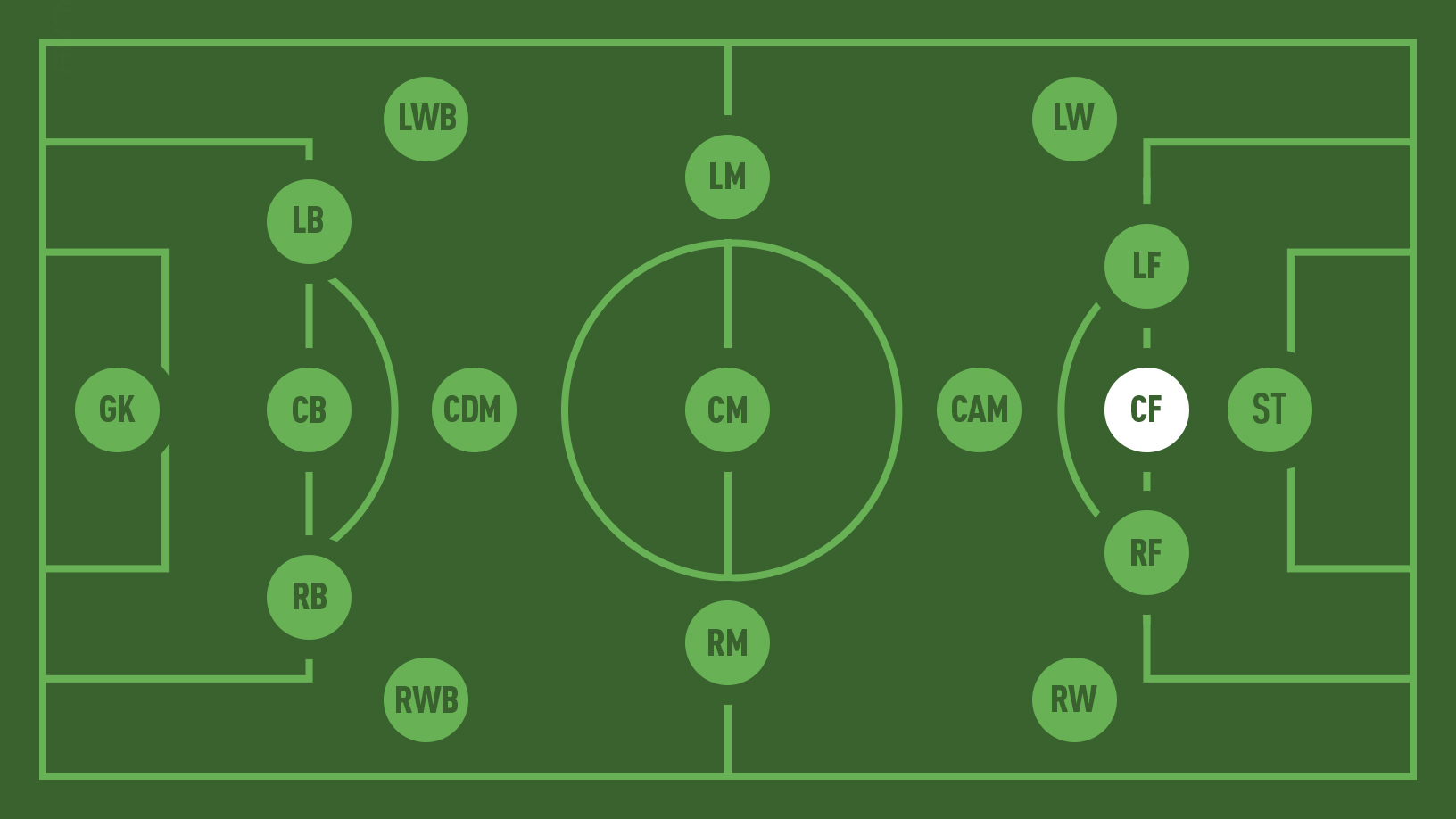
In the traditional lexicon of soccer, the acronym “CF” stands for Center Forward. Historically, this role was defined by a player’s physical presence, their ability to hold up the ball, and, most importantly, their knack for putting the ball in the back of the net. However, in the contemporary era of the “beautiful game,” the definition of a Center Forward has undergone a radical transformation. This evolution is not merely tactical; it is driven by an explosion in sports technology, high-level data analytics, and sophisticated software.
Today, understanding what a CF means in soccer requires looking beyond the pitch and into the world of Big Data, AI-driven scouting, and biomechanical tracking. The modern CF is no longer just a goal-scorer; they are a high-performance data point, optimized through technology to perform at the peak of human capability.
Defining the CF in the Digital Age: From Target Man to Data Point
The fundamental definition of a Center Forward remains the team’s primary attacking spearhead. Positioned most centrally and furthest forward, the CF is tasked with finishing chances created by midfielders and wingers. Yet, technology has redefined the metrics by which we judge their success. In the past, a CF was judged solely on goals scored. In the tech-heavy modern era, their “value” is calculated through a matrix of complex variables.
The Evolution of Positional Tracking and Heat Maps
The most visible integration of technology in defining the CF role is the use of GPS tracking and heat map software. Modern strikers wear wearable GPS vests (like those from STATSports or Catapult) during matches and training. These devices track every movement with millimeter precision.
By analyzing heat maps, coaches can determine if a CF is occupying the “Golden Zone”—the central area of the penalty box where the highest percentage of goals are scored. Technology has allowed teams to move away from the “static” striker. We now use spatial software to measure “gravity,” or the ability of a CF to drag defenders out of position through specific running patterns, even if they never touch the ball.
Expected Goals (xG) and the Quantification of Finishing
Perhaps the most significant technological contribution to the CF role is the development of the “Expected Goals” (xG) model. xG is an AI-driven metric that assigns a probability value to every shot taken based on historical data from hundreds of thousands of similar situations.
For a Center Forward, xG is the ultimate performance review. By using software that accounts for shot distance, angle, defender proximity, and even the height of the pass, analysts can determine if a CF is “overperforming” their data. If a striker has an xG of 0.5 but scores two goals, technology suggests they are an elite finisher. This data-heavy approach allows clubs to separate “lucky” strikers from those with genuine technical superiority.
Software and AI: How Tech Scouts Find the Next World-Class CF
The process of identifying a world-class Center Forward has shifted from the “eye test” of traditional scouting to the algorithmic precision of specialized software. When a club asks, “What kind of CF do we need?” they turn to databases that house the performance metrics of every professional player on the planet.
Machine Learning in Talent Identification
Platforms like Wyscout, TransferLab, and StatsBomb have revolutionized the scouting niche. These tools use machine learning algorithms to filter players based on specific “archetypes.” A club can program a search for a CF who excels in “Aerial Duels Won,” “Pressing Efficiency,” and “Post-Shot Expected Goals” (PSxG).
AI models are now capable of predictive analysis. By inputting the data of a 17-year-old prospect into a neural network, clubs can compare their developmental trajectory against the historical data of legendary strikers like Robert Lewandowski or Erling Haaland. This reduces the financial risk of multi-million dollar transfers by providing a tech-backed assurance of a player’s potential ceiling.
Video Analysis and Biometric Feedback
The modern CF spends as much time in the video room as they do on the grass. Video analysis software like Hudl and Sportscode allows strikers to break down their performance frame-by-frame.
AI-powered video tools can now automatically tag every “pressure” or “off-the-ball run” a CF makes. Furthermore, biometric feedback loops are integrated into this analysis. If a striker’s sprint speed drops by 2% in the 70th minute, performance software alerts the coaching staff that the player is entering a high-fatigue zone, increasing the risk of injury. In this sense, “CF” is a role defined by biological limits monitored by real-time digital sensors.

The Virtual CF: Mechanics and Impact of Gaming Technology
The definition of a Center Forward has also been heavily influenced by the gaming industry, specifically through simulation software like EA Sports FC (formerly FIFA) and Football Manager. These are not just games; they are complex engines that model footballing reality, and they have shaped how an entire generation perceives the CF position.
HyperMotion Technology and Real-World Modeling
EA Sports’ “HyperMotion” technology uses motion capture from real professional matches to create digital avatars that move exactly like their real-world counterparts. This tech has led to the categorization of CFs into “AcceleRATE” types—Lengthy, Explosive, or Controlled.
Interestingly, this gaming terminology has bled into real-world scouting. Analysts now use these digital classifications to describe the physical profile of a striker. The “Lengthy” CF, popularized by the digital rendering of Erling Haaland, describes a player who uses long strides to reach high top speeds over distance. This intersection of gaming tech and professional sport has created a new vocabulary for the CF position.
Tactical Simulations in Football Manager
Football Manager (FM) uses one of the most sophisticated player databases in the world, so accurate that professional clubs have been known to license it for their own scouting departments. In FM, the “CF” is broken down into roles like “False 9,” “Target Forward,” “Poacher,” or “Complete Forward.”
Each of these roles is dictated by a set of underlying “attributes” (software variables) such as Anticipation, Composure, and Off the Ball movement. By simulating thousands of matches, this software helps users—and professionals—understand how different CF archetypes interact with various tactical systems. It has taught the world that a CF is not a singular entity, but a set of programmable behaviors.
Training the Modern Striker: VR, AR, and Cognitive Tech
The way a Center Forward trains has been disrupted by immersive technology. Because a CF often has only a split second to make a decision in a crowded penalty box, cognitive training has become a priority.
Virtual Reality Drills for Spatial Awareness
Virtual Reality (VR) platforms like Be Your Best are now used by elite CFs to improve their “scanning” (the act of looking around before receiving the ball). Wearing a VR headset, a player is placed in a simulated high-pressure match environment. The software tracks their head movement and decision-making speed.
For a CF, this tech is invaluable. It allows them to practice the “perfect finish” or the “decisive turn” thousands of times without the physical wear and tear of being on the pitch. The software provides a “Cognitive Score,” giving a technological metric to a player’s “football IQ.”
Wearable Tech and Load Management
Beyond the tactical, the physical health of a CF is managed by an array of “Smart” tech. Sleep trackers, such as the Oura Ring or Whoop, monitor the recovery of these high-value assets. If a striker’s Heart Rate Variability (HRV) is low, the training software might recommend a reduced workload.
In the modern game, the “CF” is an investment that must be protected. The integration of Internet of Things (IoT) devices in training facilities ensures that the “engine” of the team—the striker—is always running at optimal efficiency. Every calorie burned, every liter of oxygen consumed, and every Newton of force exerted during a jump is recorded, analyzed, and stored in the cloud.
Conclusion: The CF as a Technological Masterpiece
When we ask, “What does CF mean in soccer?” the answer in 2024 is vastly different from 1994. While the objective remains the same—scoring goals—the methods of achieving, measuring, and predicting that success are now rooted in high technology.
The modern Center Forward is a synergy of human talent and digital optimization. They are scouted by AI, analyzed by machine learning, trained in virtual reality, and monitored by wearable sensors. As software continues to evolve, the CF will become even more specialized, with data providing the roadmap for the next generation of goal-scoring icons. In the end, the CF is the ultimate manifestation of how technology has transformed the world’s most popular sport into a high-tech discipline of precision and performance.
aViewFromTheCave is a participant in the Amazon Services LLC Associates Program, an affiliate advertising program designed to provide a means for sites to earn advertising fees by advertising and linking to Amazon.com. Amazon, the Amazon logo, AmazonSupply, and the AmazonSupply logo are trademarks of Amazon.com, Inc. or its affiliates. As an Amazon Associate we earn affiliate commissions from qualifying purchases.