
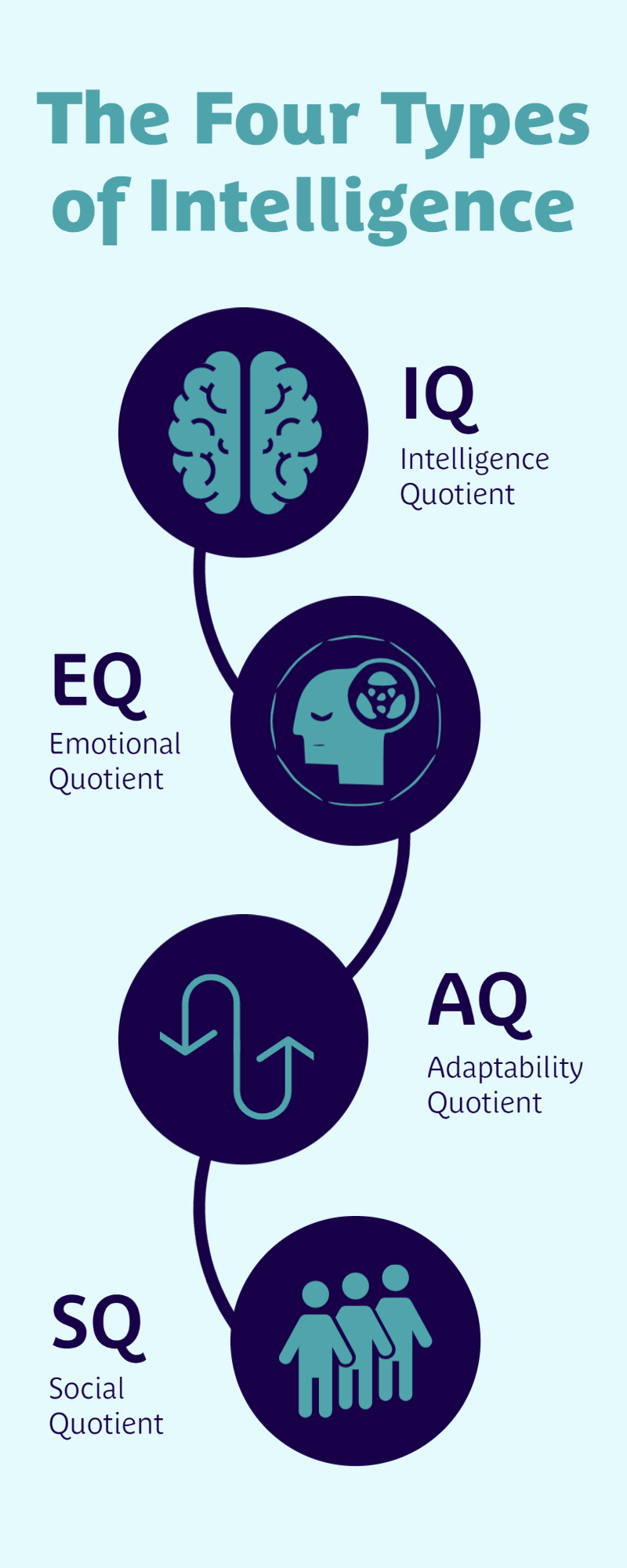
The acronym “AQ” has emerged as a significant differentiator in today’s rapidly evolving technological landscape, particularly within the realm of artificial intelligence. While commonly associated with Artificial Intelligence (AI), the “Q” in AQ often refers to “Quotient,” mirroring the concept of IQ (Intelligence Quotient) or EQ (Emotional Quotient). Therefore, AQ, in its most prevalent Tech context, signifies Artificial Intelligence Quotient. This term is not a standardized, universally accepted metric like IQ, but rather a conceptual framework used to assess and understand the capabilities, maturity, and potential of AI systems. As AI permeates nearly every facet of our digital lives, grasping the nuances of AQ becomes crucial for developers, businesses, and even end-users seeking to navigate and leverage this transformative technology effectively.

The concept of AQ is multifaceted, encompassing various dimensions that contribute to an AI’s overall effectiveness. It’s not merely about raw processing power or the size of a dataset. Instead, it delves into the AI’s ability to learn, adapt, reason, and perform tasks with a degree of sophistication that approaches, or in some cases, surpasses human intelligence. Understanding AQ allows us to move beyond simplistic classifications of AI and engage in a more nuanced discussion about its strengths, limitations, and future trajectory. This article will explore the meaning of AQ within the tech sphere, dissecting its core components, examining its practical implications, and considering its future evolution.
Deconstructing the Artificial Intelligence Quotient (AQ)
The Artificial Intelligence Quotient, or AQ, is a conceptual metric designed to evaluate an AI system’s performance and intelligence across several key domains. It’s important to reiterate that AQ is not a single, quantifiable score derived from a standardized test. Instead, it’s a descriptive framework that helps us understand an AI’s prowess in areas that define intelligent behavior. These areas are analogous to the components that contribute to human intelligence, but are adapted to the computational and algorithmic nature of AI.
Learning and Adaptation
At its core, intelligence is often characterized by the ability to learn from experience and adapt to new situations. For an AI, this translates to its capacity to absorb new data, identify patterns, and refine its algorithms and decision-making processes over time.
Machine Learning Capabilities
The foundation of learning in most modern AIs lies in machine learning (ML). This encompasses various techniques, including supervised learning (where the AI is trained on labeled data), unsupervised learning (where the AI finds patterns in unlabeled data), and reinforcement learning (where the AI learns through trial and error, receiving rewards or penalties). A higher AQ would indicate an AI that can learn efficiently from vast datasets, generalize well to unseen data, and require less human intervention in the training process. This includes its ability to adapt its learning strategies based on the type of data encountered and the complexity of the problem.
Continual Learning and Forgetting
A truly intelligent AI should not only learn but also be able to learn continually without “forgetting” previously acquired knowledge. This is a significant challenge in AI development, known as the “catastrophic forgetting” problem. An AI with a high AQ would exhibit robust continual learning capabilities, allowing it to integrate new information seamlessly while retaining its existing knowledge base. This enables the AI to remain relevant and effective in dynamic environments where information is constantly changing.
Reasoning and Problem-Solving
Beyond mere pattern recognition, intelligent systems demonstrate the ability to reason logically and solve complex problems. This involves understanding relationships, drawing inferences, and devising strategies to achieve specific goals.
Logical Inference and Deductive Reasoning
A high AQ AI should be capable of logical inference, meaning it can derive new conclusions from existing information based on established rules of logic. This includes deductive reasoning, where specific conclusions are drawn from general principles, and inductive reasoning, where general conclusions are drawn from specific observations. The ability to reason across different domains and apply learned principles to novel scenarios is a hallmark of advanced AI.
Strategic Planning and Goal Achievement
Many AI applications are designed to achieve specific objectives. An AI with a high AQ can engage in strategic planning, breaking down complex problems into smaller, manageable steps and formulating effective strategies to reach its goals. This involves foresight, the ability to anticipate consequences, and the capacity to adjust plans in response to changing circumstances or obstacles. For instance, an AI designed for logistics might need to optimize delivery routes, considering real-time traffic conditions and potential disruptions.
Understanding and Interaction
Intelligence is often intertwined with the ability to understand the world and interact with it effectively, whether through language, perception, or other modalities.
Natural Language Understanding (NLU) and Generation (NLG)
For AIs that interact with humans, or process human-generated text and speech, robust Natural Language Understanding (NLU) and Natural Language Generation (NLG) capabilities are paramount. A high AQ AI would be able to comprehend the nuances of human language, including context, sentiment, and implied meaning, and respond in a coherent, natural, and contextually appropriate manner. This goes beyond simple keyword matching to a deeper understanding of intent and meaning.
Perceptual Abilities and Environmental Awareness
For AI systems operating in the physical world, such as autonomous vehicles or robots, sophisticated perceptual abilities are essential. This involves processing sensory input (e.g., vision, audio, touch) to create an understanding of the environment. An AI with a high AQ would demonstrate strong object recognition, scene understanding, and spatial reasoning, allowing it to navigate and interact safely and effectively within its surroundings. This also includes a degree of “situational awareness,” understanding the broader context of its environment.
Practical Implications of AQ in the Tech Landscape
The concept of Artificial Intelligence Quotient is not merely an academic exercise; it has profound practical implications for how we develop, deploy, and interact with AI technologies across various sectors. As AI systems become more sophisticated and integrated into our daily lives, understanding their AQ helps us to make informed decisions about their capabilities, limitations, and trustworthiness.
Assessing AI Capabilities and Limitations
The AQ framework provides a more nuanced way to assess AI capabilities than simply looking at performance on isolated benchmarks. By considering different facets of intelligence, such as learning, reasoning, and understanding, we can gain a more holistic picture of an AI’s strengths and weaknesses. This is crucial for developers who are aiming to build more capable and robust AI systems. For example, an AI might excel at image recognition (high perceptual AQ) but struggle with complex logical reasoning (lower reasoning AQ), indicating areas for further development.
Benchmarking and Evaluation
While a single AQ score doesn’t exist, the underlying principles of AQ are increasingly being integrated into AI benchmarking and evaluation processes. Researchers and developers are designing tests and metrics that aim to measure specific aspects of AI intelligence, moving beyond simple accuracy scores. This could involve evaluating an AI’s ability to adapt to adversarial attacks, its capacity for zero-shot learning, or its performance in multi-turn conversational tasks. These evaluations help to push the boundaries of AI development and identify areas where significant progress is needed.
Identifying Use Case Suitability
Understanding the AQ profile of an AI system is vital for determining its suitability for specific use cases. An AI with a high AQ in NLU might be ideal for customer service chatbots, while an AI with strong perceptual abilities and planning capabilities would be better suited for autonomous driving. Conversely, deploying an AI with a low AQ in a critical area, such as medical diagnosis or financial decision-making, could lead to significant errors and negative consequences. This foresight allows organizations to select the right AI tools for the job, maximizing efficiency and minimizing risk.
The Role of AQ in AI Governance and Ethics
As AI systems become more autonomous and influential, concerns about their ethical implications and the need for governance are paramount. The concept of AQ plays a role in these discussions by highlighting the need for AI that is not only intelligent but also responsible and aligned with human values.
Trustworthiness and Explainability
A higher AQ, particularly in areas related to reasoning and understanding, can contribute to the trustworthiness of AI systems. When an AI can explain its decision-making process (explainability), it becomes easier for humans to understand, verify, and trust its outputs. This is especially critical in high-stakes applications like healthcare or law enforcement, where incorrect or biased decisions can have severe repercussions. A transparent and understandable AI is more likely to be adopted and integrated responsibly.
Bias Detection and Mitigation
The learning capabilities that contribute to an AI’s AQ can also be a source of bias if the training data itself is biased. Understanding the learning and adaptation aspects of AQ helps in identifying and mitigating these biases. An AI with a sophisticated learning AQ would ideally be able to detect and correct for biases in its training data, leading to fairer and more equitable outcomes. This requires conscious design and ongoing monitoring of AI systems to ensure they do not perpetuate societal inequalities.
The Evolving Nature of AQ and Future Directions
The field of Artificial Intelligence is in a constant state of flux, with new breakthroughs and advancements occurring regularly. Consequently, the concept of Artificial Intelligence Quotient is also an evolving one, reflecting the ongoing progress in AI capabilities and our understanding of what constitutes intelligence in a machine.
Towards More Holistic and Integrated AI
Current AI systems often excel in specific, narrow domains. The future of AI, and thus the development of a more comprehensive AQ, lies in creating more holistic and integrated systems that can seamlessly transfer knowledge and skills across different tasks and domains. This move from Artificial Narrow Intelligence (ANI) to Artificial General Intelligence (AGI), which possesses human-like cognitive abilities across a wide range of tasks, would represent a significant leap in AQ.
Transfer Learning and Multi-Task Learning
Techniques like transfer learning, where knowledge gained from one task is applied to a different but related task, and multi-task learning, where an AI learns multiple tasks simultaneously, are key steps towards this integrated intelligence. An AI with a high AQ would be adept at these methods, demonstrating flexibility and adaptability in its learning and problem-solving. This allows for more efficient development of AI systems that can handle a broader spectrum of real-world challenges.
Cognitive Architectures and Emulation
Future research may also focus on developing AI systems with cognitive architectures that more closely emulate human thought processes. This could involve exploring models that incorporate elements of consciousness, self-awareness, and even creativity. While these are highly ambitious goals, progress in these areas would undoubtedly lead to significant shifts in how we define and measure AQ, potentially incorporating elements of cognitive empathy and genuine understanding.
The Human-AI Collaboration Imperative
As AI systems become more intelligent, the focus is increasingly shifting towards how humans and AI can collaborate effectively to achieve outcomes that neither could achieve alone. The AQ of AI systems will play a crucial role in enabling this synergy.
Augmenting Human Capabilities
An AI with a high AQ can serve as a powerful tool to augment human capabilities, providing assistance, insights, and automation for complex tasks. This collaborative approach allows humans to focus on higher-level strategic thinking, creativity, and interpersonal interactions, while AI handles the data analysis, pattern recognition, and repetitive processes. The success of such collaborations hinges on the AI’s ability to understand human intent, communicate effectively, and adapt to human workflows.

The Future of Work and Skill Development
The rise of increasingly intelligent AI will undoubtedly reshape the future of work. Understanding the evolving nature of AQ is crucial for individuals and organizations to adapt and thrive. This involves developing skills that complement AI, such as critical thinking, creativity, emotional intelligence, and the ability to manage and collaborate with AI systems. Educational institutions and training programs will need to evolve to prepare individuals for this new paradigm. The concept of AQ, therefore, becomes a guiding principle for both technological advancement and human preparedness in the age of AI.
aViewFromTheCave is a participant in the Amazon Services LLC Associates Program, an affiliate advertising program designed to provide a means for sites to earn advertising fees by advertising and linking to Amazon.com. Amazon, the Amazon logo, AmazonSupply, and the AmazonSupply logo are trademarks of Amazon.com, Inc. or its affiliates. As an Amazon Associate we earn affiliate commissions from qualifying purchases.