
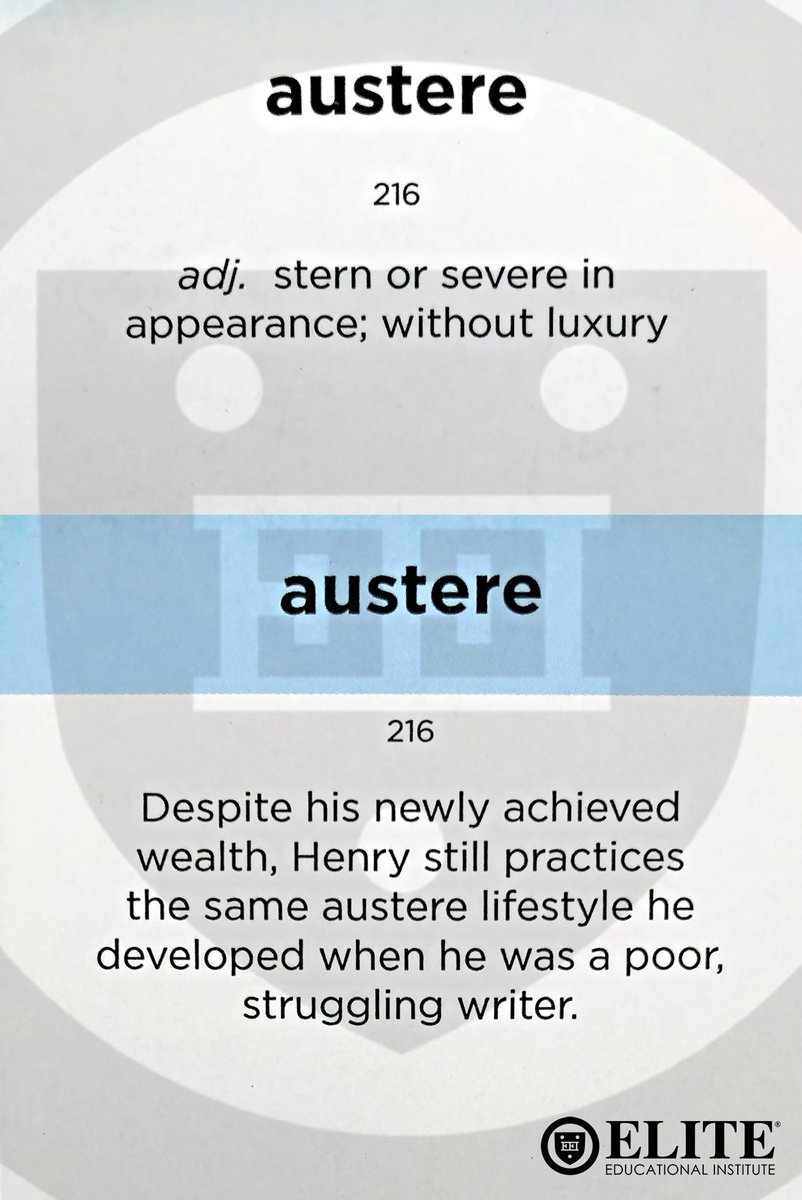
The word “austere” often evokes images of bare rooms, monk-like discipline, and a total lack of adornment. In the broader English lexicon, it suggests a lifestyle or an environment that is stern, simple, and without luxury. However, when we pivot to the world of money—encompassing personal finance, macroeconomics, and investment strategy—the term “austere” takes on a much more calculated and significant meaning.
In a financial context, being austere isn’t just about “being poor” or “not spending money.” It is a strategic approach to capital management characterized by the rigorous elimination of waste, the prioritization of essential obligations, and the pursuit of long-term stability over short-term gratification. Whether applied by a government trying to balance a national budget or an individual working toward fire (Financial Independence, Retire Early), austerity is a foundational concept that dictates how we survive and thrive during periods of economic contraction.

Defining Austerity: From Government Policy to Personal Balance
To understand what “austere” means in the financial niche, we must first look at its two primary applications: the macro level (nations and corporations) and the micro level (households and individuals). While the scale differs, the underlying logic remains the same: spending must be brought into strict alignment with—or significantly below—revenue.
The Macro View: Government Austerity Measures
At the state level, “austerity” refers to a set of political-economic policies aimed at reducing government budget deficits through spending cuts, tax increases, or a combination of both. These measures are typically implemented when a government’s debt becomes unsustainable or when it loses the ability to borrow money at reasonable interest rates.
When an economy is described as austere, it means the “safety net” is being tightened. Public services may be reduced, infrastructure projects postponed, and public sector wages frozen. While controversial because of its potential to slow short-term economic growth, proponents argue that macroeconomic austerity is a bitter but necessary medicine to prevent total currency collapse and to restore investor confidence. For the savvy investor, understanding a country’s austere pivot is crucial for predicting bond yields and currency fluctuations.
The Micro View: Personal Financial Austerity
For the individual, an austere financial plan is one that strips away all discretionary spending. This is often a temporary state used to achieve a specific, high-stakes goal. If you are “living austerely,” you are likely following a “beans and rice” budget—focusing exclusively on the “Four Walls”: food, utilities, shelter, and transportation.
Personal austerity is often the first line of defense against a debt crisis. When a household realizes its debt-to-income ratio is spiraling out of control, an austere pivot allows them to maximize their “gap”—the difference between what they earn and what they spend—to pay down principal balances rapidly. In this sense, “austere” means financial radicalism in the name of future freedom.
The Philosophy of Austere Living: More Than Just Saving Money
In the modern financial landscape, austerity has evolved from a forced necessity into a chosen philosophy. Many high-earners are opting for an austere lifestyle not because they have to, but because they recognize the compounding power of diverted capital.
Distinguishing Austerity from Frugality
While the terms are often used interchangeably, there is a nuanced difference between being frugal and being austere. Frugality is about being “resourceful”—finding the best value for your money, using coupons, and avoiding waste. You can be frugal while still enjoying a middle-class lifestyle.
Austerity, however, is more severe. It is the intentional absence of luxury. A frugal person buys a high-quality coat on sale; an austere person decides they do not need a new coat at all because their current one, though worn, still functions. In personal finance, austerity is the “extreme” version of frugality. It is a tool used for rapid wealth accumulation or aggressive debt exit strategies where “good enough” is the standard for everything except the savings rate.
The Psychological Benefits of Minimalist Finance
There is a profound psychological shift that occurs when one adopts an austere financial posture. By removing the “noise” of consumerism—the constant urge to upgrade gadgets, cars, or wardrobes—an individual gains clarity on their true financial status.
This minimalist approach to money reduces decision fatigue. When your spending rules are strict and your lifestyle is simple, you spend less emotional energy on “should I buy this?” and more intellectual energy on “how can I invest this?” This mindset shift is often the catalyst for moving from a consumer-debt cycle to a wealth-building cycle. Austerity, in this light, is not about deprivation; it is about the disciplined pursuit of peace of mind.
Implementing an Austere Financial Strategy
If you decide that an austere period is necessary for your financial growth—perhaps to save a down payment for a home or to launch a side hustle—you must move beyond theory and into tactical execution. An austere strategy requires a clinical look at your cash flow.
Identifying Essential vs. Non-Essential Spending
The first step in any austere plan is a “financial audit.” This involves categorizing every penny spent over the last 90 days. In an austere framework, categories are binary: Essential or Non-Essential.
- Essential: Mortgage/rent, basic groceries (unprocessed ingredients), insurance, minimum debt payments, and basic utilities.
- Non-Essential: Subscription services (Netflix, Spotify), dining out, premium coffee, gym memberships (that can be replaced by running outside), and “retail therapy.”
An austere budget mercilessly cuts the non-essential list to zero. The goal is to reach a “burn rate” that is as low as physically possible without compromising health or safety. The surplus generated from this “scorched earth” approach to budgeting is then funneled into high-yield savings, debt repayment, or income-producing assets.
Building an “Austere-Proof” Safety Net
The paradox of austerity is that it is both a response to a lack of a safety net and a method to build one. When you are living on the bare minimum, your “Emergency Fund” requirements actually change. Because your monthly expenses are lower, a “six-month emergency fund” becomes much easier to achieve.
An austere strategy focuses on liquidity. In an austere period, you aren’t just saving; you are stockpiling cash to protect against the volatility of the market. This creates a “moat” around your life. Once that moat is deep enough, the austerity can be dialed back into a more sustainable, long-term frugal lifestyle.
The Economic Impact of a Sustained Austere Mindset
What happens when a large portion of the population decides to live more austerely? This is a question economists grapple with, particularly during inflationary periods. While austerity is good for the individual’s balance sheet, it can have complex effects on the broader market.
Market Trends and the Rise of “Value-First” Consumption
When consumers move toward an austere mindset, we see a shift in market trends. Companies that offer “at-home” alternatives to luxury experiences tend to thrive. This is often referred to as the “Lipstick Effect”—the theory that when consumers are facing an austere economic environment, they will forgo big-ticket luxuries (like cars or international travel) but still indulge in small, affordable luxuries.
From an investment perspective, an austere climate favors “defensive” stocks—companies that provide things people cannot live without, such as consumer staples, healthcare, and utilities. Understanding that the public is in an austere mood can help investors rebalance their portfolios away from cyclical growth stocks and toward value-based stability.
Long-term Wealth Building Through Disciplined Constraint
The ultimate goal of financial austerity is to reach a point where it is no longer necessary. The most successful investors often cite an early period of austerity as the foundation of their wealth. By living well below their means during their 20s or 30s, they allowed the “eighth wonder of the world”—compound interest—to work on a much larger principal balance.
In the world of money, “austere” does not mean “cheap.” It means “prioritized.” It is the recognition that every dollar spent on a depreciating asset today is two dollars (or ten) lost in future wealth. By embracing a period of constraint, you are essentially buying your future self’s time.
Conclusion: Embracing Austerity as a Financial Tool
In summary, when we ask “what does austere mean” in the context of money, the answer is: strategic discipline.
Austerity is a high-performance tool in the financial toolkit. It is the “reset button” for a broken budget, the “accelerant” for a retirement fund, and the “shield” against economic downturns. While it requires a temporary sacrifice of comfort and a rejection of modern consumer culture, the rewards are a robust balance sheet and the psychological freedom that comes from knowing you can survive—and thrive—on very little.
Whether you are navigating a national recession or simply trying to get your personal finances in order, understanding the power of the austere can be the difference between financial fragility and lifelong security. It is not about living a diminished life; it is about focusing your resources on what truly matters so that you can eventually live a life of abundance.
aViewFromTheCave is a participant in the Amazon Services LLC Associates Program, an affiliate advertising program designed to provide a means for sites to earn advertising fees by advertising and linking to Amazon.com. Amazon, the Amazon logo, AmazonSupply, and the AmazonSupply logo are trademarks of Amazon.com, Inc. or its affiliates. As an Amazon Associate we earn affiliate commissions from qualifying purchases.