
At its core, an internal combustion engine is a self-sustaining machine, but it lacks the inherent ability to begin its cycle from a state of rest. Unlike an electric motor, which generates torque the moment current is applied, a gasoline or diesel engine requires an external force to initiate the intake and compression strokes necessary for combustion. This is where the starter motor—a masterpiece of electromechanical engineering—comes into play. In the modern technological landscape, the starter is no longer just a simple motor; it is a sophisticated component integrated into a vehicle’s complex electronic ecosystem.
The Mechanics of Motion: How Starters Bridge Electronics and Combustion
To understand what a starter does, one must view it as the bridge between the vehicle’s electrical system and its mechanical heart. The starter motor is a powerful DC (direct current) electric motor designed specifically to handle high-torque, short-duration loads. Its primary responsibility is to rotate the engine’s crankshaft at a speed sufficient to draw fuel and air into the cylinders and compress them until the spark plugs (or compression heat) can take over.
The Solenoid: The Gateway to Ignition
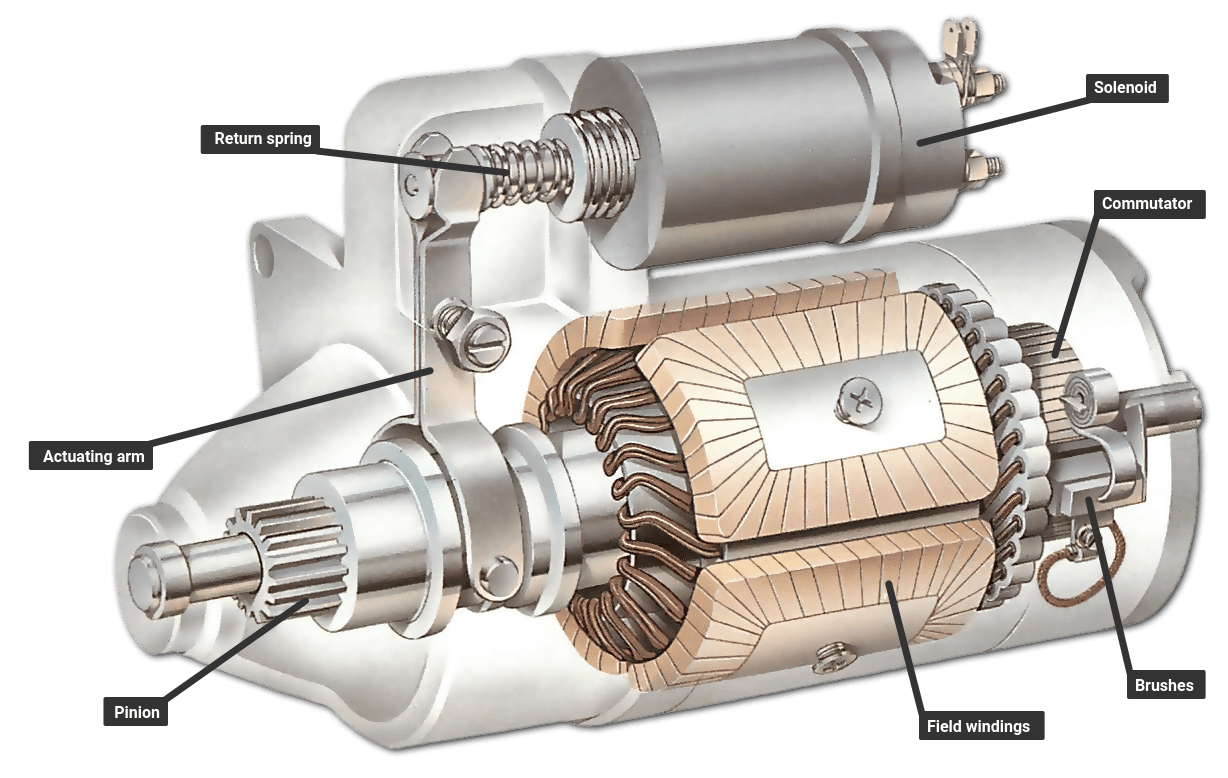
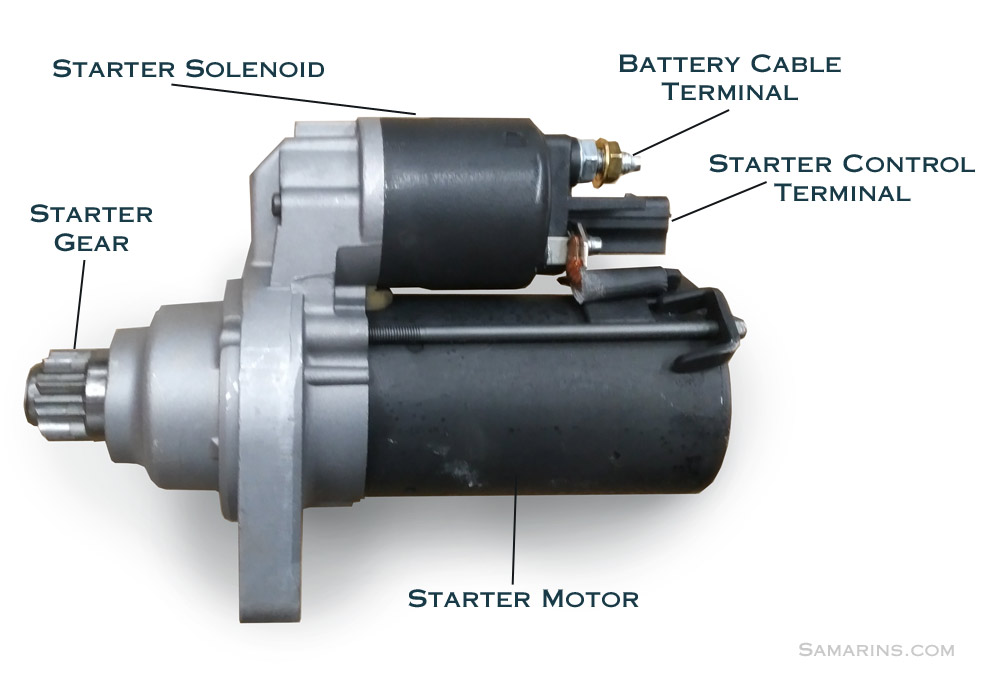
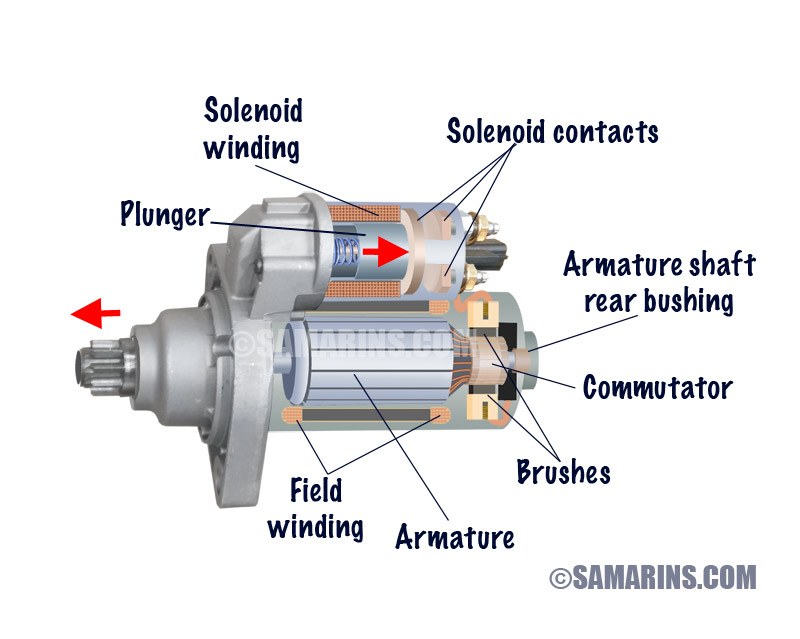
The solenoid is the first critical technological component of the starter assembly. It acts as both a powerful relay and a mechanical actuator. When you engage the ignition—whether by turning a physical key or pressing a digital start button—a small electrical signal is sent to the solenoid. This component uses electromagnetism to pull a plunger forward. This action serves a dual purpose: it completes the high-current circuit between the battery and the starter motor, and it physically pushes the starter’s drive gear toward the engine’s flywheel. Without the solenoid’s precise timing, the motor would spin without ever engaging the engine, or worse, grind against the moving gears.
The Electric Motor: Converting Current into Torque
Once the solenoid completes the circuit, the starter motor consumes a massive amount of amperage—often between 100 and 300 amps—to generate the necessary torque. This motor utilizes a series of copper windings and high-grade magnets (or electromagnets) to create a rotating magnetic field. This field spins the armature at high speeds. Because an engine is heavy and filled with viscous oil, the “tech” inside the starter must be engineered to provide maximum “stall torque,” ensuring that even in freezing temperatures, the motor has the raw power to break the engine’s static friction.
The Bendix Drive: Precise Gear Engagement
The final piece of the mechanical puzzle is the Bendix drive or the starter drive gear. This is a small pinion gear that meshes with the much larger “ring gear” on the engine’s flywheel. The gear ratio here is significant—often 15:1 or 20:1—allowing the relatively small starter motor to turn the massive engine assembly. A crucial technological feature of the Bendix drive is its one-way clutch. Once the engine fires and begins spinning faster than the starter, the clutch allows the pinion gear to freewheel, preventing the engine from “back-driving” the starter motor and causing catastrophic mechanical failure.
Evolution of Start-Up Technology: From Hand Cranks to Push-Buttons
The technology used to start a car has undergone a radical transformation over the last century. In the early days of automotive engineering, “starting” a car was a dangerous physical labor involving a hand-crank. If the engine kicked back, it could easily break the operator’s arm. The shift to electric starters was the first major technological leap in making automobiles accessible to the general public.
Legacy Systems and the Rise of Electric Ignition
The first functional electric starter was developed by Cadillac in 1912. For decades, the technology remained relatively stagnant, relying on heavy, brush-type DC motors. However, as vehicle electronics became more complex, the starter had to adapt. The transition from generators to alternators allowed for more stable battery charging, which in turn allowed for more reliable starter performance. Today’s starters are significantly smaller and lighter than their predecessors, utilizing permanent magnet technology and planetary gear reduction systems to provide more torque with less physical bulk.
Smart Keys and Remote Start Modules
In the digital age, the starter is part of a secure communication loop. Modern vehicles utilize “Smart Keys” or Fobs that communicate via encrypted Radio Frequency (RF) signals with the car’s Body Control Module (BCM). When you press the start button, the BCM must verify a digital handshake before it allows the starter relay to engage. This integration of digital security and mechanical action has virtually eliminated traditional “hot-wiring” and has paved the way for remote start technology, where software applications on a smartphone can trigger the ignition sequence from miles away.
Stop-Start Technology: Optimizing Fuel Through Software
Perhaps the most significant recent advancement is “Idle Stop-Start” (ISS) technology. In an effort to reduce emissions and increase fuel efficiency, modern Engine Control Units (ECUs) are programmed to shut the engine off when the vehicle comes to a complete stop. This puts an immense strain on the starter, as it may be required to fire dozens of times during a single commute. To handle this, engineers have developed “Enhanced Starter Motors” with high-durability brushes and more robust solenoids, often paired with software that monitors the exact position of the pistons to ensure the fastest possible restart.
Diagnostic Tech: Identifying Faults in the Starter Circuit
As starters have become more integrated into the vehicle’s computer systems, diagnosing a “no-start” condition has shifted from mechanical guesswork to high-tech analysis. A failure in the starting system is rarely just a “broken motor”; it is often a breakdown in the communication or delivery of power.
Voltage Drops and Electrical Resistance
One of the most common issues in modern starting systems is hidden electrical resistance. Technicians now use digital multimeters to perform “voltage drop tests.” This involves measuring the loss of electrical potential across a cable while the starter is under load. Even a microscopic layer of oxidation on a battery terminal or a frayed ground wire can prevent the starter from receiving the 12 volts it needs to function. This level of diagnostic precision is a far cry from the old method of simply hitting the starter with a hammer to see if it would spin.
Sensor Integration and OBD-II Communications
Modern vehicles utilize the On-Board Diagnostics (OBD-II) protocol to monitor the health of the starting system. If the starter draws too much current or fails to reach the required RPM within a specific timeframe, the ECU will trigger a Diagnostic Trouble Code (DTC). Sensors such as the Crankshaft Position Sensor and the Neutral Safety Switch are tech-heavy components that “talk” to the starter. If the computer doesn’t receive a signal that the car is in “Park” or “Neutral,” it will digitally lock out the starter circuit as a safety measure.
Mechanical Wear and Friction Heat
Despite the digital oversight, physical wear remains a factor. Thermal imaging is sometimes used in high-performance or heavy-duty environments to detect “hot spots” in a starter motor. As the internal components wear down, they create more friction and heat, which increases electrical resistance. This creates a feedback loop that eventually leads to a “dead” starter. Understanding the thermodynamics of the starter motor is essential for engineers designing vehicles for extreme climates.
The Future of Automotive Starters in the EV Era
As the automotive industry pivots toward electrification, the traditional starter motor is facing an existential shift. In a world of Battery Electric Vehicles (BEVs), the concept of “cranking” an engine is becoming obsolete, but the technology that powered the starter is being repurposed in fascinating ways.
Integrated Starter Generators (ISGs)
In many hybrid vehicles, the traditional starter and alternator have been replaced by a single unit: the Integrated Starter Generator (ISG). Located between the engine and the transmission, the ISG is a powerful electric motor that can start the engine silently and instantly. Beyond starting, it can also assist the engine during acceleration and capture energy during braking (regenerative braking). This represents a convergence of starting technology and propulsion technology.
The Shift from 12V to 48V Systems
To support more advanced tech features and more powerful starters, the industry is moving toward 48-volt electrical architectures. A 48V system allows the starter (or ISG) to deliver significantly more power with thinner, lighter wiring. This increased voltage is the backbone of “mild hybrid” systems, allowing the engine to shut off while coasting at high speeds and restart seamlessly without the driver ever feeling a vibration.
Redefining “Starting” in Fully Electric Platforms
In a fully electric vehicle, there is no “starter” because there is no engine to crank. However, the legacy of starter technology lives on in the “pre-charge” circuits and contactors that manage the high-voltage flow from the battery pack to the drive motors. The precision, reliability, and safety protocols developed over a century of starter motor engineering are now being applied to the power electronics that drive the green revolution. While the physical starter motor may eventually vanish, the engineering principles of initiation and engagement remain more relevant than ever.
aViewFromTheCave is a participant in the Amazon Services LLC Associates Program, an affiliate advertising program designed to provide a means for sites to earn advertising fees by advertising and linking to Amazon.com. Amazon, the Amazon logo, AmazonSupply, and the AmazonSupply logo are trademarks of Amazon.com, Inc. or its affiliates. As an Amazon Associate we earn affiliate commissions from qualifying purchases.