
Investing is often perceived as a complex labyrinth reserved for Wall Street elites and mathematical geniuses. However, at its core, investing is simply the act of putting your money to work today to generate more money in the future. In an era of fluctuating inflation and economic shifts, merely saving cash is no longer sufficient to maintain purchasing power or achieve long-term financial freedom. To build true wealth, one must transition from being a consumer to being an owner.
This guide provides a roadmap for navigating the multifaceted world of personal finance, focusing on the strategies, assets, and mental frameworks required to grow your capital effectively.

Building a Foundation: The Psychology and Preparation of Investing
Before committing a single dollar to the markets, you must establish a structural and psychological foundation. Successful investing is 20% head knowledge and 80% behavior. Without a clear plan and the right mindset, even the most sophisticated portfolio can crumble under the weight of emotional decision-making.
Defining Your Financial Goals
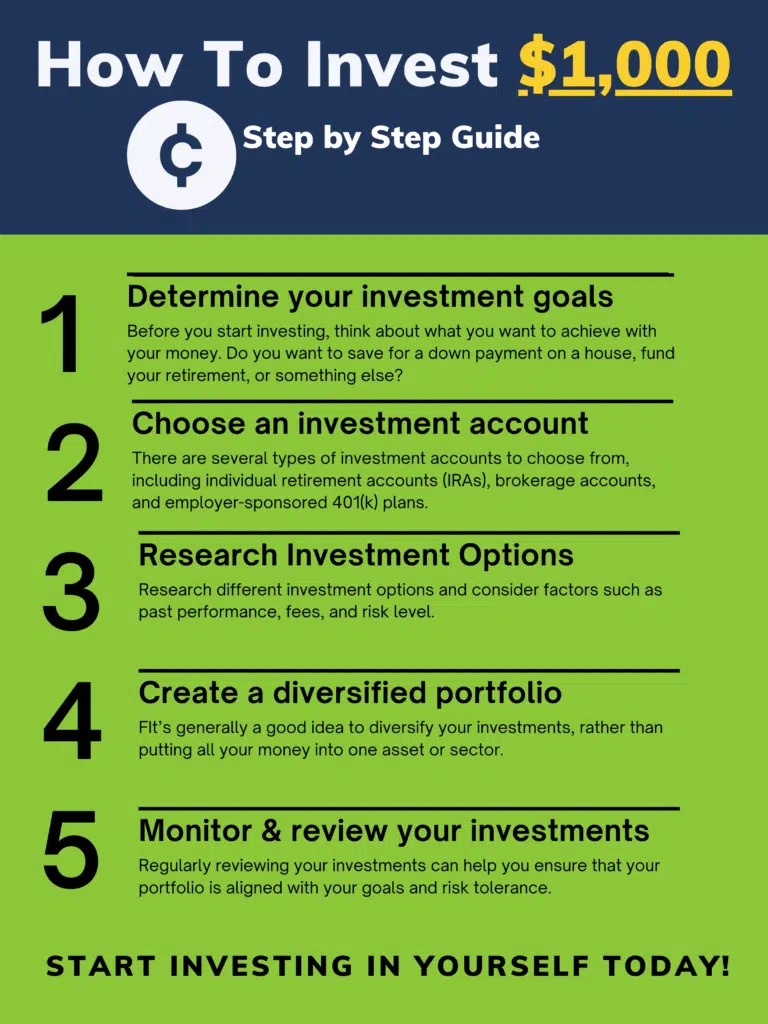
The “why” behind your investment determines the “how.” Are you investing for a retirement that is thirty years away, or are you saving for a down payment on a home in five years? Short-term goals (under 3 years) generally require high liquidity and low risk, such as high-yield savings accounts. Long-term goals (10+ years) allow you to weather the volatility of the stock market in exchange for higher historical returns. Categorizing your goals into short, medium, and long-term buckets is the first step toward a coherent strategy.
Understanding Risk Tolerance and Time Horizons
Risk is the price of admission for returns. Every investor must determine their risk tolerance—the degree of market volatility they can endure without panicking. This is closely linked to your time horizon. A 25-year-old has decades to recover from a market downturn, allowing for a high-growth, high-risk portfolio. Conversely, someone five years from retirement must prioritize capital preservation. Understanding that “risk” isn’t just the possibility of losing money, but also the risk of not growing your money enough to meet your goals, is a vital distinction.
The Essential Safety Net: Emergency Funds and Debt Management
You cannot build a skyscraper on a swamp. Before investing in volatile assets, ensure you have an emergency fund covering 3–6 months of essential living expenses. This fund acts as insurance for your investments, preventing you from being forced to sell your stocks during a market low due to an unexpected job loss or medical bill. Additionally, address high-interest debt (such as credit card balances) before investing. The guaranteed “return” of paying off a 20% interest rate debt far outweighs the projected 7–10% return of the stock market.
Exploring the Asset Classes: Where to Put Your Money
Once your foundation is set, you must decide which vehicles will carry your wealth toward its destination. Diversification across different asset classes is the primary tool for managing risk.
The Stock Market: Growth and Dividends
Equities, or stocks, represent partial ownership in a corporation. Historically, the stock market has been one of the greatest wealth-creation engines in history. Investors can profit through capital appreciation (the stock price goes up) or dividends (the company shares a portion of its profits). While individual stock picking is popular, most successful long-term investors utilize Index Funds or Exchange-Traded Funds (ETFs) that track the performance of the entire market, providing instant diversification.
Fixed Income: Bonds and Treasuries
Bonds are essentially loans you provide to a government or a corporation in exchange for regular interest payments (coupons) and the return of the principal at a set date. Bonds are generally less volatile than stocks and serve as a “ballast” for your portfolio. When the stock market is turbulent, high-quality government bonds often remain stable or even increase in value, providing a psychological and financial cushion.
Real Estate: Physical Assets vs. REITs
Real estate offers a tangible way to grow wealth through rental income and property appreciation. While owning physical rental property requires significant capital and management effort, it offers unique tax advantages and leverage. For those seeking exposure to the real estate market without the “landlord” responsibilities, Real Estate Investment Trusts (REITs) allow you to buy shares in companies that own and manage large-scale commercial or residential properties.

Alternative Investments: Commodities and Private Equity
Beyond the traditional trio of stocks, bonds, and real estate, alternative investments include gold, oil, venture capital, and private equity. These assets often have a low correlation with the stock market, meaning they may move in different directions during economic cycles. While they can provide an extra layer of diversification, they are often less liquid and more complex, making them more suitable for experienced investors or as a small percentage of a total portfolio.
Investment Vehicles and Accounts: Choosing the Right Container
Where you hold your investments is often as important as what you invest in. Different accounts offer varying tax advantages that can significantly impact your “net” returns over decades.
Tax-Advantaged Retirement Accounts
In many regions, governments provide incentives for retirement saving. In the United States, for example, 401(k) plans and Individual Retirement Accounts (IRAs) offer either tax-deferred growth (Traditional) or tax-free withdrawals (Roth). Utilizing these accounts is one of the most efficient ways to invest, especially if an employer offers a “match”—which is essentially a 100% return on your contribution before any market movement.
Taxable Brokerage Accounts
A standard brokerage account offers the most flexibility. There are no limits on how much you can contribute, and you can withdraw your funds at any time without tax penalties (though you will owe capital gains taxes on profits). These accounts are ideal for “bridge” money—funds you may need before you reach retirement age but after you’ve already maximized your tax-advantaged options.
High-Yield Savings and Money Market Accounts
While not “investing” in the traditional sense of buying assets, these accounts are the best place for your emergency fund and short-term cash needs. Unlike traditional savings accounts that offer negligible interest, high-yield options utilize the prevailing interest rate environment to provide a modest return while keeping your principal 100% liquid and insured.
Strategic Execution: Managing and Growing Your Portfolio
With a plan in place and accounts opened, the focus shifts to execution. Successful investing is less about timing the market and more about time in the market.
The Power of Diversification and Asset Allocation
Asset allocation refers to the percentage of your portfolio dedicated to various asset classes (e.g., 70% stocks, 20% bonds, 10% real estate). Diversification is the practice of spreading those investments within each class to minimize the impact of any single failure. By diversifying, you ensure that the downfall of one company or sector does not derail your entire financial future. It is the only “free lunch” in finance.
Passive vs. Active Management
Active management involves trying to “beat the market” by picking individual stocks or timing entries and exits based on economic forecasts. Passive management, conversely, involves buying the whole market through index funds and holding for the long term. Decades of data suggest that the vast majority of active managers fail to outperform passive indexes over long periods, especially after accounting for fees and taxes. For most individual investors, a passive approach is both more effective and less stressful.
Rebalancing and Staying the Course
Over time, different parts of your portfolio will grow at different rates, causing your asset allocation to drift. If your target is 80% stocks but a bull market pushes them to 90%, you are now exposed to more risk than you intended. Rebalancing—selling some of what has performed well and buying what has lagged—forces you to “buy low and sell high” automatically.
The greatest challenge to investing is the human urge to react to the news cycle. Market corrections and bear markets are a natural part of the economic cycle. The investors who succeed are those who remain disciplined, continue their regular contributions (a strategy known as dollar-cost averaging), and avoid the temptation to flee the market when headlines turn negative.
In conclusion, investing is a marathon, not a sprint. By building a solid foundation, understanding your options, utilizing tax-advantaged accounts, and maintaining a disciplined strategy, you can harness the power of compounding interest to secure your financial future. The best time to start was yesterday; the second best time is today.
aViewFromTheCave is a participant in the Amazon Services LLC Associates Program, an affiliate advertising program designed to provide a means for sites to earn advertising fees by advertising and linking to Amazon.com. Amazon, the Amazon logo, AmazonSupply, and the AmazonSupply logo are trademarks of Amazon.com, Inc. or its affiliates. As an Amazon Associate we earn affiliate commissions from qualifying purchases.