
In the early 20th century, the landscape of science was primarily theoretical, a collection of best guesses regarding the invisible building blocks of our universe. In 1911, Ernest Rutherford, along with his colleagues Hans Geiger and Ernest Marsden, performed what is now famously known as the Gold Foil Experiment. While textbooks often frame this as a milestone in chemistry, its implications were the primary spark for the technological revolution of the 21st century.
What the Gold Foil Experiment proved was not just the existence of an atomic nucleus; it proved that matter—and by extension, every piece of hardware we use today—is governed by precise, manipulatable structural laws. Without the insights gained from that thin sheet of gold, we would have no semiconductors, no microprocessors, and no quantum computing. This article explores how the shift from a “solid” view of the atom to a “nuclear” view laid the foundational architecture for the digital age.

The Atomic Pivot: From Plum Pudding to the Logic Gate
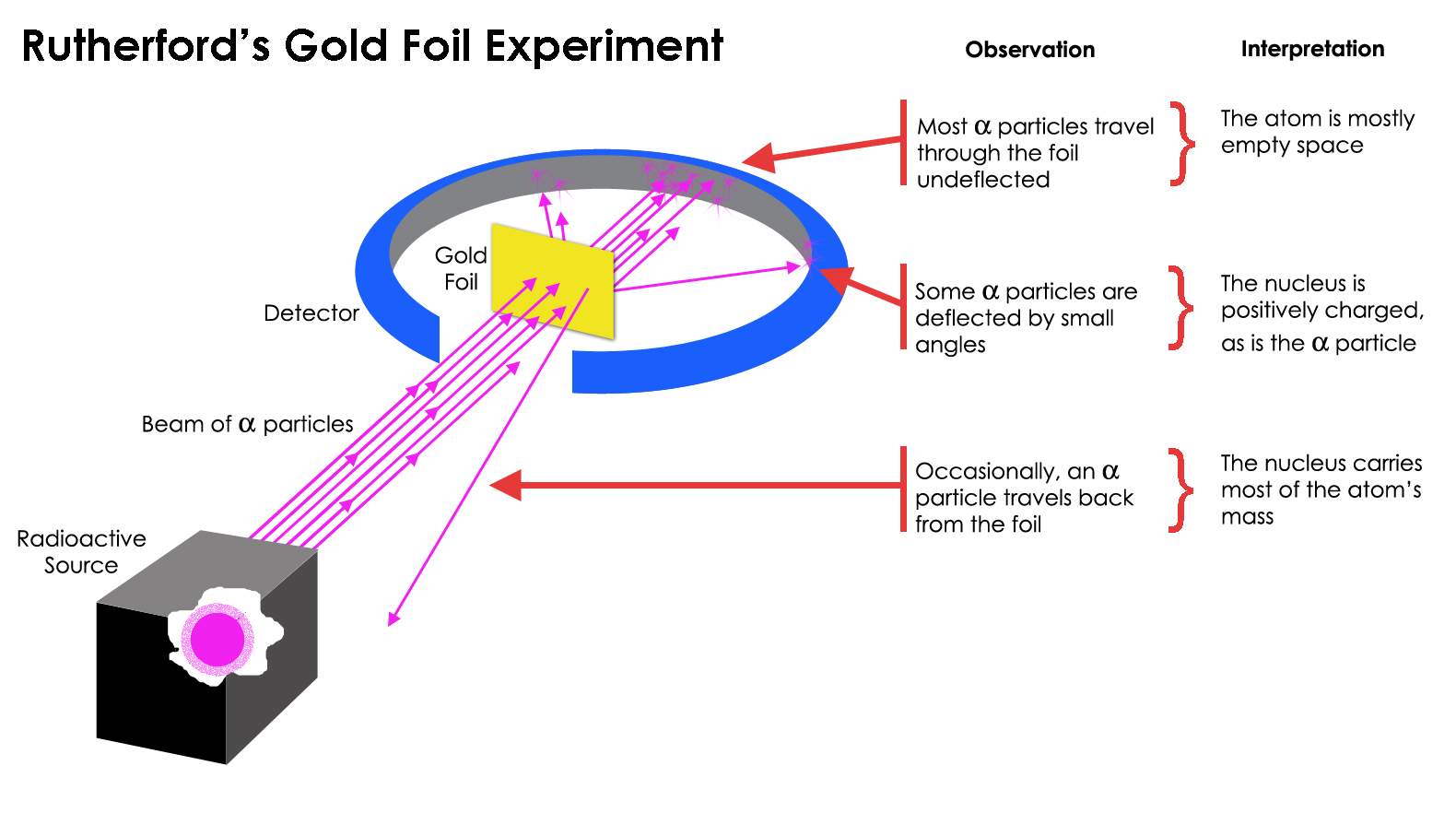
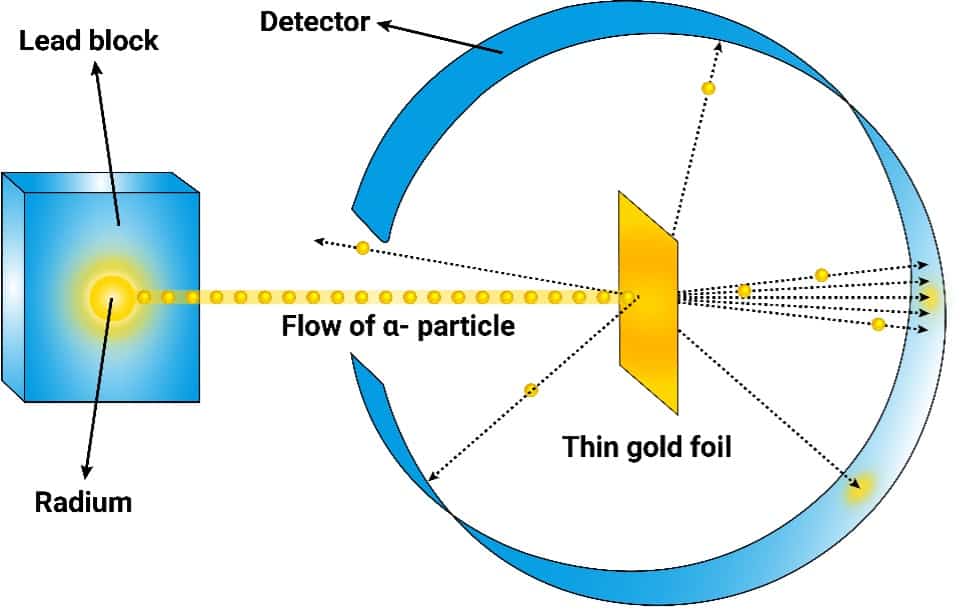
To understand why the Gold Foil Experiment is the “patient zero” of modern technology, one must look at the prevailing theory it destroyed: the Plum Pudding Model. J.J. Thomson had suggested that atoms were spheres of positive charge with electrons stuck inside like raisins. If this had been true, the alpha particles in Rutherford’s experiment would have passed straight through with minimal deflection.
The Discovery of “Empty Space”
Rutherford’s team observed that while most particles passed through, some were deflected at massive angles, and a few even bounced straight back. This proved that the atom was not a solid mass but was composed of 99.9% empty space, with a dense, positively charged nucleus at the center.
In the tech sector, this discovery was the first step toward miniaturization. By proving that the “solid” world was actually a vacuum held together by electromagnetic forces, Rutherford opened the door to the idea that we could manipulate these forces. If matter is mostly space, then data—in the form of electrons—can be moved through it. This realization eventually led to the development of vacuum tubes and, later, the transistors that drive every smartphone on the planet today.
The Birth of Subatomic Engineering
By proving the existence of the nucleus, Rutherford shifted the focus of engineering from the macro to the micro. Technology moved from the era of “steam and gears” to the era of “particles and waves.” We stopped trying to build better mechanical machines and started trying to build better electronic ones. The Gold Foil Experiment proved that the power of the universe was concentrated in a tiny core, suggesting that if we could control the behavior of the particles around that core, we could create artificial logic.
The Nucleus of Innovation: How Subatomic Structure Built the Digital World
The proof of a central nucleus surrounded by orbiting electrons (further refined by Niels Bohr) provided the blueprint for the semiconductor industry. Modern technology relies entirely on our ability to manipulate the movement of electrons between the “empty spaces” Rutherford discovered.
Semiconductors and the P-N Junction
The Gold Foil Experiment proved that atoms have a positive core. This understanding allowed later scientists to experiment with “doping” materials—adding specific impurities to a crystal lattice to change its electrical properties.
- Silicon Foundations: By understanding that the nucleus dictates how many electrons an atom can hold, tech pioneers were able to create N-type (negative) and P-type (positive) materials.
- The Transistor: When you join these materials, you create a junction that can act as a switch. This switch is the “0 or 1” of the binary system. Every software application, from a simple calculator to a complex AI model, runs on the fundamental physics proved by Rutherford’s gold foil.
High-Energy Physics in Hardware Manufacturing
The experiment also introduced the world to particle scattering. Today, the tech industry uses this exact principle in the manufacturing of high-end hardware. Ion implantation, a process used to introduce dopants into a semiconductor wafer, is a direct technological descendant of Rutherford’s alpha particle scattering. We use high-energy beams to “shoot” particles into materials to change their conductivity, mirroring the methodology used in 1911 to probe the structure of gold.
Quantum Leap: From Gold Foil to the Quantum Processor
While Rutherford’s experiment proved the existence of the nucleus, it also presented a problem that classical physics couldn’t solve: why didn’t the electrons spiral into the nucleus? This paradox forced the birth of quantum mechanics. Today, we are seeing the “second wave” of tech innovation based on these quantum principles.
The Evolution of Data Storage
Rutherford proved that the nucleus contains almost all the mass of an atom. In the world of enterprise tech and data storage, this led to the understanding of magnetic moments and spin. Hard Disk Drives (HDDs) and the emerging field of MRAM (Magnetoresistive Random Access Memory) rely on the orientation of atomic particles. Without the proof of a localized nucleus, our ability to store terabytes of data in a space the size of a fingernail would be theoretically impossible.
Quantum Computing and Qubits
The tech world is currently racing to perfect quantum computing. These machines do not use standard bits; they use qubits, which leverage the properties of subatomic particles like electrons or nuclei.
- Superposition: Because the Gold Foil Experiment proved atoms are mostly empty space governed by probability and force, it allowed for the discovery that particles can exist in multiple states.
- Entanglement: Modern quantum tech uses the nucleus (proved by Rutherford) as a stable environment to hold quantum information, as the nucleus is shielded from external “noise” by the very empty space Rutherford identified.
Material Science and Nanotech: Engineering at the Atomic Level
The Gold Foil Experiment was the first successful attempt at nanotechnology—manipulating a material so thin (only a few hundred atoms thick) that its atomic properties could be observed. Today, the tech industry is obsessed with “2D materials” like graphene, which are essentially the modern version of Rutherford’s gold foil.
The Limits of Moore’s Law
For decades, the tech industry followed Moore’s Law, doubling the number of transistors on a chip every two years. However, as we approach the 2-nanometer and 1-nanometer scale, we are running into the “Rutherford limit.” We are getting so close to the nucleus that the “empty space” Rutherford discovered is no longer enough to prevent electrons from leaping between circuits (quantum tunneling).
Next-Generation Hardware: Beyond Silicon
The proof that different nuclei have different binding energies and properties has led tech researchers to explore beyond silicon.
- Gallium Nitride (GaN): Used in modern power adapters and 5G base stations, GaN allows for higher voltages and faster switching than silicon.
- Photonics: Instead of moving electrons through the empty space of an atom, tech companies are looking at moving light (photons). This shift is only possible because we understand the “nuclear” structure of the materials the light passes through.
Digital Security and the Nuclear Legacy
Finally, the Gold Foil Experiment’s proof of nuclear structure led to our understanding of isotopes and radiation, which has surprising applications in modern digital security and infrastructure.
True Random Number Generation (TRNG)
In the world of cybersecurity, “pseudo-random” numbers generated by software can be cracked. To create uncrackable encryption, tech firms use hardware-based True Random Number Generators. Many of these sensors rely on the radioactive decay of certain isotopes. This decay is a nuclear process; it happens within the very nucleus that Rutherford discovered. By measuring the timing of a particle being emitted from a nucleus—a process that is inherently unpredictable—tech firms can generate truly random keys for high-level digital security.
Nuclear Power for Data Centers
As AI tools like ChatGPT and Gemini require massive amounts of compute power, the tech industry is turning toward Small Modular Reactors (SMRs) to power data centers. This return to nuclear energy is the ultimate practical application of Rutherford’s discovery. By proving that energy is concentrated in the nucleus, Rutherford provided the key to the most energy-dense fuel source available to the tech industry today, ensuring that the AI revolution has the power it needs to scale.
Conclusion: The Invisible Foundation
What did the gold foil experiment prove? To a scientist, it proved the nuclear model of the atom. To a technologist, it proved that the universe is programmable.
The transition from the 19th-century mechanical world to the 21st-century digital world required a fundamental shift in how we perceived reality. Rutherford provided that shift. By proving that matter is mostly empty space with a dense core of potential, he gave us the map to the subatomic world. Every time we use a touch screen, save a file to the cloud, or run a complex algorithm, we are utilizing the “empty space” and the “nuclear density” that were first glimpsed in a dark lab in 1911. The gold foil was thin, but the technological empire built upon it is vast and continues to expand into the quantum frontier.
aViewFromTheCave is a participant in the Amazon Services LLC Associates Program, an affiliate advertising program designed to provide a means for sites to earn advertising fees by advertising and linking to Amazon.com. Amazon, the Amazon logo, AmazonSupply, and the AmazonSupply logo are trademarks of Amazon.com, Inc. or its affiliates. As an Amazon Associate we earn affiliate commissions from qualifying purchases.