
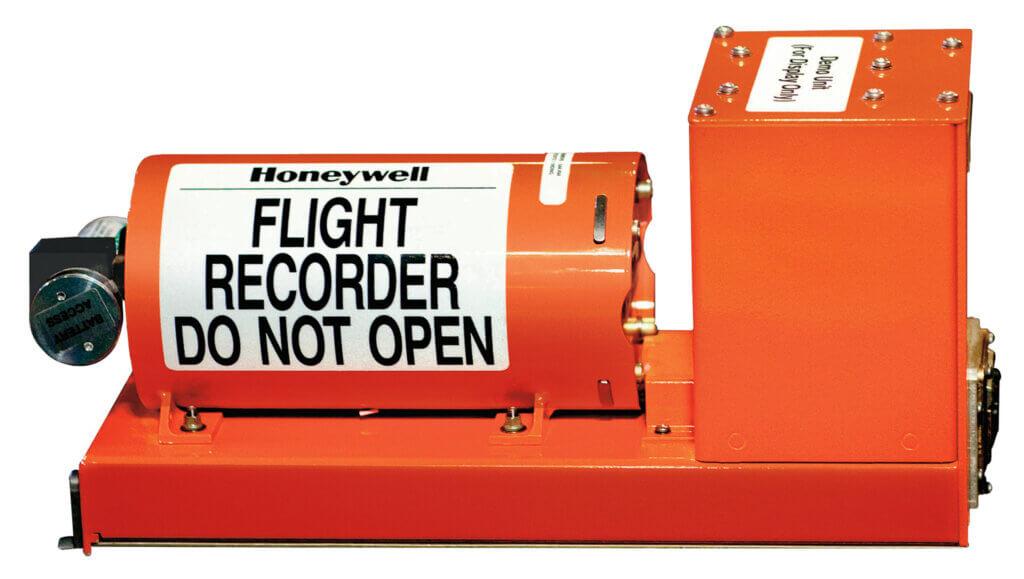
In the world of aviation technology, few devices are as legendary or as misunderstood as the “black box.” For decades, the public has been captivated by the search for these elusive devices following an aviation incident. However, the first thing any tech enthusiast or aerospace engineer will tell you is that the name is a complete misnomer. The black box is not black; it is a vibrant, neon shade of “International Orange.”
But beyond the curious choice of color, the black box represents one of the most sophisticated feats of engineering in the modern world. It is a device built to survive the unsurvivable, functioning as a redundant, indestructible server that captures the final moments of a flight’s digital life. As we delve into the technical architecture of these devices, we discover a world of high-integrity data storage, acoustic signal processing, and extreme materials science.
The Engineering of Visibility: Why the Black Box is International Orange
To understand the tech behind the black box, one must first understand its primary environmental requirement: visibility. In the immediate aftermath of a high-impact event, a device that is actually black would be nearly impossible to locate amidst charred wreckage, dark soil, or the murky depths of the ocean floor.
International Orange and Visual Contrast
The specific hue used for these devices is known as “International Orange.” This is the same high-visibility shade used in the aerospace industry for test rockets and the Golden Gate Bridge. The choice is purely functional. In technical terms, International Orange offers the highest possible contrast against both the blue of the ocean and the green or brown of terrestrial landscapes.
Furthermore, the exterior of the box is typically adorned with strips of retroreflective tape. This allows search teams using high-powered flashlights or underwater Remote Operated Vehicles (ROVs) to identify the device through the reflection of light, even in low-visibility environments. The “black box” name likely stems from early prototypes that used charred internal components or the “black box” theory in cybernetics—where a system is viewed in terms of its inputs and outputs without knowledge of its internal workings.
The Crash Survivable Memory Unit (CSMU)
The orange chassis isn’t just a shell; it is the outermost layer of the Crash Survivable Memory Unit (CSMU). This is the “fortress” that protects the data. To achieve its durability, engineers utilize a multi-layer stack of materials:
- Stainless Steel or Titanium Shell: The outer armor that resists punctures and high-velocity impacts.
- High-Temperature Insulation: A layer of dry silica material that provides a thermal shield, ensuring the internal memory chips don’t melt during a post-crash fire.
- Paraffin Wax or Cast Aluminum: Some models use a thermal block that absorbs heat through phase-change energy, keeping the core temperature stable while the outside world burns at over 1,000 degrees Celsius.
Under the Hood: The Evolution of Flight Data Storage
Modern aviation has moved far beyond the analog era. In the early days of flight recording, data was etched onto metal foils or recorded on magnetic tape. Today, the tech has transitioned entirely to Solid-State Drive (SSD) technology, utilizing NAND flash memory similar to what you might find in a high-end laptop, but with significantly higher industrial-grade durability.
The Flight Data Recorder (FDR)
The FDR is the “biometric monitor” of the airplane. It tracks a massive array of parameters—thousands of them in modern wide-body jets like the Boeing 787 or Airbus A350. The technical complexity here lies in the data bus integration. The FDR pulls data from the aircraft’s ARINC 429 or AFDX (Avionics Full-Duplex Switched Ethernet) networks.
It records everything from airspeed, altitude, and vertical acceleration to the precise movement of every individual flap, slat, and fuel valve. The tech is designed to overwrite itself, typically keeping a rolling log of the last 25 hours of flight data. This ensures that the most relevant information is always preserved without requiring petabytes of storage.
The Cockpit Voice Recorder (CVR)
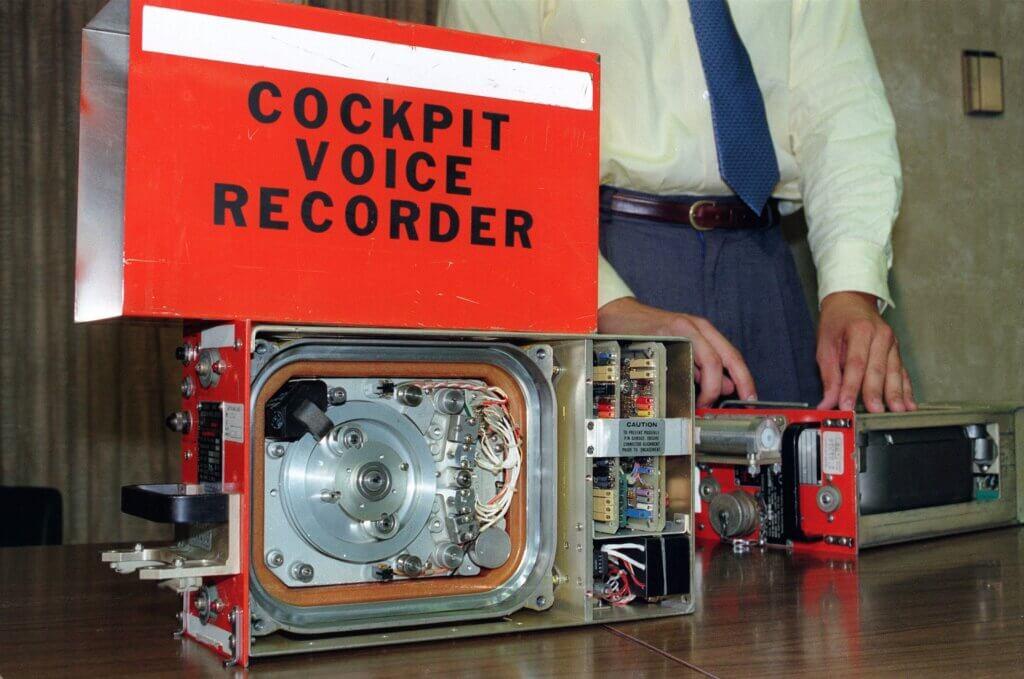
While the FDR handles the numbers, the CVR handles the human element. Modern CVRs use digital signal processing to record four distinct channels of audio:
- The Pilot’s headset.
- The Co-pilot’s headset.
- The Third crew member’s station.
- The Area Microphone (located in the overhead panel).
The area microphone is particularly high-tech; it is tuned to pick up ambient cockpit sounds, such as the click of a switch, the hum of the engines, or the sound of an explosion. Forensic audio experts use this data to determine engine RPMs or the timing of mechanical failures based on sound frequency analysis. Recent tech mandates have pushed the recording capacity of CVRs from 30 minutes to 25 hours, ensuring that the entire duration of a long-haul flight is captured.
The Architecture of Recovery: ULB and GPS Integration
Locating a 10-pound orange box in a 5-mile-deep ocean trench is a needle-in-a-haystack problem. To solve this, the black box utilizes an Underwater Locator Beacon (ULB), often referred to as a “pinger.”
Underwater Locator Beacons (ULB)
The ULB is a masterpiece of low-power, high-reliability tech. It is triggered by “water sensors”—essentially two electrodes that complete a circuit when submerged in salt or fresh water. Once activated, it emits an acoustic pulse at a frequency of 37.5 kHz.
This frequency is chosen because it is not typically produced by biological life or common geological movements, making it stand out to sonar equipment. The battery technology in these beacons is designed for extreme shelf life, remaining dormant for years but capable of “pinging” once every second for 90 days straight after an accident.
The Shift to Cloud-Based “Global Aeronautical Distress and Safety System” (GADSS)
The tech industry is currently working on the next evolution of the black box: streaming. Following the disappearance of MH370, there was a massive push to ensure data isn’t just stored locally. New “Deployable” recorders are being developed that can eject from the aircraft upon impact and float on the water.
More importantly, “Virtual Black Boxes” are coming online. Through satellite constellations like Iridium or Inmarsat, aircraft are beginning to stream “triggered” data. If the aircraft’s onboard computer detects an unusual attitude, loss of altitude, or engine failure, it automatically begins high-bandwidth streaming of flight data to a ground-based cloud server. This ensures that even if the physical orange box is never recovered, the digital twin of the flight’s final moments is safely stored in the cloud.
Testing the Limits: The Extreme Quality Assurance of Aviation Tech
Before a black box is certified for use, it must survive a “gauntlet” of tests that would vaporize any standard consumer electronic device. These tests are governed by international standards like EUROCAE ED-112.
Impact and Pressure Testing
To simulate a high-speed collision with the ground, engineers fire the memory unit from an air cannon into a target, subjecting it to an impact of 3,400 Gs. To put that in perspective, a human loses consciousness at around 5 to 10 Gs.
Following the impact test, the device is subjected to “Static Crush” testing, where a hydraulic press applies 5,000 pounds of pressure to the unit for five minutes. This ensures that even if the box is buried under tons of aircraft debris, the memory chips inside remain uncrushed.
Deep Sea and Fire Resistance
The final stages of testing involve environmental extremes. The box is submerged in a pressurized tank of salt water for 30 days to simulate the pressure at 20,000 feet below sea level. Saltwater is highly corrosive, so the seals must be hermetically perfect to prevent the brine from eating away at the circuit boards.
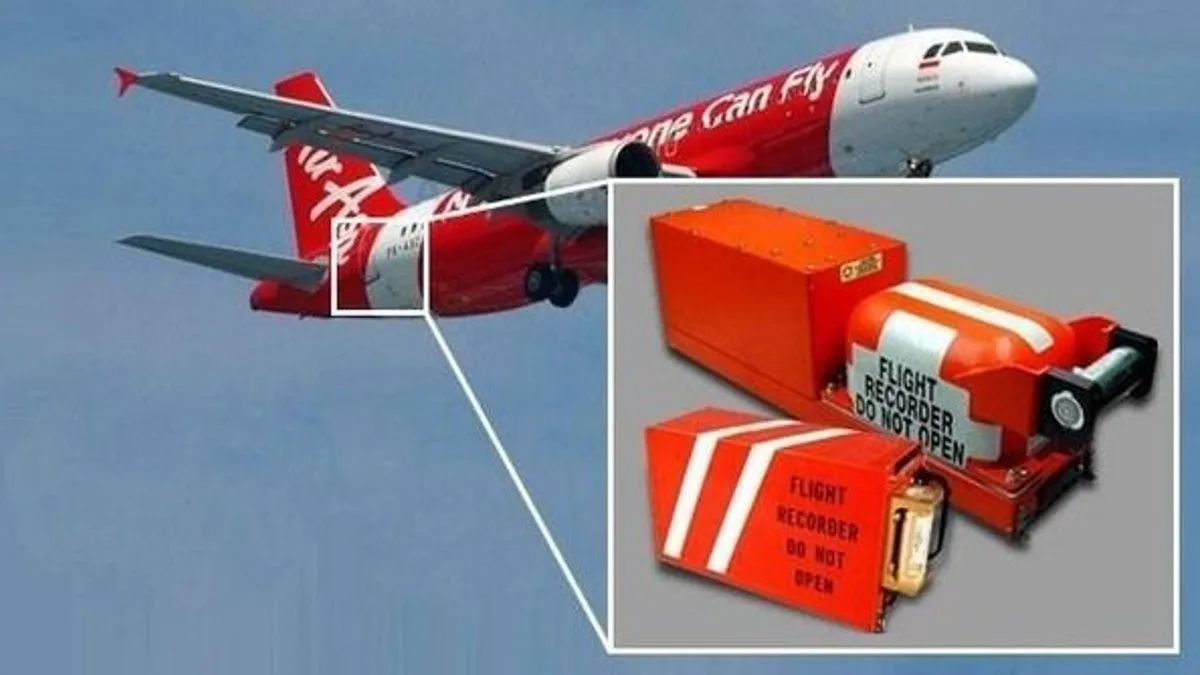
Finally, there is the fire test. The unit is engulfed in flames at 1,100 degrees Celsius (2,012 degrees Fahrenheit) for 60 minutes. This is followed by a “smolder test” where it must survive 10 hours at 260 degrees Celsius. Only after passing these rigorous tech trials is the “International Orange” box allowed to be bolted into the tail of a commercial airliner.
Conclusion: The Ultimate Tech Fail-Safe
The black box is a testament to the philosophy of “redundancy and resilience” that defines modern technology. It is a device that we hope never has to be used, yet it is engineered with more care than almost any other piece of hardware on the planet.
By combining high-visibility design with indestructible materials and sophisticated data-logging software, the black box ensures that every flight is a learning opportunity. As we move toward a future of AI-driven cockpits and real-time satellite data streaming, the physical orange box remains the ultimate fail-safe—a rugged, silent witness that holds the keys to aviation safety in its silicon heart. Whether on the wing of a high-tech jet or at the bottom of the Atlantic, this “International Orange” marvel continues to be the most important piece of tech in the sky.
aViewFromTheCave is a participant in the Amazon Services LLC Associates Program, an affiliate advertising program designed to provide a means for sites to earn advertising fees by advertising and linking to Amazon.com. Amazon, the Amazon logo, AmazonSupply, and the AmazonSupply logo are trademarks of Amazon.com, Inc. or its affiliates. As an Amazon Associate we earn affiliate commissions from qualifying purchases.