
The digital age has fundamentally transformed the way we communicate, connect, and intervene in moments of crisis. While the question of “what to say to a suicidal person” has traditionally been the domain of psychologists and crisis counselors, it has increasingly become a focal point for technology developers, data scientists, and AI researchers. As our lives migrate online, the first point of contact for someone in distress is often a search engine, a social media platform, or a dedicated mental health app.
This shift has birthed a new intersection between behavioral science and technology. We are no longer just looking for the right words to say; we are building systems that can identify when those words are needed and deploying automated tools that can deliver them with precision, empathy, and speed.
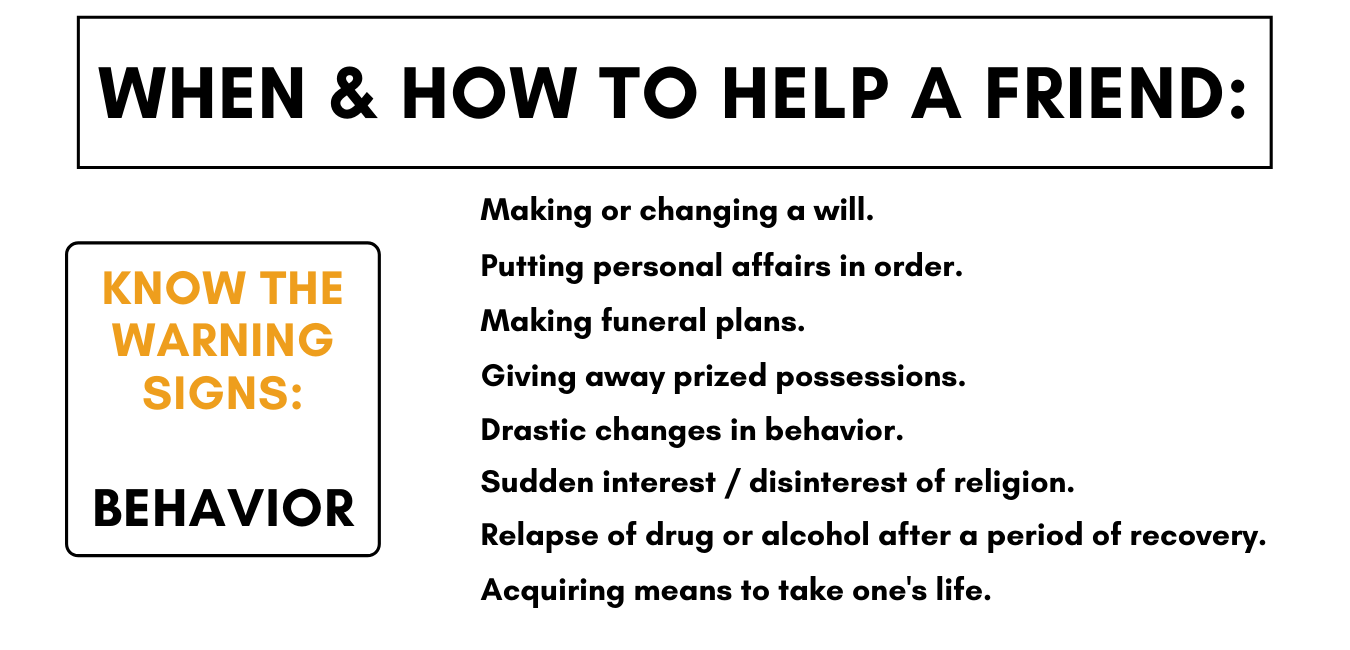
The Evolution of Digital Intervention: From Voice to Interface
For decades, the standard for crisis intervention was the telephonic hotline. While effective, the rise of digital-native generations has necessitated a shift in how support is delivered. Technology has moved the needle from reactive voice calls to proactive, text-based digital interfaces.
The Transition from Hotlines to Text-Based Apps
Research indicates that many individuals, particularly Gen Z and Millennials, find voice calls intimidating during high-stress situations. This has led to the rise of platforms like the Crisis Text Line, which utilizes SMS and web-based chat interfaces. The technical advantage here is the ability to handle massive data sets of conversations. By analyzing millions of text-based interactions, tech companies can identify which specific phrases lead to a “de-escalation” of a crisis. This data-driven approach helps refine the scripts used by both human volunteers and AI-driven bots, answering the “what to say” question through statistical success rates.
Real-time Sentiment Analysis in Social Media
Social media platforms have become the modern-day “public square,” and often, the first signs of suicidal ideation appear in status updates or comments. Tech giants have developed sophisticated sentiment analysis tools that scan for linguistic markers of distress. Instead of waiting for a human to report a post, these algorithms can trigger an automated intervention in milliseconds. When the system detects a high-risk post, it serves the user a targeted notification: “Someone thinks you might be going through a hard time. How can we help?” This is a tech-driven application of immediate, low-friction outreach.
Building Empathetic Algorithms: How AI Learns to Respond
The most significant technological leap in this field is the development of Large Language Models (LLMs) and specialized AI designed for crisis de-escalation. The challenge for developers is “coding empathy”—teaching a machine not just to recognize a problem, but to respond in a way that feels human and supportive.
Natural Language Processing (NLP) and Crisis Detection
At the heart of modern intervention technology is Natural Language Processing (NLP). NLP allows software to move beyond simple keyword matching (like searching for the word “suicide”) to understanding context, tone, and intent. For instance, an NLP model can distinguish between someone quoting a dark song lyric and someone expressing genuine personal hopelessness. By analyzing syntax and semantic structures, the tech can prioritize “high-intensity” cases for immediate human intervention, ensuring that the most critical voices are heard first in a crowded digital landscape.
Training Large Language Models (LLMs) for De-escalation
When we ask a tool like a chatbot “what to say to a suicidal person,” the AI relies on a process called Reinforcement Learning from Human Feedback (RLHF). Developers feed the AI thousands of transcripts from successful crisis interventions. The AI learns that phrases like “I hear you,” “You are not alone,” and “Tell me more about how you’re feeling” are more effective than dismissive or overly “fix-it” oriented responses. This creates a standardized, tech-enabled baseline for communication that reduces the margin of human error in high-pressure scenarios.
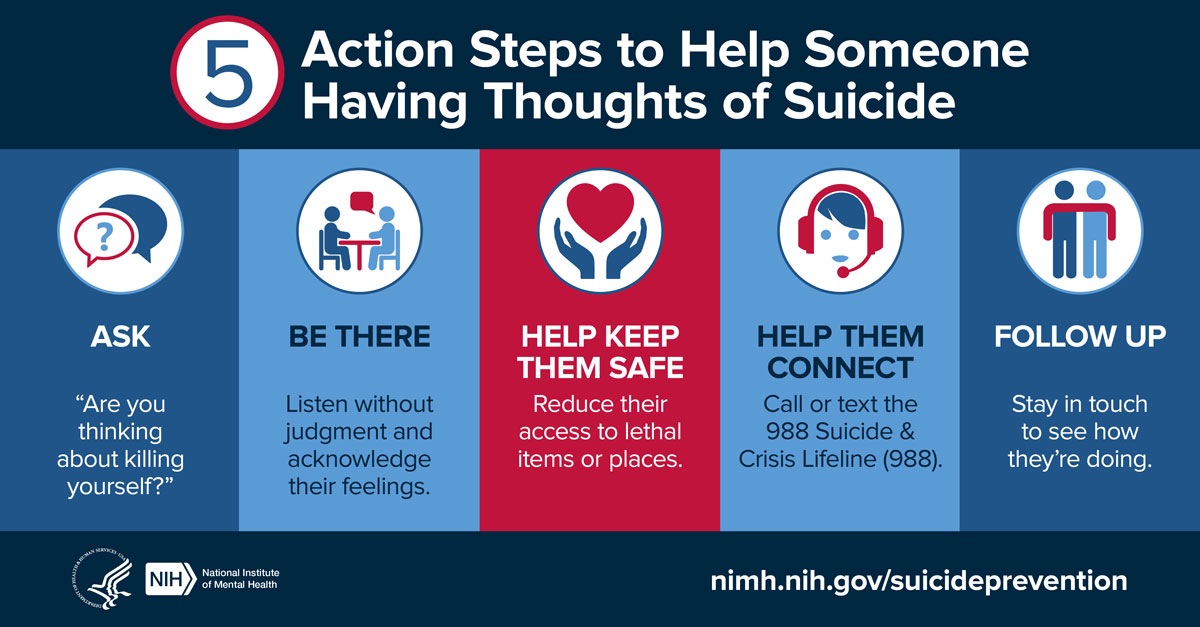
The Role of Social Media Platforms and Search Engines in Preventive Outreach
Search engines and social media platforms are often the “gatekeepers” of information for someone in a dark place. The tech strategy here is to intercept a potentially harmful journey and redirect it toward a supportive one.
Meta and Google’s Proactive Algorithmic Triggers
Google has integrated “Safety Search” features that are triggered by specific queries. If a user searches for methods of self-harm, the algorithm is programmed to override standard search results and place a prominent box at the top of the page with a local crisis number and a prompt to “talk to someone who can help.” Similarly, Meta (Facebook and Instagram) uses AI to detect patterns of behavior—such as a user posting more frequently about hopelessness or changes in their typical posting schedule—which can trigger a “wellness check” interface. This tech doesn’t just wait for the user to ask “what should I say”; it initiates the conversation itself.
The Ethical Dilemma of Automated Surveillance
While the tech is life-saving, it raises significant questions regarding digital security and privacy. To identify someone in need, platforms must engage in a level of persistent surveillance of user content. The “tech” side of the “what to say” equation must balance the urgency of life-saving intervention with the user’s right to data privacy. Developers are currently working on “Edge AI” solutions, where the analysis happens locally on the user’s device rather than in the cloud, ensuring that sensitive mental health data is never stored on a company’s central servers.
Best Practices for Digital Communication in High-Stakes Situations
Technology is not meant to replace human connection, but to facilitate it. In the tech sector, we focus on “Human-in-the-Loop” (HITL) systems, where AI handles the initial outreach and categorization, but hands over the actual conversation to a trained professional when the stakes are highest.
Standardizing Scripts for Crisis Bot Responses
One of the most valuable tech contributions to this field is the standardization of response frameworks. By using “Branching Logic” in chatbots, developers ensure that the bot never says the “wrong” thing. If a user responds to a prompt with “I want to give up,” the bot’s logic tree leads it to an empathetic validation response rather than a generic “Thank you for your feedback.” This technical structure provides a safety net, ensuring that the initial moments of a crisis are handled with clinical accuracy and zero judgment.
Integrating Wearables and Biometric Data
The future of this technology lies in wearables. Smartwatches and fitness trackers can monitor physiological signs of acute stress, such as a spiking heart rate or irregular sleep patterns. In the near future, your device might detect a panic attack before you even realize you’re having one and prompt you with a digital message: “Your heart rate is high; would you like to try a breathing exercise or call a friend?” This moves the conversation from “what to say to a suicidal person” to “how to prevent the crisis before it reaches a breaking point” through proactive biometric monitoring.

The Future of Tech-Enabled Support
As we look toward the future, the integration of VR (Virtual Reality) and AR (Augmented Reality) offers even more immersive ways to teach people how to communicate in these situations. VR simulations can train the public on “what to say” by placing them in a safe, simulated environment where they can practice de-escalation techniques with an AI-driven avatar. This democratizes crisis intervention skills, turning every smartphone and headset into a tool for mental health literacy.
The marriage of tech and mental health is not without its challenges, but the potential is undeniable. By leveraging AI, NLP, and proactive algorithmic triggers, we are creating a digital safety net that is always on, always listening, and—most importantly—always knows exactly what to say to provide a glimmer of hope in a moment of darkness. Through continued innovation, the tech community is ensuring that no one has to navigate their darkest moments alone, providing the tools and the words to bridge the gap between despair and recovery.
aViewFromTheCave is a participant in the Amazon Services LLC Associates Program, an affiliate advertising program designed to provide a means for sites to earn advertising fees by advertising and linking to Amazon.com. Amazon, the Amazon logo, AmazonSupply, and the AmazonSupply logo are trademarks of Amazon.com, Inc. or its affiliates. As an Amazon Associate we earn affiliate commissions from qualifying purchases.