
The colonoscopy has long been regarded as the gold standard for colorectal cancer prevention, yet for the average patient, the procedure itself is not the deterrent—the preparation is. Historically, “the prep” involved vague paper pamphlets and a stressful regimen of restrictive eating. However, as we move into the era of Health 2.0, the 48-hour window preceding a colonoscopy is being transformed by technology. What you eat two days before the procedure is no longer just a medical directive; it is a data-driven optimization process designed to maximize the efficacy of high-resolution imaging and artificial intelligence (AI) diagnostic tools.

By viewing the pre-colonoscopy diet through the lens of medical technology and digital precision, we can understand why the “low-residue” phase is critical for the hardware and software currently used in modern gastroenterology.
1. Precision Nutrition Platforms: The Software Behind the Low-Residue Diet
Two days before a colonoscopy, patients typically transition to a “low-residue” or “low-fiber” diet. In the tech-integrated medical landscape, this transition is managed less by intuition and more by algorithmic meal planning and digital compliance tracking.
Algorithmic Meal Planning
Modern MedTech startups have developed specialized software that integrates with a patient’s Electronic Health Record (EHR). These platforms provide a “Digital Prep Path” that utilizes push notifications to guide the user through the 48-hour countdown. Two days out, the algorithm identifies high-risk foods—those that leave physical “noise” in the digestive tract—and suggests alternatives that ensure the “Signal-to-Noise Ratio” (SNR) of the upcoming internal scan is as high as possible. For example, instead of whole grains or raw vegetables, which are difficult for imaging software to “see” through, the apps suggest refined carbohydrates and lean proteins that digest cleanly.
Digital Compliance Tracking and Gamification
The biggest failure in colonoscopy outcomes isn’t the doctor’s skill; it’s patient compliance during the 48 hours prior to the procedure. New patient engagement apps use gamification to ensure the user sticks to the white-bread-and-eggs regimen required at the two-day mark. By logging food intake into a dedicated portal, patients receive real-time feedback. If a patient logs an item with high fiber content 48 hours before the procedure, the software can alert the clinic, allowing for a proactive adjustment rather than a failed (and expensive) procedure.
2. Hardware vs. Bio-Waste: The Engineering Necessity of a Clean Colon
To understand what to eat two days before a colonoscopy, one must understand the hardware requirements of the modern endoscope. Today’s scopes are not just cameras; they are sophisticated imaging suites equipped with 4K resolution, Narrow Band Imaging (NBI), and multiple light wavelengths.
Resolution Limits of Optical Fiber Tech
The sensors at the tip of a modern colonoscope are designed to detect micro-vessels and subtle mucosal changes. When a patient consumes high-fiber foods two days before a procedure—such as seeds, nuts, or corn—these materials can persist in the colon despite the liquid prep taken later. From a technical standpoint, these residues create “artifacts” on the digital feed. Much like dust on a camera lens, these residues block the sensor’s ability to render a clear 3D map of the colon wall. By adhering to a refined, tech-friendly diet 48 hours out, the patient is essentially “cleaning the sensor” from the inside out.
AI-Driven Polyp Detection (CADe)
One of the most significant leaps in gastroenterology is Computer-Aided Detection (CADe). This AI software runs as an overlay on the doctor’s screen, highlighting potential polyps in real-time using green boxes. However, AI is only as good as the data it receives. If a patient consumes “noisy” foods two days prior, the AI may trigger “false positives” by mistaking food debris for sessile serrated lesions. To optimize the performance of the AI, the digestive tract must be devoid of any particulate matter that shares the textural signature of human tissue. The low-residue diet at the 48-hour mark is, therefore, a prerequisite for AI calibration.

3. The Connectivity Factor: Telehealth and Remote Prep Management
The 48-hour window is also the phase where “Remote Patient Monitoring” (RPM) becomes vital. Technology has shifted the responsibility of the prep from the clinic to the home, connected by a digital tether.
Automated Patient Engagement Systems
Healthcare providers are increasingly using automated SMS and AI-driven chatbots to manage the 48-hour dietary transition. These bots serve as a 24/7 technical support line for the patient’s gut. “Can I eat white rice two days before?” is a query handled by Natural Language Processing (NLP) engines that cross-reference the question with the specific prep kit hardware being used. This reduces the “cognitive load” on the patient and ensures that the instructions—which are mission-critical for the tech to work—are followed to the letter.
Real-time Bio-Sensing and Hydration Monitoring
While the 48-hour mark still allows for solid foods (albeit low-fiber ones), it is the start of the hydration ramp-up. New wearable technologies, such as smart patches that monitor skin turgor and electrolyte balance, are being trialed to assist during this phase. Maintaining optimal cellular hydration two days out ensures that when the “osmotic” phase of the prep begins (the liquid purge), the body’s internal systems remain stable. This data can be streamed directly to a clinician’s dashboard, ensuring that the patient is physically optimized for the sedation and the procedure’s technological demands.
4. Beyond the Scope: Future Tech and the End of Invasive Prep
As we look at the evolution of “what to eat,” we are seeing a shift toward technologies that might one day make the 48-hour dietary restriction obsolete. However, for now, these technologies actually reinforce the need for dietary precision.
Ingestible Sensor Capsules (PillCams)
The PillCam is a marvel of miniaturization—a pill-sized camera that a patient swallows. It records thousands of images as it traverses the GI tract. Because this device has no “flush” function (unlike a traditional endoscope which can spray water to clear debris), the 48-hour low-residue diet is even more critical. If the “data packet” (the pill) encounters a piece of undigested fiber from a meal eaten two days prior, the entire diagnostic run could be corrupted. In this sense, the food you eat is the “environment” in which this mobile IoT device must operate.
Big Data and Gut Microbiome Mapping
There is an emerging intersection between the pre-colonoscopy diet and “Omics” technology (genomics, proteomics, and metabolomics). Some researchers are using the 48-hour window to study how a standardized low-residue diet affects the gut microbiome before it is “reset” by the prep. By using high-throughput sequencing, tech-enabled labs are looking at how this dietary pause provides a “baseline” for human health data. In the future, the 48-hour pre-colonoscopy meal may be a standardized, lab-created nutrient block designed to provide perfect transparency for multi-spectral scanners.
Conclusion: The Engineering of the Human Internal Environment
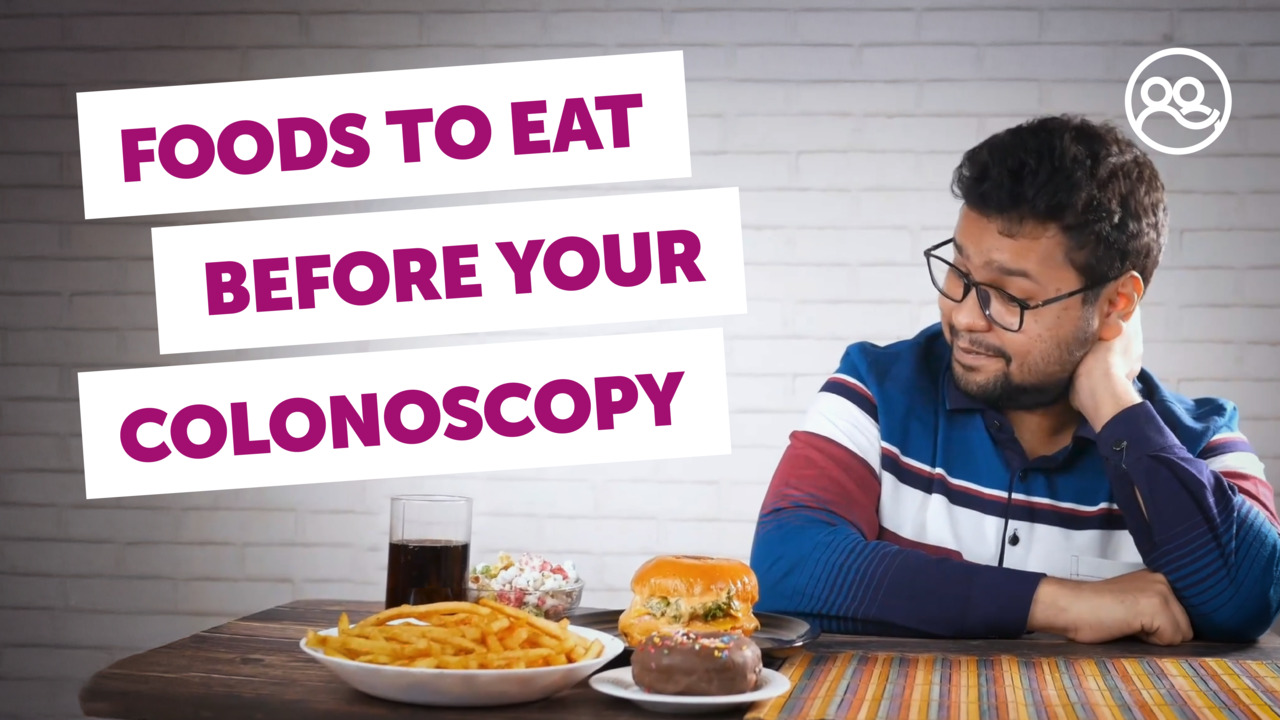
What you eat two days before a colonoscopy is a critical input in a complex technological system. The transition to white breads, lean proteins, and peeled potatoes is not a mere tradition; it is a deliberate “de-fragmentation” of the digestive tract. By reducing the “residue” or “data noise” in the colon, patients enable 4K cameras, AI-driven detection software, and robotic endoscopic tools to perform at their theoretical limits.
As MedTech continues to advance, the synergy between what we ingest and how our devices “see” us will only tighten. In the modern age, the 48-hour pre-procedure diet is the first step in a high-tech diagnostic journey—one where the patient acts as the system administrator, ensuring the hardware has the clear field of view it needs to save lives. Through the integration of apps, AI, and precision imaging, we are turning a dreaded medical chore into a masterclass in health optimization.
aViewFromTheCave is a participant in the Amazon Services LLC Associates Program, an affiliate advertising program designed to provide a means for sites to earn advertising fees by advertising and linking to Amazon.com. Amazon, the Amazon logo, AmazonSupply, and the AmazonSupply logo are trademarks of Amazon.com, Inc. or its affiliates. As an Amazon Associate we earn affiliate commissions from qualifying purchases.