
For decades, the selection of eyewear was a subjective process, reliant on the intuitive “eye” of a trained optician or the trial-and-error approach of a consumer standing before a mirror. However, the question of “what shape of frame for a round face” has moved out of the realm of style advice and into the domain of high-level computational geometry. Today, the intersection of Computer Vision (CV), Augmented Reality (AR), and Machine Learning (ML) is redefining how we match facial topology with geometric hardware.
In the technology sector, identifying the ideal frame shape for a round face is no longer a matter of opinion—it is a data-driven optimization problem. By leveraging sophisticated algorithms, the tech industry has developed tools that can analyze a user’s facial landmarks in real-time, providing a level of personalization that was previously impossible.
The Evolution of Virtual Try-On (VTO) Systems
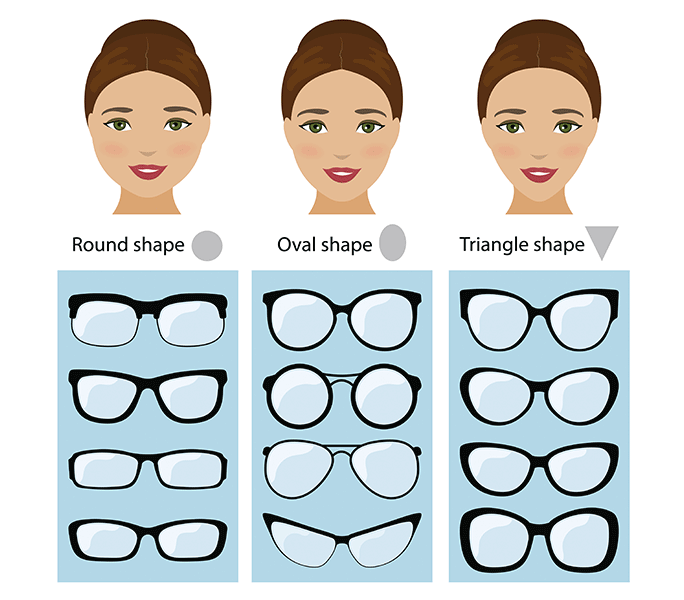
The initial iterations of virtual try-on software were rudimentary, often consisting of static 2D image overlays that failed to account for depth, lighting, or the nuances of facial movement. For a user with a round face—characterized by soft curves, a wider forehead, and a rounded chin—these early systems were insufficient. They could not accurately convey how an angular, rectangular frame would contrast with the soft features of the wearer.
From Static Overlays to Real-Time 3D Mapping
Modern VTO systems have transitioned to sophisticated 3D mesh modeling. When a user engages with a high-end eyewear app, the software uses the device’s camera to project thousands of invisible dots onto the face. This creates a high-fidelity 3D map of the user’s topology. For someone with a round face, the software identifies the specific coordinates of the cheekbones and the lack of sharp angles at the jawline.
This technological leap allows the software to “seat” a virtual pair of glasses on the bridge of the nose with physics-based accuracy. It accounts for “vertex distance” (the space between the back of the lens and the eye) and “pantoscopic tilt” (the angle of the frame front). This ensures that when the algorithm suggests a square frame to add definition to a round face, the user sees an accurate representation of how those lines will interact with their specific contours.
The Role of Computer Vision in Identifying Face Geometry
Computer Vision is the backbone of frame recommendation engines. CV algorithms are trained on vast datasets of human faces, categorized by geometric properties. To determine that a face is “round,” the system measures the ratio of face width to face height and analyzes the curvature of the jawline.
Once the system identifies the “round” classification, it applies a logic-based recommendation engine. In the world of optics-tech, this is often a “contrast-based” algorithm. If the input (the face) is high in curvature, the output (the frame recommendation) should be high in angularity. This automated decision-making process eliminates the cognitive load on the consumer and provides a scientifically backed starting point for their search.
Algorithm-Driven Aesthetics: How AI Recommends Frames for Round Faces
At the heart of modern e-commerce for eyewear is a recommendation engine powered by Artificial Intelligence. These AI models do more than just categorize faces; they predict aesthetic satisfaction by analyzing billions of data points regarding consumer preferences and facial measurements.
Quantitative Analysis of Facial Landmarks
The process begins with facial landmark detection. AI models identify 68 to over 100 specific points on the human face, including the corners of the eyes, the tip of the nose, and the outline of the chin. For a round face, the distance between the lateral points of the cheekbones is often nearly equal to the vertical distance from the forehead to the chin.
The AI uses these measurements to calculate “angularity deficits.” Because a round face lacks the natural “sharpness” of a square or heart-shaped face, the algorithm searches its database for frames with high “geometric contrast.” This typically results in the prioritization of rectangular, cat-eye, or wayfarer shapes. The tech doesn’t just suggest these shapes because they are “fashionable”; it suggests them because they provide the necessary horizontal orientation to visually lengthen a round profile.
Machine Learning and Style Databases
Machine Learning (ML) takes this a step further by incorporating “Collaborative Filtering.” The system looks at what other users with similar facial dimensions (round faces) ultimately purchased and kept. If the data shows that users with a specific width-to-height ratio are 80% more likely to keep a rectangular frame and return a circular one, the AI learns to weight those recommendations more heavily.
This integration of biometric data and consumer behavior creates a feedback loop. The more the technology is used, the better it becomes at answering the question of frame selection. We are moving toward a future where the AI can predict not just what will fit, but what will be perceived as “complementary” based on global aesthetic trends encoded into the software.

The Tech Stack Behind the Lens: Hardware and Software Synergy
To achieve the precision required for selecting frames for a round face, there must be a seamless synergy between mobile hardware and cloud-based software. The hardware provides the raw data, while the software provides the analytical intelligence.
LiDAR and Depth Sensing on Mobile Devices
The inclusion of LiDAR (Light Detection and Ranging) in modern smartphones has been a game-changer for the eyewear tech industry. Unlike standard camera lenses, LiDAR scans the environment and the user’s face with laser pulses to measure distance with millimeter precision.
For a user with a round face, LiDAR can accurately capture the “depth” of the face—something standard 2D cameras struggle with. It can measure the protrusion of the nose and the depth of the eye sockets. This data is critical because a frame that looks good on a 2D image of a round face might actually sit too close to the eyelashes or rub against the cheeks in real life. LiDAR-powered apps can flag these fit issues before a physical pair is ever shipped.
Cloud Processing vs. Edge Computing in Personalization
The debate between cloud processing and edge computing is highly relevant in eyewear technology. Edge computing—processing the facial data directly on the user’s device—ensures lower latency and higher privacy. This allows for the “magic mirror” effect, where the user can move their head from side to side and see the virtual frames move in real-time without “glitching.”
However, the “recommendation logic”—the complex calculations that compare the user’s round face against thousands of frame SKUs—often happens in the cloud. Cloud-based servers can run more complex simulations, such as how different lens materials (like high-index plastic versus polycarbonate) will look in a specific frame. This hybrid approach ensures that the user gets both a smooth visual experience and a deep, data-driven recommendation.
Future Frontiers: Generative Design and Smart Frames
As we look toward the future, the technology for matching frames to face shapes is evolving beyond mere selection and into the realm of custom creation. We are entering an era of “Generative Design,” where the frame is built specifically for the user’s unique geometry.
3D Printing and Custom-Tailored Geometry
The ultimate solution for a round face may not be a pre-existing frame shape, but one that is algorithmically generated. Using 3D facial scans, companies are now using generative design software to “grow” a frame shape that perfectly balances the user’s features.
If the user’s face is slightly asymmetrical—which most round faces are—the software can adjust the bridge width or the temple length of a rectangular frame to compensate. This data is then sent to a 3D printer, which fabricates a bespoke pair of glasses. In this scenario, the “shape of the frame” is a direct mathematical inverse of the “shape of the face,” ensuring a perfect fit and aesthetic balance every time.
Integrating AR Displays into Optimal Frame Shapes
The rise of Smart Glasses and AR Wearables adds a new layer of complexity to frame selection. In the near future, the shape of the frame won’t just be about aesthetics; it will be about the hardware requirements of the “heads-up display” (HUD).
For tech companies, the challenge is fitting batteries, processors, and waveguides into frames that still look good on various face shapes. Designing a “smart” frame for a round face requires clever engineering to hide the bulk of the electronics while maintaining the angular lines needed to complement the wearer’s features. We are seeing the development of “modular optics,” where the internal tech remains the same, but the outer “shell” or frame shape can be swapped out—using AI-driven recommendations—to suit a round, square, or oval profile.

Conclusion: The Convergence of Geometry and Algorithm
The question of “what shape of frame for a round face” has transitioned from a fashion query to a technological milestone. Through the power of Computer Vision, Machine Learning, and advanced hardware like LiDAR, the tech industry has eliminated the guesswork from the optical industry.
By prioritizing angularity and horizontal lines for round faces through automated recommendation engines, technology is providing users with a level of confidence and precision that human intuition alone cannot match. As we move toward generative design and smart wearables, the link between our facial biometrics and our digital hardware will only grow stronger, making the “perfect fit” a matter of code, not just craft.
aViewFromTheCave is a participant in the Amazon Services LLC Associates Program, an affiliate advertising program designed to provide a means for sites to earn advertising fees by advertising and linking to Amazon.com. Amazon, the Amazon logo, AmazonSupply, and the AmazonSupply logo are trademarks of Amazon.com, Inc. or its affiliates. As an Amazon Associate we earn affiliate commissions from qualifying purchases.