
For global investors, entrepreneurs, and financial analysts, understanding the demographic landscape of an emerging market is a prerequisite for success. While geography and natural resources are often the focus of due diligence, linguistic capital is frequently the “hidden asset” that determines the scalability of a business or the success of a market entry strategy. In Colombia, the linguistic profile is far more complex than a monolingual Spanish-speaking nation. It is a diverse ecosystem that currently drives a multi-billion dollar BPO (Business Process Outsourcing) industry, fuels a booming tech sector, and provides a unique competitive advantage for those looking to tap into Latin American wealth.

Identifying the languages spoken in Colombia—and understanding their economic utility—is essential for anyone looking to capitalize on the country’s “Orange Economy” (the creative and intellectual property sector) or its burgeoning remote-work marketplace.
The Dominance of Spanish and the “Neutral Accent” Arbitrage
The primary language of Colombia is Spanish, spoken by over 99% of the population. However, from a financial and business perspective, the value of Colombian Spanish lies in its perceived “neutrality.” In the world of international business finance, clarity of communication equates to efficiency and reduced operational risk.
The BPO and Customer Experience Goldmine
For decades, Bogotá and Medellín have been the premier destinations for international corporations looking to establish service hubs. The Colombian accent, particularly the “Cachaco” dialect of the capital, is often cited as the clearest and most standardized form of Spanish in the world. This is not merely a linguistic curiosity; it is a financial asset.
Companies such as Amazon, Google, and various global financial institutions have moved their operations to Colombia to leverage this clarity. For the investor, this means a lower barrier to entry for training and a higher quality of service delivery compared to regions with more specialized or heavy dialects. The BPO sector in Colombia has seen double-digit growth, contributing significantly to the national GDP and providing a stable environment for foreign direct investment (FDI).
Scaling Latin American Operations
When a business looks to expand across Spanish-speaking Latin America, Colombia often serves as the “Regional HQ.” Because the Spanish spoken here is easily understood from Mexico to Argentina, marketing collateral, legal contracts, and financial reports generated in Colombia require minimal localization. This allows firms to centralize their business finance teams and creative branding departments, creating massive economies of scale.
English Proficiency: The Gateway to Online Income and Global Tech Exports
While Spanish is the language of daily life, English has become the language of upward mobility and international trade. For the modern professional in Colombia, English proficiency is directly correlated with a 30% to 50% increase in earning potential. From a “Money” perspective, English is the primary driver of Colombia’s growing middle class and its integration into the global digital economy.
Remote Work and the “Dollarization” of Local Income
The rise of the “side hustle” and remote work has transformed the financial landscape in major Colombian cities. Thousands of bilingual Colombians now work for North American and European firms in roles ranging from software development to financial analysis. Because they earn in USD or EUR while spending in COP (Colombian Pesos), they possess significant discretionary income.
This demographic has created a new market for luxury goods, high-end real estate, and sophisticated financial tools. For developers of fintech apps and investment platforms, this “bilingual middle class” represents the most lucrative segment of the Colombian market. They are tech-savvy, globally minded, and possess the capital to invest in diversified portfolios.
Medellín: The Silicon Valley of South America
The city of Medellín was recently designated a “Center for the Fourth Industrial Revolution” by the World Economic Forum. This transformation is heavily predicated on linguistic shifts. The local government has invested millions into “Medellín Bilingüe” programs, recognizing that English is the necessary infrastructure for a tech-driven economy.
As a result, the city has become a hub for software exports. When a Colombian tech firm exports code or AI solutions to the US market, the transaction is predicated on the linguistic bridge of English. For venture capitalists, the “language of code” combined with the “language of commerce” makes Colombian tech startups some of the most attractive investments in the region.
The Economic Potential of Minority Languages and Cultural Tourism
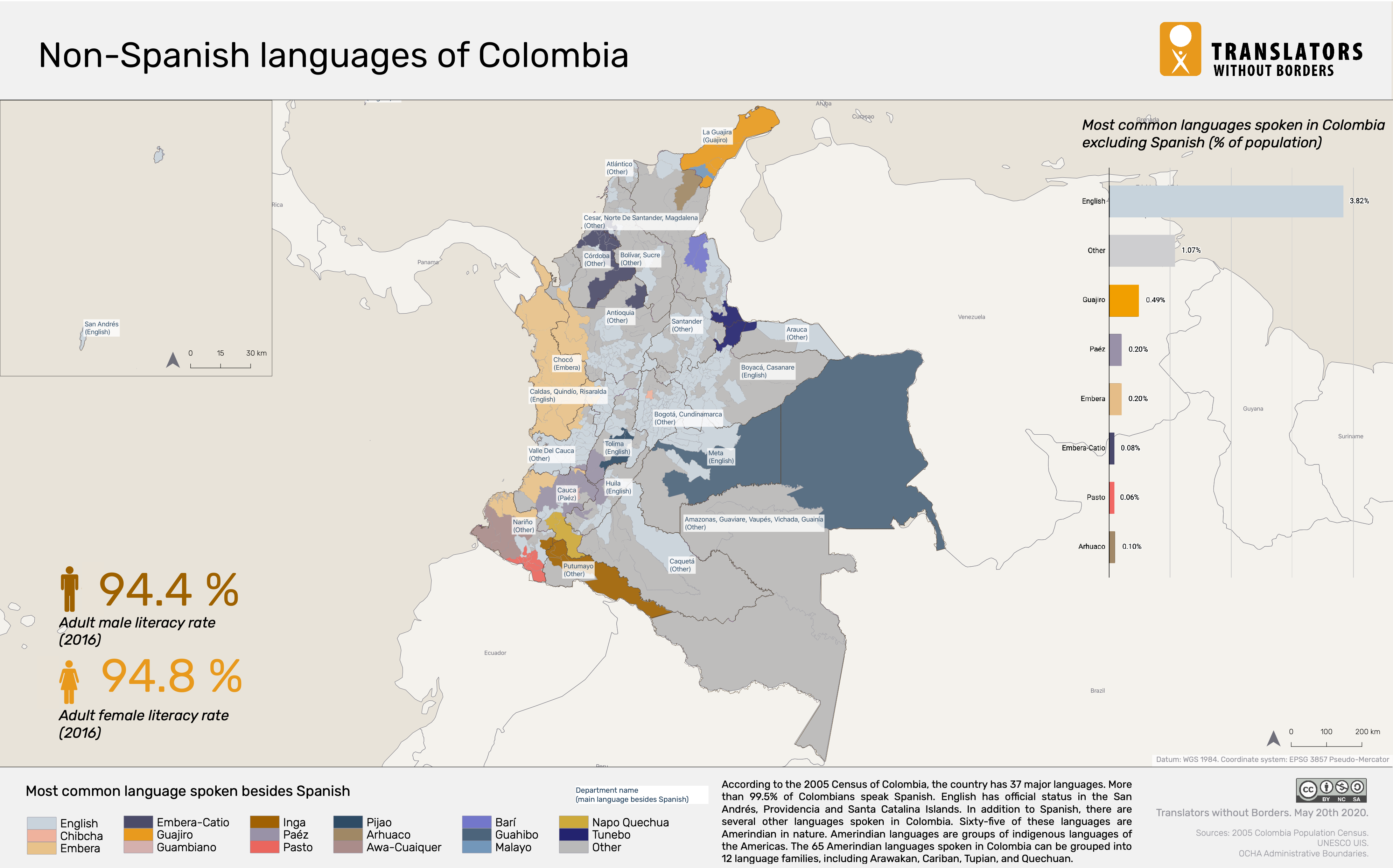
Beyond the major metropolitan languages, Colombia is home to 65 indigenous languages, two Creole languages (San Andrés Creole and Palenquero), and Romani. While these might seem like marginal concerns for a financier, they represent a significant, untapped niche in the “Experience Economy” and sustainable investment sectors.
Investing in Ethno-Tourism and Sustainable Brands
The global travel market is shifting toward authenticity and cultural immersion. Colombia’s linguistic diversity is a core component of its “brand” as a tourism powerhouse. Regions like the Guajira (where Wayuunaiki is spoken) or the Amazon (home to dozens of linguistic groups) are seeing a surge in high-end, sustainable ethno-tourism.
Investors are increasingly looking at “Social Impact Bonds” and sustainable development projects that preserve these languages while creating profitable tourism infrastructure. There is a growing market for products with a “Protected Designation of Origin” that are tied to specific linguistic and cultural groups—such as Wayuu textiles or specialty coffee from indigenous cooperatives. In these cases, the language is not just a form of communication; it is a brand asset that adds premium value to the product.
San Andrés and the Caribbean Trade Bridge
The archipelago of San Andrés, Providencia, and Santa Catalina speaks English-based Creole. This unique linguistic position makes the islands a natural bridge for trade between Colombia and the English-speaking Caribbean (CARICOM). For businesses involved in maritime logistics or Caribbean-focused financial services, the bilingual and trilingual nature of the islanders provides a unique human resource pool that can navigate both Latin American and Caribbean regulatory and business environments.
Strategic Diversification: Navigating Regional Dialects for Targeted ROI
In the world of marketing and personal branding, a “one-size-fits-all” approach to the Colombian market is a recipe for wasted capital. While the “neutral” accent is great for BPO, regional dialects—such as Paisa, Costeño, and Caleño—carry deep emotional and cultural weight.
Maximizing ROI through Localized Branding
If a brand is launching a consumer product in Medellín, using the local Paisa parlance in its marketing can drastically improve conversion rates and brand loyalty. Conversely, a corporate financial firm in Bogotá would use a formal, “Rolo” tone to convey stability and trustworthiness.
Understanding these nuances is essential for:
- Market Research: Accurate data collection requires questions phrased in the local vernacular to ensure clarity.
- Sales Strategies: High-ticket sales often depend on the “mirroring” of a client’s linguistic style to build rapport.
- Digital Security and Fintech: As more Colombians use apps for their personal finance, the language used in the UI/UX must be culturally resonant to build the trust necessary for users to deposit and move money.
Conclusion: Language as the Currency of the 21st Century
Colombia is no longer just an agrarian or extractive economy; it is a service and knowledge-based powerhouse. At the heart of this transition is its linguistic landscape. The Spanish spoken in its cities provides a platform for regional dominance, while the push for English proficiency is integrating the workforce into the global financial elite.
For the investor or business leader, the answer to “what languages are spoken in Colombia” is more than a list of names. It is a map of where the money is flowing. From the BPO centers of Bogotá to the tech hubs of Medellín and the culturally rich tourism of the coasts, language is the primary driver of economic ROI. By understanding and leveraging this linguistic diversity, businesses can unlock the true financial potential of one of the most dynamic markets in the Western Hemisphere.
aViewFromTheCave is a participant in the Amazon Services LLC Associates Program, an affiliate advertising program designed to provide a means for sites to earn advertising fees by advertising and linking to Amazon.com. Amazon, the Amazon logo, AmazonSupply, and the AmazonSupply logo are trademarks of Amazon.com, Inc. or its affiliates. As an Amazon Associate we earn affiliate commissions from qualifying purchases.