
In the modern era, time is more than a measurement of the sun’s position in the sky; it is a fundamental pillar of global digital infrastructure. For a burgeoning tech hub like Vancouver, British Columbia, “Vancouver time” represents a specific set of technical protocols, synchronization standards, and software challenges. Understanding what Vancouver time is requires looking beyond the hands of a clock and into the Network Time Protocol (NTP) servers, the tz database, and the intricate logic of distributed systems.
Geographically, Vancouver operates within the Pacific Time Zone. However, from a technical perspective, Vancouver time is defined by its relationship to Coordinated Universal Time (UTC). Specifically, it oscillates between UTC-8 (Pacific Standard Time) and UTC-7 (Pacific Daylight Time). This transition is not merely a social convenience but a complex event that requires precise execution across millions of servers, IoT devices, and cloud environments.

The Infrastructure of Chronology: How Technology Defines Vancouver Time
The foundation of timekeeping in any modern city is no longer the local clock tower but a sophisticated hierarchy of hardware and software designed to maintain “perfect” time. For developers and network engineers operating in the Pacific Northwest, Vancouver time is a data point anchored by high-precision technology.
Network Time Protocol (NTP) and Local Nodes
To ensure that a server in a Vancouver-based data center matches the time on a smartphone in Gastown, the Network Time Protocol (NTP) is utilized. NTP is one of the oldest Internet protocols still in use, designed to synchronize the clocks of computers over variable-latency data networks.
Vancouver’s tech infrastructure relies on Stratum 1 and Stratum 2 time servers. Stratum 0 devices are high-precision timekeeping instruments, such as atomic clocks or GPS clocks. Stratum 1 servers are directly linked to these devices. When we ask “What is Vancouver time?” at a system level, a local machine queries a Stratum 2 server, which in turn references a Stratum 1 source, ensuring that the local time is accurate to within milliseconds of the global standard.
The Role of Atomic Clocks and GPS in Regional Accuracy
While Vancouver does not house a primary national atomic clock (like the ones managed by the NRC in Ottawa), its digital ecosystem is heavily reliant on GPS-based time synchronization. GPS satellites carry onboard atomic clocks, and the signals they beam down include highly accurate timestamps. Tech companies in Vancouver, particularly those involved in telecommunications and high-frequency data processing, use GPS disciplined oscillators (GPSDO) to maintain internal timing consistency that is independent of public internet latency.
Managing the Shift: The Software Logic Behind PST and PDT
One of the most significant technical hurdles involving Vancouver time is the transition between Pacific Standard Time (PST) and Pacific Daylight Time (PDT). This shift is governed by a set of rules that must be hard-coded into operating systems and applications to prevent data corruption and scheduling errors.
Navigating the IANA Time Zone Database
In the world of software engineering, “Vancouver time” is officially identified as America/Vancouver. This string is part of the IANA (Internet Assigned Numbers Authority) Time Zone Database, also known as the Olson database.
The America/Vancouver entry contains the historical record of all time changes in the region. This database is critical for legacy systems and modern applications alike. When a developer uses a library like Moment.js, Luxon, or Python’s pytz, the system references this database to determine whether a specific historical or future date in Vancouver falls under PST or PDT. Without this technical repository, global software would be unable to accurately calculate the duration of events that cross the daylight saving boundary.
The Complexity of Daylight Saving Time (DST) in Code
From a programming standpoint, the “Spring Forward” and “Fall Back” events are fraught with peril. When Vancouver shifts to PDT, an hour “disappears” (2:00 AM becomes 3:00 AM). Conversely, when it reverts to PST, an hour is repeated.
For tech firms managing logs, databases, and cron jobs, this creates a logic gap. If a system is scheduled to run a backup at 2:30 AM on the night the clocks move forward, the task might never trigger. If it runs at 1:30 AM during the fall back, it might run twice. To solve this, technical best practices dictate that all back-end operations should occur in UTC, with the “Vancouver time” conversion only happening at the UI (User Interface) layer. This abstraction ensures that the underlying data remains linear and immutable.
The Tech Ecosystem: Coordinating Global Operations from the West Coast
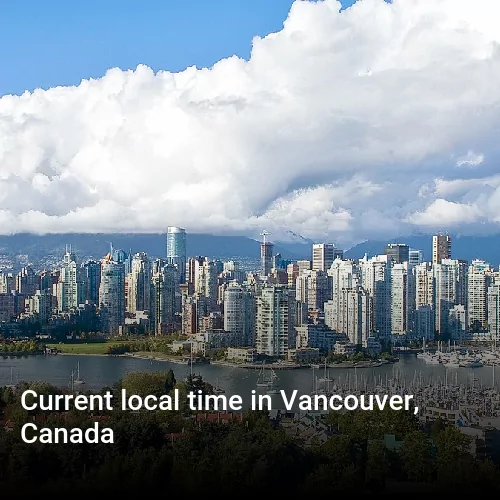
Vancouver is a vital gateway for North American tech, serving as a bridge between Asian markets and Eastern North American financial centers. The technical management of “Vancouver time” is therefore essential for global interoperability.
API Best Practices for Multi-Regional Scheduling
As Vancouver-based companies scale, they must build APIs that handle time zone diversity. A common mistake in early-stage software is failing to include the UTC offset in timestamp strings. For example, representing Vancouver time as 2023-10-27T10:00:00 is ambiguous. A robust technical approach uses the ISO 8601 format: 2023-10-27T10:00:00-07:00.
By including the -07:00 or -08:00 offset, the software communicates exactly where the time stands in relation to the global prime meridian. This is vital for collaborative tools developed in the city, such as Slack or project management platforms, where a “10:00 AM” meeting in Vancouver must be precisely mapped to “1:00 PM” in Toronto or “2:00 AM” the following day in Tokyo.
Latency and Data Center Positioning in British Columbia
“Vancouver time” also has implications for physical infrastructure. The proximity of data centers to the city’s core affects the “time” it takes for a packet to travel. In the world of edge computing, Vancouver acts as a low-latency hub for the Pacific Northwest.
Major cloud providers like AWS, Azure, and Google Cloud utilize “Local Zones” or “Edge Locations” in or near Vancouver. These facilities ensure that the “system time” and “response time” for local users are minimized. For high-demand tech sectors like gaming (e.g., Electronic Arts) or visual effects (VFX), the synchronization of time across render farms and localized servers is a critical performance metric.
Future-Proofing Time: Emerging Trends in Digital Chronometry
As technology evolves, the way we define and interact with regional time like Vancouver’s is undergoing a transformation. New paradigms in decentralization and cloud architecture are challenging traditional notions of time zones.
Blockchain and Decentralized Timekeeping
In decentralized networks, “Vancouver time” is often irrelevant, yet the need for a “network time” is paramount. Blockchains use a concept called “Median Time Past” or specific timestamps to order blocks. However, for decentralized applications (dApps) built by Vancouver’s growing Web3 community, syncing on-chain events with local “real-world” time is a significant technical challenge. Developers are increasingly using “Oracles” to feed accurate UTC time into smart contracts, which then calculate the local Vancouver offset for end-users.
The Impact of Cloud Computing on Regional Consistency
With the rise of “Serverless” computing (like AWS Lambda), the concept of a server having a “local time” is disappearing. These functions are ephemeral and may run in a data center anywhere in the world. As a result, Vancouver tech firms are moving toward “Time-as-a-Service” (TaaS) models.
Instead of relying on the local system clock of a virtual machine, applications call specialized time APIs or use hardware-embedded clocks within the cloud provider’s infrastructure. This ensures that even if a Vancouver company’s code is executing in a Virginia data center, the logic remains perfectly synchronized with the Pacific Time requirements of its local users.
Conclusion
“What is Vancouver time?” is a question that begins with a simple clock-check but ends in a complex web of global protocols and software engineering. For the technology sector, Vancouver time is a localized expression of UTC, managed through the IANA database, synchronized via NTP, and transmitted through ISO 8601 standards.
As Vancouver continues to solidify its reputation as a world-class tech hub, the precision with which its systems handle time will remain a quiet but essential driver of innovation. Whether it is managing the transition of Daylight Saving Time in a complex codebase or ensuring microsecond accuracy in a distributed network, the technical mastery of time is what keeps the city’s digital pulse beating in sync with the rest of the world.
aViewFromTheCave is a participant in the Amazon Services LLC Associates Program, an affiliate advertising program designed to provide a means for sites to earn advertising fees by advertising and linking to Amazon.com. Amazon, the Amazon logo, AmazonSupply, and the AmazonSupply logo are trademarks of Amazon.com, Inc. or its affiliates. As an Amazon Associate we earn affiliate commissions from qualifying purchases.