
In the world of high-net-worth wealth management, the line between passion and profit often blurs. While traditional portfolios are anchored by equities, bonds, and real estate, the modern investor is increasingly looking toward alternative assets to hedge against inflation and diversify risk. Among these alternatives, the luxury watch market has emerged as a powerhouse of capital appreciation. When we ask, “What is the most expensive watch?” we are not merely discussing a piece of jewelry or a mechanical tool for timekeeping; we are analyzing a unique financial instrument that commands tens of millions of dollars at auction.
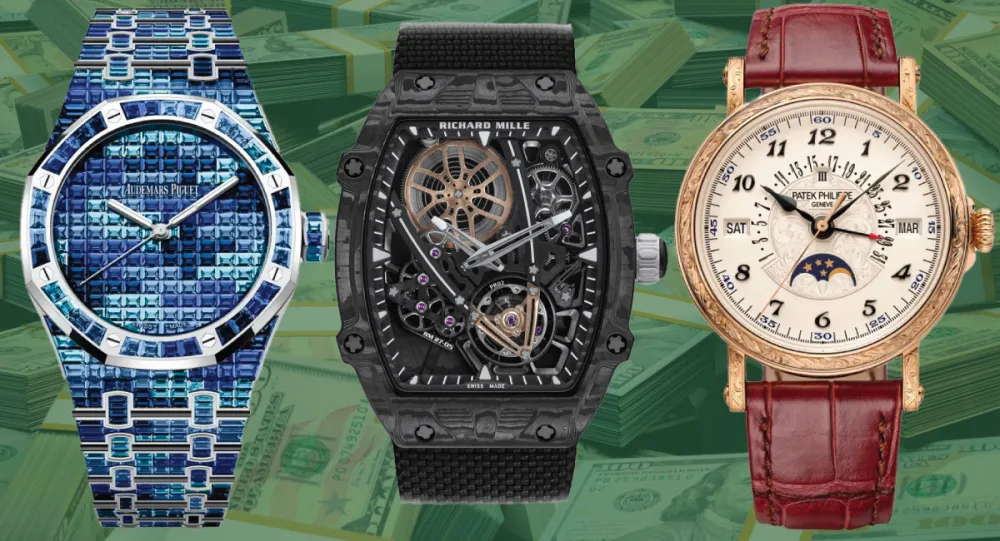
The transition of the wristwatch from a utilitarian device to a “blue-chip” asset has been fueled by global wealth expansion, limited production cycles, and a secondary market that often outperforms the S&P 500. To understand the most expensive watches in the world is to understand the mechanics of scarcity, provenance, and the psychology of value.
The Valuation Framework of Ultra-Luxury Timepieces
The price tag of a record-breaking watch is rarely a reflection of its raw materials. While gold, platinum, and diamonds have intrinsic value, they represent only a fraction of the final hammer price at an auction house like Christie’s or Sotheby’s. The financial value of a multi-million-dollar timepiece is driven by a specific set of economic variables.
Scarcity and the Economics of Supply
In any market, price is a function of supply and demand. In the world of “Haute Horlogerie,” supply is artificially and technically constrained. Leading brands like Patek Philippe and Audemars Piguet limit the production of their most complicated movements. When a watch is a “Piece Unique” (one of one), the supply curve becomes perfectly inelastic. For investors, this creates a “moat” around the asset. If there is only one Patek Philippe Grandmaster Chime in steel, and ten billionaires want it, the price is limited only by the depth of the bidders’ pockets.
Provenance and Historical Appreciation
In the financial world, “provenance” is the equivalent of a verified track record. A watch owned by a cultural icon or a historical figure carries a premium that defies standard depreciation models. This is often referred to as the “celebrity multiplier.” When an asset can prove its history through a clear chain of custody, its risk profile decreases, and its potential for appreciation increases. This historical significance transforms a mechanical object into a cultural artifact, ensuring that its value remains decoupled from the volatility of traditional currency markets.
Case Studies in Record-Breaking Financial Milestones
To identify the most expensive watch, one must look at the specific transactions that have redefined the ceiling of the horological market. These watches represent the “unicorns” of the financial world—assets that appear once in a generation and command prices that rival Manhattan penthouses or private jets.
The Patek Philippe Grandmaster Chime (Ref. 6300A-010)
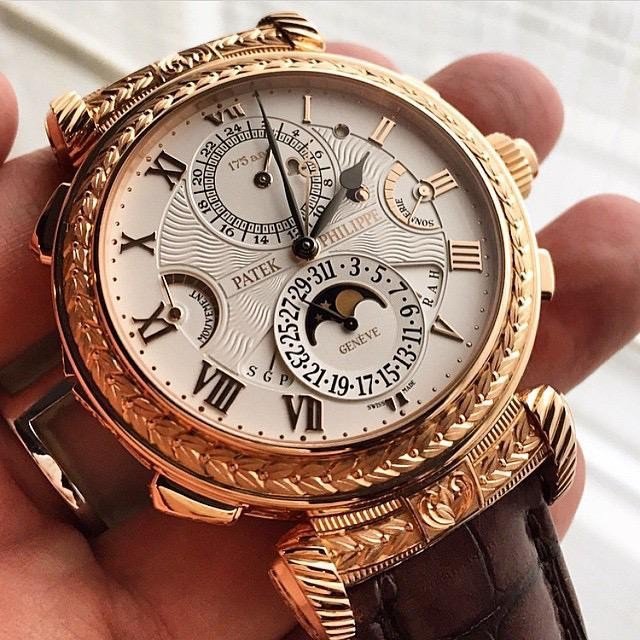
Currently holding the title for the highest price ever paid for a wristwatch at auction, the Patek Philippe Grandmaster Chime Ref. 6300A-010 sold for approximately $31 million at the 2019 Only Watch charity auction in Geneva. From an investment perspective, this piece is the ultimate “blue chip.” It features 20 complications, including a minute repeater and a perpetual calendar. However, its primary value driver was its material: stainless steel. While steel is a common metal, it is incredibly rare for Patek Philippe’s most complicated watches to be cased in it, making this specific reference a “black swan” asset in the collecting world.
The Graff Diamonds Hallucination: A Store of Value
If we expand the definition to include “jewelry watches,” the Graff Diamonds Hallucination takes the lead with a valuation of $55 million. While horologists might argue that its value lies in the 110 carats of rare colored diamonds rather than the quartz movement inside, from a money management perspective, the Hallucination is a masterclass in “concentrated wealth.” It represents a portable, high-density store of value. For the ultra-wealthy, such items serve as a hedge against currency devaluation, as rare diamonds have historically maintained their purchasing power over centuries.
The Rolex Paul Newman Daytona: Market Volatility and Gains
In 2017, the Rolex “Paul Newman” Daytona (Ref. 6239) owned by the actor himself sold for $17.75 million. This sale was a watershed moment for the “Money” aspect of horology. It proved that vintage steel sports watches—originally sold for a few hundred dollars in the 1960s—could provide a Return on Investment (ROI) that dwarfs almost any other asset class. For investors, the Paul Newman Daytona serves as a case study in “brand equity,” demonstrating how marketing and cultural relevance can turn a mass-produced item into a high-value commodity.
High-End Watches as an Alternative Asset Class
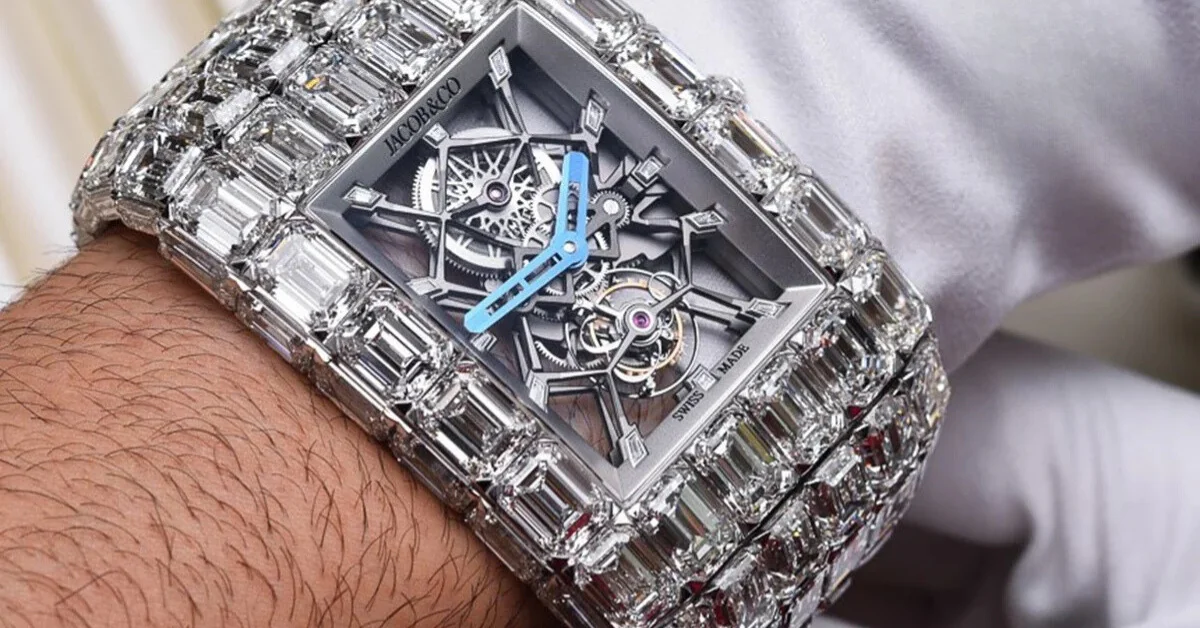
For the modern investor, the most expensive watches are not kept in a drawer; they are kept in a diversified portfolio. As traditional markets face headwinds from geopolitical instability and fluctuating interest rates, the luxury watch market offers a unique set of advantages for capital preservation.
Liquidity in the Secondary Market
One of the historical drawbacks of “collectibles” was a lack of liquidity. However, the rise of digital platforms like Chrono24 and professionalized dealers has created a robust secondary market. While a $30 million Patek Philippe is not as liquid as a share of Apple stock, the market for “entry-level” investment watches (in the $50,000 to $200,000 range) is incredibly deep. Investors can now exit positions with relatively low slippage, making watches a viable tool for short-to-medium-term capital gains.
Diversification and Wealth Preservation
High-end watches have shown a low correlation with traditional equity markets. During the 2008 financial crisis and the 2020 pandemic, while the S&P 500 experienced significant drawdowns, the prices for “holy trinity” watches (Patek Philippe, Audemars Piguet, and Vacheron Constantin) remained remarkably resilient. This makes horology an attractive “safe haven” for capital. Furthermore, watches are highly portable assets. In scenarios of extreme economic instability, the ability to transport millions of dollars of value on one’s wrist provides a level of financial security that real estate or heavy bullion cannot match.
The Mechanics of Watch Investing and Portfolio Management
Investing in the world’s most expensive watches requires more than just capital; it requires specialized knowledge and a rigorous due diligence process. Much like venture capital, the highest rewards go to those who can identify value before it is recognized by the broader market.
Identifying “Blue Chip” Models
Professional watch investors focus on “Blue Chip” models that have a proven history of appreciation. This includes the Patek Philippe Nautilus, the Audemars Piguet Royal Oak, and the Rolex Submariner. When looking for the next “most expensive” piece, investors look for “transitional references” or models with production errors (such as “tropical” dials that have discolored over time). These imperfections, paradoxically, increase the asset’s value by ensuring its uniqueness, much like a misprinted postage stamp or a rare coin.
Storage, Insurance, and Maintenance Costs
Every investment has carrying costs. For multi-million dollar timepieces, these costs are non-trivial. Specialized insurance premiums for high-value horology can range from 1% to 2% of the asset’s value annually. Furthermore, maintenance is critical; a watch that has been improperly serviced or contains non-original parts can see its market value plummet by 30% or more. Investors must treat these pieces like fine art or vintage Ferraris, requiring climate-controlled storage and a paper trail of expert servicing to maintain their “investment grade” status.
Future Outlook: The Evolution of the Luxury Watch Market
The quest for the most expensive watch is far from over. As global wealth continues to concentrate and new markets—particularly in Asia and the Middle East—deepen their interest in horology, we can expect the $31 million record to be shattered in the coming decade.
The digitalization of the market is also introducing new financial products, such as fractional ownership of high-value timepieces. This allows smaller investors to own a “share” of a record-breaking Rolex or Patek, further increasing market demand and pushing prices higher at the top end. While some critics argue that the market is in a bubble, the fundamental drivers—extreme scarcity and the increasing number of global billionaires—suggest that the luxury watch will remain one of the most prestigious and profitable ways to store and grow wealth.
In conclusion, the “most expensive watch” is a symbol of the intersection between art and finance. It is an asset that transcends its mechanical purpose, serving instead as a beacon of stability and a trophy of financial success. For those who navigate this market with a professional eye, these timepieces offer a unique opportunity to turn the passage of time into the accumulation of wealth.
aViewFromTheCave is a participant in the Amazon Services LLC Associates Program, an affiliate advertising program designed to provide a means for sites to earn advertising fees by advertising and linking to Amazon.com. Amazon, the Amazon logo, AmazonSupply, and the AmazonSupply logo are trademarks of Amazon.com, Inc. or its affiliates. As an Amazon Associate we earn affiliate commissions from qualifying purchases.