
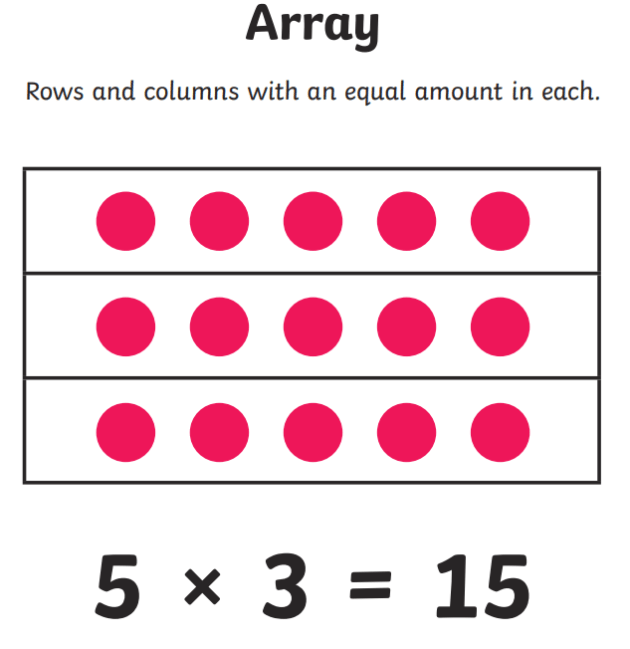
In the most fundamental sense, the “product” in mathematics refers to the result of a multiplication operation. While most people encounter this concept in elementary school—learning that the product of 2 and 3 is 6—the implications of this definition extend far beyond the chalkboard. In the realm of technology, the mathematical product is the silent engine driving every digital interaction, from the rendering of complex graphics to the training of sophisticated artificial intelligence models.
Understanding the meaning of product in math is not merely an academic exercise; it is a prerequisite for understanding how software scales, how data is secured, and how machines learn to perceive the world. This article explores the mathematical product through the lens of modern technology, examining its role in algorithmic logic, data science, cybersecurity, and system architecture.

The Computational Core: Multiplication as the Fundamental Logic Gate
At the heart of every computing device lies the Central Processing Unit (CPU) and the Arithmetic Logic Unit (ALU). For these components, the “product” is a operation that must be executed with extreme efficiency. Unlike addition, which is relatively straightforward at the hardware level, multiplication requires more complex circuitry and more clock cycles.
Binary Arithmetic and the ALU
In the digital world, every product is a binary calculation. Computers do not multiply base-10 numbers; they manipulate bits (0s and 1s). The binary product is achieved through a series of “shift and add” operations. For instance, multiplying a number by two in binary is as simple as shifting the bits one position to the left. This efficiency is why many software optimizations focus on power-of-two operations. Understanding how the ALU calculates a product allows software engineers to write lower-level code that maximizes hardware performance, a crucial skill in embedded systems and driver development.
Algorithmic Complexity and Scalability
When we discuss the “product” in a tech context, we often refer to the multiplicative relationship between input size and processing time. In Big O Notation—the standard for measuring algorithmic efficiency—many common algorithms operate on a “product” of variables. For example, an $O(n times m)$ algorithm means the time complexity is the product of two different input sets. As technology trends shift toward processing massive datasets (Big Data), minimizing these multiplicative costs becomes the difference between a functional application and a system crash.
The Mathematical Product in Artificial Intelligence and Machine Learning
If there is one field where the concept of the “product” reigns supreme, it is Artificial Intelligence (AI). Modern AI, particularly Deep Learning, is essentially a massive, non-stop series of multiplication operations. When we talk about the “parameters” of a model like GPT-4, we are essentially talking about billions of weights that must be multiplied by input data.
Dot Products and Vector Space
The “dot product” is perhaps the most important mathematical concept in software engineering today. It is a specific type of product involving two sequences of numbers (vectors) that results in a single scalar value. In the world of AI tools, dot products are used to determine “similarity.” When you ask a search engine a question or interact with a recommendation engine, the software is calculating the dot product of your query vector and millions of indexed data vectors. A higher product indicates a closer match. This simple mathematical operation is what allows Spotify to suggest your next favorite song or Netflix to recommend a series.
Matrix Multiplication in Neural Networks
Neural networks are structured as layers of interconnected nodes. The signal passing from one layer to the next is calculated using matrix multiplication—the product of an input matrix and a weight matrix. This is why Graphics Processing Units (GPUs) and Tensor Processing Units (TPUs) have become the most valuable hardware in the tech industry. Unlike standard CPUs, these chips are designed to perform thousands of multiplication products simultaneously. The current AI revolution is, quite literally, a result of our increased capacity to calculate mathematical products at scale.
Cryptography and the Security of Large Prime Products
Digital security and cybersecurity rely on the mathematical properties of products to keep our data safe. The foundation of modern encryption is not just multiplication, but the asymmetry between calculating a product and reversing it.
The RSA Algorithm and Factorization
The RSA algorithm, which secures much of the internet’s sensitive data, is built on the “product of two large prime numbers.” While a computer can calculate the product of two 500-digit prime numbers in a fraction of a second, even the most powerful supercomputers currently struggle to find the original factors of that product. This “one-way” nature of the mathematical product ensures that while your browser can easily encrypt your credit card info, a hacker cannot easily decrypt it without the specific factors (the private key).
Elliptic Curve Cryptography
As technology moves toward the mobile-first and IoT (Internet of Things) era, more efficient encryption is needed. Elliptic Curve Cryptography (ECC) represents the next evolution. While it uses different mathematical structures, it still relies on “scalar multiplication”—repeatedly adding a point on a curve to itself. The resulting “product” in this geometric sense provides higher security with shorter keys, making it the standard for modern digital signatures and secure messaging apps like Signal and WhatsApp.
Data Analytics and Statistical Products in Big Data
Beyond the code and the hardware, the mathematical product serves as a vital tool for data scientists and software developers looking to derive insights from raw information.
Geometric Means and Growth Rates
When tech companies measure user growth or system performance over time, they rarely use a simple average (arithmetic mean). Instead, they use the “geometric mean,” which is the $n$-th root of the product of $n$ numbers. This is particularly useful in technology tutorials and reviews to describe the average performance gain across different benchmarks. Because performance gains are multiplicative (a 10% improvement on top of a 10% improvement), the mathematical product provides a far more accurate picture of progress than addition does.
Probability Theory and System Reliability
In the world of cloud computing and digital security, “uptime” is calculated using the product of individual component probabilities. If a software system has three independent components, each with a 99.9% reliability, the total system reliability is the product of those three values ($0.999 times 0.999 times 0.999$). This mathematical reality is why tech giants like Amazon Web Services (AWS) and Google Cloud emphasize redundancy. By understanding the product of probabilities, engineers can build resilient systems that remain operational even when individual parts fail.

Conclusion: Why the “Product” Defines the Future of Tech
The word “product” in math is often dismissed as a basic term, yet it is the cornerstone of the entire technological landscape. From the binary shifts in a gadget’s processor to the massive matrix multiplications powering the latest AI tools, the product is the primary operation of the digital age.
As we look toward future technology trends—such as quantum computing, which promises to revolutionize how we calculate products, or advanced blockchain protocols that use mathematical products to verify identity—the importance of this concept only grows. For developers, data scientists, and tech enthusiasts, a deep appreciation of the mathematical product is not just about solving equations; it is about understanding the very logic that builds our digital world. Whether you are coding an app, securing a network, or training a machine learning model, you are fundamentally in the business of managing products.
aViewFromTheCave is a participant in the Amazon Services LLC Associates Program, an affiliate advertising program designed to provide a means for sites to earn advertising fees by advertising and linking to Amazon.com. Amazon, the Amazon logo, AmazonSupply, and the AmazonSupply logo are trademarks of Amazon.com, Inc. or its affiliates. As an Amazon Associate we earn affiliate commissions from qualifying purchases.