
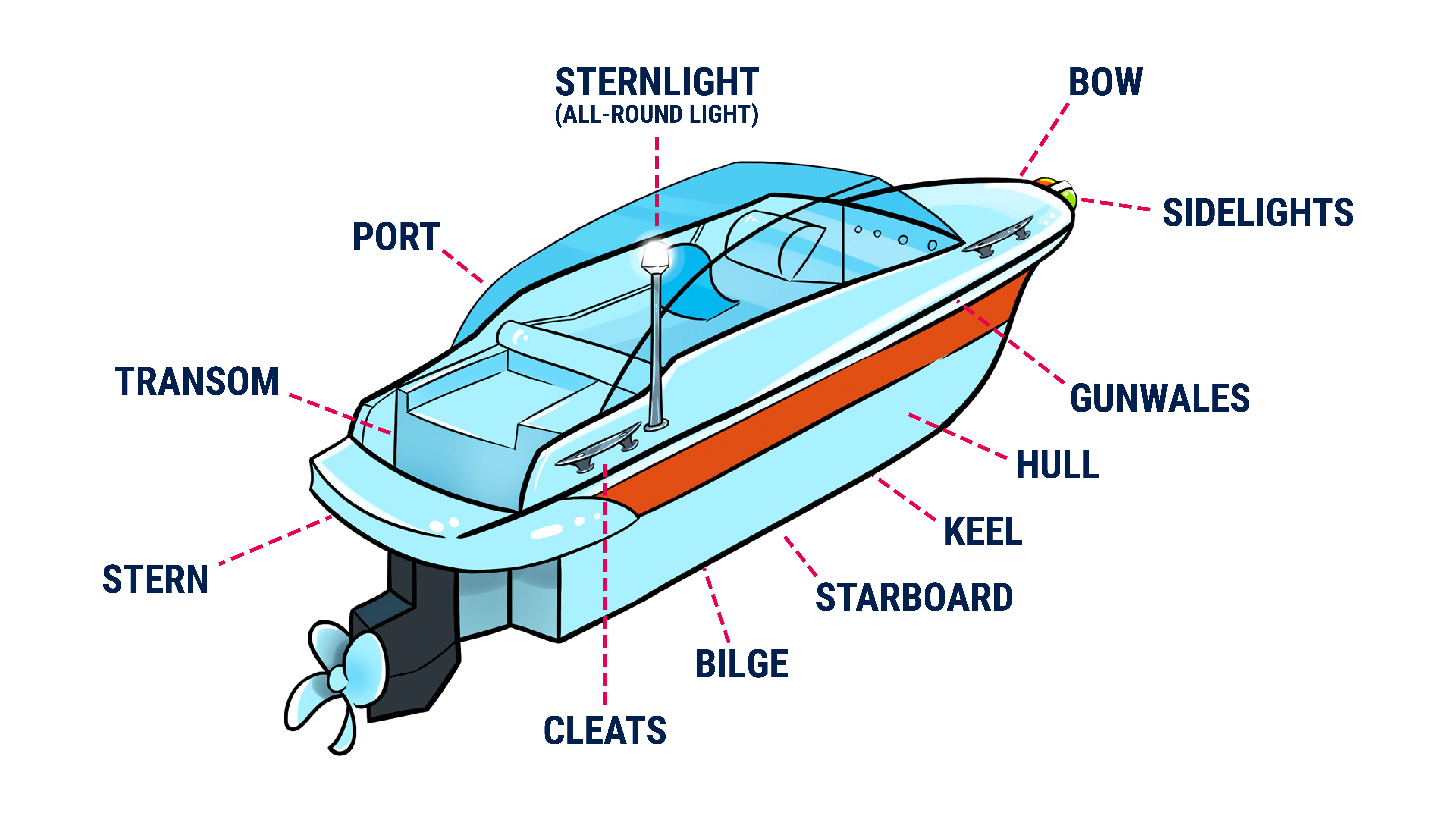
In the realm of maritime engineering, the hull is often simplified as the “body” of a vessel. However, from a technological perspective, the hull is a sophisticated piece of hardware designed to interface between two distinct physical environments: air and water. It is the primary structural component of any watercraft, serving as the platform upon which all other technological systems—propulsion, navigation, and life support—are built. To understand what the hull of a boat is in the modern era is to understand a convergence of fluid dynamics, material science, and computational design.

As we transition into an age of autonomous vessels and hyper-efficient transport, the hull has evolved from a passive wooden shell into a “smart” structure. This article explores the technological intricacies of boat hulls, examining how modern software, advanced materials, and data-driven design are redefining this ancient invention.
The Fundamentals of Hydrodynamic Design and Architecture
At its core, the hull is a technical solution to the problem of buoyancy and resistance. The design of a hull determines how a vessel interacts with the water, dictating its speed, stability, and fuel efficiency. Engineers categorize hulls based on their hydrodynamic profile, essentially the “operating system” of the boat’s movement.
Displacement vs. Planing Hulls: The Software of Motion
The most fundamental technical distinction in hull design is between displacement and planing hulls. Displacement hulls are designed to move through the water by pushing it aside. Their speed is technically limited by their “hull speed,” a calculation based on the length of the waterline. These are common in heavy-reaching technology like tankers and large cruisers where stability is paramount.
In contrast, planing hulls are designed to rise up and glide on top of the water once a certain speed is reached. This transition—going from displacement mode to planing mode—requires precision engineering of the hull’s “deadrise” (the angle of the bottom). From a tech standpoint, designing a planing hull involves balancing the lift-to-drag ratio, much like the wing of an aircraft. Modern naval architects use parametric modeling to find the exact “sweet spot” where a hull can break the surface tension of the water with minimal energy expenditure.
Form and Function: Computational Fluid Dynamics (CFD) in Hull Optimization
Before a single piece of material is cut, modern boat hulls are “born” in a digital environment. Computational Fluid Dynamics (CFD) is the primary software tool used to simulate how water will flow around a virtual hull. This allows engineers to visualize turbulence, pressure distribution, and wave-making resistance in high resolution.
By running thousands of simulations, designers can implement subtle “micro-geometries,” such as stepped hulls or spray rails, which reduce the wetted surface area. This digital-first approach has revolutionized the industry, allowing for the creation of “piercing hulls” that cut through waves rather than riding over them, significantly increasing the efficiency of high-speed naval and commercial craft.
Material Science: From Timber to Advanced Composites
If the design is the software, the material is the hardware. The “what” of a boat hull has shifted from organic materials to high-performance polymers and alloys. The choice of material impacts the hull’s weight, durability, and signal-transparency (important for modern radar and sonar integration).
Carbon Fiber and Resin Infusion Technology
In the high-performance sector, carbon fiber reinforced polymer (CFRP) is the gold standard. Carbon fiber provides a strength-to-weight ratio that is vastly superior to traditional fiberglass or aluminum. The manufacturing process itself is a feat of technology: vacuum resin infusion.
In this process, dry carbon fabric is laid into a precision-machined mold. The entire structure is sealed in a vacuum bag, and resin is drawn through the fibers using pressure differentials. This ensures an even distribution of material with zero air pockets, creating a hull that is incredibly stiff and lightweight. For electric boats, where battery weight is a major constraint, these advanced composite hulls are the critical tech enabler that makes long-range electric transit possible.
Smart Materials and Self-Healing Coatings
The frontier of hull technology now includes “smart materials.” Engineers are experimenting with hulls that can sense damage or even repair themselves. Bio-mimetic coatings, inspired by the skin of sharks, are being applied to hulls to reduce “biofouling” (the growth of algae and barnacles).
Technologically, these coatings use nano-textures to prevent organisms from attaching to the surface. This isn’t just a maintenance win; it’s a data-driven efficiency win. A clean hull can reduce fuel consumption by up to 20% by maintaining the smooth hydrodynamic profile intended by the CFD models. Furthermore, research into piezo-electric materials integrated into the hull laminate may one day allow boats to generate small amounts of electricity simply from the vibrations of the waves against the hull.
The Integration of IoT and Sensor Technology within the Hull
The modern hull is no longer a “dumb” object; it is an integrated component of the vessel’s Internet of Things (IoT) ecosystem. By embedding sensors directly into the hull structure, operators can monitor the health and performance of the vessel in real-time.
Structural Health Monitoring (SHM) Systems
Fiber-optic sensors can now be embedded within the composite layers of a hull during construction. These sensors act like a nervous system, measuring strain, temperature, and impact. This technology, known as Structural Health Monitoring (SHM), allows for “predictive maintenance.”
Instead of inspecting a hull on a fixed schedule, the onboard computer can alert the captain if the hull has suffered a structural fatigue event after a particularly rough crossing. This digital security layer is vital for large-scale commercial shipping and high-speed passenger ferries, where a structural failure could be catastrophic. It shifts the hull from a passive component to an active, reporting participant in the ship’s safety protocol.
Enhancing Performance via Real-Time Data Analytics
By combining hull sensors with GPS and engine data, maritime software platforms can provide real-time performance analytics. For example, if the sensors detect increased drag, the system can analyze whether it’s due to weight distribution (trim) or external sea conditions. AI-driven apps can then suggest the optimal speed and trim tab adjustments to minimize fuel burn. This level of technical integration transforms the hull into a dynamic tool for operational efficiency, where every millimeter of displacement is accounted for and optimized by software.
The Future of Marine Tech: Autonomous Hulls and Sustainable Propulsion
As we look toward the future, the definition of a boat hull is expanding to include components that look more like robotics than traditional shipbuilding. The “hull of the future” is one that adapts to its environment.
Hydrofoil Technology and the Digital Control Revolution
Perhaps the most significant technological leap in hull design is the “flying” hull, or hydrofoil. Hydrofoils are underwater wings attached to the hull that lift the entire boat out of the water at high speeds. This virtually eliminates wave-making resistance.
The tech that makes this possible isn’t just the foils themselves, but the flight control systems. At high speeds, a foiling boat is inherently unstable. It requires sophisticated sensors and ultra-fast actuators to adjust the angle of the foils hundreds of times per second. This is essentially “fly-by-wire” technology adapted for the ocean. Companies like Candela and Artemis Technologies are using this tech to create electric ferries that consume 80% less energy than traditional hulls.

Biomimicry and the Next Frontier of Maritime Innovation
The final frontier of hull technology lies in biomimicry—copying the designs perfected by nature over millions of years. Engineers are studying the fluid movements of cetaceans to design hulls that are flexible or that utilize “vortex generators” to manipulate water flow.
In the future, we may see “morphing hulls” that change their shape based on the speed and the state of the sea, controlled by AI algorithms. Such a vessel would have a wide, stable footprint at rest and a narrow, sleek profile at speed. This convergence of robotics, AI, and fluid dynamics ensures that the hull remains the most technologically active area of maritime development.
The hull of a boat is far more than a container for passengers or cargo. It is a highly engineered interface, a product of rigorous computational modeling, and a platform for the latest in material science and IoT connectivity. As we move toward a more sustainable and autonomous maritime future, the technology of the hull will be the primary driver of innovation on the high seas.
aViewFromTheCave is a participant in the Amazon Services LLC Associates Program, an affiliate advertising program designed to provide a means for sites to earn advertising fees by advertising and linking to Amazon.com. Amazon, the Amazon logo, AmazonSupply, and the AmazonSupply logo are trademarks of Amazon.com, Inc. or its affiliates. As an Amazon Associate we earn affiliate commissions from qualifying purchases.