
In the modern global economy, “study abroad” is frequently characterized as a rite of passage for students seeking cultural enrichment. However, from a professional financial perspective, study abroad is more accurately defined as a high-stakes capital allocation decision. It is a strategic investment in human capital where an individual deploys significant financial resources—tuition, living expenses, and opportunity costs—in exchange for a diversified portfolio of skills, global networks, and enhanced earning potential.
To answer “what is study abroad” through the lens of finance is to examine the intersection of international education and wealth management. It is a calculated move to gain a competitive edge in a saturated job market, effectively “arbitraging” education by seeking higher-quality instruction or more prestigious credentials in foreign markets than might be available or affordable domestically.

The Anatomy of the Investment: Understanding the Costs
Before assessing the value of an international education, one must dissect the total cost of acquisition. Unlike domestic education, the financial footprint of studying abroad is influenced by geopolitical factors, currency fluctuations, and varying economic structures.
Tuition and Institutional Fees
The primary expense of any study abroad venture is tuition. Depending on the destination, this can range from nominal administrative fees in countries like Germany or Norway to premium-priced degrees in the United States, United Kingdom, or Australia. From a “Money” niche perspective, these fees represent the “entry price” for accessing a specific market’s intellectual property and institutional prestige. Financial planning for these costs requires an understanding of whether the host institution operates on a public subsidy model or a private revenue-generating model.
Cost of Living and Currency Exchange Dynamics
A critical component of the study abroad budget is the cost of living, which is inextricably linked to the strength of the home currency versus the host currency. A student from a country with a weakening currency studying in a “hard currency” zone (like the Eurozone or the US) faces an escalating cost of attendance even if tuition remains static. Savvy students monitor exchange rates and utilize financial tools like forward contracts or multi-currency accounts to hedge against currency volatility.
Hidden Expenses: Insurance, Visas, and Travel
Beyond the obvious line items, study abroad involves significant “friction costs.” These include mandatory international health insurance, student visa processing fees, and the logistics of international transit. While individually small, these costs can aggregate to 5–10% of the total budget. Professionals view these as the “transaction costs” of the educational investment, necessary to maintain the legality and safety of the asset (the student) while in a foreign jurisdiction.
Funding the Venture: Financial Instruments and Strategies
Securing the capital for an international education requires a sophisticated mix of funding sources. The objective is to minimize “bad debt” while maximizing “leverage” through grants and scholarships.
Scholarship Landscapes and Grants
In the world of personal finance, scholarships are the equivalent of “equity grants.” They represent non-repayable capital that reduces the overall cost basis of the education. Strategic students approach scholarship applications like a business proposal, demonstrating why they are a low-risk, high-reward investment for the sponsoring organization. Major funds like the Fulbright Program or the Erasmus+ scheme serve as massive institutional investors in global talent.
Student Loans and International Credit
For many, studying abroad involves debt financing. However, international student loans are complex financial products. Borrowers must consider interest rates, grace periods, and the “repayment currency.” If a student borrows in US Dollars but intends to work in a country with a different currency after graduation, they expose themselves to significant exchange rate risk. Financial literacy in this area involves understanding the long-term impact of compound interest on a student’s future net worth.
Personal Savings and Family Contribution
Many international educations are funded by family offices or personal savings. This represents a transfer of generational wealth with the expectation of a high return on investment (ROI). From a wealth management perspective, this is a diversification strategy—moving family capital into an “offshore” educational asset that can eventually provide the family with a foothold in a stronger economy or a more stable political environment.
Calculating the ROI: Long-term Financial Gains
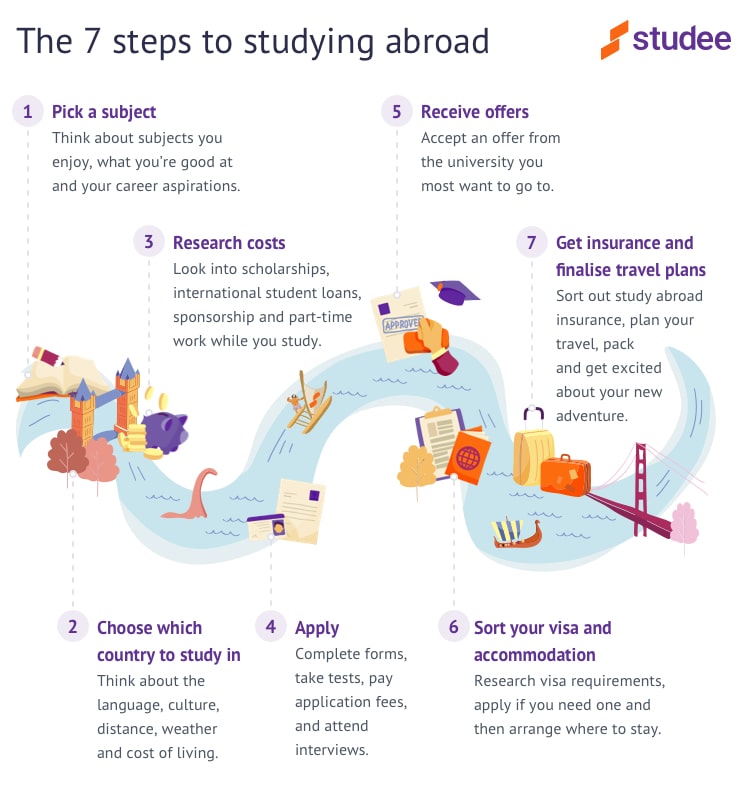
The ultimate justification for the high cost of study abroad is the projected Return on Investment. This is not merely a qualitative benefit; it can be measured in tangible financial metrics over a 20-to-30-year career horizon.
Enhanced Earning Potential in Global Markets
Data consistently shows that graduates with international experience often command higher starting salaries. They are viewed as “globalized assets” capable of navigating cross-border business environments. In sectors like finance, consulting, and international law, a foreign degree is often a prerequisite for high-tier compensation brackets. The “study abroad” experience acts as a signaling mechanism to employers that the candidate possesses high adaptability and a global mindset—traits that carry a significant market premium.
Networking as Social Capital
In finance, “who you know” is often as important as “what you know.” Studying abroad allows a student to build a global rolodex of high-net-worth individuals and future industry leaders. This social capital can be liquidated later in life through business partnerships, investment opportunities, or career referrals. The network acquired at a top-tier international university is a lifelong intangible asset that continues to appreciate in value.
The “Soft Skill” Dividend in Career Progression
While difficult to quantify on a balance sheet, “soft skills” like cross-cultural communication, problem-solving, and resilience are highly valued in the corporate world. From a business finance perspective, these skills reduce “operational friction” in international teams. Employees who can navigate different cultural norms save companies money by preventing misunderstandings and fostering smoother international collaborations, leading to faster promotions and higher bonus structures for the individual.
Budgeting and Financial Management for International Students
Once the decision to study abroad is made, the focus shifts to operational financial management. Managing liquidity in a foreign country is a practical exercise in personal finance.
Digital Banking and Fintech Solutions
The rise of Fintech has revolutionized the study abroad experience. Tools like Wise, Revolut, and Monzo allow students to manage multiple currencies with minimal fees. Using these platforms, students can avoid the predatory exchange rates and high wire transfer fees of traditional legacy banks. This “financial optimization” can save a student thousands of dollars over the course of a four-year degree.
Part-time Work and Legal Income Streams
Many host countries allow international students to work a limited number of hours per week. This provides a “cash flow” that can offset daily living expenses. However, students must be aware of the tax implications of this income. Understanding tax treaties between the home and host countries is essential to ensure that the student is not double-taxed on their earnings, which would erode their net financial position.
Tax Implications and Financial Reporting
For students from countries like the United States, which taxes on global income, studying and working abroad requires careful financial reporting. Maintaining “tax compliance” is a crucial part of the study abroad journey. Failure to account for foreign bank accounts (such as FBAR filings in the US) can lead to significant financial penalties, turning a strategic educational move into a legal and financial liability.
The Business of Global Education: A Macroeconomic View
To fully understand “what is study abroad,” one must look beyond the individual and at the global marketplace. International education is a multi-billion dollar industry that significantly impacts national economies.
The Economic Impact on Host Countries
For countries like Australia and the UK, international education is a top export. Foreign students inject billions into the local economy through tuition and consumption. This “export of services” supports thousands of jobs and funds domestic research and development. When a student chooses a destination, they are essentially participating in a global trade market, where countries compete to offer the best “educational product” to attract foreign capital.
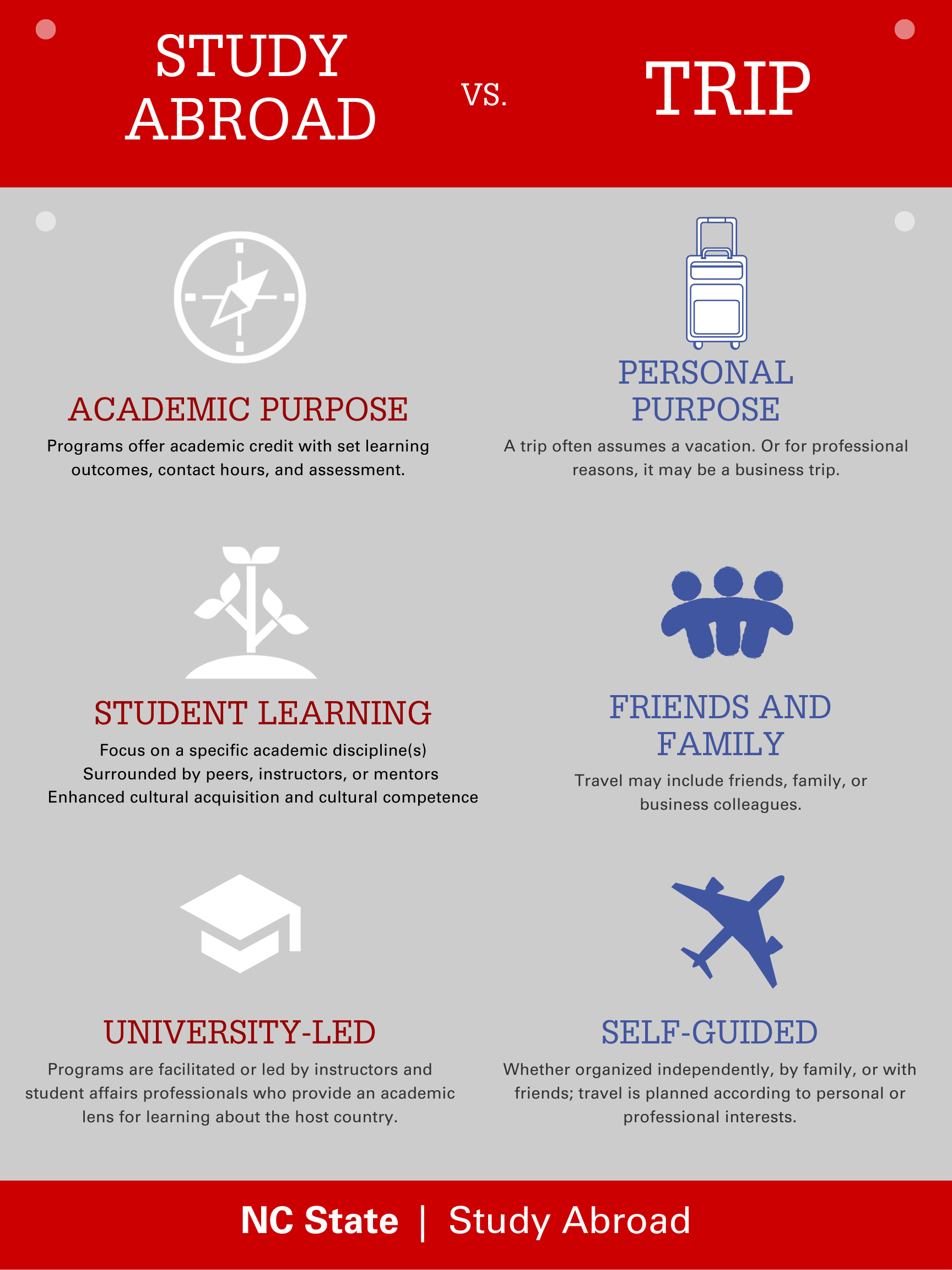
Education as an Export Service
Governments view study abroad through the lens of “soft power” and economic influence. By educating the future leaders of other nations, a country builds long-term trade relationships and political alliances. From a macroeconomic standpoint, the flow of students abroad is a flow of human capital that rebalances global talent. Countries that successfully retain international graduates through post-study work visas are effectively “importing” high-value taxpayers who have already been educated at no cost to the host state—a massive net gain for the host nation’s Treasury.
In conclusion, “what is study abroad” is far more than a travel experience or a semester of classes. It is a sophisticated financial endeavor involving the mobilization of capital, the management of risk, and the pursuit of a high-yield return. By viewing study abroad as a strategic investment, students and their families can make more informed decisions that lead to long-term financial stability and global professional success.
aViewFromTheCave is a participant in the Amazon Services LLC Associates Program, an affiliate advertising program designed to provide a means for sites to earn advertising fees by advertising and linking to Amazon.com. Amazon, the Amazon logo, AmazonSupply, and the AmazonSupply logo are trademarks of Amazon.com, Inc. or its affiliates. As an Amazon Associate we earn affiliate commissions from qualifying purchases.