
When the evening news anchor turns to the financial segment or a push notification hits your smartphone, the first number mentioned is almost invariably the Dow Jones Industrial Average (DJIA). “The Dow is up 200 points,” or “The Dow tumbled today,” are phrases that have become synonymous with the health of the American economy. But for the modern investor, asking “What is the Dow Jones doing?” requires a deeper investigation than a simple numerical quote. To understand the Dow’s movement is to understand the intersection of corporate profitability, Federal Reserve policy, and global geopolitical stability.

In this comprehensive exploration, we will dive into the mechanics of the Dow, the factors currently driving its volatility, and what its performance signals for your personal portfolio.
Decoding the Mechanism: How the Dow Actually Moves
To understand what the Dow is “doing,” one must first understand what it actually is. Unlike the S&P 500 or the Nasdaq Composite, which track hundreds or thousands of companies based on their market capitalization, the Dow Jones Industrial Average is a price-weighted index of just 30 “blue-chip” companies. This unique structure dictates how the index reacts to market news.
The Significance of Price-Weighting
In a price-weighted index, stocks with higher share prices have a greater influence on the index’s total value than those with lower share prices. For example, if a company trading at $500 per share gains 1%, it moves the Dow significantly more than a company trading at $50 per share gaining the same 1%. This creates a unique dynamic where the performance of a handful of high-priced stocks—such as UnitedHealth Group or Goldman Sachs—can dictate the “direction” of the Dow, even if the other 20+ companies are trading flat. When investors ask what the Dow is doing, they are often witnessing the collective momentum of these high-priced industrial, financial, and healthcare giants.
The Role of the Dow Divisor
The Dow is not a simple average of 30 stock prices. If it were, every time a company underwent a stock split or a new company replaced an old one, the index would fluctuate wildly. To prevent this, the “Dow Divisor” is used. This is a mathematical constant that adjusts to ensure continuity in the index’s value. When a stock in the Dow splits, the divisor is adjusted so the index value remains the same. Understanding this mechanism is vital for investors who want to look past the “points” and understand the actual percentage shifts in value.
Selective Representation
The Dow is curated by a committee at S&P Dow Jones Indices. They select companies that have an excellent reputation, demonstrate sustained growth, and are of interest to a large number of investors. Because it only includes 30 companies, it is often criticized for being too narrow. However, because those 30 companies represent nearly every sector of the economy (excluding transportation and utilities, which have their own Dow indices), it remains a remarkably accurate mirror of the “Old Economy” and mature corporate America.
Macroeconomic Catalysts: Why the Dow Reacts to the News
When the Dow makes a sudden move, it is rarely in a vacuum. The index serves as a sensitive instrument that reacts to three primary external pressures: interest rates, inflation data, and corporate earnings.
The Federal Reserve and Interest Rate Expectations
The most significant driver of the Dow in recent years has been the Federal Reserve’s monetary policy. The Dow’s components are large, established corporations that often carry significant debt or rely on consumer credit to drive sales. When the Fed raises interest rates to combat inflation, borrowing becomes more expensive, and the present value of future earnings decreases. Consequently, the Dow often “does” poorly in high-interest-rate environments. Conversely, at the first sign of a “Fed pivot” toward lower rates, the Dow tends to rally as investors anticipate cheaper capital and renewed consumer spending.
Inflation and the Consumer Price Index (CPI)
As a measure of industrial and consumer-facing giants, the Dow is highly sensitive to inflation. When the CPI (Consumer Price Index) report comes in “hotter” than expected, the Dow often retreats. This is because high inflation erodes profit margins. While companies like Coca-Cola or Procter & Gamble have significant “pricing power” (the ability to raise prices without losing customers), there is a limit to how much they can offset rising raw material costs. When the Dow is volatile, it is often because investors are trying to price in whether these 30 companies can maintain their margins amidst fluctuating costs.
Earnings Season and Forward Guidance
Four times a year, the components of the Dow report their quarterly earnings. During these weeks, the Dow’s movement is dictated by “the beats and the misses.” However, the market is forward-looking. A company might report record profits for the previous quarter, but if the CEO gives “cautious guidance” for the next six months, the stock—and by extension, the Dow—may fall. Investors look to the Dow during earnings season to gauge the health of the American consumer. If Dow retailers and credit card companies report high spending, it suggests a “soft landing” for the economy.
The Relevance Debate: Is the Dow Still the Best Economic Barometer?
In the age of trillion-dollar tech titans and AI-driven growth, some critics argue that the Dow Jones Industrial Average is a relic of the past. To understand what the Dow is doing today, we must address its role alongside more modern indices.
Dow vs. S&P 500: A Tale of Two Realities
The S&P 500 is often considered the “gold standard” for professional investors because its market-cap weighting better reflects the total value of the stock market. In recent years, we have seen a “divergence” between the two. When tech stocks are booming, the S&P 500 and the Nasdaq often outperform the Dow. However, when the “AI bubble” cools or investors seek safety, they often rotate back into the Dow’s “value” stocks. Tracking what the Dow is doing relative to the S&P 500 tells you whether the market is in a “risk-on” (growth-focused) or “risk-off” (stability-focused) mood.
The Shift Toward Technology
While the Dow is called the “Industrial” average, its composition has shifted significantly. It now includes Apple, Microsoft, and Salesforce. This means that even the “stodgy” Dow is now influenced by tech trends. When you see the Dow moving in tandem with the Nasdaq, it is a sign that technology is no longer a niche sector but the fundamental infrastructure of the entire economy.
Sentiment and the “Retail Effect”
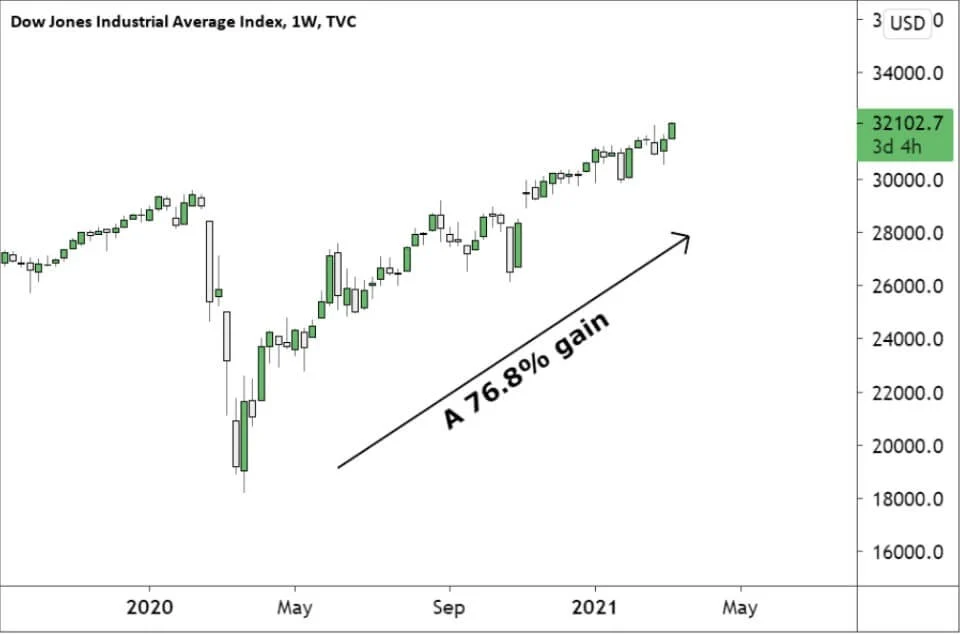
Perhaps the Dow’s greatest strength is its psychological impact. Because it has been around since 1896, it is the index that “Main Street” follows. When the Dow hits a milestone like 30,000 or 40,000, it creates a “wealth effect.” Consumers feel wealthier, confidence increases, and spending often follows. What the Dow is “doing” often creates a self-fulfilling prophecy in consumer behavior.
Navigating the Volatility: Investment Strategies for a Dow-Focused Portfolio
Knowing what the Dow is doing is only useful if you know how to apply that knowledge to your personal finance strategy. Whether you are a conservative retiree or a growth-oriented investor, the Dow offers specific strategic advantages.
The “Dogs of the Dow” Strategy
One popular investment strategy is the “Dogs of the Dow.” This involves buying the ten stocks in the DJIA with the highest dividend yields at the beginning of the year. The theory is that these are high-quality companies that are temporarily out of favor. By holding them, investors can collect high dividends while waiting for the stock price to recover. This strategy highlights the Dow’s role as a haven for income-seeking investors.
Using Index Funds and ETFs
Most individual investors should not try to pick winners within the 30 stocks. Instead, many use ETFs like the SPDR Dow Jones Industrial Average ETF (DIA), commonly known as “Diamonds.” This allows for instant diversification across the 30 blue-chip giants. When the Dow is trending upward due to strong economic fundamentals, these ETFs provide a low-cost way to capture that growth with less volatility than individual tech stocks.
The Importance of Diversification
While the Dow is a great indicator of large-cap American strength, an investor who only watches what the Dow is doing is missing out on international markets, small-cap companies, and emerging technologies. A sound financial plan uses the Dow as a benchmark for the “stable” portion of a portfolio, while diversifying into other areas to capture broader global growth.

Conclusion: The Dow as a Living History of Capitalism
In the final analysis, “What is the Dow Jones doing?” is a question about the current state of global capitalism. The 30 companies that make up the index are the survivors of decades of economic shifts, technological revolutions, and geopolitical conflicts. They represent the bedrock of the financial world.
When the Dow rises, it signals a confidence in the continued profitability and resilience of the world’s largest corporations. When it falls, it often reflects a necessary recalibration of expectations in the face of uncertainty. For the savvy investor, the Dow is more than a number—it is a narrative. By understanding the price-weighting, the macroeconomic drivers, and the psychological impact of the index, you can look past the daily headlines and make informed decisions that secure your financial future. Whether the Dow is at an all-time high or in the midst of a correction, its movement provides the essential data points needed to navigate the complex world of modern finance.
aViewFromTheCave is a participant in the Amazon Services LLC Associates Program, an affiliate advertising program designed to provide a means for sites to earn advertising fees by advertising and linking to Amazon.com. Amazon, the Amazon logo, AmazonSupply, and the AmazonSupply logo are trademarks of Amazon.com, Inc. or its affiliates. As an Amazon Associate we earn affiliate commissions from qualifying purchases.