
In the rapidly evolving landscape of enterprise technology, Human Capital Management (HCM) software has transitioned from a back-office administrative tool into a sophisticated, AI-driven ecosystem. As organizations navigate the complexities of remote work, global talent acquisition, and data-driven decision-making, the underlying technology used to manage a workforce has become a critical pillar of the modern tech stack. HCM software is no longer just a digital filing cabinet for employee records; it is a comprehensive suite of integrated applications designed to optimize the most valuable asset of any organization: its people.
Defining HCM Software in the Digital Era
To understand what HCM software is, one must first distinguish it from its predecessors and cousins: Human Resource Information Systems (HRIS) and Human Resource Management Systems (HRMS). While these terms are often used interchangeably, HCM represents the most holistic approach, encompassing the entire employee lifecycle through a unified technological framework.
From Paper Records to Cloud-Native Platforms
The evolution of HCM technology mirrors the broader history of computing. In the 1980s and 90s, HR software was largely on-premise, focusing on basic “records of truth”—digitizing personal details, tax forms, and payroll data. These systems were siloed and required significant manual entry.
Today’s HCM platforms are cloud-native, built on multi-tenant architectures that allow for real-time updates, global accessibility, and seamless scalability. The shift to the cloud has been the single most significant technological leap in the industry, enabling even mid-sized enterprises to leverage the same computing power and sophisticated algorithms that were once reserved for Fortune 500 companies.
Core Modules: The Architecture of Human Capital Systems
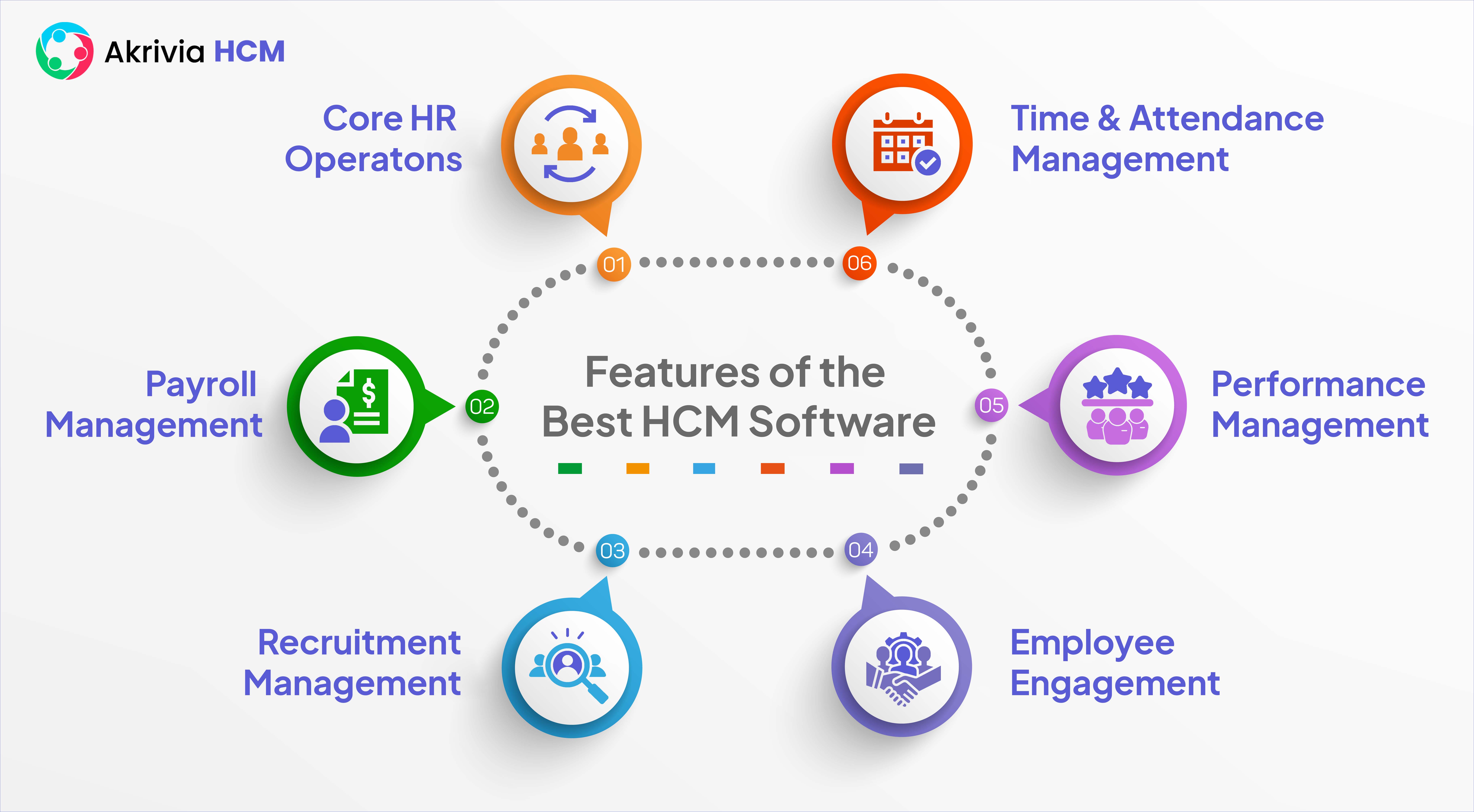
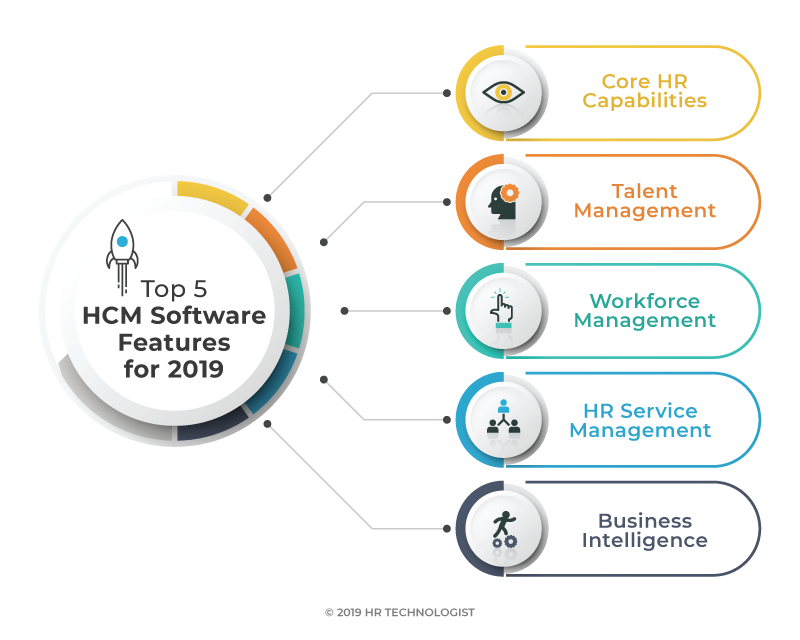
At its core, HCM software is an umbrella term for a suite of modules. From a technical perspective, these modules sit on a unified database, ensuring that data flows seamlessly from one function to another. The primary modules include:
- Core HR: The centralized database for employee information, organizational charts, and compliance tracking.
- Talent Acquisition: Applicant Tracking Systems (ATS) that utilize parsing engines and AI to source, screen, and rank candidates.
- Payroll and Benefits: Automated engines that calculate taxes, deductions, and contributions across various jurisdictions.
- Performance Management: Tools for continuous feedback, goal tracking (OKRs), and annual reviews.
- Learning Management Systems (LMS): Digital environments for employee training, certifications, and upskilling.
Key Technological Features of Modern HCM Platforms
The “Tech” in HCM has seen a massive surge in capability over the last five years. Modern platforms are no longer static interfaces; they are dynamic environments powered by advanced computational logic and user-centric design.
The Role of Artificial Intelligence and Machine Learning
Artificial Intelligence (AI) is the heartbeat of contemporary HCM software. Machine Learning (ML) algorithms are now integrated into nearly every module to reduce bias and increase efficiency. For instance, in recruitment, AI can analyze thousands of resumes in seconds, identifying candidates whose skills best match the job description based on historical hiring data.
Furthermore, AI-driven “Natural Language Processing” (NLP) powers internal chatbots that handle routine employee inquiries—such as “How many vacation days do I have left?”—without human intervention. This shift allows HR professionals to move away from administrative gatekeeping and toward strategic technology management.
Data Analytics and Predictive Insights
One of the most powerful aspects of modern HCM tech is its ability to transform raw data into “People Analytics.” By leveraging Big Data, these systems can identify patterns that are invisible to the human eye.
Predictive analytics tools can now forecast “flight risks” by analyzing patterns in employee engagement, performance scores, and even login activity. Similarly, workforce planning modules use historical data to predict future hiring needs, helping organizations stay ahead of labor market shifts. These insights are typically presented through dynamic dashboards that allow executives to visualize the health of their workforce in real-time.
Mobile-First Design and Employee Self-Service
The modern workforce is mobile, and HCM software has adapted accordingly. The “Mobile-First” philosophy ensures that employees can access their data from any device. Employee Self-Service (ESS) portals are a hallmark of modern HCM tech, allowing workers to update personal information, view pay stubs, and request time off via native iOS or Android apps. From a technical standpoint, this requires robust API structures and responsive design frameworks that ensure a consistent user experience across web browsers and mobile hardware.
The Infrastructure: Cloud vs. On-Premise Solutions

When evaluating HCM software, the technical infrastructure is just as important as the feature set. The industry has largely moved toward a Software-as-a-Service (SaaS) model, which offers distinct advantages in deployment and maintenance.
SaaS Models and Scalability
The SaaS delivery model has democratized HCM technology. Instead of purchasing a perpetual license and hosting the software on internal servers, companies subscribe to a service hosted by the vendor. This architecture allows for automatic updates—ensuring that the software is always compliant with the latest tax laws and security patches.
Scalability is another technical advantage. Whether an organization has 50 employees or 50,000, cloud-based HCM systems can scale their computing resources (CPU, RAM, and Storage) dynamically to meet the load. This elasticity is crucial for global companies that experience seasonal spikes in hiring or payroll processing.
Security Protocols and Data Privacy Compliance
Because HCM systems store highly sensitive Personal Identifiable Information (PII), including social security numbers, bank details, and health records, the security stack is incredibly rigorous.
Modern HCM platforms employ multi-layered security protocols, including:
- Data Encryption: Encrypting data both “at rest” (in the database) and “in transit” (as it moves between the server and the user’s browser).
- Multi-Factor Authentication (MFA): Requiring multiple forms of verification to prevent unauthorized access.
- Compliance Frameworks: Adhering to global standards such as GDPR (General Data Protection Regulation) in Europe, CCPA in California, and SOC 2 Type II audits for service organization controls.
The technical burden of maintaining these security standards is handled by the software vendor, which is a major reason why organizations are migrating away from legacy on-premise systems.
Integration and the Tech Ecosystem
No piece of software exists in a vacuum. A key component of HCM technology is its ability to communicate with other enterprise tools, creating a unified digital ecosystem.
API Connectivity and Cross-Platform Interoperability
Application Programming Interfaces (APIs) are the bridges that allow HCM software to talk to other systems. A modern HCM platform must integrate with an organization’s Enterprise Resource Planning (ERP) system, Customer Relationship Management (CRM) tools, and productivity suites like Slack or Microsoft Teams.
For example, when a new employee is hired in the HCM system, an API trigger can automatically create their email account in Google Workspace, add them to the relevant Slack channels, and set up their profile in the company’s expense management software. This level of interoperability reduces manual data entry and minimizes the risk of human error.
Automating the Employee Lifecycle
Automation is the primary goal of HCM integration. Workflow engines within the software can be programmed to handle complex sequences of events. When a “Life Event” is triggered—such as a promotion—the system automatically adjusts the employee’s salary in the payroll module, updates their permissions in the IT system, and sends a notification to the benefits provider to adjust their insurance coverage. This automation is built on “If-This-Then-That” logic, which streamlines operations and allows the technology to act as a digital orchestrator of company policy.
The Future of HCM: Emerging Tech Trends
As we look toward the future, several emerging technologies are poised to redefine the HCM category even further.
Generative AI in HR Operations
While standard AI focuses on analysis, Generative AI (like LLMs) is beginning to automate content creation within HCM platforms. We are seeing tools that can automatically generate job descriptions based on a list of requirements, draft personalized employee offer letters, and even create custom training content for LMS modules. This reduces the time-to-hire and ensures that communication across the organization remains consistent and professional.
The Metaverse and Remote Collaboration Tools
As remote and hybrid work become permanent fixtures, HCM vendors are exploring immersive technologies. Some platforms are experimenting with “Virtual Onboarding” in the Metaverse, allowing new hires to explore a digital twin of the office and interact with colleagues in a 3D space. While still in the early stages, the integration of AR (Augmented Reality) and VR (Virtual Reality) into the HCM tech stack represents the next frontier of employee engagement.
In conclusion, HCM software has evolved into a high-tech powerhouse that sits at the intersection of data science, cloud computing, and user experience. By centralizing employee data, automating complex workflows, and providing deep analytical insights, these platforms allow organizations to manage their workforce with unprecedented precision. As AI and automation continue to mature, HCM software will remain the essential engine driving the future of work.
aViewFromTheCave is a participant in the Amazon Services LLC Associates Program, an affiliate advertising program designed to provide a means for sites to earn advertising fees by advertising and linking to Amazon.com. Amazon, the Amazon logo, AmazonSupply, and the AmazonSupply logo are trademarks of Amazon.com, Inc. or its affiliates. As an Amazon Associate we earn affiliate commissions from qualifying purchases.