
In the landscape of modern technology, the concept of “divide by” transcends the elementary arithmetic we learn in childhood. While the basic principle remains the partitioning of a quantity into equal parts, its application within software development, computer architecture, and artificial intelligence is a complex and foundational pillar. To understand what “divide by” truly means in a tech-driven world, one must look beyond the division sign and explore how processors calculate, how algorithms scale, and how software handles the inherent logical risks of the operation.
Understanding the Fundamentals of Digital Division
At the core of every digital interaction is a series of mathematical operations. Division is arguably the most computationally expensive of the basic arithmetic operations for a central processing unit (CPU) to perform. Unlike addition or subtraction, which can be executed in a single clock cycle, division requires iterative processes that demand more logic gates and more time.
Binary Arithmetic: How CPUs Handle the Division Operation
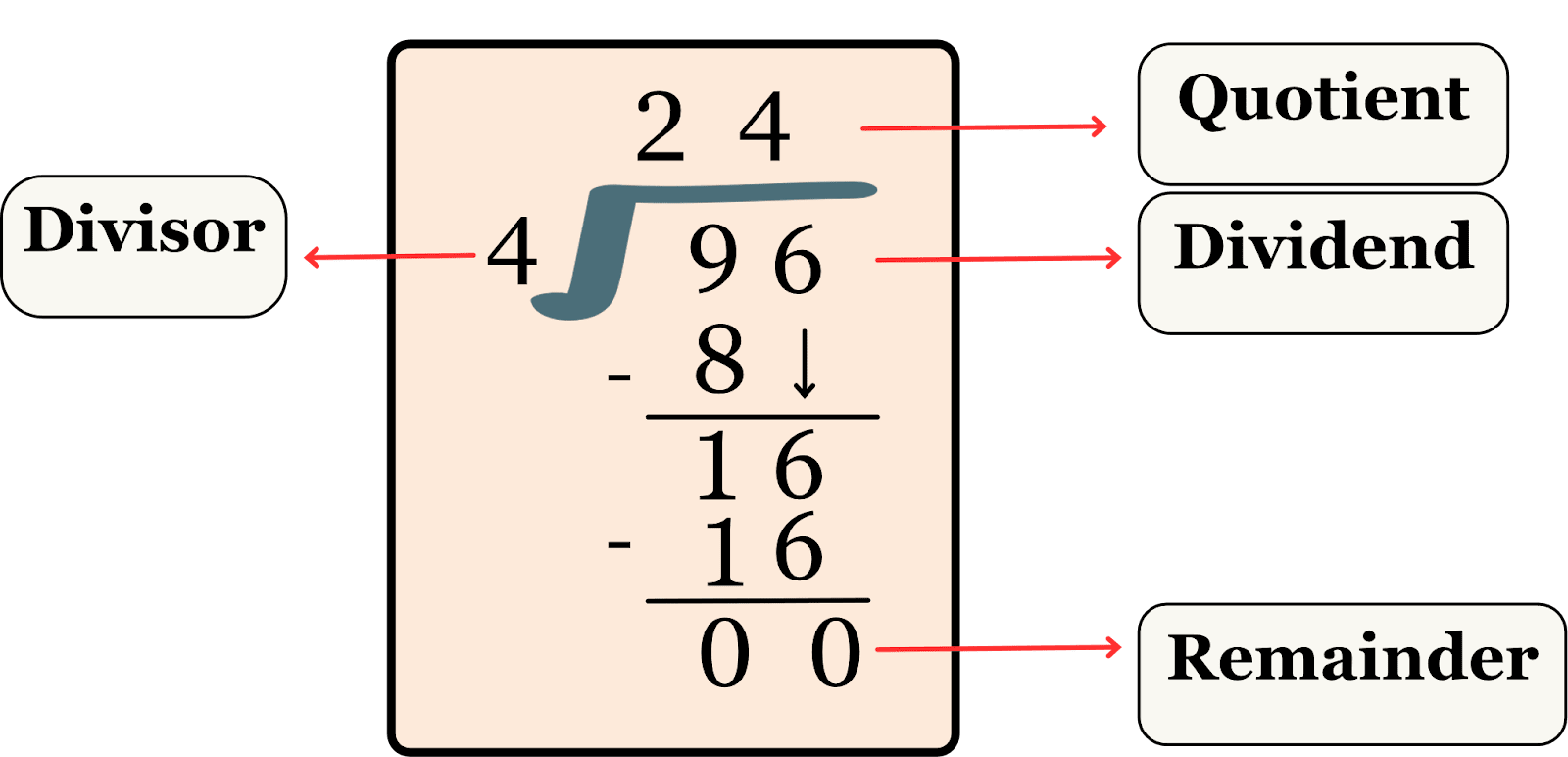
At the hardware level, computers do not “see” numbers the way humans do. They operate in binary (0s and 1s). When a piece of software executes a “divide by” command, the Arithmetic Logic Unit (ALU) within the CPU takes over. The ALU typically uses a method known as “restoring division” or the more efficient “non-restoring division” algorithm.
These processes involve shifting bits and subtracting the divisor from the dividend repeatedly. For modern high-performance computing, hardware designers use even more sophisticated techniques, such as the SRT (Sweeney, Robertson, and Tocher) algorithm, which guesses the quotient digits based on lookup tables to speed up the process. Understanding this “under-the-hood” mechanism is crucial for low-level systems engineers who need to optimize code for maximum hardware efficiency.
Floating-Point vs. Integer Division: Why Data Types Matter
In programming, the outcome of a “divide by” operation depends heavily on the data types involved. This is a common pitfall for junior developers.
- Integer Division: When you divide two integers (whole numbers), many programming languages default to “truncating” the result. For example,
7 / 2might result in3rather than3.5. The decimal is simply discarded. - Floating-Point Division: This utilizes the IEEE 754 standard for representing real numbers. This allows for precision, yielding the expected
3.5.
The choice between these two governs how resources are managed. Integer division is faster and requires less memory, making it ideal for loop counters or array indexing. Floating-point division is essential for scientific computing, graphics rendering, and any application where precision is paramount.
Division in Modern Programming Languages
Every programming language treats the “divide by” operation with its own set of syntactical rules and logical safeguards. As we transition from assembly-level logic to high-level software development, the way we express and handle division becomes more abstracted but no less critical.
Common Syntax and Operators (Python, JavaScript, C++)
Most modern languages use the forward slash (/) as the universal symbol for division. However, the evolution of language design has led to more specific operators to prevent ambiguity.
- Python: Python is unique in its clarity. It uses
/for true division (always returns a float) and//for floor division (returns the largest integer less than or equal to the result). - JavaScript: As a dynamically typed language, JavaScript treats almost all numbers as 64-bit floats. This means
7 / 2will automatically result in3.5, which simplifies web development but can lead to precision issues in heavy mathematical computations. - C++ and Java: These languages are strictly typed. If you divide an integer by an integer, you get an integer. To get a decimal, at least one of the operands must be explicitly cast as a
floatordouble.
Handling the Infamous “Division by Zero” Error
One of the most frequent causes of software crashes is the “division by zero” error. Mathematically, dividing by zero is undefined; computationally, it is a catastrophic event if not handled properly. When a program attempts to divide by zero, the CPU may trigger a hardware exception, which the operating system must catch.
In robust software engineering, developers use “exception handling” blocks (Try-Catch) or “guard clauses” to ensure the divisor is never zero before the operation occurs. In modern AI and data science frameworks, such as NumPy or TensorFlow, dividing by zero often returns NaN (Not a Number) or Inf (Infinity) instead of crashing, allowing the algorithm to continue processing while flagging the error for later review.
Modulo and Floor Division: The Unsung Heroes of Logic
The “divide by” concept extends into the “modulo” operator (%), which returns the remainder of a division. While it might seem secondary, modulo is essential in tech for tasks such as:
- Determining Parity: Checking if a number is even or odd (
x % 2). - Cycling through Arrays: Using modulo to “wrap around” an index in a circular buffer.
- Cryptography: Many encryption algorithms, including RSA, rely heavily on modular arithmetic to secure data.
The Role of Division in Algorithm Design and AI
In the realms of Machine Learning (ML) and Big Data, “divide by” takes on a more structural role. It is less about simple arithmetic and more about scaling and distributing data.
Normalization and Scaling in Machine Learning
Artificial Intelligence models are sensitive to the scale of input data. If one feature (like “Annual Income”) has values in the thousands and another (like “Age”) has values under 100, the model may become biased. To fix this, data scientists use “normalization,” which frequently involves a “divide by” operation.
By dividing every value in a dataset by the maximum value or the standard deviation, the data is scaled to a range between 0 and 1. This ensures that the neural network treats all inputs with equal statistical weight, leading to faster convergence and more accurate predictions.
Load Balancing: Dividing Tasks in Distributed Systems
In cloud computing and distributed systems, the concept of “divide by” is applied to workloads. A load balancer acts as a “divisor,” taking incoming traffic (the dividend) and splitting it across multiple servers (the divisors).
Algorithms like “Round Robin” are essentially division-based logic. They ensure that no single server is overwhelmed, effectively dividing the computational burden to maintain system uptime and responsiveness. This is the logic that allows platforms like Netflix or Amazon to handle millions of concurrent users without failure.
Advanced Applications and Security Implications
As we push the boundaries of what computers can do, the precision of our division operations becomes a matter of security and historical significance.
Cryptographic Math: Division in Encryption
Modern digital security relies on the fact that while multiplication is easy for computers, the inverse—finding the factors of a massive number (a form of complex division)—is incredibly difficult. This is the basis of public-key cryptography. When you see a “secure” padlock in your browser, your computer is performing complex modular division to verify certificates. If a breakthrough in “division algorithms” were to occur (such as through quantum computing), current encryption methods could become obsolete overnight.
Precision Errors and the Pentium FDIV Bug Legacy
The history of “divide by” in tech is not without its failures. One of the most famous examples is the 1994 Intel Pentium FDIV bug. A flaw in the floating-point division lookup table caused the processor to return slightly incorrect results for certain division operations.
While the error occurred in the fourth or fifth decimal place, it was catastrophic for engineers and scientists. Intel eventually had to recall the processors, costing the company nearly $500 million. This serves as a permanent reminder in the tech industry that even the most basic “divide by” operation must be executed with absolute, unerring precision.
Conclusion
To answer the question “what is divide by” in a technical context is to acknowledge the silent engine running beneath our digital lives. It is a process that begins with binary shifts in a silicon chip, moves through the syntax of high-level programming languages, and eventually enables the scaling of global cloud infrastructures and AI models.
Whether it is a developer preventing a crash by checking for a zero divisor, or a data scientist normalizing a dataset for a neural network, the act of division is a fundamental tool of logic. As technology continues to evolve, our methods of dividing data and tasks will only become more sophisticated, further cementing this mathematical concept as a cornerstone of the digital age.
aViewFromTheCave is a participant in the Amazon Services LLC Associates Program, an affiliate advertising program designed to provide a means for sites to earn advertising fees by advertising and linking to Amazon.com. Amazon, the Amazon logo, AmazonSupply, and the AmazonSupply logo are trademarks of Amazon.com, Inc. or its affiliates. As an Amazon Associate we earn affiliate commissions from qualifying purchases.