
In the broadest sense, a motorboat is a vessel propelled by an internal combustion engine or an electric motor. However, in the modern technological landscape, this definition has expanded far beyond a simple hull attached to a power source. Today, a motorboat represents a sophisticated intersection of mechanical engineering, advanced material science, and cutting-edge software integration. To understand what a motorboat is today is to understand a high-tech platform capable of autonomous navigation, real-time telemetry, and sustainable propulsion.
From the roaring outboards of the mid-20th century to the silent, AI-driven electric cruisers of the 2020s, the motorboat has become a primary laboratory for transport innovation. As we look at the hardware and software that define these vessels, we see a shift away from pure mechanics toward a holistic digital ecosystem.

The Anatomy of Modern Marine Propulsion: From Internal Combustion to Electric
At its core, the technology of a motorboat is defined by its propulsion system. This is the “engine room” of the vessel’s identity, and it has undergone a radical transformation driven by the need for efficiency, power-to-weight ratio improvements, and environmental sustainability.
Outboard vs. Inboard Systems: The Mechanical Foundation
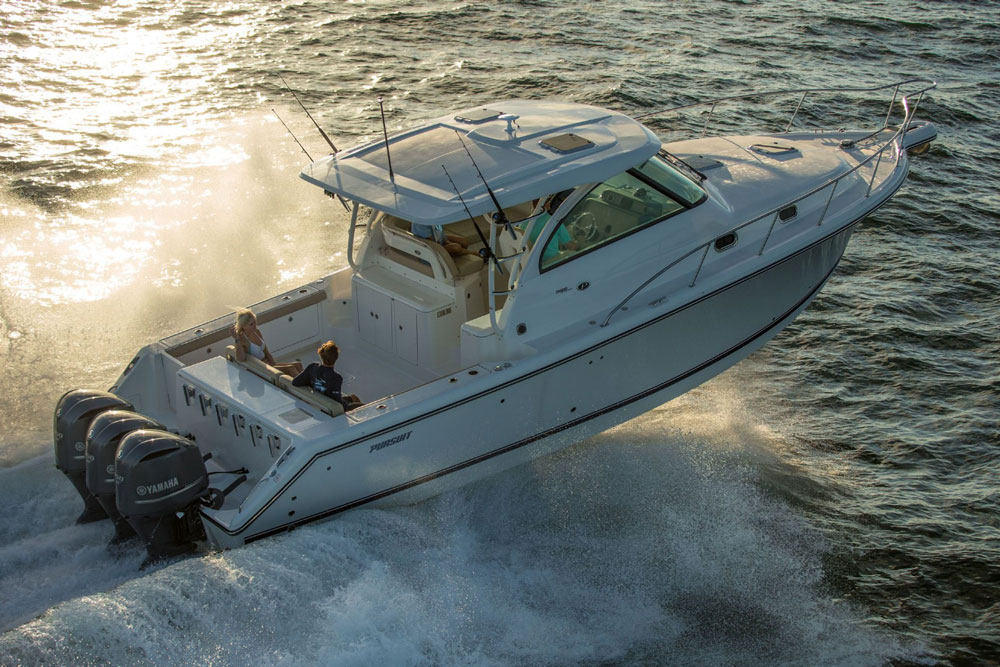
The traditional categorization of motorboats begins with the placement of the engine. Outboard motors, which are self-contained units mounted to the transom, have benefited from massive technological leaps. Modern outboards utilize high-pressure direct injection and variable valve timing—technologies borrowed and refined from the automotive sector—to deliver massive torque while minimizing fuel consumption.
Conversely, inboard and sterndrive systems integrate the engine within the hull. The technical advantage here lies in the center of gravity and the ability to utilize larger, high-displacement diesel or gasoline engines. In the high-end tech space, we are seeing the rise of “pod drives” (like the Volvo Penta IPS). These systems use steerable pods underneath the hull, controlled by software-driven joysticks, allowing for 360-degree maneuverability that was once impossible for traditional shaft-driven vessels.
The Rise of Electric Propulsion and Battery Management
The most significant tech trend in motorboating is the transition to electric propulsion. Companies like X Shore and Candela are redefining the motorboat as a “gadget on water.” These vessels replace fuel tanks with high-density lithium-ion battery packs and traditional engines with high-torque electric motors.
The technical challenge in electric motorboats is the “energy density” of water. Because water is significantly denser than air, it requires more energy to move through it. To solve this, electric boat manufacturers are integrating sophisticated Battery Management Systems (BMS) that optimize power output in real-time. This involves thermal management to keep batteries cool under high loads and regenerative braking systems that can recover energy while the boat is being towed or under sail (in hybrid models).
The Digital Cockpit: Software and Navigation Systems
The “bridge” of a modern motorboat has evolved from a series of analog gauges to a fully integrated digital cockpit. This shift has turned the captain from a mechanical operator into a systems manager, relying on a suite of sensors and software to ensure safety and performance.
Integrated Glass Helm Technology
Modern motorboats utilize what is known as “Glass Helm” technology. This is a centralized software interface—often powered by Linux-based operating systems—that integrates radar, sonar, GPS, and engine diagnostics into a single touchscreen array. Through NMEA 2000 (a plug-and-play communications standard), every component on the boat, from the fuel sensor to the underwater lights, communicates with a central Multi-Function Display (MFD).
This integration allows for “digital switching,” where the vessel’s electrical systems are controlled via software rather than physical fuses and switches. This reduces wiring complexity and weight, while allowing users to create “modes” (e.g., “Fishing Mode” or “Night Cruise”) that automatically adjust lighting, sonar settings, and stabilizer fins with a single touch.
AI-Driven Autonomy and Docking Assistance
Perhaps the most “Tech-forward” aspect of modern motorboats is the introduction of Artificial Intelligence (AI). Docking a motorboat is notoriously difficult due to wind and current, but companies like Raymarine and Avikus are deploying AI-assisted docking systems. Using a combination of computer vision, LiDAR (Light Detection and Ranging), and ultrasonic sensors, these systems can identify the dock, calculate the vessel’s trajectory, and take control of the engines to slide the boat into a slip with centimeter-level precision.
Furthermore, autonomous navigation is no longer science fiction. High-end motorboats now feature “Adaptive Cruise Control” for water, which uses radar and AIS (Automatic Identification System) data to detect other vessels and automatically alter course to avoid collisions, adhering to international maritime regulations without human intervention.
Hydrodynamics and Material Science in Modern Hull Design
A motorboat is only as good as its interaction with the water. The technology used to design and build hulls has moved from trial-and-error craftsmanship to precision engineering using supercomputers.
Computational Fluid Dynamics (CFD) in Design
Before a modern motorboat is ever built, it exists as a digital twin in a virtual environment. Engineers use Computational Fluid Dynamics (CFD) software to simulate how the hull will behave in various sea states. This allows for the optimization of “lift”—the force that pushes the boat out of the water to reduce drag.
One of the most exciting technological leaps in this area is “hydrofoiling.” By adding computer-controlled wings (foils) beneath the hull, a motorboat can lift entirely out of the water once it reaches a certain speed. This reduces drag by up to 80%, allowing electric motorboats to achieve the range and speed of their fossil-fuel counterparts. These foils are adjusted hundreds of times per second by flight controllers, similar to the tech found in modern fighter jets.
Sustainable Composite Materials
The “tech” of the hull also includes the materials themselves. While fiberglass has been the standard for decades, we are seeing a move toward carbon fiber and bio-resins. Carbon fiber provides an incredible strength-to-weight ratio, which is essential for high-performance motorboats and electric vessels where weight-saving translates directly into battery range. Additionally, 3D printing is beginning to enter the space, with some manufacturers printing entire structural components or even small hulls, allowing for complex geometries that are impossible with traditional molding.
Connectivity and the Internet of Things (IoT) at Sea
In the modern era, a motorboat is a connected node in the Internet of Things (IoT). The expectation of being “off-grid” has been replaced by the demand for “always-on” connectivity, which has profound implications for vessel management.
Remote Monitoring and Predictive Maintenance
Through 4G/5G and satellite integration (such as Starlink Maritime), motorboat owners can now monitor their vessels from anywhere in the world. IoT sensors can alert an owner via a smartphone app if the bilge pump is running excessively, if the battery voltage drops, or if the vessel moves outside of a geofenced area.
Beyond simple monitoring, we are seeing the rise of predictive maintenance. By analyzing data streams from the engine’s ECU (Engine Control Unit), software can predict when a component is likely to fail before it actually does. For instance, if the software detects a microscopic change in exhaust temperature or vibration patterns, it can trigger a service alert, ordering the necessary parts through an automated supply chain.
Satellite Integration and Global Communication
The integration of low-earth orbit (LEO) satellite technology has revolutionized the motorboat’s utility. Previously, high-speed internet was reserved for massive superyachts with expensive, heavy domes. Today, compact satellite receivers allow even small motorboats to stream high-definition video, run cloud-based navigation software, and maintain VoIP communication thousands of miles from the nearest cell tower. This connectivity ensures that the “digital cockpit” remains updated with real-time weather overlays and crowdsourced bathymetric data (depth maps).
The Future of Motorboats: Hydrogen and Beyond
As we look toward the horizon, the definition of a motorboat continues to evolve alongside global technology trends. While battery-electric systems are ideal for short-range cruising, the tech industry is looking at hydrogen fuel cells for long-range, high-power applications. A hydrogen-powered motorboat would offer the silence and zero emissions of electric power with the rapid refueling and energy density of traditional fuels.
Furthermore, we are likely to see increased “cross-pollination” between the automotive and marine tech sectors. As companies like Tesla, GM, and Mercury Marine invest more in electrification and autonomous software, the motorboat will continue to transition from a simple mechanical tool to a high-performance computing platform.
In conclusion, what is a motorboat? It is no longer just a vessel with a motor. It is a sophisticated amalgamation of AI-driven navigation, advanced fluid dynamics, and interconnected digital systems. Whether it is foiling over the waves on computer-controlled wings or docking itself via LiDAR sensors, the modern motorboat is a testament to how technology is conquering one of the most challenging environments on Earth. For the tech enthusiast, the motorboat is perhaps the ultimate mobile device.
aViewFromTheCave is a participant in the Amazon Services LLC Associates Program, an affiliate advertising program designed to provide a means for sites to earn advertising fees by advertising and linking to Amazon.com. Amazon, the Amazon logo, AmazonSupply, and the AmazonSupply logo are trademarks of Amazon.com, Inc. or its affiliates. As an Amazon Associate we earn affiliate commissions from qualifying purchases.