
The disappearance of the Roanoke colony in the late 16th century is often shrouded in the mist of supernatural folklore and archeological “cold case” intrigue. However, when stripped of the “Croatoan” enigma and the ghost stories, the tragedy of Roanoke emerges as one of the most significant financial failures in the history of Western enterprise. To understand what happened to the “Lost Colony,” one must look past the empty settlement and into the ledgers of Elizabethan England. Roanoke was not merely an exploratory mission; it was a high-stakes, private equity-backed startup that succumbed to systemic risk, supply chain fragility, and a catastrophic lack of diversified capital.

The Financial Architecture of the Roanoke Venture
To analyze the failure of Roanoke through a financial lens, we must first recognize that the colonization of the New World was the “SaaS” or “AI” frontier of the 1580s. It was a high-risk, high-reward environment where the barriers to entry were astronomical.
The Cost of the “New World” Startup
In the 16th century, launching a transatlantic venture required massive upfront liquid capital. An investor had to procure ships, hire specialized labor (sailors, soldiers, and artisans), and purchase months of provisions. Unlike modern startups that burn through venture capital in digital marketing, the Roanoke venture burned capital in physical depreciation. Ships rotted, food spoiled, and the “burn rate” was measured in the lives of the settlers and the structural integrity of the vessels. The initial 1585 expedition was an attempt to establish a “Minimum Viable Product” (MVP)—a military outpost that could provide a return on investment (ROI) through privateering against Spanish gold fleets.
Sir Walter Raleigh: The Lead Investor
Sir Walter Raleigh acted as the quintessential lead investor. Having secured a patent from Queen Elizabeth I, he held the exclusive rights to “discover, search, find out, and view such remote, heathen and barbarous lands.” However, the Queen provided the license, not the liquidity. Raleigh was forced to bootstrap the venture using his own fortune and by attracting “angel investors” among the English nobility and merchant classes. The 1587 expedition—the one that actually “vanished”—represented a pivot in the business model. Moving away from a purely military outpost, Raleigh sought to create a “plantation,” a permanent settlement that would generate long-term equity through agriculture and trade. The “Lost Colony” was, in essence, a Series B round intended to scale the operation.
Systemic Risk and Supply Chain Fragility
The primary reason for the collapse of the Roanoke venture was not a lack of effort, but a failure to account for “Black Swan” events that disrupted the supply chain. In business finance, the reliability of the supply chain is the backbone of operational continuity. For Roanoke, the supply chain was a 3,000-mile umbilical cord made of wood and canvas.
The Anglo-Spanish War: A Geopolitical Black Swan
In 1588, the Spanish Armada launched its attack on England. This was a classic geopolitical risk that paralyzed English maritime commerce. The English government issued a “stay of shipping,” effectively seizing all capable vessels for the defense of the realm. For the Roanoke settlers, this meant that their “scheduled maintenance” and resupply missions were cancelled. John White, the colony’s governor and a key stakeholder, found himself trapped in England, unable to secure the transport required to deliver the “dividends” of food and manpower the colony desperately needed. This three-year delay in resupply is the fundamental cause of the colony’s “disappearance.” In modern terms, the venture suffered a total liquidity crunch because the infrastructure required to deliver capital was repurposed for a national emergency.
Resource Depletion and Cash Flow Issues
While John White was stuck in England, the colony at Roanoke was experiencing a negative cash flow of resources. They had landed too late in the season to plant sustainable crops, and their “burn rate” of food supplies was accelerating. Without a steady influx of “new capital” (supplies from England), the colony became insolvent. Financial historians argue that the settlers likely did not “vanish” in a puff of smoke but performed a strategic merger or acquisition with the local Croatoan people. Faced with total resource depletion, the remaining “employees” of the Roanoke venture likely integrated into a more stable local economy to ensure survival.

Modern Lessons for Private Equity and Business Resilience
The Roanoke disaster served as a brutal lesson for the financial architects of the British Empire, leading to a radical shift in how overseas ventures were funded and managed.
Diversification vs. Total Exposure
Sir Walter Raleigh’s mistake was his total exposure to the project. He was the primary financier and the sole patent holder. When the project failed, his personal wealth was devastated, and he lacked the diversified portfolio necessary to absorb the loss. This failure paved the way for the invention of the “Joint-Stock Company.” By the time the Virginia Company founded Jamestown in 1607, the risk was spread across hundreds of investors. No single individual bore the brunt of a potential failure. This transition from “Sole Proprietorship” to “Publicly Traded Entity” is the single most important evolution in the history of business finance, and it was born from the ashes of Roanoke.
Scalability and the “Minimum Viable Colony”
Roanoke proved that a colony cannot be “scaled” if it cannot first achieve “Product-Market Fit.” The settlers were searching for gold and a passage to the Pacific—assets that didn’t exist in the Outer Banks. They failed to identify a viable “commodity” that could be exported back to England to create a self-sustaining revenue loop. It wasn’t until the discovery of tobacco in the Chesapeake Bay years later that the English colonization model found its “killer app.” Roanoke remains a cautionary tale about scaling an enterprise before securing a repeatable and scalable revenue stream.
The ROI of Mystery: Turning Failure into Cultural Capital
While the original investors in Roanoke saw a 100% loss on their capital, the “Roanoke Brand” has, over centuries, generated a different kind of return. The mystery itself has become a valuable cultural asset, driving tourism, literature, and media revenue.
Long-term Brand Value vs. Immediate Financial Loss
From a marketing and brand strategy perspective, “The Lost Colony” is one of the most successful “failed” brands in history. The ambiguity of the settlers’ fate has created a perpetual interest that a successful, boring settlement would never have achieved. Every year, thousands of tourists visit Manteo, North Carolina, to see the “The Lost Colony” outdoor drama, contributing millions to the local economy. In a strange twist of financial irony, the failure of the 1587 mission eventually created a sustainable tourism industry that has lasted longer than the original colony ever would have.
Lessons in Stakeholder Management
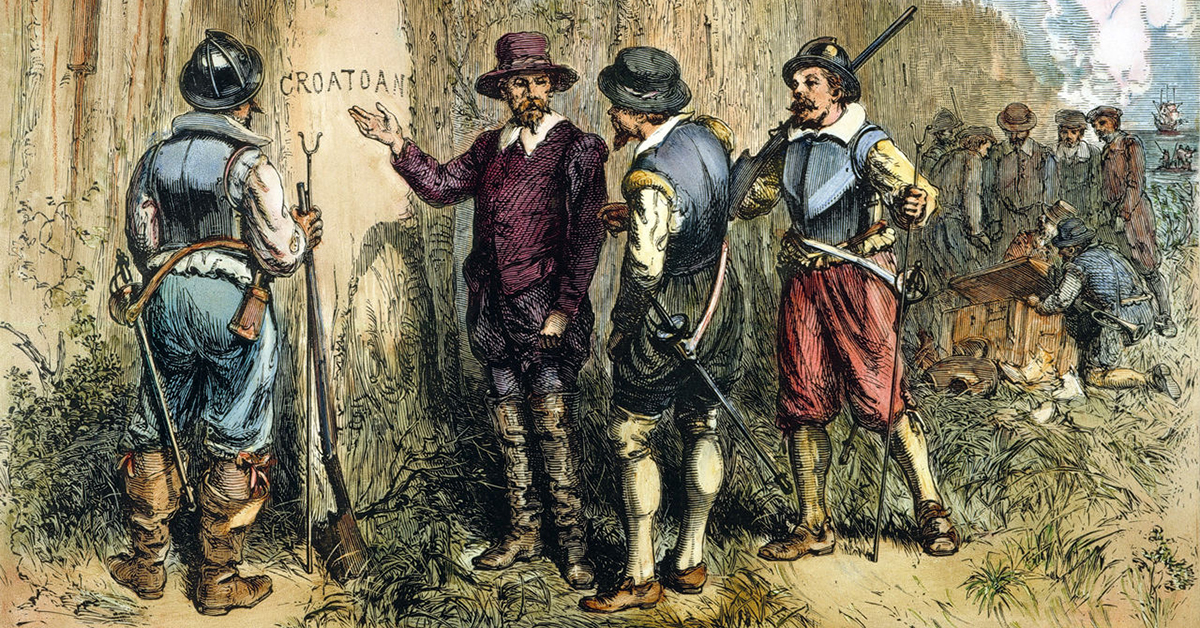
The disappearance of the colony was also a failure of stakeholder management. John White, as the Governor, failed to maintain the confidence of both his investors in England and his “staff” on the ground. When he finally returned in 1590 to find the settlement abandoned, the lack of communication (save for a single word carved into a post) represented the ultimate breakdown in reporting. In any modern business, a total lack of transparency and a failure to communicate status to stakeholders is a precursor to a collapse in valuation.
Conclusion: The Financial Reality of the “Lost” Colony
What happened to the lost colony of Roanoke? They didn’t disappear into another dimension; they succumbed to a classic “startup death spiral.” The venture was undercapitalized, the supply chain was brittle, and the lead investor was distracted by a geopolitical crisis that froze his assets.
The true legacy of Roanoke isn’t found in the “Croatoan” tree; it’s found in the birth of the modern corporation. The financial world learned that if you want to settle a new frontier, you cannot rely on the pockets of a single man. You need the collective capital of the masses, the risk-mitigation of the joint-stock model, and a clear path to profitability. Roanoke was the expensive “Beta Test” that failed so that the global economy could eventually succeed. In the world of money and investing, Roanoke remains the ultimate reminder that without a resilient financial structure, even the most ambitious vision will eventually be reclaimed by the wilderness.
aViewFromTheCave is a participant in the Amazon Services LLC Associates Program, an affiliate advertising program designed to provide a means for sites to earn advertising fees by advertising and linking to Amazon.com. Amazon, the Amazon logo, AmazonSupply, and the AmazonSupply logo are trademarks of Amazon.com, Inc. or its affiliates. As an Amazon Associate we earn affiliate commissions from qualifying purchases.