
The term “semimonthly” is a fundamental concept in financial management, both for individuals and businesses. While seemingly straightforward, understanding its precise meaning and implications is crucial for accurate budgeting, timely payments, and overall financial well-being. This article delves into the intricacies of semimonthly pay cycles, exploring what they entail, how they differ from other common payment schedules, and the practical considerations for both employers and employees.
Understanding the Semimonthly Pay Cycle
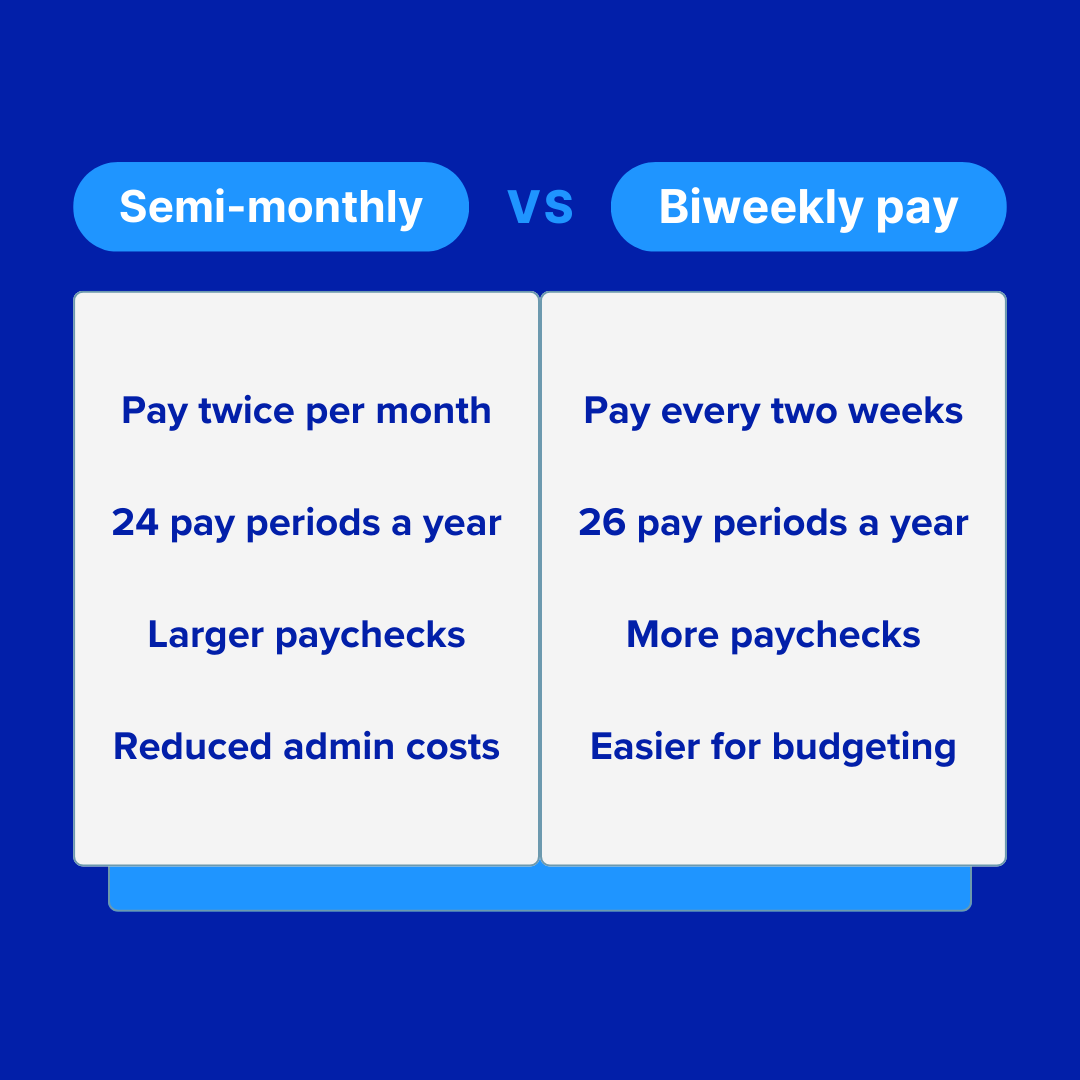
At its core, a semimonthly pay cycle means that employees receive their salary twice a month. This equates to a total of 24 pay periods per year. The defining characteristic of a semimonthly schedule is that the pay dates are fixed and generally fall on specific days of the month, rather than being a set number of days apart.

The Mechanics of Semimonthly Payments
The most common arrangement for semimonthly payments is to pay employees on the 15th and the last day of each month. For example, an employee paid semimonthly might receive their first paycheck of the month on the 15th and their second on the 31st (or the last business day if the 31st falls on a weekend or holiday).
It’s important to note that while the 15th and the end of the month are prevalent, some companies may adopt slightly different fixed dates, such as the 1st and the 15th, or the 10th and the 25th. The key is the predictability and regularity of these two predetermined dates within each month.
Distinguishing Semimonthly from Other Pay Frequencies
To fully grasp what semimonthly signifies, it’s beneficial to contrast it with other common pay frequencies:
Bi-weekly vs. Semimonthly
Perhaps the most common point of confusion arises between bi-weekly and semimonthly pay cycles. While both involve receiving pay more than once a month, their underlying structures are different:
- Bi-weekly: This means payment occurs every two weeks. Since there are 52 weeks in a year, this results in 26 pay periods annually (52 weeks / 2 weeks per pay period = 26 pay periods). Because 26 is not evenly divisible by 2, there will be two months out of the year that contain three paychecks for bi-weekly employees. This can be a significant advantage for employees, as they receive an extra paycheck in those months, which can be used for savings, debt reduction, or discretionary spending.
- Semimonthly: As established, this means payment twice per month, resulting in 24 pay periods per year. This schedule is more predictable in terms of the number of paychecks received each month (always two), but it lacks the bonus paychecks that can occur with a bi-weekly schedule.
The financial implications for employees can differ. With a bi-weekly schedule, the extra paychecks in certain months can provide a financial boost. With a semimonthly schedule, income is more evenly distributed across the year, which can aid in consistent budgeting but doesn’t offer the same opportunity for an occasional windfall.
Weekly vs. Semimonthly
A weekly pay cycle means employees are paid once every week, resulting in 52 pay periods annually. This offers the highest frequency of payments and the most distributed income stream. Employees on a weekly schedule receive a paycheck every week. This contrasts sharply with the semimonthly schedule, where employees receive pay only twice per month.
Monthly vs. Semimonthly
A monthly pay cycle means employees are paid once per month, resulting in 12 pay periods annually. This is the least frequent payment schedule among the common options. Semimonthly, with its 24 pay periods, provides employees with more frequent access to their earnings compared to a monthly schedule.
The choice between these pay frequencies has tangible effects on an individual’s cash flow, budgeting strategies, and financial planning.
Practical Implications for Employees
For employees, understanding their semimonthly pay schedule is essential for effective personal finance management. This knowledge directly impacts budgeting, bill payment, and overall financial planning.
Budgeting with a Semimonthly Schedule
The consistent receipt of two paychecks per month can simplify budgeting for many individuals. Instead of trying to stretch a single monthly paycheck to cover all expenses, semimonthly pay allows for a more balanced distribution of income across the month.
- Bi-weekly Bill Payment: Many bills, such as rent or mortgage payments, utilities, and loan installments, are often paid on a monthly basis. With semimonthly pay, employees can choose to allocate one paycheck towards larger, recurring monthly bills and the second paycheck towards smaller, more frequent expenses, savings, or discretionary spending. This can help avoid the feeling of having to go a long time between paydays with no income.
- Managing Fixed and Variable Expenses: Employees can dedicate their first semimonthly paycheck to covering essential fixed expenses like rent, mortgage, loan payments, and insurance premiums. The second paycheck can then be used to manage variable expenses such as groceries, transportation, entertainment, and personal care, as well as to contribute to savings goals or investments.
- Avoiding Paycheck to Paycheck Living: While any regular pay schedule aims to alleviate this, the semimonthly structure can be particularly helpful for those who might struggle with a longer gap between paychecks. Having income twice a month can reduce the temptation to rely on credit or loans to bridge financial gaps.
Impact on Savings and Investments
The semimonthly pay structure can also influence how individuals approach their savings and investment goals.
- Regular Contributions: The predictable nature of semimonthly pay makes it easier to set up automatic transfers to savings accounts or investment portfolios. For instance, an employee could choose to automatically transfer a portion of their first paycheck to a high-yield savings account and another portion of their second paycheck to a brokerage account for long-term investing.
- Consistent Growth: By making regular, smaller contributions twice a month, individuals can benefit from the power of compounding over time without feeling a significant pinch in their day-to-day spending. This consistent approach to saving and investing can lead to more substantial financial growth than sporadic contributions.
- Emergency Funds: The twice-monthly income stream can facilitate building or replenishing an emergency fund. Employees can earmark a portion of each paycheck towards this critical financial safety net, ensuring they are better prepared for unexpected expenses like medical bills or job loss.
Tax Withholding Considerations
While not directly determined by the semimonthly schedule itself, the frequency of pay can influence the way taxes are withheld. Employers utilize tax tables provided by the IRS that are adjusted for different pay frequencies. When an employee’s W-4 is set up, the payroll system uses the specified pay frequency to calculate the appropriate amount of federal, state, and local taxes to withhold from each paycheck.
For semimonthly employees, taxes are deducted from each of the 24 paychecks throughout the year. This generally leads to a more even distribution of the tax burden across the year, compared to less frequent pay cycles where larger tax amounts might be withheld from fewer paychecks. Employees should review their W-4 annually or after significant life events to ensure their tax withholding accurately reflects their situation.
Practical Implications for Employers
For businesses, choosing a semimonthly pay cycle is a strategic decision that impacts payroll processing, employee satisfaction, and financial planning.
Payroll Administration and Efficiency
Implementing a semimonthly pay cycle requires careful planning and robust payroll systems.
- Streamlined Processing: With 24 fixed pay dates per year, employers can establish a predictable and efficient payroll processing schedule. This allows for better resource allocation within the HR and finance departments, as they know exactly when payroll runs need to occur and deadlines for timesheet submission and approvals.
- Reduced Administrative Burden: Compared to weekly payroll, semimonthly processing involves fewer payroll runs per year, potentially reducing administrative overhead and the associated costs. This can be particularly attractive for larger organizations where managing weekly payroll for a significant workforce can be complex.
- Integration with Other Financial Systems: Semimonthly payroll cycles often integrate seamlessly with other financial management systems, such as accounting software and expense management platforms. This consistency in payment timing can simplify reconciliation processes and provide a clearer picture of labor costs.
Cost Management and Cash Flow
The choice of pay frequency can have a direct impact on a company’s cash flow and its ability to manage labor costs effectively.
- Predictable Outflows: Semimonthly payments mean that payroll expenses are spread out evenly over the year. This predictability allows businesses to forecast their cash outflows more accurately, which is crucial for managing working capital and ensuring sufficient liquidity.
- Alignment with Revenue Cycles: For businesses with predictable revenue cycles, a semimonthly pay schedule can be aligned to coincide with periods of higher income. This can help smooth out cash flow and prevent potential shortfalls.
- Labor Cost Optimization: While the total annual payroll cost remains the same regardless of pay frequency (assuming the same annual salary), the timing of these payments can influence how a company manages its immediate cash position. Spreading payroll over 24 periods can be more manageable for businesses than paying out a larger sum every two weeks.
Employee Satisfaction and Retention
While not always the primary driver, the chosen pay frequency can influence employee morale and perception of the company.
- Employee Preference: While some employees may prefer the potential for extra paychecks in a bi-weekly system, others may appreciate the consistent, twice-monthly income of a semimonthly schedule for its budgeting simplicity. Offering a semimonthly option can be a differentiator in attracting and retaining talent, especially if it aligns with the financial habits of the target workforce.
- Clarity and Transparency: Clearly communicating the semimonthly pay schedule, including the specific pay dates, is vital. Transparency builds trust and reduces the likelihood of misunderstandings or employee dissatisfaction regarding payment timing.
- Benefits of Dual Paychecks: While bi-weekly schedules offer the potential for 26 paychecks, semimonthly schedules still provide employees with income twice a month, offering more frequent access to funds than a monthly system. This can be perceived as a positive by employees who value more regular cash flow.
Legal and Compliance Considerations
Adhering to labor laws and regulations is paramount for any employer, and this extends to pay frequency. While there are no federal laws mandating specific pay frequencies, many states have laws dictating minimum pay frequencies or prohibiting certain practices.
State-Specific Regulations
- Minimum Pay Frequencies: Numerous states have laws that require employers to pay employees at certain intervals. For example, some states may mandate that employees be paid at least twice a month. Semimonthly pay inherently meets this requirement in most jurisdictions.
- Prohibited Practices: Employers must ensure their chosen pay frequency does not lead to practices that are illegal, such as intentionally delaying payment or paying employees late without a valid reason.
- Record Keeping: Regardless of the pay frequency, employers are legally obligated to maintain accurate payroll records, including hours worked, wages paid, and deductions made. This is crucial for compliance with wage and hour laws and for responding to any potential audits or disputes.
Fair Labor Standards Act (FLSA)
The FLSA governs minimum wage, overtime pay, recordkeeping, and child labor standards. While the FLSA does not dictate pay frequency, it does require that employees be paid for all hours worked and that overtime be calculated correctly based on their regular rate of pay.
- Calculating Regular Rate: When calculating overtime, the “regular rate of pay” is essential. For semimonthly employees, the regular rate is typically calculated by dividing their total straight-time earnings for the pay period by the total number of hours worked in that pay period. This regular rate is then used to determine overtime pay (typically 1.5 times the regular rate for hours over 40 in a workweek).
- Accurate Tracking: Regardless of the pay frequency, accurate tracking of hours worked is non-negotiable to ensure compliance with FLSA overtime provisions. This is particularly important for non-exempt employees.
Importance of Payroll Professionals
Navigating the complexities of payroll, including pay frequency, tax withholding, and compliance, can be challenging. Many businesses opt to work with professional payroll service providers or consult with labor law experts to ensure they are meeting all legal obligations and best practices. These professionals can help:
- Determine appropriate pay frequencies based on state laws.
- Set up payroll systems that accurately calculate wages and deductions.
- Ensure compliance with all federal, state, and local labor regulations.
- Manage tax filings and payments.

Conclusion
Understanding what semimonthly means is more than just a definitional exercise; it’s about grasping a fundamental aspect of financial operations that affects both individuals and businesses. For employees, it offers a structured approach to income management, enabling consistent budgeting and facilitating savings goals. For employers, it provides a predictable framework for payroll administration, contributing to efficient financial planning and operational stability. By comprehending the nuances of semimonthly pay cycles, alongside their distinctions from other payment frequencies, individuals and organizations can make informed decisions that support their financial health and operational success. The key lies in clear communication, accurate record-keeping, and a commitment to understanding how these financial rhythms impact everyone involved.
aViewFromTheCave is a participant in the Amazon Services LLC Associates Program, an affiliate advertising program designed to provide a means for sites to earn advertising fees by advertising and linking to Amazon.com. Amazon, the Amazon logo, AmazonSupply, and the AmazonSupply logo are trademarks of Amazon.com, Inc. or its affiliates. As an Amazon Associate we earn affiliate commissions from qualifying purchases.