
The landscape of modern gaming is a multifaceted marvel of software engineering, artistic vision, and interactive storytelling. At the heart of this industry lies one of the most enduring and influential genres: the RPG. But what does RPG stand for in games, and more importantly, what does it represent from a technological and structural perspective?
RPG stands for Role-Playing Game. While the term originated in the realm of tabletop dice and paper, its transition into the digital tech space has redefined how we interact with software. In the contemporary tech ecosystem, an RPG is more than just a game; it is a complex system of interconnected databases, mathematical algorithms, and branching logic engines designed to simulate a living, breathing world.

Decoding the Acronym: The Origins and Core Mechanics of RPGs
To understand the RPG as a piece of technology, one must first understand its foundational logic. At its core, an RPG is a game where the player assumes the role of a character in a fictional setting, making decisions that influence the character’s development and the outcome of the story.
Defining Role-Playing Games in the Digital Age
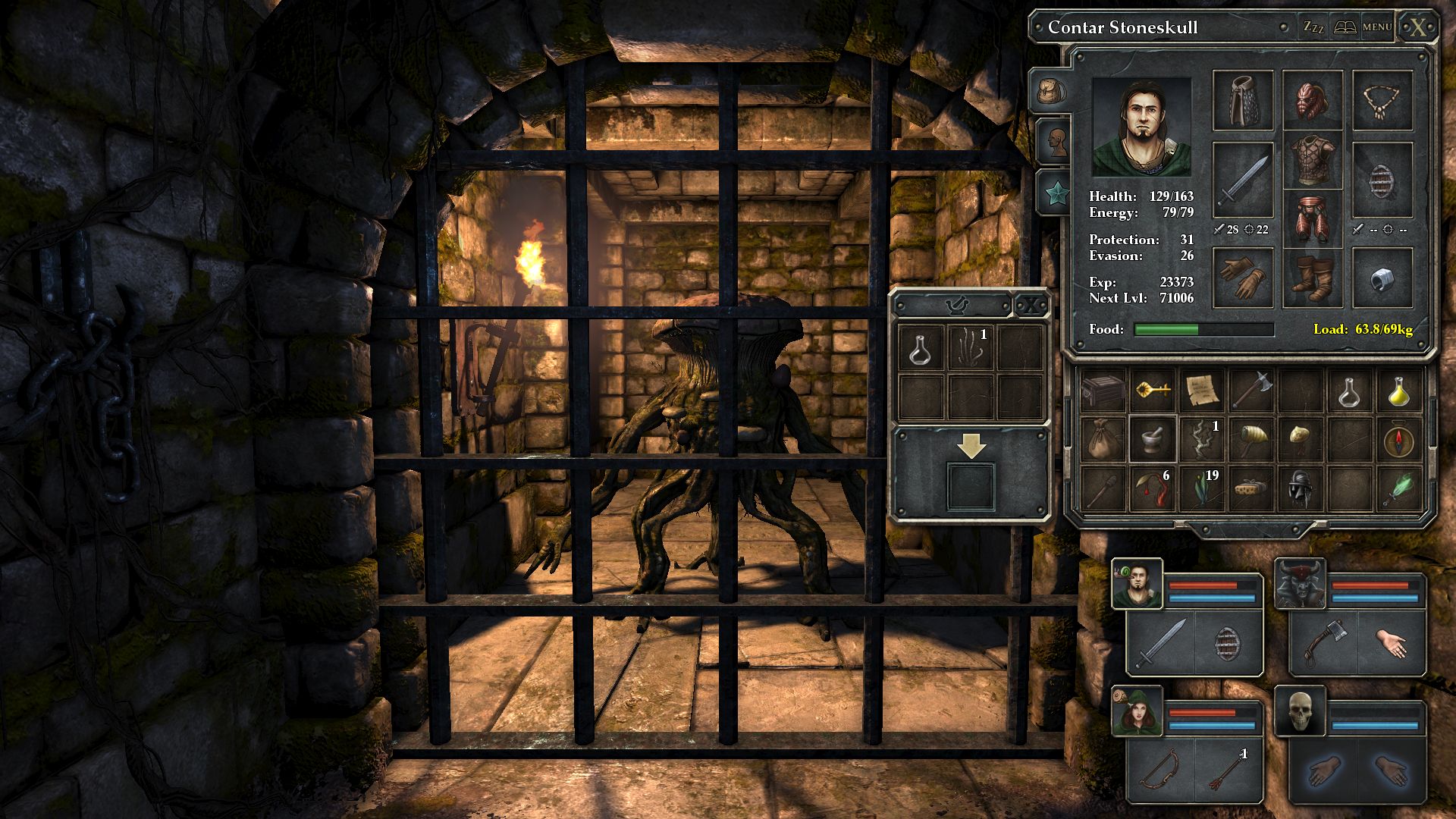
In the context of modern software, an RPG is defined by “systems.” Unlike a traditional action game that relies primarily on player reflexes (input latency and collision detection), an RPG relies on an underlying “stat engine.” When a player swings a sword in an RPG, the software isn’t just checking if the 3D models touched; it is running a series of background calculations involving the player’s strength attribute, the weapon’s damage variable, and the enemy’s defense coefficient. This reliance on background data processing is what separates the RPG from other genres.
From Tabletop Logic to Binary Code: The Tech Transition
The leap from tabletop games like Dungeons & Dragons to digital masterpieces like The Witcher 3 or Elden Ring required a massive evolution in computing power. Early digital RPGs had to translate complex rulebooks into hardcoded logic. This involved creating the first “Save State” technologies—databases capable of remembering hundreds of variables about a player’s progress. Today, this has evolved into sophisticated cloud-save architectures that sync character data across multiple platforms, ensuring that your “role” is persistent across the digital ecosystem.
The Technological Pillars of Modern RPGs
Building a modern RPG is one of the most significant challenges in software development. These games require the integration of several high-level technological systems to function seamlessly.
Procedural Generation and World-Building Algorithms
As the demand for larger game worlds grows, developers have turned to procedural generation. This is a method where software algorithms, rather than human designers, create vast landscapes, dungeons, or even entire planets (as seen in Starfield or No Man’s Sky). Using noise functions and fractal geometry, developers can generate terabytes of environmental data without manually placing every rock or tree. This tech allows RPGs to offer hundreds of hours of exploration while keeping the initial installation size manageable.
Complex AI and Non-Player Character (NPC) Decision Trees
The “Role” in RPG is only as good as the world reacting to it. This is where Artificial Intelligence (AI) comes in. Modern RPGs utilize complex finite-state machines and behavior trees to govern NPC actions. Tech like “Utility AI” allows NPCs to weigh different needs—such as hunger, safety, or social interaction—and make autonomous decisions. This creates an immersive layer of technology where the world feels alive, reacting dynamically to the player’s presence through localized scripts and global state triggers.
Database Management: Handling Player Agency and Persistence
Perhaps the most “tech-heavy” aspect of an RPG is its backend database. Every item you pick up, every quest you complete, and every dialogue choice you make must be recorded. In a massive RPG, this can mean tracking tens of thousands of boolean flags (true/false variables) and integers simultaneously. The software must be optimized to query these databases in real-time without causing “stutter” or “lag.” This requires high-performance data structures and efficient memory management, especially in open-world environments where the game must load and unload data “chunks” as the player moves.

The Evolution of Sub-Genres: Tech Innovations Driving Variety
The term RPG is a broad umbrella. Over the decades, technological shifts have birthed various sub-genres, each with its own technical requirements and architectural philosophies.
JRPGs vs. WRPGs: Architectural Differences
Japanese Role-Playing Games (JRPGs) and Western Role-Playing Games (WRPGs) often differ in their technical execution. JRPGs, like the Final Fantasy series, traditionally focus on highly polished, linear narrative engines and “instanced” combat systems. From a tech standpoint, this allows for more cinematic control and directed resource allocation. WRPGs, like The Elder Scrolls, prioritize “sandbox” architectures where the player can interact with almost any object. This requires a physics engine that can track thousands of persistent items in the game world, a significantly more taxing requirement for CPU and RAM.
MMORPGs: The Tech Behind Massive Multiplayer Networking
Massively Multiplayer Online Role-Playing Games (MMORPGs) like World of Warcraft represent the pinnacle of network engineering. These games must synchronize the actions of thousands of players in a single virtual space. This involves “sharding” (splitting players across different server instances) and “netcode” optimization to minimize latency. The challenge is maintaining “state authority”—ensuring the server, not the player’s computer, decides what happened to prevent cheating, all while making the gameplay feel instantaneous to the user.
Action RPGs: Merging Real-Time Physics with Stat Engines
The Action RPG (ARPG) is a hybrid that demands both high-speed physics calculations and deep database queries. In games like Diablo IV or Cyberpunk 2077, the engine must calculate projectile trajectories, hitboxes, and environmental destruction in real-time, while simultaneously calculating loot drops and experience point gains. This requires a multi-threaded approach to game design, where the physics engine and the logic engine run on separate CPU threads to maintain a high frame rate.
Emerging Technologies Shaping the Future of RPGs
As we look toward the next decade, several emerging technologies are poised to redefine what an RPG can be.
Generative AI and Dynamic Storytelling
The next frontier for RPGs is the integration of Large Language Models (LLMs). Imagine an RPG where NPCs aren’t limited to pre-written scripts but can engage in natural language conversations, generating unique responses based on the player’s past actions. Tech startups are already developing “AI-driven NPCs” that use generative tech to create infinite questlines and dynamic dialogue, potentially removing the “boundaries” of traditional game writing.
Virtual and Augmented Reality (VR/AR) Integration
VR technology is the ultimate tool for “Role-Playing.” By tracking a player’s physical head and hand movements, VR RPGs translate human motion into digital input. The tech challenge here is maintaining a high “refresh rate” (usually 90Hz or higher) to prevent motion sickness, which is difficult in a data-heavy RPG environment. Future AR tech may even allow RPG elements—like status bars or digital “loot”—to be overlaid onto the real world, blending gaming with physical reality.
Cloud Gaming and Seamless Cross-Platform Play
Cloud technology is removing the hardware barrier for complex RPGs. Services like Xbox Cloud Gaming or NVIDIA GeForce Now allow users to stream high-end RPGs to low-powered devices. From a tech perspective, this moves the heavy lifting of rendering and logic processing to remote data centers, requiring sophisticated video encoding and ultra-low-latency streaming protocols. This ensures that the “RPG experience” is no longer tethered to a $2,000 gaming PC.
Conclusion: Why RPGs Remain the Gold Standard of Software Complexity
When we ask “what does RPG stand for in games,” the simple answer is Role-Playing Game. However, the technical answer is much more profound. An RPG is a testament to the power of modern software engineering—a synthesis of high-level AI, massive database management, procedural generation, and real-time physics.
RPGs push the boundaries of what hardware can achieve, driving innovations in GPU rendering, CPU multi-threading, and network stability. They are the “stress tests” of the tech world. As we move into an era defined by AI and cloud computing, the RPG genre will continue to lead the way, transforming the simple act of “playing a role” into a deep, technologically-driven immersion into digital worlds. Whether you are a developer, a tech enthusiast, or a casual player, the RPG represents the ultimate intersection of human creativity and binary precision.
aViewFromTheCave is a participant in the Amazon Services LLC Associates Program, an affiliate advertising program designed to provide a means for sites to earn advertising fees by advertising and linking to Amazon.com. Amazon, the Amazon logo, AmazonSupply, and the AmazonSupply logo are trademarks of Amazon.com, Inc. or its affiliates. As an Amazon Associate we earn affiliate commissions from qualifying purchases.