
In the realm of digital imaging and optical technology, few terms are as ubiquitous yet frequently misunderstood as “ISO.” For the professional photographer, ISO is a fundamental pillar of the exposure triangle. For the camera engineer, it is a complex calculation of signal amplification and voltage. To understand what ISO stands for is to understand the bridge between the physical world of light and the digital world of data. In this technical deep dive, we will explore the origins, mechanics, and future of ISO within the context of modern photography technology.

Understanding the Origins and Evolution of ISO in Digital Imaging
To define ISO, one must first look beyond the camera body. ISO stands for the International Organization for Standardization. Unlike many technical acronyms, “ISO” is not a direct abbreviation for the organization’s name in any specific language. Instead, it is derived from the Greek word isos, meaning “equal.” This choice ensures that the organization’s name remains uniform across all languages and cultures, reflecting its mission to create universal benchmarks.
The Transition from Film Sensitivity to Digital Gain
In the era of analog photography, “ISO” (previously referred to as ASA and DIN) represented the physical sensitivity of film stock. Film was coated with light-sensitive silver halide crystals; larger crystals were more sensitive to light (higher ISO) but resulted in a “grainy” texture.
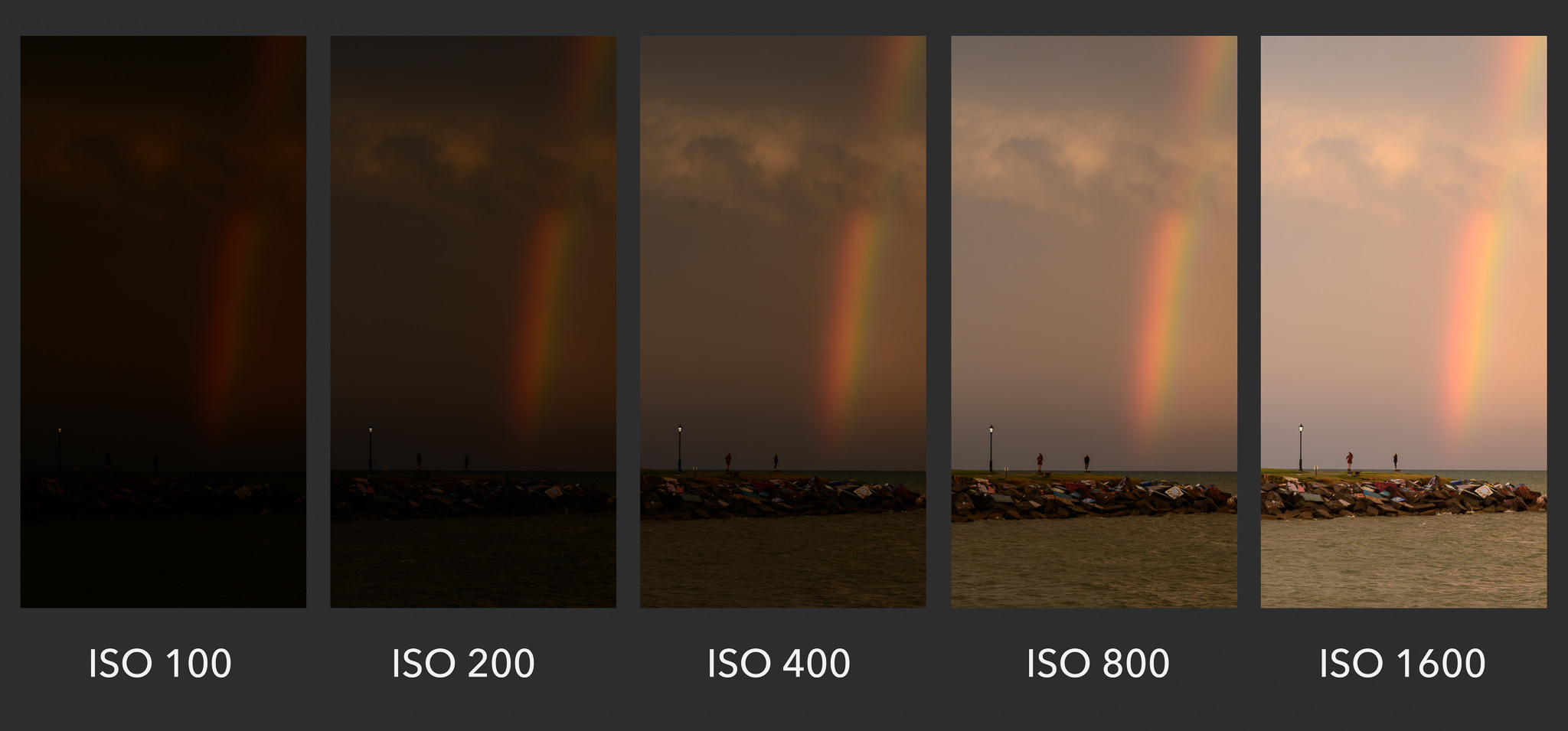
When the industry pivoted to digital technology, the International Organization for Standardization developed the ISO 12232 standard. This allowed digital sensor manufacturers to map the light sensitivity of electronic sensors to the familiar scale used by film. However, a critical technical distinction exists: while film had a fixed physical sensitivity, a digital sensor has a “base” sensitivity. When you “increase” ISO on a digital camera, you aren’t changing the sensor’s physical sensitivity; you are increasing the gain—or the electronic amplification—of the signal captured by the sensor.
The Role of Universal Standards in Hardware Interoperability
The primary reason we use ISO today is for technical consistency across different hardware platforms. Because of the ISO standard, a setting of ISO 400 on a Sony sensor should, in theory, produce the same exposure value as ISO 400 on a Canon or Nikon sensor when paired with the same aperture and shutter speed. This interoperability is what allows light meters, flash units, and post-processing software to function universally across the vast ecosystem of digital imaging gadgets.
The Mechanics of ISO: How Digital Sensors Process Light
To truly grasp the “Tech” behind ISO, one must look at the architecture of the CMOS (Complementary Metal-Oxide-Semiconductor) sensor. Every digital sensor is comprised of millions of “photosites” or pixels. These photosites act as buckets that catch photons (light particles) and convert them into an electrical charge.
Signal Amplification and Sensor Voltage
When you set your camera to its “Base ISO” (typically ISO 100), the sensor is operating at its cleanest state, using the native voltage to read the light data. However, in low-light environments where photons are scarce, the electrical signal produced by the photosites is too weak to create a visible image.
This is where the technology of ISO comes into play. By increasing the ISO setting, the camera’s internal processor applies an analog or digital gain to the signal. Much like turning up the volume on a radio to hear a faint broadcast, increasing the ISO amplifies the data collected by the sensor. This process allows the camera to produce a bright image even when the physical amount of light hitting the sensor is minimal.
The Exposure Triangle: Balancing ISO, Aperture, and Shutter Speed
In the technical hierarchy of exposure, ISO serves as the final arbiter. The Aperture (the physical opening of the lens) and Shutter Speed (the duration the sensor is exposed) control how much light physically enters the device. ISO, conversely, determines how that light is processed.
The relationship is mathematical: doubling the ISO (e.g., from 100 to 200) results in a “stop” of light, allowing the photographer to use a faster shutter speed or a narrower aperture. This synergy is essential for high-tech applications, such as sports photography or wildlife cinematography, where capturing fast-moving subjects in varied lighting requires precise sensor calibration.
Managing Digital Artifacts: The Technical Cost of High ISO

Every technological advancement comes with a trade-off. In the case of ISO, the cost of high signal amplification is the introduction of “noise.” In the world of digital security and data integrity, noise is considered a corruption of the original signal. In photography, it manifests as grainy, multi-colored speckles that degrade image clarity.
Luminance Noise vs. Chromatic Noise
Technically, digital noise is categorized into two types:
- Luminance Noise: This resembles traditional film grain. It consists of variations in brightness across pixels and is generally considered less intrusive.
- Chromatic (Color) Noise: This is the result of errors in the sensor’s interpretation of color data during the amplification process. It appears as unsightly purple or green splotches in the shadows of an image.
As the ISO increases, the heat generated by the sensor also increases. This thermal energy can cause electrons to “jump” into photosites where they don’t belong, creating “hot pixels” and further contributing to the degradation of the signal-to-noise ratio.
Signal-to-Noise Ratio (SNR) and Dynamic Range
A key metric in reviewing camera gadgets and sensors is the Signal-to-Noise Ratio (SNR). A high SNR means the “signal” (the actual light from the scene) vastly outweighs the “noise” (the electronic interference). At higher ISOs, the SNR drops significantly.
Furthermore, as ISO rises, the Dynamic Range—the sensor’s ability to capture detail in both the brightest highlights and the darkest shadows—begins to shrink. From a technical standpoint, the “cleanest” data always resides at the base ISO, which is why professional landscape and studio photographers prioritize lighting setups that allow for the lowest possible ISO settings.
Hardware and Software Innovation: The Future of ISO Management
As we move further into the decade, the limitations of ISO are being challenged by breakthroughs in hardware engineering and artificial intelligence. The “Tech” of ISO is no longer just about amplification; it is about intelligent reconstruction.
Dual Native ISO and Stacked Sensors
One of the most significant recent innovations in camera technology is Dual Native ISO. Traditional sensors have one “sweet spot” for noise-free images. Dual Native ISO sensors, however, feature two distinct analog circuits for every pixel. This allows the camera to switch to a higher “native” sensitivity at a hardware level, providing much cleaner images at high ISO settings (such as ISO 3200 or 6400) than was previously possible.
Additionally, the advent of Stacked CMOS sensors—where the light-collecting pixels are layered directly on top of the processing circuitry—has drastically reduced the distance the signal must travel. This reduces electronic interference and heat, allowing modern gadgets like the Sony A1 or the Nikon Z9 to push ISO boundaries further than ever before.
AI-Powered Denoising and Post-Processing
The final frontier of ISO is occurring in the software space. AI tools and machine learning algorithms (such as Adobe’s “Denoise AI” or Topaz Photo AI) are revolutionizing how we handle high-ISO files. These programs have been trained on millions of images to recognize the difference between “detail” and “noise.”
When a user processes a high-ISO image through these AI tools, the software doesn’t just blur the noise; it uses predictive modeling to reconstruct the lost textures and colors. This synergy between camera hardware and AI software is effectively extending the “usable” ISO range of modern cameras, allowing photographers to shoot in near-total darkness and still produce professional-grade results.
Conclusion: The Enduring Importance of ISO Standards
ISO is much more than a three-letter acronym on a camera screen; it is a vital technical standard that ensures consistency across the global imaging industry. From its roots in the International Organization for Standardization to its modern application in high-gain signal processing, ISO remains the bedrock of digital exposure.
As sensor technology continues to evolve—moving toward higher dynamic ranges, lower noise floors, and AI-integrated workflows—the fundamental principles of ISO will remain. Whether you are a software developer building the next generation of editing tools or a gadget enthusiast looking for the best low-light performance, understanding the technical nuances of ISO is essential for mastering the digital image. In the intersection of light and electricity, ISO is the bridge that makes the invisible visible.
aViewFromTheCave is a participant in the Amazon Services LLC Associates Program, an affiliate advertising program designed to provide a means for sites to earn advertising fees by advertising and linking to Amazon.com. Amazon, the Amazon logo, AmazonSupply, and the AmazonSupply logo are trademarks of Amazon.com, Inc. or its affiliates. As an Amazon Associate we earn affiliate commissions from qualifying purchases.