
In the world of personal finance and investing, terminology often acts as a barrier to entry for the uninitiated. Among the most fundamental yet frequently misunderstood terms is “face value.” While the phrase is used colloquially to suggest taking something at its surface appearance, its financial definition is precise, quantifiable, and essential for anyone looking to build a robust investment portfolio or manage their personal wealth effectively.
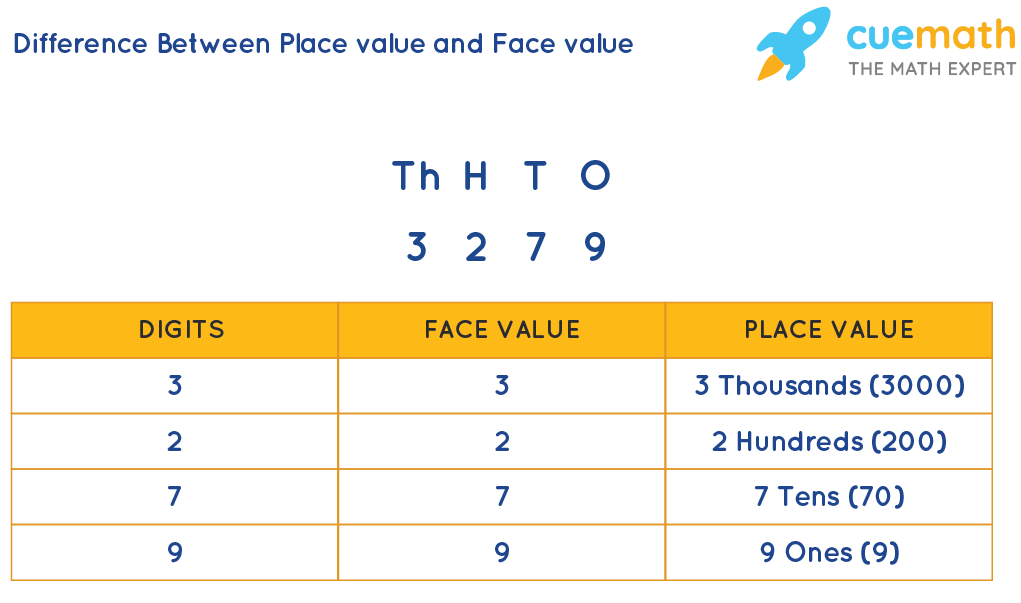
At its core, face value—often referred to as “par value” in professional circles—is the nominal value of a security or financial instrument as stated by the issuer. It is the amount printed on the front of a bond, a stock certificate, or a piece of fiat currency. However, in a dynamic global economy, the face value is rarely the same as the actual market price. Understanding the delta between these two figures is where true financial literacy begins.
Understanding the Fundamentals of Face Value
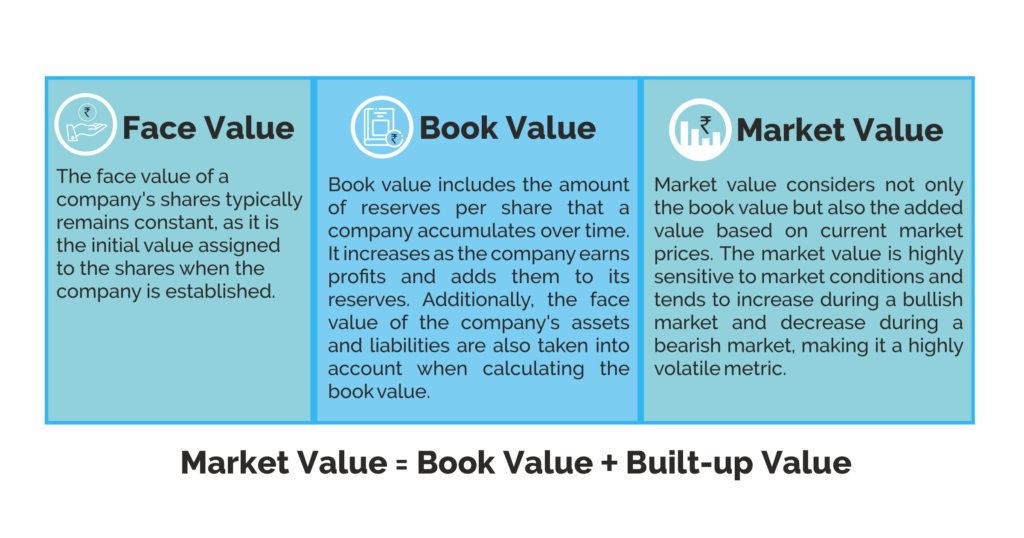
To navigate the complexities of modern finance, one must first grasp the static nature of face value compared to the fluid nature of market value. Face value is the “anchor” price assigned to a financial product at the moment of its inception.
The Literal Definition in Personal Finance
In the simplest terms, face value is the value indicated on the document itself. If you hold a $100 bill, its face value is exactly one hundred dollars. In the context of paper currency, face value and market value are generally identical because the government mandates that the bill must be accepted for that specific amount of debt.
However, once we move beyond physical cash into financial instruments like gift cards or savings bonds, the distinction becomes clearer. A U.S. Savings Bond may have a face value of $50, but it might be purchased for $25, with the expectation that it will grow to its face value over a set period. Here, the face value represents the future promise rather than the immediate liquid worth.
Face Value vs. Market Value: Why They Diverge
The most critical lesson for any investor is that face value is a fixed figure, while market value is a moving target. Market value is determined by the laws of supply and demand, interest rate fluctuations, and the perceived creditworthiness of the issuer.
If a company issues a bond with a face value of $1,000, that is the amount they promise to pay back at maturity. However, if interest rates in the general economy rise, that $1,000 bond might trade on the secondary market for $950. Conversely, if interest rates fall, the bond might trade at $1,050. In this scenario, the face value remains $1,000, but the market value—what you could actually sell it for today—shifts constantly.
Face Value in the World of Investing
In the investment sector, face value serves different purposes depending on the asset class. While it is the cornerstone of the bond market, its relevance in the stock market has evolved significantly over the last century.
Bonds and Par Value: The Maturity Promise
For bond investors, face value is the most important number on the contract. It represents the “principal” amount. When an investor buys a bond, they are essentially lending money to an entity (like a corporation or a government). The face value tells the investor two things:
- The Redemption Amount: The exact amount of money the issuer will return to the investor once the bond reaches its maturity date.
- The Coupon Calculation: Most bonds pay interest (coupons) based on a percentage of the face value. For example, a bond with a $1,000 face value and a 5% coupon rate will pay $50 in interest annually, regardless of whether the bond’s market price fluctuates.
Understanding this allows investors to calculate “Yield to Maturity” (YTM), a sophisticated metric that helps determine if a bond is a good deal based on its current market price relative to its fixed face value.
Preferred Stocks and Dividends
While “par value” for common stocks is often a fraction of a cent and largely a legal formality with no impact on trading price, it remains highly relevant for preferred stocks.
Preferred stocks share characteristics with both stocks and bonds. They typically have a fixed face value (often $25 or $100). This figure is vital because the dividends paid to preferred shareholders are calculated as a percentage of this face value. Furthermore, in the event of company liquidation, preferred shareholders have a claim on assets up to the face value of their shares before common stockholders receive any compensation. For the income-focused investor, the face value of a preferred share is the primary metric for calculating the reliability of their cash flow.
The Role of Face Value in Insurance and Risk Management
Beyond the trading floor, face value is a pillar of the insurance industry, particularly in life insurance. Here, it defines the scope of protection and the scale of the financial safety net provided to beneficiaries.
Death Benefits and Coverage Limits
In life insurance, the face value is the “death benefit.” It is the stated dollar amount that the insurance company agrees to pay out to beneficiaries upon the death of the insured party. When you hear someone say they have a “$500,000 life insurance policy,” they are referring to the face value.
This figure is the baseline for risk management. Financial planners determine the necessary face value by calculating a family’s future needs, including mortgage balances, education costs, and income replacement. Unlike a bond, where you might pay something close to the face value, life insurance allows an individual to secure a high face value (the payout) for a relatively small monthly premium, leveraging the power of actuarial mathematics.
Cash Value vs. Face Value in Permanent Policies
Complexity arises in permanent life insurance policies (such as Whole Life or Universal Life) that include a “cash value” component. It is vital not to confuse the two.
- Face Value: The amount paid to beneficiaries upon death.
- Cash Value: The equity or savings portion of the policy that builds up over time and can be borrowed against or withdrawn by the policyholder during their lifetime.
In many standard policies, if a policyholder dies, the beneficiaries receive the face value, while the accumulated cash value reverts to the insurance company. However, some specialized policies offer a death benefit that consists of the face value plus the cash value. Understanding these nuances is essential for ensuring that “face value” provides the intended level of security.
Why Face Value Matters for Your Financial Strategy
Understanding face value is not just an academic exercise; it has practical implications for how you allocate capital and protect your purchasing power.
Factoring in Inflation and Purchasing Power
One of the greatest risks to an investment tied to face value is inflation. Because the face value of a bond or an insurance policy is a fixed nominal amount, its real-world “purchasing power” erodes over time as the cost of goods and services rises.
For instance, a 30-year bond with a face value of $10,000 may seem like a significant sum today. However, if inflation averages 3% annually, that $10,000 will buy significantly less three decades from now than it does today. Savvy investors counteract this by diversifying into assets that don’t have a fixed face value—such as common stocks or real estate—which have the potential to grow in value alongside or ahead of inflation.
Navigating the Secondary Market for Fixed-Income Assets
For those engaged in active bond trading or managing a retirement portfolio, the relationship between face value and market price provides a signal for opportunity. When a bond trades below its face value, it is said to be trading at a “discount.” This often happens when market interest rates rise above the bond’s coupon rate.
Conversely, when a bond trades above its face value, it is at a “premium.” This occurs when the bond’s fixed interest rate is more attractive than current market rates. By understanding that the bond will always return to its face value at maturity (provided the issuer doesn’t default), investors can make strategic moves. Buying at a discount offers a “capital gain” in addition to the interest payments, as the bond’s value will gradually “pull to par” as it approaches its expiration date.
Conclusion: Looking Beyond the Surface
In the financial landscape, face value is the definitive starting point. It provides the structure for bonds, the calculation for dividends, and the guarantee for insurance coverage. However, as we have explored, it is rarely the final word on an asset’s worth.
To manage money effectively, one must look at face value as a fixed point in a sea of variables. Whether you are assessing a corporate bond, evaluating a life insurance policy, or considering a preferred stock, always ask: How does this face value relate to the current market reality? By mastering this distinction, you move from being a passive observer of your finances to an active, informed participant in your own wealth creation. Face value tells you what is promised; market value tells you what is true today; and your strategy determines how to bridge the gap between the two.
aViewFromTheCave is a participant in the Amazon Services LLC Associates Program, an affiliate advertising program designed to provide a means for sites to earn advertising fees by advertising and linking to Amazon.com. Amazon, the Amazon logo, AmazonSupply, and the AmazonSupply logo are trademarks of Amazon.com, Inc. or its affiliates. As an Amazon Associate we earn affiliate commissions from qualifying purchases.