
For the modern investor, understanding when the stock market opens is more than a matter of checking a clock; it is about understanding the pulse of global finance. Timing is a critical variable in the equation of successful investing. Whether you are a long-term retirement saver or an active day trader, the operating hours of major exchanges dictate liquidity, volatility, and the speed at which news is priced into securities.
In the United States, the primary equity markets—the New York Stock Exchange (NYSE) and the Nasdaq—operate on a synchronized schedule that provides a window of intense activity for participants worldwide. However, the “opening bell” is merely the center point of a much larger chronological framework that includes extended hours and global shifts.
The Standard Operating Hours of Major U.S. Exchanges
The core of the financial world in the Western Hemisphere revolves around a specific window of time on weekdays. For most retail investors, this is the only time they will interact directly with the market.
The Core Trading Session (9:30 AM – 4:00 PM ET)
The standard trading session for the NYSE and the Nasdaq runs from 9:30 AM to 4:00 PM Eastern Time, Monday through Friday. This period is often referred to as “regular trading hours.” It is during these six and a half hours that the highest volume of shares changes hands, ensuring that bid-ask spreads are at their narrowest and price discovery is at its most efficient.
The 9:30 AM opening is marked by the famous “Opening Bell,” a ceremonial event that signals the start of the auction process. Conversely, the 4:00 PM “Closing Bell” marks the end of regular trading, leading into the “closing auction,” which determines the official closing price for each security—a figure used by mutual funds and institutional investors to value their portfolios.
The Significance of the Weekend and “The Opening Gap”
The stock market is closed on Saturdays and Sundays. While this might seem like a period of dormancy, it is often a time of high tension for investors. News events that occur over the weekend—geopolitical shifts, economic data releases from overseas, or unexpected corporate scandals—accumulate while the market is closed. When the market finally opens on Monday morning at 9:30 AM, these factors often lead to an “opening gap,” where a stock’s price opens significantly higher or lower than it closed on Friday. Understanding this phenomenon is essential for risk management in any personal finance strategy.
Beyond the Bell: Pre-Market and After-Hours Trading
In our hyper-connected digital age, the “market” never truly sleeps. Electronic Communication Networks (ECNs) allow investors to trade outside of the traditional 9:30 AM to 4:00 PM window. This is known as extended-hours trading, and it plays a vital role in how professional and sophisticated retail investors react to breaking news.
The Pre-Market Session (4:00 AM – 9:30 AM ET)
Pre-market trading allows investors to act on news that breaks overnight or early in the morning, such as U.S. Bureau of Labor Statistics reports or pre-opening corporate earnings calls. While some brokerages allow trading as early as 4:00 AM ET, most retail activity begins around 8:00 AM ET.
The primary characteristic of pre-market trading is significantly lower liquidity. Because fewer people are trading, the “spread” (the difference between what a buyer will pay and what a seller will accept) is much wider. This can lead to extreme price swings that may not accurately reflect where the stock will trade once the regular session begins.
The After-Hours Session (4:00 PM – 8:00 PM ET)
Perhaps the most volatile time in the market is the immediate aftermath of the 4:00 PM close. This is when the majority of public companies release their quarterly earnings reports. The after-hours session, which lasts until 8:00 PM ET, sees intense activity as investors scramble to digest financial statements and executive guidance. For an investor, the after-hours market offers a chance to exit a position quickly if a company misses its targets, but it also carries the risk of “slippage,” where orders are filled at prices far worse than expected due to the lack of participants.
The Risks of Extended-Hours Trading
While the ability to trade for nearly 16 hours a day offers flexibility, it is not without peril. Most financial advisors recommend that novice investors avoid extended hours. The lack of liquidity can result in “fake-outs,” where a stock jumps 5% in the pre-market only to end the regular day down 2%. Furthermore, many brokerages only allow “limit orders” during these times to protect investors from executing trades at wildly unfavorable prices.
Market Holidays and Early Closures
The U.S. stock market does not follow a standard federal holiday calendar exactly, though there is significant overlap. For anyone managing their own business finance or personal portfolio, knowing the “off days” is essential for planning liquidity needs.
Major Market Holidays
The NYSE and Nasdaq are closed on several key holidays throughout the year, including:
- New Year’s Day
- Martin Luther King, Jr. Day
- Presidents’ Day
- Good Friday (A notable inclusion, as it is not a federal holiday)
- Memorial Day
- Juneteenth National Independence Day
- Independence Day
- Labor Day
- Thanksgiving Day
- Christmas Day
If a holiday falls on a Saturday, the market usually closes on the preceding Friday. If it falls on a Sunday, the market closes on the following Monday.
Early Closures and the “Black Friday” Schedule
There are specific days when the market opens as usual at 9:30 AM but closes early at 1:00 PM ET. These typically occur on the day after Thanksgiving (Black Friday) and sometimes on Christmas Eve or July 3rd, depending on how the calendar falls. These “half-days” are often characterized by very low volume, as many institutional traders take the day off, which can lead to strange, idiosyncratic price movements.
The Global Clock: Investing Across Time Zones
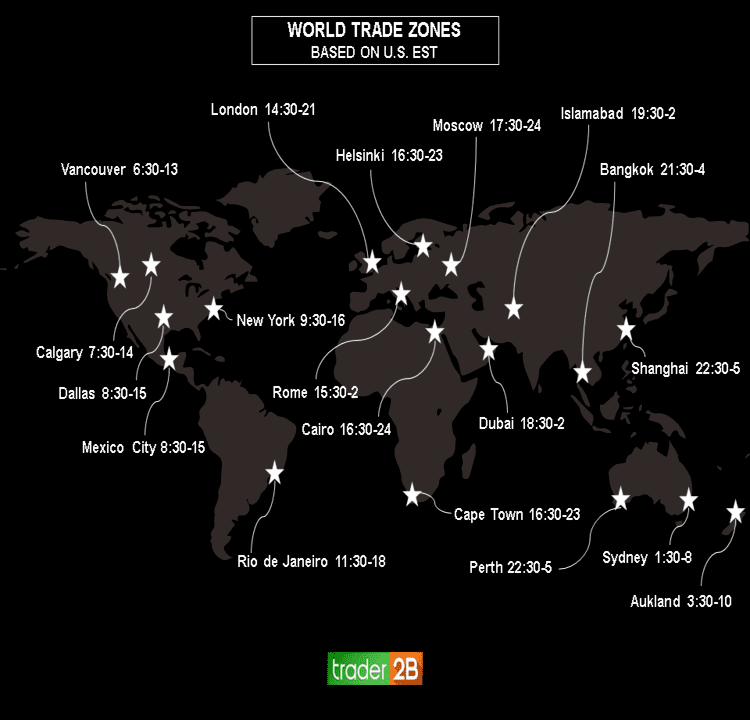
While the 9:30 AM ET opening is the focus for U.S. stocks, the global financial system operates in a relay race. As the sun moves across the globe, different markets open and close, creating a 24-hour cycle of capital flow.
The European and Asian Sessions
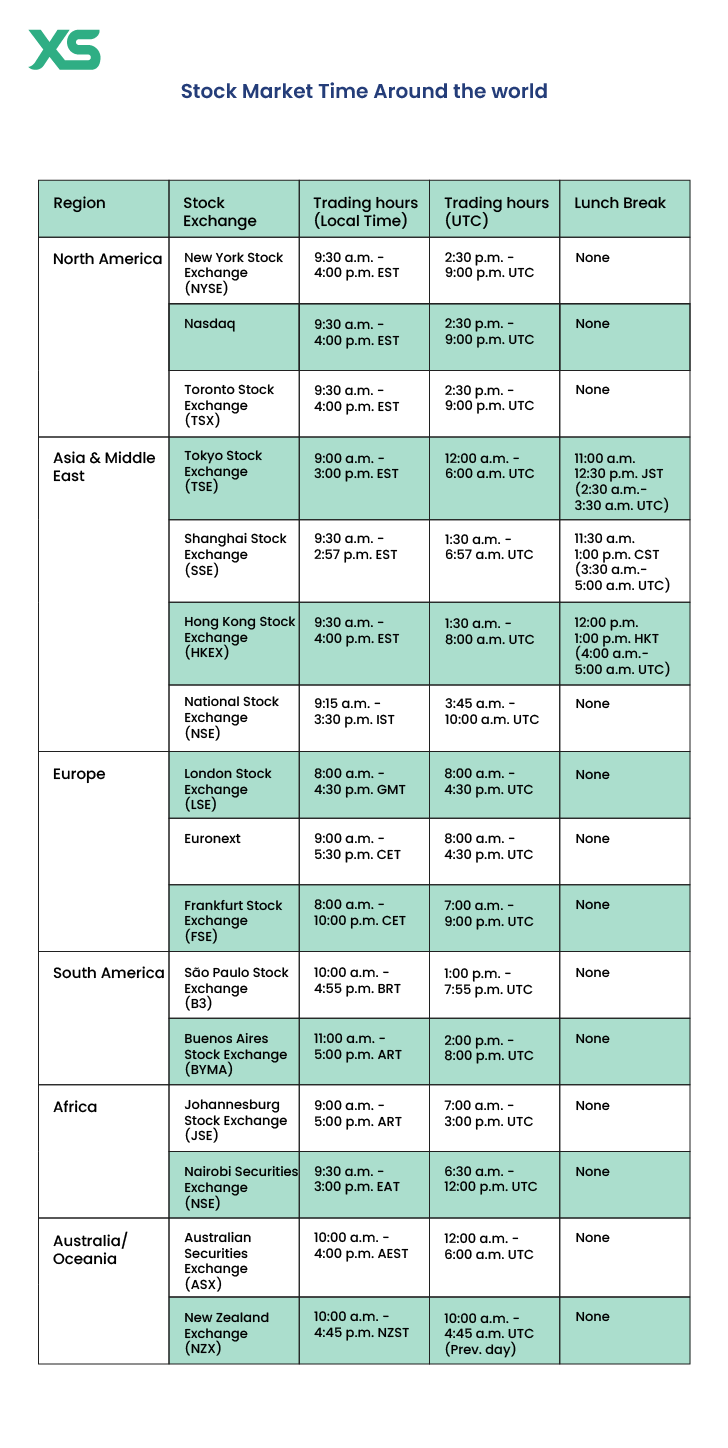
For a U.S.-based investor, the London Stock Exchange (LSE) is a key market to watch. It opens at 3:00 AM ET and closes at 11:30 AM ET. There is a critical three-and-a-half-hour overlap (9:30 AM to 11:30 AM ET) when both New York and London are open. This is often the most liquid time of the day for global assets like currencies and commodities.
Earlier in the day, the Asian markets—including the Tokyo Stock Exchange (TSE), the Hong Kong Stock Exchange (HKEX), and the Shanghai Stock Exchange—set the tone. Events in these markets often dictate how the U.S. “pre-market” will behave. If the Nikkei 225 drops 3% overnight, U.S. futures will likely be “red” (down) before the 9:30 AM opening bell.
Tracking Futures as a Leading Indicator
Even when the stock market is closed, “Stock Futures” are often trading. S&P 500 futures, for example, trade on the CME Globex exchange nearly 24 hours a day, six days a week. For a retail investor, checking the “futures” at 7:00 AM ET is the best way to predict whether the stock market will open higher or lower. This is an essential tool for anyone looking to time their entries or exits based on macro-economic sentiment.
Strategic Timing: When Should You Actually Trade?
Knowing when the market opens is one thing; knowing when it is advantageous to trade is another. In the world of money and investing, not all hours are created equal.
The Power Hour and the First 30 Minutes
The first 30 to 60 minutes after the 9:30 AM open are often called the “amateur hour” by professionals, though it is also the time of highest opportunity. This period involves the “unstacking” of all the orders that accumulated overnight. Volatility is at its peak.
The “Power Hour” refers to the final hour of trading (3:00 PM to 4:00 PM ET). During this time, institutional investors and fund managers rebalance their positions. For a long-term investor, executing trades during the middle of the day (11:00 AM to 2:00 PM ET)—the “lunchtime doldrums”—is often preferred because prices are generally more stable and less prone to the wild fluctuations of the open and close.
Consistency Over Timing
Ultimately, while understanding market hours is vital for navigating the mechanics of finance, the most successful investors prioritize “time in the market” over “timing the market.” However, by respecting the opening and closing bells, understanding the risks of after-hours volatility, and keeping an eye on the global calendar, you can ensure that your financial decisions are made with the highest level of precision and insight. Whether the bell is ringing in New York or London, being aware of the clock is the first step toward mastering your financial future.
aViewFromTheCave is a participant in the Amazon Services LLC Associates Program, an affiliate advertising program designed to provide a means for sites to earn advertising fees by advertising and linking to Amazon.com. Amazon, the Amazon logo, AmazonSupply, and the AmazonSupply logo are trademarks of Amazon.com, Inc. or its affiliates. As an Amazon Associate we earn affiliate commissions from qualifying purchases.