
In the realm of modern technology, we often find ourselves fixated on the “macro”—the sleek design of a new smartphone, the processing speed of a cloud server, or the vast capabilities of generative AI. However, the true engine of innovation resides in the “micro.” To understand the trajectory of the tech industry, one must look toward the fundamental building blocks of matter. At the heart of this understanding lies a singular, vital metric: the atomic number.
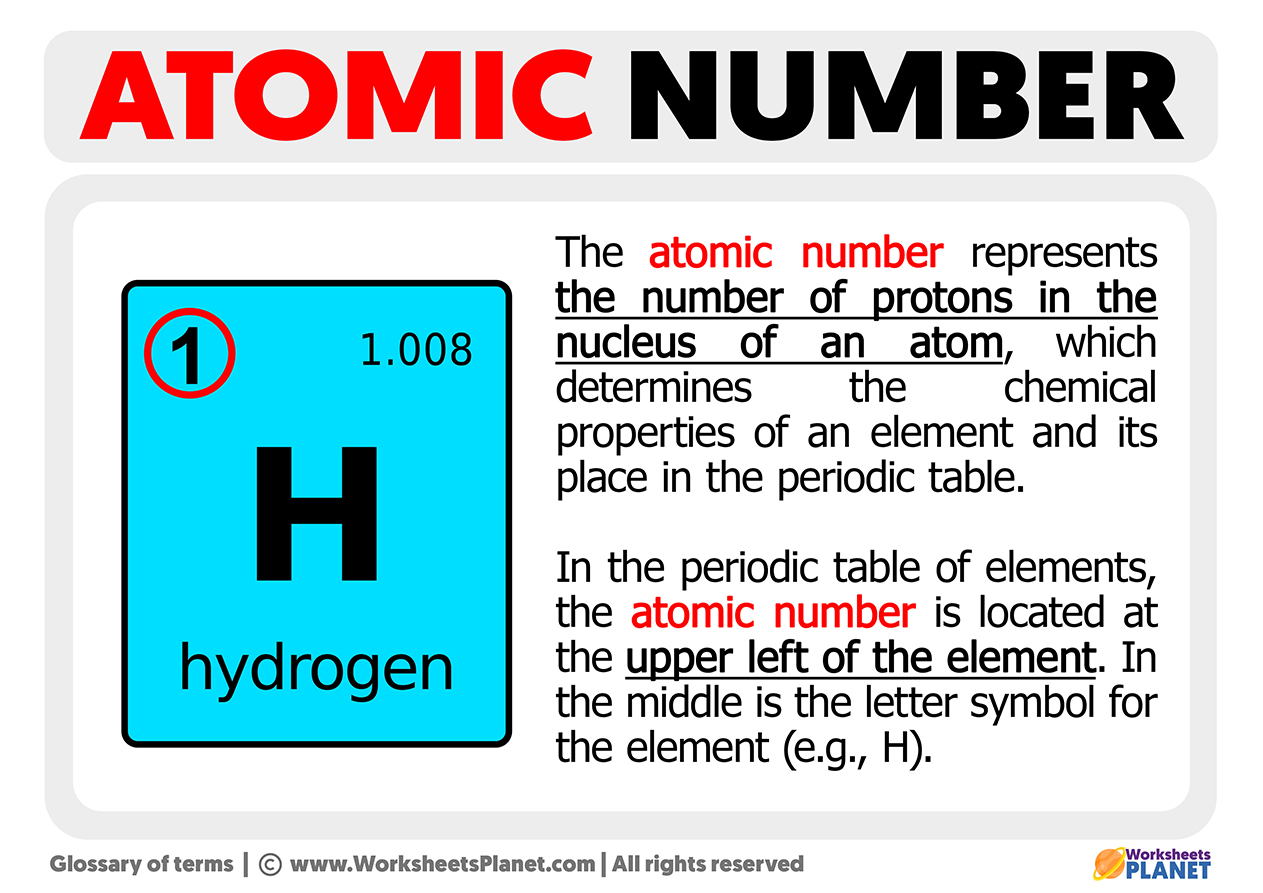
But what does atomic number represent in a technological context? While a high school chemistry student might define it simply as the number of protons in an atom’s nucleus, to a hardware engineer, a materials scientist, or a quantum computing researcher, the atomic number represents the “source code” of the physical world. It defines the electronic properties, thermal stability, and conductive potential of every material that powers our digital lives.

As we push the boundaries of Moore’s Law and transition into an era of AI-driven material discovery, the atomic number has become the most important variable in the tech stack.
The Fundamental Blueprint: Why Atomic Numbers Drive Tech Innovation
At its core, the atomic number (denoted by the symbol Z) determines the identity of an element. Because the number of protons dictates the number of electrons an atom can hold in its neutral state, it ultimately determines how that element interacts with others. In technology, these interactions are the difference between a high-performing processor and a pile of inert dust.
From Periodic Table to Processing Power
The tech industry is essentially an exercise in applied chemistry. When we ask what the atomic number represents, we are asking about the electronic configuration of a material. For instance, the transition from vacuum tubes to solid-state electronics was entirely dependent on understanding the atomic properties of specific elements. The atomic number tells us where an element sits on the periodic table, revealing whether it is a metal, a non-metal, or a metalloid. This classification is the first step in deciding if an element can be used to facilitate or inhibit the flow of electricity.
The Chemical Architecture of Modern Hardware
In modern hardware manufacturing, specifically in lithography and etching, the atomic number represents a threshold of physical possibility. As transistors shrink to the 3nm and 2nm scales, engineers must account for “quantum tunneling”—a phenomenon where electrons jump across barriers they shouldn’t. By understanding the atomic number and the resulting atomic radius of the elements involved, tech companies can engineer atomic-layer depositions (ALD) that prevent these leaks, ensuring that our gadgets remain efficient and powerful.
Semiconductors and the Atomic Precision of Computing
The semiconductor industry is perhaps the most prominent field where the atomic number serves as a literal roadmap for progress. The entire digital revolution was built on the back of element number 14.
Silicon’s Sweet Spot: The Significance of Atomic Number 14
Silicon is the gold standard of the tech world. But why? Its atomic number, 14, places it in Group 14 of the periodic table, giving it four valence electrons. This specific atomic structure allows it to form stable crystalline lattices while being easily “doped” with other elements to change its conductivity. When we look at what the atomic number represents in this context, it represents versatility. Silicon can act as both a conductor and an insulator, a dual nature that is the foundational “on/off” logic of every binary system in existence.
Beyond Silicon: Exploring Compound Semiconductors
As we hit the physical limits of Silicon, the tech industry is looking to other atomic numbers. Gallium (31) and Nitrogen (7) are combined to create Gallium Nitride (GaN), while Silicon (14) and Carbon (6) create Silicon Carbide (SiC). These compound semiconductors are revolutionizing power electronics. Because of their unique atomic numbers and the resulting “bandgap” energy, these materials can handle much higher voltages and temperatures than pure Silicon. This technology is currently the backbone of the fast-charging industry and the power conversion systems in electric vehicles (EVs).
AI and Computational Chemistry: Digitizing the Atomic Number
The most significant shift in 21st-century technology is the marriage of Artificial Intelligence and Material Science. In this niche, the atomic number is no longer just a figure in a textbook; it is a data point in a neural network.
Machine Learning in Material Discovery
Traditionally, discovering a new material for a better battery or a faster chip took decades of trial and error. Today, AI tools like Google DeepMind’s GNoME (Graph Networks for Materials Exploration) are predicting millions of new stable crystal structures. For these AI models, the atomic number is the primary input. By processing the “atomic fingerprints” represented by these numbers, AI can simulate how different elements will bond before a single experiment is even conducted in a lab. This has accelerated the timeline of tech innovation from decades to months.
Simulating Quantum Interactions for Next-Gen Tech
As we move toward quantum computing, the atomic number represents the complexity of a quantum system. Quantum simulators use the atomic number to calculate the probability clouds of electrons. For software developers working on quantum algorithms, understanding the “atomic” constraints of the hardware is essential. We are entering an era where software can design its own hardware by iterating through every possible combination of atomic numbers to find the perfect superconducting material.
Energy Tech and the Atomic Quest for Sustainability
The transition to green energy is, at its heart, an atomic challenge. The quest for more efficient solar panels and higher-capacity batteries is a quest to find the right atomic numbers to facilitate ion movement.
Lithium-Ion and the Atomic Weight of Power
Why is Lithium the king of batteries? Its atomic number is 3. This low number means it is incredibly light and has a high electrochemical potential. In the tech world, the atomic number represents the density of energy storage. However, as Lithium becomes more expensive and difficult to mine, tech companies are looking at Sodium (atomic number 11). While Sodium is heavier, its position in the same group as Lithium means it shares similar chemical properties, offering a cheaper, more abundant alternative for grid-scale energy storage.
The Hydrogen Frontier: Harnessing Atomic Number 1
Hydrogen, with an atomic number of 1, is the simplest and most abundant element in the universe. In the tech sector, “Green Hydrogen” technology aims to use electrolysis to store energy. Here, the atomic number represents the ultimate efficiency. Because it has only one proton and one electron, the energy released when it combines with oxygen to form water is immense. The tech challenge today lies in creating storage and transport systems that can contain such a small, volatile atom—a challenge that requires an intimate understanding of the atomic numbers of the metals used in storage tanks.
The Future: Atomic-Level Engineering and Nanotechnology
As we look toward the future of technology, the concept of the atomic number is shifting from a descriptive tool to a prescriptive one. We are no longer just using materials that exist; we are manipulating them at the atomic scale.
Building Tech Atom by Atom
Nanotechnology is the pinnacle of this journey. In this field, what the atomic number represents is a “coordinate” for construction. Technologies like Scanning Tunneling Microscopy (STM) allow scientists to move individual atoms. By arranging atoms with specific atomic numbers in precise patterns, we can create “meta-materials” that do not exist in nature—materials that can bend light (cloaking tech) or conduct electricity with zero resistance at room temperature.
Ethical Implications and Digital Security
Even digital security is being impacted by our mastery of the atomic level. Quantum Key Distribution (QKD) relies on the spin of electrons—a property dictated by the atomic number of the medium through which the signal travels. As we gain the ability to manipulate these properties, the tech industry must also grapple with the security implications. If we can engineer materials at the atomic level, we can also create “hardware trojans” that are invisible to any current scanning technology.

Conclusion
So, what does atomic number represent? In the context of 21st-century technology, it represents the DNA of innovation. It is the bridge between the theoretical world of software and the tangible world of hardware. From the Silicon in our pockets to the AI-designed alloys in our spacecraft, every advancement we make is a testament to our growing mastery over the periodic table.
As we continue to explore the digital frontier, our success will depend less on how many lines of code we can write and more on how well we can manipulate the elements. The atomic number is the key that unlocks this potential, proving that the most powerful technologies are often built on the smallest foundations. Understanding the atomic number is not just a lesson in science—it is a glimpse into the future of human ingenuity.
aViewFromTheCave is a participant in the Amazon Services LLC Associates Program, an affiliate advertising program designed to provide a means for sites to earn advertising fees by advertising and linking to Amazon.com. Amazon, the Amazon logo, AmazonSupply, and the AmazonSupply logo are trademarks of Amazon.com, Inc. or its affiliates. As an Amazon Associate we earn affiliate commissions from qualifying purchases.