
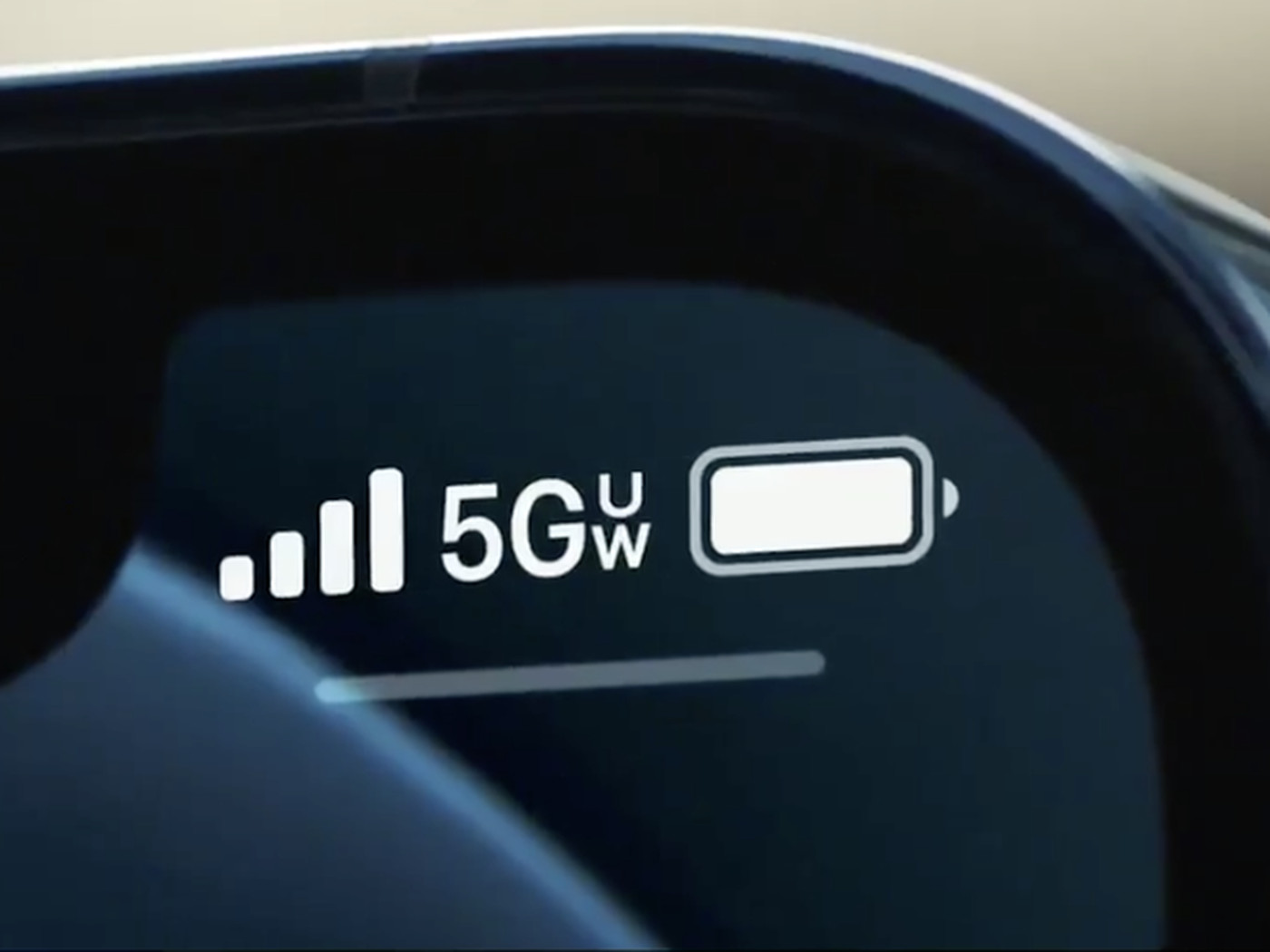
In the rapidly evolving landscape of telecommunications, the iconography displayed in the corner of our smartphone screens has become a shorthand for our digital potential. While most users have grown accustomed to the “5G” indicator, a more specialized symbol has begun to appear on devices across the United States: 5GUW. This acronym, which stands for 5G Ultra Wideband, represents a significant leap forward in wireless technology, moving beyond the incremental updates of early 5G deployments into a realm of performance that rivals, and often exceeds, residential fiber-optic internet.
To understand what 5GUW means is to understand the sophisticated orchestration of radio frequencies, hardware infrastructure, and software protocols that define modern mobile computing. It is not merely a marketing label but a technical designation for a high-performance network tier designed to handle the massive data demands of the next decade.
Understanding the Technology Behind 5G Ultra Wideband
The “UW” in 5GUW signifies a departure from the “Nationwide” or “Low-Band” 5G that many consumers first experienced. To grasp how this works, we must look at the electromagnetic spectrum and how data is encoded and transmitted through the air.
The Spectrum Explained: mmWave vs. C-Band
5G Ultra Wideband is primarily built upon two distinct types of radio frequencies: Millimeter Wave (mmWave) and C-Band.
- Millimeter Wave (mmWave): These are extremely high-frequency bands (typically 24GHz to 47GHz). Because these frequencies are so high, they can carry massive amounts of data at incredible speeds. However, they have a short range and are easily obstructed by buildings, glass, and even foliage. This is why 5GUW was initially found only in dense urban centers or stadiums.
- C-Band: This is the “Goldilocks” spectrum of 5G. Occupying the mid-band range (3.7GHz to 3.98GHz), C-Band offers the perfect balance between the high speed of mmWave and the long-range coverage of low-band 5G. When you see the 5GUW icon today, you are most likely connected to a C-Band tower, which provides high-speed throughput over several miles.
The Hardware Requirement: Why Your Device Matters
Accessing 5GUW is not just about being in the right location; it requires specific hardware capabilities. Modern smartphones must be equipped with specialized modems and antenna arrays capable of “tuning in” to these higher frequencies.
The integration of Massive MIMO (Multiple Input, Multiple Output) technology is crucial here. This allows a cell tower to use dozens of antennas to transmit and receive data simultaneously, significantly increasing the capacity of the link. For the user, this means that even in a crowded area—like a music festival or a business district—the hardware can isolate your signal from the noise, maintaining the “Ultra Wideband” connection.
Comparing 5GUW to Standard 5G and 4G LTE
To appreciate 5GUW, it is helpful to contrast it with its predecessors and its “standard” siblings. The transition from 4G LTE to 5G was not a single jump but a phased rollout, leading to various tiers of service.
Speed and Latency Benchmarks
The most immediate difference a user notices with 5GUW is the raw throughput. Standard 5G (often called 5G Nationwide) typically operates on low-band frequencies. While it offers better reliability than 4G, its speeds are often only marginally faster, ranging from 50 Mbps to 200 Mbps.
In contrast, 5GUW is a performance powerhouse. On C-Band, users frequently see download speeds between 300 Mbps and 1 Gbps. On mmWave, those speeds can skyrocket to an astonishing 2 Gbps or higher. Perhaps more importantly, 5GUW significantly reduces latency—the “lag” or delay before a data transfer begins. While 4G latency typically hovers around 50–100 milliseconds, 5GUW aims for sub-30ms or even sub-10ms performance, making the mobile experience feel instantaneous.
Throughput and Network Capacity
One of the technical bottlenecks of older network generations was “congestion.” In a densely populated area, 4G towers would become overwhelmed, leading to the dreaded “spinning wheel” even if you had full signal bars. 5GUW utilizes a much wider “lane” on the digital highway. By using wider channels of spectrum (sometimes 100MHz or more), the network can accommodate thousands of devices simultaneously without a drop in individual performance. This makes 5GUW a critical technology for the “Internet of Things” (IoT) ecosystem, where everything from smartwatches to autonomous delivery robots requires a constant, high-bandwidth heartbeat.
The Real-World Benefits of 5G Ultra Wideband
The transition to 5GUW isn’t just about downloading movies faster; it’s about enabling a new class of mobile applications that were previously impossible on wireless networks.
Revolutionizing Mobile Gaming and AR/VR
For the tech community, the most exciting application of 5GUW is in the realm of Extended Reality (XR). Augmented Reality (AR) and Virtual Reality (VR) require massive data transfers with zero perceptible lag to prevent motion sickness and ensure immersion. 5GUW provides the “fat pipe” necessary to stream high-fidelity 3D environments from the cloud to a mobile headset or smartphone.
In mobile gaming, 5GUW levels the playing field between mobile users and those on hardwired fiber connections. Competitive gamers can enjoy frame-perfect responsiveness in multiplayer titles, untethered from their home Wi-Fi.
Enhancing Remote Work and Large-Scale Data Transfers
As the professional landscape shifts toward hybrid and remote models, the “office” can be anywhere. However, 4G often struggled with high-definition video conferencing and the uploading of large raw files (such as 4K video or massive CAD files). 5GUW transforms a smartphone or a 5G-enabled laptop into a workstation that can compete with an office LAN. It allows for seamless 4K Zoom calls while simultaneously syncing gigabytes of data to cloud servers like AWS or Google Cloud, effectively removing the geographical limitations of high-tech production.
Security and Infrastructure in the 5GUW Era
As we push more of our digital lives through these high-speed pipes, the underlying infrastructure and the security protocols governing them have undergone a massive overhaul.
Network Slicing and Digital Security
5GUW is built on a “5G Standalone” (5G SA) core in many regions, which allows for a revolutionary tech feature known as Network Slicing. This allows operators to create multiple virtual networks on top of the same physical infrastructure. For example, a slice could be dedicated purely to emergency services with guaranteed bandwidth and enhanced encryption, while another slice handles general consumer web browsing.
From a security perspective, 5G introduces improved subscriber identity encryption. In older 4G networks, the International Mobile Subscriber Identity (IMSI) was sometimes sent in cleartext, making it vulnerable to “Stingray” devices used for tracking. 5GUW utilizes sophisticated public-key cryptography to ensure that device-to-tower communication is much more resistant to interception and spoofing.
The Expansion of Small Cell Technology
The physical manifestation of 5GUW is different from the massive cellular towers of the past. To support the high frequencies of Ultra Wideband, carriers are deploying “small cells.” These are compact radio units mounted on streetlights, utility poles, and the sides of buildings.
This densification of the network is a technical necessity. Because mmWave signals don’t travel far, these small cells must be placed every few hundred feet in urban environments. This creates a “mesh” of connectivity that ensures that as a user moves through a city, their device is seamlessly handed off from one high-speed node to the next, maintaining the 5GUW connection without interruption.
The Future Landscape: 5GUW and the Evolution of Tech
The emergence of the 5GUW icon is just the beginning of a broader shift in how we interact with technology. As coverage expands from city centers to suburban and rural corridors via C-Band, the digital divide will begin to shrink, and the “cloud” will move closer to the “edge.”
Edge Computing and AI Integration
The low latency of 5GUW is the primary catalyst for Edge Computing. Instead of sending data to a server three states away, 5GUW allows data to be processed at the “edge” of the network—essentially at the base of the cell tower itself. This is critical for the future of Artificial Intelligence. Imagine an AI-powered assistant on your phone that can process complex visual data in real-time, or an autonomous vehicle that can communicate with street sensors to navigate a busy intersection. These technologies require the split-second decision-making that only 5GUW’s low-latency architecture can provide.

Conclusion: More Than Just an Icon
What does 5GUW mean? In the simplest terms, it is the realization of the true promise of 5G. While the initial launch of 5G was characterized by incremental improvements, 5GUW is a transformative technology. It represents the convergence of high-frequency physics, advanced semiconductor engineering, and intelligent software design.
For the tech-savvy consumer, seeing the “UW” on their device is a signal that they are no longer limited by the constraints of traditional mobile data. It is an invitation to explore high-fidelity streaming, immersive virtual worlds, and a more secure, responsive internet. As this infrastructure continues to mature, 5GUW will cease to be a “premium” feature and will become the invisible, high-speed foundation upon which the next generation of technological innovation is built.
aViewFromTheCave is a participant in the Amazon Services LLC Associates Program, an affiliate advertising program designed to provide a means for sites to earn advertising fees by advertising and linking to Amazon.com. Amazon, the Amazon logo, AmazonSupply, and the AmazonSupply logo are trademarks of Amazon.com, Inc. or its affiliates. As an Amazon Associate we earn affiliate commissions from qualifying purchases.